Bricks and design at an art school in Bangalore (Bengaluru)

THE HUMBLE BRICK is a much used material in the construction of many kinds of building. It can be used unimaginatively, as it often is, or imaginatively to create visually intriguing textures.


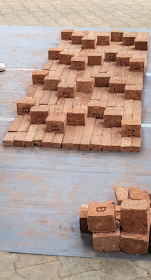
During a visit to one of Bangalore’s art schools,  the Chitrakala Parishath,  we watched architecture students participating in an outdoor “brick techtonics” workshop. This was being supervised by the noted Indonesian architect Andy Rahman.


We watched small groups of students arranging bricks so as to make interesting patterns, following plans drawn up by Andy Rahman. As they worked, Mr Rahman moved from group to group, discussing with them what they were doing.


All around the area where the workshop was taking place, labourers were working noisily on a construction site where new buildings were being built for the art school. Thus, the architects working on realising theoretical bricklaying design ideas were surrounded by real life applications of established building practices.


I hope that when the budding architecture students begin designing ‘for real’ that they will recall the interesting brickwork creativity that Mr Rahman was introducing to them. For he was showing them that even the humble brick can become a component in a visually fascinating design.

Problems with identifying gender in London and Bangalore (Bengaluru)

WHEN OUR DAUGHTER was about two years old and able to walk unassisted, she often wore overalls (jump suits), rather than girlish frocks. One day we were walking in London’s Kensington Gardens when we passed a couple of elderly ladies.  One of them looked at our child, and said to us: “What a cute little boy you have”

We replied:

“Actuually, she is our daughter.”

To which one of the ladies said to her friend: “it’s so difficult to tell one from the other these days.”


The former Men’s Bar at the Bangalore Club

Some months later, we were in India at the Bangalore Club (in Bangalore). In those days, the late 1990s, the club had a Men’s Bar, to which only men were admitted. Its wood panelled walls bear hunting trophies and archaic weapons.

One day, I was having a drink in that bar with my father-in-law, when our daughter arrived in the adjoining room with my wife. Excited to see us, our daughter,  dressed in her overalls, dashed into the Men’s Bar. An elderly gentleman, seeing a child in the bar, said to our daughter:

“You are too young to come in, young man. When you are 21, you will be welcome here.”

To which, my wife standing close to the entrance, said: “She’s our daughter.”

The gentleman then responded: “In that case, you will never be able to enter our bar”.

 How wrong he was.

Sometime during the early twenty-first century, the rules changed: now both men and women can use what had been the Men’s Bar.  Now, this bar has been renamed: it is simply The Bar.

Today, almost 28 years later, nobody would have any difficulty identifying our daughter as a young lady.

Getting fixed in Bangalore (Bengaluru), India

KALIM REPAIRS JEWELLERY in Jewellers Street in the Commercial Street district of Bangalore (Bengaluru). He sits on the pavement on the shaded east side of the street in the morning and in the afternoon,  he moves to the west side to keep out of the sun. He can mend almost every kind of jewellery. When restringing necklaces, he uses both his hands and his feet, to keep the thread taut.


Kalim at work

Kalim is one of many people we visit in the Commercial Street area to get repairs done. These craftsmen include tailors, a bag repairer, dyers, darners, watch repairers, locksmiths, and jewellers. We have known all of them for years.


The great thing about these skilled workers is that they will skilfully repair almost anything. On the UK,  people like this are few and far between.


You can read about these wonderful people in and around Commercial Street in my book “88 DAYS IN INDIA: A JOURNEY OF MEMORY AND DISCOVERY”.

The book is available from Amazon https://www.amazon.co.uk/88-DAYS-INDIA-JOURNEY-DISCOVERY/dp/B0FKTFBFM2/

A Hindu temple that incorporates a banyan tree

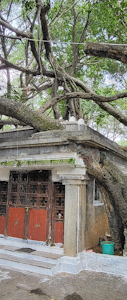
ON THE CAMPUS of Bangalore’s Chitrakala Parishath art college, there is a small Hindu mandir, the Ganapathi Temple. Dedicated in 1984 and built by Mandelia Parmarth Rosh, it contains an effigy of Ganesh and not much else.

What makes this small religious building both fascinating and charming is that its construction incorporates branches of a large, living banyan tree. The tree is growing through part of the temple.

Man, nature, hills, and mountains in the Western Ghats of India

WE VISITED BANGALORE’S Chitrakala Parishath, an art school, on the last day of an exhibition called “Hidden Gems of the Western Ghats”. We were alerted to it by a good friend, Ajay Ghatage, who posted something about it on Facebook.


The Western Ghats are a line of hills and mountains that separate the Deccan Plateau from the western coastal strip of India, the shore of the Arabian Sea. The ghats are in the most part forested.


The exhibition included sculptures, many of them beautiful stone carvings, paintings, and a few ‘installations’. Each work expresses its creator’s reaction to the nature and its exploitation (and/or despoliation) by mankind. And the majority of the artworks on display did this well, beautifully, and often highly imaginatively.


Amongst the installations, there was one by Shivanand Shyagoti that particularly attracted my attention. It consisted of a tree trunk into which hatchets had been stuck. On the wooden handles of each of these choppers, there were line drawings of the woodland creatures whose habitat would be disturbed by deforestation.


The other works on display were at least as imaginative as the one described above. What was impressive about the majority of the artworks was that although they often conveyed messages about the fragility of the natural environments of the Western Ghats, they did it subtly, creatively, and,  most importantly, beautifully.

A Boer officer in Bangalore 1901

GEORGE GLAESER MUNNIK was a  Boer  during the first Anglo-Boer War (1899-1902). He was captured by the British and imprisoned in the south of India. During his time in India, he was taken to Bangalore briefly and was put up in the West End Hotel.

In his autobiography,  Munnik recalled:

“We arrived in Bangalore early in the morning and went to the West End
Hotel. This hostelry stands in extensive grounds and consists of about
half-a-dozen bungalows, each a hundred yards apart and holding six
visitors; each has its own cook, butler, etc…“

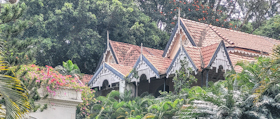
The hotel still exists and is one of the finest in Bangalore. Although enlarged since Munnik stayed there, it stands in beautifully maintained grounds.

To discover why the British took this POW from his prison camp to a deluxe hotel in  Bangalore, you will need to read my book “Imprisoned in India”.  It is available as a kindle from Amazon: https://www.amazon.in/IMPRISONED-INDIA-South-African-Bangalore-ebook/dp/B07Z2S4V3P/     

OR  as  a paperback from: https://www.lulu.com/shop/adam-yamey/imprisoned-in-india/paperback/product-1y5j98em.html?q=Yamey&page=1&pageSize=4

In the pie, or the core of the matter

RECENTLY WHEN WALKING in an an orchard in Hampshire, we found that the trees were literally groaning beneath the weight of apples growing upon them. Seeing all of these ripe fruits brought back memories of visiting family friends, who lived in Kent, during my early childhood.

Whenever we went to their home, we were given a lavish lunch. The dessert was always apple pie. The apples were covered with a topping of pastry. What fascinated me was that the centre of this topping was always raised above the rest of it. Beneath this centrally located curved mound, – and this is what used to fascinate me – there would be a ceramic cup buried amongst the cooked apples. Discovering a cup buried in an apple pie tickled my imagination, and always puzzled me. I believe that it is normal practice to insert something to support the pastry topping, but when I was less than 10 years old, I did not know this. Our friend who used to cook this apple pie for us is, sadly, no more,

Incidentally, in recent years, some of the best apple pie I have tasted is that served at The Only Place in Museum Road, Bangalore (south India). Its recipe was introduced to the restaurant by the American wife of Haroon, who founded the restaurant many years ago.

A tailor in Bangalore (India) who knew how to be tactful

DIPLOMATIC AMNESIA

Almost immediately after I first arrived in India (in late December 1993), and a few days before our Hindu wedding ceremony, my father-in-law recommended that I visit his tailor – Mr Krishnan – to get measured up for some new suits. One of these was to be a white ‘Prince Suit’, and the other two were western style formal suits in greyish materials. The Prince Suit, a traditional Indian design with a high neck collar, was to be worn at our wedding reception after the marriage ceremony. The other garments would be useful for the many formal occasions, which my father-in-law anticipated both in India and England. He loved such occasions.

When he worked in an upmarket tailoring shop in Bangalore’s Brigade Road, Mr Krishnan had made suits for my father-in-law. When I met him, he was semi-retired and worked from his home in a small, old-fashioned house on a short lane in a hollow several feet beneath the nearby busy Queen’s Road. He was a short, elderly gentleman – always very dignified and polite. He measured me up for the suits in his front room, which served as part of his workshop. After a couple of visits to try the suits whilst they were still being worked on, I picked up the finished garments. Each of the suits fitted perfectly – ‘precision-fit’ you could say quite truthfully. Despite being so accurately made, they were not in the least bit uncomfortable. Everybody admired them. I could understand why I had been sent to Mr Krishnan.

Our next trip to India was made 20 months later when our recently born daughter had had sufficient vaccinations to allow her to travel safely. During the interval between these two holidays, my dimensions had changed significantly because of my good appetite and happy marriage. Notably, my girth had increased greatly. Sadly, the suits that Mr Krishnan had so carefully crafted no longer fitted me.

We returned to see Mr Krishnan, who told us that in anticipation of my dimensions changing, he had left extra cloth within the garments for adjusting them. Without comment, he took my new measurements, and noted them down in a book. My wife, who had accompanied me, said to the tailor, mischievously:

“Just out of curiosity, Mr Krishnan, would you be able to look up Adam’s previous measurements to see how much he has changed.”

He put down his pencil, sighed, and said:

“I am very sorry, Madame, but I have unfortunately lost them.”

Mr Krishnan was not only a wonderful tailor, but also a perfect diplomat.

End of excerpt

https://www.amazon.co.uk/CORACLES-CROCODILES-101-TALES-INDIA/dp/B0DJZ6DMYB/