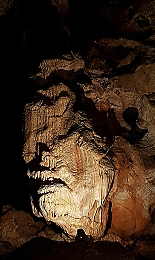
discovering forgotten cities in India and memorable archaeologists

CURRENTLY MANY MUSEUMS in the ‘Western World’ are pondering over the idea of returning some of their exhibits to the territories from where they were obtained. A controversial example of this quandary are the fragments from Athen’s Parthenon, which are known as the Elgin Marbles.
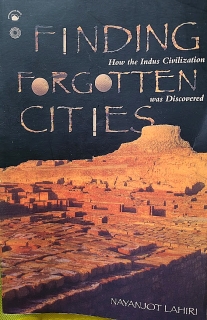
From 1899 to 1905, Lord Curzon was the Viceroy of British India. In her book “Finding Forgotten Cities”, Nayanjot Lahiri describes how Curzon was concerned about preserving and conserving India’s many archaeological and historical sites, and promoting the work of archaeologists in what was to become the Archaeological Survey of India (‘ASI’). Concerning artefacts removed from India, it was Curzon who arranged for some ancient artefacts to be returned from the British Museum to where they came from in India. The most important thing that Curzon did in relation to Indian archaeology was to appoint the archaeologist John Marshall (1876-1958) to supervise and plan archaeological activities within the Indian subcontinent. It is Marshall and his highly trained colleagues including many Indians such as Rakhaldas Banerji, DR Bhandarka, KN Dikshit, and DR Sahni, who are important protagonists in Lahiri’s story about how the extensive remains of Harrappan (or Indus Valley) civilisation came to be discovered. The book also includes much information about the Italian archaeologist Luigi Pio Tessitori (born 1887 in Udine, Italy, died 1919 in Bikaner, Rajasthan), whose discoveries eventually contributed much to the unravelling of the mystery of Harrapan civilisation.

Apart from the above-mentioned, Lahiri describes the lives and archaeological work of a whole host of other people working in India. She describes how the earlier archaeologists were fixated on finding remains of places mentioned in early texts including the Vedas, classical author’s histories of Alexander the Great’s incursions into the Indian subcontinent, Buddhist and Jain sources, and accounts by early Chinese travellers in India. When the remains of what is now recognised as the very old Harrapan civilisation (as early as about 3000 BC) began to be discovered, it was gradually realised that these were not compatible with the stories written in the ancient texts. Although at first nobody knew the age of these findings, the fact that they were discovered deeper beneath the ground than the artefacts that could be dated, Marshall and his colleagues believed that they had stumbled on remains from a time far earlier than had been hitherto discovered by archaeologists in India. Amongst these and at various different locations, seals inscribed with pictograms or symbols began to be discovered. Later, these seals became important in dating the Harrapan civilisation.

Lahiri’s well-documented, scholarly account reads like a thriller. Not only does she relate the story of the discovery of the Harrapan civilisation and the archaeologists who found it, but also she tells of the difficulties that Marshall encountered ensuring that the ASI was adequately funded. And she tells of the remarkable way that the ageing of the civilisation became possible after Marshall had published his findings with many illustrations in the widely read, non-scholarly Illustrated London News in 1924.

I never believed that I would read a book about archaeology and find it un-put-downable, but Lahiri’s fascinating book was just that. It is a book that should interest both archaeologists and lay readers. I began reading it soon after revisiting one of India’s major Harrapan sites, that at Dholavira in Kachchh (Gujarat), and I am pleased that I did.
Recording the terrain before and during its exploration by archaeologists

WHEN ARCHAEOLOGISTS DISCOVER and then remove historical artefacts from the ground, the terrain in which they have lain for centuries or maybe millennia is changed forever, and irreversibly. For once an artefact is removed and/or the site is excavated to reveal its original features, no amount of effort can restore the site to what it was before it was investigated by archaeologists.

Given the permanent changes resulting from the activities of archaeologists, it is important that the appearance of the site is recorded before, during, and after the archaeological dig. To do this, photography is very useful.

Yesterday, 7 January 2025, we viewed an exhibition, “Archeo Logical Camera”. It is being held in a gallery at the Kara Hotel, a luxurious and beautifully designed establishment located on the Maidan (Parade Ground) at Fort Kochi. The exhibits consists of several artefacts dug up by archaeologists as well as photographs taken by Mohamed A, who graduated in Fine Arts at Trivandrum, Kerala.

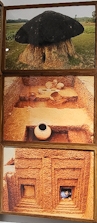
The photographs, each of which is a work of art, are those he took while documenting archaeological digs in various parts of India. The pictures show, archaeologists at work, the sites where they worked before and during the digs, and artefacts both in their original locations and after excavation.

Not only were the photographs beautifully executed and interesting, but also the exhibition was superbly displayed. The show is a project by Aazhi Archives, and the artistic director is Riyas Komu.

This wonderful exhibition is NOT part of the 2025/26 Kochi Muziris art biennale. However, after having now seen many of the festival’s artistic offerings, I think that the quality and originality of “Archeo Logical Camera”, exceeds most of what is to be seen at the Kochi Muziris Biennale.

Wonderful Roman mosaics preserved near the Humber river

KINGSTON UPON HULL (‘Hull’) did not exist as a significant settlement until several centuries after the Romans left Britain. However, the Romans built a road that ran north through Brough, which is west of Hull, to Malton (northwest of Hull), and beyond towards York. Along this road, at Horkstow and Brantingham, and at Rudston and Harpham, along a side road northeast of Hull, remains of buildings constructed by the Romans have been found and excavated by archaeologists. At each of these sites, large areas of Roman mosaics have been found.

The mosaics have been carefully moved to Hull and can be seen at the city’s Hull and East Riding Museum. There, they have been beautifully displayed. I do not think I have ever seen such a large collection of Roman mosaics as can be found in the museum. It is worth visiting Hull to view this remarkable set of mosaics. Although, in my view, the mosaics alone make the museum unmissable, there is much more to be seen in this superbly curated place.

Visitors to the museum, which specialises in archaeology, follow a route that leads from exhibits relating to prehistory to just after the English Civil War.  Each room or area along the way is designed to ignite interest in archaeology in the minds of everyone, from small children to adults. Every exhibit is labelled in language that is easy to understand, yet does not ‘dumb down’. Even if you enter the museum with little interest in archaeology and early history, you are bound to leave having become interested in these subjects.

Apart from the Roman mosaics, the museum contains several timber boats, the Ferriby vessels, that were built on the bank of the Humber in the Bronze Age. One of these is preserved in a special tank called the Boatlab, which contains equipment to preserve the ancient timber. It is believed the Ferriby boats are the earliest known form of seacraft made in Europe.

I have highlighted two aspects of this museum in Hull. They are the ‘icing on the cake’, but the rest of the cake is richly interesting. Many people disdain the idea of visiting Hull, but they are mistaken. The museum with its Roman mosaics is just one of many of the city’s relatively unknown but worthwhile attractions.

Roman recycling

TOLLESBURY IN ESSEX on the Blackwater River estuary is a village just over 5 miles southeast of Tiptree, a small town close to the Wilkinson jam factory and museum. This charming village, where a good friend of ours lives, has a venerable parish church, St Mary the Virgin.

Roman bricks used to construct the arch above the south entrance of St Mary’s in Tollesbury, Essex.

In common with most of the parish churches we have visited during our extensive roamings around the English countryside, this church, whose construction had begun by the 11th century, contains a rich selection of interesting features. These are well described in a copiously illustrated booklet about the edifice published by the Friends of St Mary’s Tollesbury in early 2020. Amongst the interesting things we saw within St Mary’s, one of them particularly intrigued me: the incorporation of Roman bricks in the fabric of the church.

Archaeologists have uncovered the remains of a Romano-British cemetery near the village. They have concluded from their findings that in about 200 AD, there was a significant rural settlement located near Tollesbury at that time. Other remains are evidence that the district around the estuarine village has been the site of human activity since the Neolithic era (4000-2000 BC).

As if to prove that recycling is not simply a recent trend, the church of St Mary incorporates bricks made whilst the Romans occupied England. These can be seen clearly above the south doorway within the church. The 11th century arch above this portal is made entirely of recycled Roman bricks. Some more brickwork made with Roman bricks can be seen exposed above the gothic archway in the western wall of the nave, which is also part of the late 11th century bell tower.

Although the re-used Roman bricks have been ‘highlighted’ in St Mary’s, the structure of the parish church in the nearby village of Goldhanger also contains recycled Roman bricks. Making bricks at the time when these churches were built would have been far more laborious than making bricks using today’s industrial techniques. So, re-using bricks that had already been made would have been very sensible.

A cave underneath a seaside town in Devon

LONG, LONG AGO, the land where Torquay now stands was below the Equator in the southern hemisphere. Shifting of tectonic plates over the millennia has moved it to where it is now. Along with this migration, a series of caves has also reached this location but far beneath the town, about 1 mile northeast of the Torquay Harbour seafront. The cave network known collectively as Kents Cavern has been open to the public since 1952. What makes it fascinating is that archaeologists have found, amongst other things, the earliest known human remains in Britain. Three types of hominid have made, use of these caves: Homo heidelbergensis (thrived roughly 750,000 to 200,000 years ago), Homo neanderthalensis (thrived from 400.000 to 40,000 years ago), and Homo sapiens (that is us today: we have been around since about 300,000 years ago). The two earlier forms of hominid lived or sheltered in the caves. Now, we, the current edition of this type of primate, merely explore the caves as archaeologists, and visit them as tourists.

The earliest evidence of recent exploration of the caves is some inscriptions found within them. William Pete scratched his name on a stalagmite in 1571 and Robert Hedges did the same in 1688. Scientific exploration of the caves began in the early 19th century. In 1824, the geologist Thomas Northmore (1766-1851) made the first recorded excavation in 1824. Since then, others have made systematic archaeological excavations and discovered the remains of our early ancestors, their tools, and the remains of animals that sheltered in the caves. Two notable explorers of these underground passages and caverns are The Reverend John MacEnery (1796-1841) and William Pengelly (1812-1893). The latter established his reputation as an archaeologist by his discovery of the hominid remains in Kents Cavern. In addition, his discoveries helped in to prove that the biblical chronology of the earth was incorrect.

In 1903, the caves were acquired by a carpenter, Francis Powe, who used them as a workshop for constructing beach huts for the seafront in Torquay. His son, Leslie, converted them into a tourist attraction by installing electric lighting and laying down concrete paths. The caves are now run by a member of the family, Nick Powe.

At first sight, the visitor complex with its shop and café seems unexceptional and rather too ‘touristy’ for my liking. Visitors are escorted within the caves in groups led by a guide. The tourist facilities give little or no clue as to the wonders that await visitors after they step into the parts of the cave system that are on display. We were guided by a knowledgeable man, who was able to make geology and archaeology both palatable and extremely comprehensible to us. Even if you had had no interest in these subjects prior to going on the tour, he was able to sow seeds of interest in these subjects during the tour. Not only did he relate the facts clearly, but he was able to recreate in our minds the nature of life in the caves as it was when our ancestors illuminated them with lamps consisting of fat impregnated moss or other vegetable matter in scallop shells, and when enormous wild bears and other creatures hibernated or roamed about in these dark spaces. In addition, he pointed out interesting features of the geology of the caves including, stalagmites and stalactites in various stages of their continuing formation. Throughout the tour, our guide explained the difficulties that early explorers of the cave encountered.

To conclude, a visit to Kents Cavern is both visually spectacular and of great interest. Having seen the place, I would say that a visit to Devon must include a wander through these caves.

Golden guesswork: the Scythians in Cambridge

THE SCYTHIANS ROAMED around the steppes of Central Asia from about 800 BC to about 300 BC. I write “about” because very little is known for certain about this group of people, also known as the Saka-Scythians or Saka. My interest in the Scythians, who were dependant on horse riding for their not inconsiderable exploits including ruling most of Central Asia, was aroused by discovering that they used the double-headed eagle, a symbol that fascinates me, in their handiwork. So, it was with great excitement that I visited the special exhibition of Scythian gold at the Fitzwilliam Museum in Cambridge. The show, “Gold of the Great Steppe”, is on until the 30th of January 2022.

The exhibition is well worth seeing. The gold and other items found in Scythian grave mounds in Kazakhstan are superb examples of sophisticated technology and fine craftsmanship and they are displayed beautifully. The labelling is clear and easy to read. However, what is very clear from what is written on these labels is that almost nothing concrete is known about the people who created the exhibits. The curators make numerous reasonable-sounding suggestions about the possible ways of life that the items suggest, but these seem to me to be mainly intelligent guesswork. The Scythians left no written records. What we know about them depends mainly on metallurgical and genetic findings, as well as a few linguistic studies. Various Ancient Greek writers have written about them, but their opinions were often biased against them. So, it is not surprising that visitors to the exhibition are left little wiser about the people who created the magnificent artefacts on display. Interspersed amongst the items found in the graves in Kazakhstan there are modern recreations of how the Scythians and their horses might have looked in life. I felt that these mock-ups were rather too speculative for my taste. That said, I was pleased to have seen the show.

A sea creature in stone at Richmond upon Thames

ON A TERRACE that overlooks the River Thames at Richmond there is a curious souvenir of the past. The so-called Fish Marker Stone was dug up in the 20th century. It is named thus because there is a carved fish or sea creature on top of it. Now no longer visible because it has worn away, the stone’s inscription bore the words “To Westminster Bridge 14 3/4 miles”. The stone is believed to have marked a fare stage for boatmen carrying passengers along the river.

A lonely chimney

A SOLITARY CHIMNEY stands in the middle of East Harptree Woods in the Mendip Hills of Somerset, not far from Bristol and Bath. This tall, not quite vertical, chimney and the surrounding uneven landscape is all that remains of the local tin and zinc mining activities in the area. Known as Smitham Chimney, this was built in the 19th century and was the exhaust for the toxic fumes created by the furnaces smelting lead-bearing materials. The unevenness of the surrounding area, now richly populated with a variety of trees, was caused by the pits and spoil heaps created during the era of mining activity. The chimney was built in 1867 and by 1870, the East Harptree Lead Works Co Ltd were producing about 1000 tons of lead per year (https://en.wikipedia.org/wiki/Smitham_Chimney,_East_Harptree).

Smitham Chimney

Today, the chimney stands amongst a fine collection of trees including conifers and birches, all growing in a sea of ferns and other bushes. Much of the woodland is mossy. Maintained by Forestry England, the Mendip Society, and Somerset County Council, the woodland has good, fairly level paths, easy on the feet. The place and its industrial archaeological feature make for a pleasant and interesting short excursion.

Building site or archaeological remains?

MANY SMALL PLACES in East Anglia have disproportionately large churches. Cley-Next-The-Sea (‘Cley’) is no exception. Its parish church of St Margaret of Antioch is one of the largest in northern Norfolk. It stands atop a hillock, which used to be an island only reachable by boat. The boats that reached Cley were not only those of locals but also foreign vessels bringing valuable cargos to Cley. According to Marjorie Missen, who has written a detailed guide to the church, it was at Cley:

“… that strong links were made with Hanseatic traders and it was in some measure due to their wealth that today we are able to wonder at the size and magnificence of St Margaret’s.”

Without doubt, this church is both impressive in size and contains much of remarkable beauty. Most of the church was built during the 14th and 15th centuries. Its external walls are of flint with stone dressing. Amongst the things that caught my eye during our first and, as yet, only visit to the church were the beautiful, vaulted ceiling of its south porch; the stone carvings on the 15th century font: they depict aspects of the Sacrament; the wood carvings on some of the choir stalls (miserichords); and stone carvings of musicians on the tops of columns lining the nave. However, what first attracted my attention to this church was part of its exterior.

A roofless gothic structure projects from the south side of the church at the place where one would expect a transept. This structure is affixed to the main body of the church but is blocked off from it. Once upon a time, this might have been accessible from within the church when or if it it formed the south transept. I have so far been unable to find any definitive explanation for the abandonment of the south transept and its decay. Ms Missen wrote:

“The large scale work on the transepts and nave are unlikely to have begun before about 1315, or even later. Although the transepts have been in ruins for some centuries the delicacy and tracery of the south window can still be appreciated.”

Interesting as this is, it does not provide any reason why the south transept and the north have been blocked off from the church and allowed to become dilapidated.  It has been suggested by Simon Knott (http://www.norfolkchurches.co.uk/cley/cley.htm) that the transepts, whose construction began in the early 14th century, were never completed because of The Black Death, which reached Norfolk in 1349:

“The most beautiful is that in the south transept, elegant lights that build to a cluster of vast quatrefoils. This was competed on the eve of the Black Death, and is probably at the very apex of English artistic endeavour. But I think that it was never filled with glass. I can see no evidence that the transepts were completed in time for their use before the pestilence, or that there was ever a need to use them after the recovery from it. And, then, of course, the Reformation intervened.”

This seems a quite reasonable theory. Yet, it is only a hypothesis, and so the mystery lives on. Is the south transept a ruin or an uncompleted building? That is the question.

Philosopher’s stone and UFOs

A SCULPTED STONE stands in a small garden on the north side of All Saints Church in London’s Notting Hill. We have walked past it often during the various ‘lockdowns’ and over many years before these were deemed necessary, always remarking on its satisfying appearance but without questioning its significance. Yesterday, the 8th of March 2021, we entered the garden and examined the abstract stone artwork. It stands on a circular stone base inscribed with the words we had never noticed before:

“JOHN MICHELL 1933 _ 2009 WRITER GEOMETER NATURAL PHILOSOPHER”

By chance, the church was open, and we entered. There, we met one of its clerics and asked him whether the word ‘geometer’ meant anything to him. Like us, he had no idea about that or about Mitchell. My curiosity was aroused. There is plenty about John Michell on the Internet, but to a simple-minded chap like me, it is mostly rather weird, but that will not prevent me having a stab at trying to unravel why he was worth commemorating with a stone in Notting Hill.

Michell’s early life was conventional (www.john-michell-network.org/index.php/about-john-michell): educated at Eton and Trinity College Cambridge, where studied languages but missed examinations by oversleeping; trained as a Russian interpreter for the Royal Navy; painted and exhibited his works; and worked briefly as an estate agent and chartered surveyor.  In 1966, by which time he had moved into one of the properties he managed in Notting Hill, its basement became the London Free School, an alternative community action education project (https://en.wikipedia.org/wiki/London_Free_School). Around this time, Michell began publishing works on unidentified flying objects (‘UFOs’) and many other unexplained phenomena. His first book, “The Flying Saucer Vision”, published in 1967, was probably:

“… “the catalyst and helmsman” for the growing interest in UFOs among the hippie sector of the counter-culture.” (https://en.wikipedia.org/wiki/John_Michell_(writer)).

This work introduced links between UFOs and ley lines, proposed by Alfred Watkins, (1855-1935), which some believe criss-cross the countryside and act as markers for extra-terrestrial spacecraft crewed by aliens who assisted human society early in the history of mankind. Along with two subsequent books, notably his “The View over Atlantis”, and other publications, Michell became an influential figure who believed in the:

“ “sacred geometry” of the Great Pyramid. Alfred Watkins’s ‘The Old Straight Track’ had come up with the concept of ley lines in 1925. John took it much further, believing that these alignments of traditional sites were a kind of feng shui of the landscape. They made up a sort of Druids’ transport system, he said, which harnessed a mysterious power that whisked large rocks across the countryside.” (www.theguardian.com/books/2009/may/06/john-michell-obituary)

As time went on, Michell delved deeper and deeper into phenomena like these. His knowledge of the hidden forces was used to help design the pyramid stage used at the Glastonbury Festival in 1971. It was because of him that Glastonbury an epicentre of New Age ideas and events (www.nytimes.com/2009/05/03/books/03michell.html).

Unfamiliar as many of his ideas and theories are Michell was a serious thinker:

“His approach uniquely combined the thought of Plato and of Charles Fort. Blending scholarship and deep intuition, John often returned to his favourite subjects: Platonic idealism, sacred geometry, ancient metrology, leys and alignments, megaliths, astro-archaeology, strange phenomena, simulacra, crop circles, UFOs, the Shakespeare authorship controversy, and the nature of human belief.” (www.john-michell-network.org/index.php/about-john-michell)

You have heard of Plato, but Charles Fort (1874-1932) might be less familiar. This self-taught American researcher and writer, a contrarian, specialised in discovering and considering the many examples of phenomena that defied explanation by conventional (accepted) scientific methods and theories. When Michel wrote an introduction to one of Fort’s books, “Lo!”, he remarked:

“Fort, of course, made no attempt at defining a world-view, but the evidence he uncovered gave him an ‘acceptance’ of reality as something far more magical and subtly organized than is considered proper today.” (quoted in https://en.wikipedia.org/wiki/Charles_Fort).

Not being inclined to philosophy, it would be unwise for me to attempt to explain how Michell’s ideas display the influences of both Plato and Fort.

Michell felt it necessary to question orthodoxy. His book on the identity of the true author(s) of Shakespeare’s plays, “Who Wrote Shakespeare?” examined this question thoroughly but received mixed reviews. Several of his other publications questioned the commonly accepted archaeologists’ interpretations of their findings, suggesting that their refusal to take ideas about ley lines seriously was a grave error. In the 1980s, two academic archaeologists investigated his ideas and found that he had erroneously included natural rocks and monuments that were created far later than during the prehistoric era as markers for his supposed ley lines. When the replacement of feet and inches by the Metric metre was introduced, Michell objected strongly to the abandonment of a measurement that he believed dated back to earliest times and established an Anti-Metrication Board to oppose the change.

Michell had one son, Jason Goodwin, born in 1964. His mother was the writer Jocasta Innes (1934-2013), who was married twice to Richard B Goodwin. Jason, a Byzantine scholar, is a well-known, prize-winning author, whose books my wife has enjoyed greatly.

Michell became a cult figure in Notting Hill, associated with the ‘local vibe’ and The Rolling Stones. He took members of the group to Stonehenge to scan the heavens for saucers (https://www.nytimes.com/2009/05/03/books/03michell.html). He smoked marijuana regularly, publicly encouraged the use of mind-altering drugs, and, surprisingly, his favourite newspaper was the right-wing oriented “The Telegraph”. At Notting Hill, he lived at number 11 Powis Gardens, within easy reach of All Saints Church, where the stone monument to his memory can be found. It was sculpted by John de Pauley, who explained (www.constructingtheuniverse.com/JM%20Memorial%20Sculpture.html):

“’The idea for the sculpture comes from Neolithic stone spheres. Their purpose remains a mystery. The geometrical construction is of a Platonic solid, 12 projecting tumescence making an icosahedron.”

Knowing this and a little about Michell, it seems an entirely suitable memorial to a bold and original thinker.

Finally, that word ‘geometer’: it is simply the name given to a mathematician, who studies geometry. One of Michell’s may paintings has the title “The Geometer’s Breakfast”.