Still standing but for how much longer?

COMMERCIAL STREET IN Bangalore (Bengaluru) is one of the main arteries of a busy shopping district – a bazaar area – in the centre of the city. It is close to an area occupied by military establishments, descendants of a former British military base, to which Sir Winston Churchill (no friend of India) was attached briefly when he was a young man. Another main road, Kamaraj Road, in the area used to be known as Cavalry Road. And another reminder of the area’s military proximity is Infantry Road that runs into the Commercial Street area.
There is a network of narrow lanes that run through the bazaar district. These are lined with shops of varying sizes, tradesmen, artisans, cafés, and other businesses. Numerous motorcyclists and autorickshaws thread their way through the crowds of pedestrians thronging the streets. I suspect that only a small number of these people notice or are interested in the architecture of the buildings lining these lanes. I am one of that small minority.

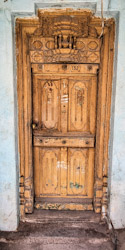
Many of the buildings in the bazaar are either modern or post 1947. There are still some earlier edifices still standing. Some are gradually falling to pieces and others are in good condition.

Recently, I was taking pictures of some of the older buildings and their traditional decorative features when a man came up to me and said:
“Very old. Historic buildings. Old, very old.”
How old they are, I do not know, but it is likely that they were already standing when India became independent in 1947. I did not ask the man, who commented on the buildings’ age, exactly when they were built. One of my reasons for not doing so was a consequence of an instance in Junagadh (a city in Gujarat) some years ago. We were looking at an interesting mausoleum in the centre of Junagadh, wondering about its age, when we asked a bystander when it was built. He answered:
“I don’t know. I wasn’t born then.”

The few intact attractive, old buildings in the Commercial Street bazaar area are lovely to behold. Given how many of them have already been replaced, I wonder how much longer those remaining will survive.

An unusual letter box in Bangalore

A FRIEND IN BANGALORE, Mr Aggarwal, alerted me to the existence of an historic pillar box (letter box) in the city’s Bowring Institute. This private club has been located in its current position on St Marks Road since 1888, when it’s elegant clubhouse was constructed.

In front of the main entrance to the clubhouse, there is a hexagonal pillar box, which is still in use. This six-sided box is topped with six sloping triangular panels which meet at the highest point of the letter box.

The box bears a crest or emblem on the side where the slot for posting letters is located. This consists of a lion and a unicorn facing each other. Their forecast rest on a circle contains a cross. The circle is surmounted by a crown with two crosses. There is also a small crown with a cros on the lion’s head.

Below the crest, there is a diamond shaped lozenge containing the letters R, N, C, I (or possibly O). What these letters signified (or whether this was the manufacturer’s name) has not yet been revealed by an Internet search.

It had been suggested to me that the pillar box was a British East India Company (‘EIC’) letter box. This is unlikely to be the case because, from what I have managed to ascertain, the EIC crests included two lions facing each other, but no unicorns. Furthermore, by 1888 India was governed by the British Government rather than the EIC (which was in charge of governing India prior to 1857).

The letter box is believed to be contemporary with the construction of the Bowring clubhouse. In 1888, Queen Victoria was the Empress of India. The post box is therefore likely to have some connection with the British Indian postal service. I have yet to discover whether I am right about this. A quick search of the Internet did not reveal any examples of historic pillar boxes bearing the crest on the box at the Bowring Institute. If anyone knows more about this particular crest, please do inform me.

HAPPY CHRISTMAS

A Modulor in Bangalore

THE BOWRING INSTITUTE is a private members’ social club in central Bangalore (Bengaluru). It was established in 1868, and has been standing on its present site since 1888. The club has recently undergone a tasteful restoration and improvement. The old 19th century buildings can be seen in their full glory, looking as if they have only just been constructed.

One external wall of a club building has been adorned with a huge panel decorated with two Modulors. The Modulor is a symbol created by the great pioneer of 20th century architecture, Le Corbusier. It looks like a man with one arm raised and was designed by Le Corbusier to be “ a visual bridge between two scales: the metric and the imperial…” It was also connected with his philosophy that the proportions of structures should be related to those of the human body.

Le Corbusier had several connections with India. For example, he was intimately involved in the design of the city of Chandigarh and created a few wonderful buildings in Ahmedabad.

That said, I have yet to discover why the Modulor was placed twice on a panel at the Bowring Institute so long after its creator’s death. I would like to think that it is a fitting reminder of the considerable influence that Le Corbusier has had on 20th century Indian architects, including Balkrishna Doshi, whose studio and offices are in Ahmedabad.

Everything is available …

EVERY FEW MINUTES, a ferry traverses Goa’s Mandovi River between Panjim and the village of Betim. This free river crossing is for the use of pedestrians and those riding two-wheelers. The ferryboat is loaded via an elevatable ramp.

As soon as the ramp touches the concrete landing stage, a wave of pedestrians and motorbikes surge from the boat onto the shore. As they do so, the waiting pedestrians and vehicles swarm on to the ferry.

On arrival at Betim, we walked away from the landing place along a busy country road lined with shops, shacks, and much tropical vegetation. It was not long before we reached the small restaurant set back from the road, which had been recommended to us.

Although it was nearly noon, the eatery seemed rather lifeless. Eventually, we saw a man emerging from it. He showed us a menu. We asked him if all the dishes were available. He replied:
“Everything is available.”
After a pause, he added:
“Today kitchen is closed.”

India’s history rediscovered?

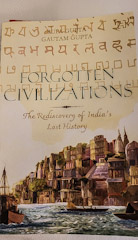
RUPA GUPTA AND Gautam Gupta have written a fascinating book with an intriguing title: “Forgotten Civilisations. The Rediscovery of India’s Lost History”. It describes 15 British men, who came to India during the British colonial era, which ended on the 15th of August 1947 and explored the Subcontinent’s early history.

The authors have written short biographies of these interesting men, highlighting the contributions they made to documenting India’s long history. The book seems to be making the case that before the arrival of these men, filled with a great enthusiasm for unearthing the past, India’s history prior to the Mughals had been largely forgotten.

Now, I am not qualified to comment on whether or not Indians had forgotten about their early ancestors, but wonder whether this history had really been lost before the arrival of the men described in the book. In many cases, these men were reliant on help from pandits who could read ancient scripts such as Sanskrit. Understanding these texts was the key to many of the ‘discoveries’ made by the subjects of the book. The existence of these texts suggests that long before the arrival of the British, early Indian history had been preserved, but maybe not as systematically as modern European historians would have preferred.

Despite my reservations about whether India had really lost or forgotten its ancient past, the book by the Guptas is fascinating (even though I have some reservations about its rather repetitive formulaic style).

Suggesting that a country had forgotten its own history might pander to readers who still harbour patronising or colonialist ideas about India. Although I have not yet seen this book on sale in British bookshops, I suspect it would might well appeal to readers, who seem to have forgotten that Britannia no longer rules the waves. I doubt that it was the Gupta’s intention that their interesting text might possibly appeal to readers who still believe that Britain is superior to other nations.

Art for all ???

I HAVE ATTENDED many art festivals. These have included the biennales at Cochin and Venice, and the trienniale at Folkestone. At each of these, the visitor is made to feel that the event is planned to encourage his or her interest in artistic endeavours.

This December (2022) we happened to be in Panjim, Goa, during the Serendipity Arts Festival (‘SAF’).

At the SAF, each event is swarming with volunteers wearing orange jackets. Attendees are required to complete an online registration in addition to registering for many of the various events in the programme. The poorly trained, often ill-informed, volunteers are obsessed with checking visitors’ registration passes (on mobile phones). Yet, we discovered that many of the visitors to the exhibits and shows have neither bothered to register nor been stopped from entering the SAF venues.

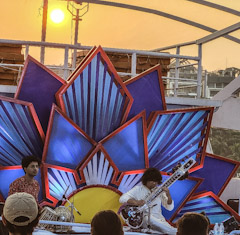
Yesterday, having made an online booking for seats on what promised to be a pleasant musical cruise on the Mandovi River, we turned up at the embarkation point well in advance of the departure Time, only to discover that the bookings were irrelevant and it was ‘first come, first served’. Furthermore, despite the boat being full to capacity, so-called VIPs and the ubiquitous volunteers were permitted to come on board. By force of personality, we managed to board the crowded vessel. I am not sure that after the struggle to get on board that I derived much, if any, enjoyment from the cruise.

It appears to me that unlike what we have experienced at Cochin, Folkestone, and Venice, the arts festival at Panjim seems to be mainly for the benefit of the organisers and the numerous volunteers, rather than for the members of the public who have travelled all the way to Goa to experience it.

However, I wish to conclude this on a positive note. We were fortunate to have been shown around one of the exhibitions by its curator, who seemed very pleased that we had come to see her show.

My uncle and his joke

MY MOTHER’S BROTHER, my Uncle Felix, told a joke that goes like this. A man is told that eating ‘poy’ was the secret to having a good life. So, he travelled the world in search of poy. He visited each continent and many countries, but to no avail.

Eventually, he reached a remote monastery in the highest Himalayas, and asked one of the monks for poy. The monk invited him into the kitchen, and said to him: ”Today, we have Shepherds poy, cottagepoy, fish poy, steak and kidney poy, apple poy … just choose which you want.”
Thus, the joke ended.

Goan poyie

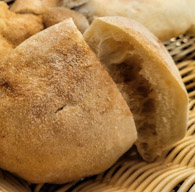
During our visit to Goa, we have really discovered poy. Actually it is spelled ‘poyie’. It is not a pie as is suggested by my uncle’s joke, but a circular bread with a hollow interior. So, unlike the man in the joke, we have truly found ‘poy’. My uncle died many years ago. I would have liked to have been able to tell him about our discovery.