Worth its weight in gold:
The craftsmanship –
Often sadly under valued

Worth its weight in gold:
The craftsmanship –
Often sadly under valued
Mahatma Gandhi might well have crossed this bridge…

Ahmedabad was founded on the east bank of the River Sabarmati in the 15th century. Until 1871, there was no bridge across the river from the city to the west bank. In that year, a wooden bridge was constructed.
A few years later, the wooden bridge was destroyed by floods. In 1892, a steel bridge was constructed. This was designed by an Indian engineer HD Bhachech and named in honour of a British colonial official named Ellis.
The Ellis Bridge remained in use until 1997, when it was closed. By 1999, two concrete bridges were constructed, one on each side of the old bridge. These new, wider bridges form what is now known as the Swamivivekananda Bridge. The old Ellis Bridge flanked by the two concrete bridges, heavily laden with traffic, has been preserved as a heritage monument.
The old Ellis Bridge, which existed when Gandhi returned to India from…
View original post 22 more words

I am not certain when I first saw palm trees. Maybe, it was when I was three years old. Then, my parents took me for a holiday in South Africa, where they were born.
Some of the first palm trees that I remember seeing are still growing in a small garden next to the entrance of St John’s Wood Underground station near Lord’s Cricket Ground in London. We used to visit St John’s Wood regularly when I was a child because our family dentist, Dr Samuels – a refugee from Nazi Germany, had his surgery opposite the station.
My first view of palm trees growing en-masse was from the air on an early morning in late December 1993. Our plane was landing at the airport in Colombo, Sri Lanka. We were travelling via Colombo to Bangalore in India. A week or so after seeing this vast plantation of palms, my wife and I were married during a colourful Hindu ceremony.
Although I have seen many, many palm trees since then, I still find them beautiful and exotic.

Stems of sharp thorns,
Fair flowers above:
Is not Nature so wonderful?
You never know what you might find in a provincial museum…

Mahatma Gandhi studied for a few months at Samaldas College in Bhavnagar. The Gandhi Smruti in that city contains a first class collection of photographs recording the life of the Mahatma. This echibition is on the first floor of a building. Its ground floor is occupied by the exhibits in the city’s Barton Museum.
The Barton contains some fine artefacts made in different eras. Amongst these, there are some lovely Jain stone carvings.
One area of the museum oncludes a case showing the evolution of the flag of what was to become post-colonial India. Near to this, there is a vitrine containing ageing historic postage stamps in various states of decay.
While looking at the stamps, I spotted several bearing the name “Ifni”. Never heard of it? Well, I had. I used to spot Ifni on the pages of atlases published before the 1960s. However, I had never seen stamps…
View original post 133 more words

As long as I can remember, I have been sticking my nose into any book that I am reading so that I can smell its pages.
I suppose that in brand new, recently printed books I am smelling the paper and the ink. Books printed in different countries often have distinctly differing odours.
As books get older, the smells of their pages change. This is both the result of ageing ink and paper and also a consequence of the environment in which the book has been stored. For example, if the book has been housed in the shelves of a reader who smokes, the pages acquire a tinge of the smell of tobacco and its smoke.
At first, I believed that I was the only person who sniffs the interiors of books, but now I know that I am not alone. The world of book readers is divided into page sniffers and those who do not poke their noses into books for reasons other than reading.

Light filtering through
Leaves and branch-es:
Felicity reigns serenely
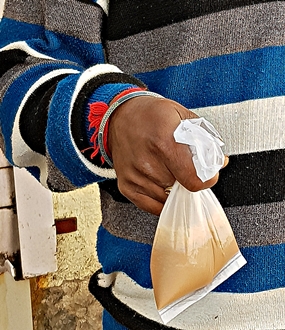
Charitable feeding by Moslems and Hindus in Ahmedabad and Bangalore

A few years ago, I was on Calcutta during the August monsoon. As I waded through the filthy rain water flooding the streets of a bazaar area, I noticed that at quite a few clothing material shops run by Moslems there were huge pots of rice and dal or curry. These were manned by shop staff. They were doling out this food to various poorly clothed passers by.
I asked what was going on. One shop keeper told me that during Ramadan it was considered virtuous to feed the poor while the faithful Moslems upheld their required daily fasting. This charitable activity impressed me.
During a recent visit to Ahmedabad in February, I passed an eatery, whose signboard read Muslim Kifayat Hotel, hotel being Indian English for restaurant.
Kifayat is the Urdu word for ‘sufficiency’. It may have other meanings in Hindi.
The restaurant under discussion is on one…
View original post 201 more words
HAPPY VALENTINES DAY!

Albania is one of the smallest countries in Europe. Between 1944 and late 1990, it was isolated from the rest of the world by a stern dictatorship that held in high regard the Russian dictator Joseph Stalin and his methods of government. In brief, Albania was ruled by a pro-Stalin dictatorship.
The dictatorship, led by Enver Hoxha from 1944 until his death in ’85, had few allies. For a couple of years after 1945, Albania maintained an uneasy friendship with Tito’s Yugoslavia. Then for a longer period, the USSR became its ally and provider of assistance. With Stalin’s death and his replacement by Nikita Krushchev, who denounced Stalin posthumously, Albania rejected the USSR.
For a period between about 1964 and the mid to late 1970s, tiny Albania became closely allied with the enormous Peoples Republic of China. This period included the ten year Chinese Cultural Revolution. Albanians were subjected to Enver Hoxha’s own version of what the Chinese people had to suffer. Eventually, China’s drift away from Albania’s approach to Marxism- Leninism, caused an end to friendship between the two countries.
I have met several retired diplomats who served in China during the period of Sino-Albanian friendship. Their anecdotes make interesting reading.
When I was last in Tirana, I met a retired Albanian diplomat, who had served in China during the years of Sino-Albanian friendship. He said that in those days the Chinese newspapers were full of pictures and articles about Albania. One day, some Chinese people approached him. They told him that because there was so much about Albania in the news, it must surely be a huge country like China!
A retired Indian diplomat, who had served in China during the Cultural Revolution, collected atlases, something that I also enjoy doing. He found a Chinese world atlas and looked for Albania. In this particular atlad, Albania was hidden away near the spine of the book where two pages met. The country was barely visible except by opening the atlas as widely as possible without cracking the spine. When some young Chinese students asked the diplomat to show them Albania in his atlas, they were surprised at its almost hidden representation in the book. They could not believe that their country’s socialist ally in Europe was so tiny and insignificant. Almost immediately, the students began insulting him with phrases like: “capitalist spy”, “imperialist lackey”, and “enemy of the people”. They refused to believe that the country, which was so important to China, was so tiny.
Another retired Indian diplomat, whom I met in India, came up tomeafter I had given a talk about Albania. He told me that he was serving in China when Enver Hoxha sent the open letter declaring that he was terminating the friendship between his country and China. He told me that he was amazed that such a minute nation like Albania had the nerve to throw mud in the face of a major power and ally such as China was and still is.
These anecdotes help illustrate that tiny Albania had a larger than life history during the 20th century.

A Non Resident Indian or NRI is someone, most usually of Indian origin, residing outside India.
There are Indians living in India who try to make their lifestyle as un-Indian as they can possibly manage. These people are usually fabulously wealthy. They try to isolate themselves from the material reality of India as much as they can. A friend of ours refers to these people as “Resident Non Indians”, which is a great way of summarising the way they try to live.