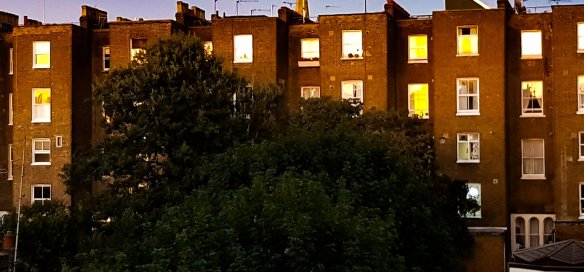
west facing windows
reflecting the sun-
its slowly dying embers


west facing windows
reflecting the sun-
its slowly dying embers
mobile phone stolen
contacts imag-es vanish:
modern tragedy
For several years I worked in a west London practice near Portobello Road . My patients came from families that had originated in many parts of the world. Almost all of them had lively characters. They were not your average quiet provincial types, who respect professionals – a bit too much in my opinion. They were unpredictable in their punctuality and behaviour. This made every one of my working days exciting, sometimes a bit too much so.
‘J’ was a frequent attender with many dental concerns. Although he made appointments, I could be sure that the appointment times were those that he was least likely to appear at the surgery. His timing was erratic to say the least.
When J arrived, he ignored the reception desk and would come straight into my surgery even if I was already treating a patient. If I was in the midst of treating someone, he would respect my asking him to wait until I was free. He would then hover around outside my surgery, and if the wait was too long for him he would disappear, only to reappear unannounced and unexpectedly a few days or weeks later.
One afternoon when I was free, J, who was not a nervous patient, ran into my surgery. He was too agitated to sit down in my dental chair. Instead, he leant against one of the walls of my small room.
“What’s the matter?” I asked.
“It’s bad, man.”
“Can you tell me about it? Do you want to talk?” I asked.
“My mobile ‘phone has been nicked.”
“Sorry to hear that.”
“I know who took it.”
“Really,” I said, “then, can’t you get it back?”
“I don’t know, man. But, I know who nicked it, and I am going to get the boys from South London to put him six feet under.”
Having said those worrying words, he settled into my dental chair.
I have just seen a performance of the much-hyped, sold-out, “Lehman Trilogy” at London’s National Theatre. It is written by Italian playwright Stefano Massini and ‘adapted’ into English by Ben Power. Starring Simon Russell Beale and two other actors, the three-and-a-half-hour drama charts the rise and fall of the Lehman brothers and the financial establishments they created. It is in three parts separated from each other by intervals. The first part and the beginning of the second narrate the Lehman’s family saga clearly, entertainingly, and quite interestingly. Then, the latter part of the play seems to ‘lose the plot’.
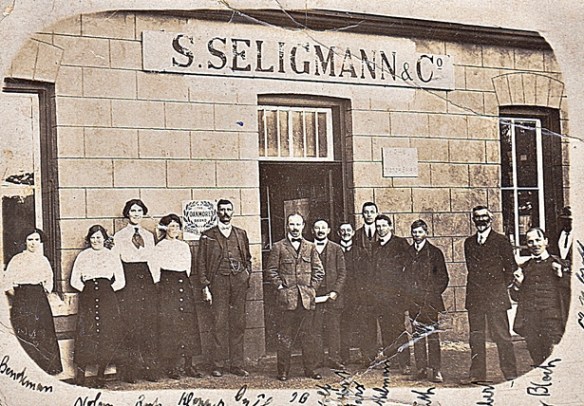
Seligmann store in Barkly East, South Africa
The Lehman bank’s operations literally collapsed in 2008. Although I am the son of an eminent economist, I do not understand the subject at all. I was hoping that the collapse of the Lehman Bank might be explained in relatively simple terms as the “Lehman Trilogy” drew towards its finale, but it was not. Rather than explore the dramatic possibilities of what was surely a very dramatic demise of a great financial establishment, the playwright and his ‘adaptor’ merely hinted at the disaster but made no obvious attempt to depict the momentous events that led to a frightful ending that greatly impacted on worldwide news and financial affairs. So, as you can gather, I was not altogether satisfied by the play itself. However, it got me thinking about my own ancestors, who, like the Lehman brothers, left Bavaria in the mid-19th century to seek their fortunes away from Europe across the oceans.
The Lehman brothers, who migrated to the USA in the mid-19th century, were born in Rimpar (Bavaria), near Würzburg. Heinrich (later’ Henry’) Bergmann, my great-grand uncle, was born 50 kilometres south-east of Rimpar in Ditenheim (Bavaria). He was only a few years younger than the Lehmans. In 1849, aged 18, he sailed to Cape Town in South Africa. Soon after arriving, he became the manager of a general store opened in the newly-established town of Aliwal North in the same year. Like the Lehman brothers, Heinrich became very successful as a middle-man. Like the Lehmans, during bad times he gave the farmers (his customers) credit, which they repaid when the wool harvests were brought to his shop (to be sold on to wool merchants). By the early 1860s, soon after marrying the daughter of a Jewish banker in Frankfurt-am-Main, he became the manager of one of the Aliwal’s three banks. Eventually Heinrich’s bank took over its two rivals. For reasons that are not at all clear, young Henrich shot himself in 1866.
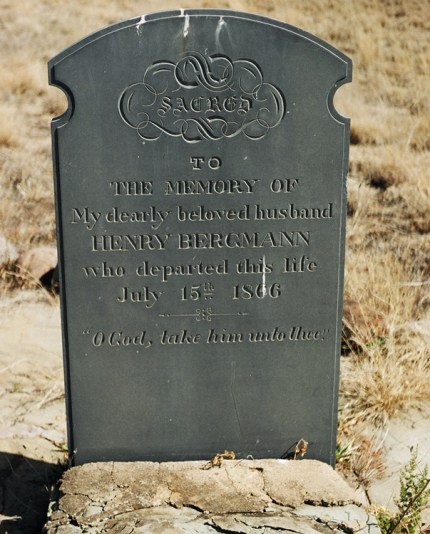
The grave of Heinrich (‘Henry’) Bergmann in Aliwal North, South Africa
Heinrich’s death was not the end of the story. During his time in the Cape, Heinrich was joined in South Africa by his brother and some of his cousins. The cousins in question came mainly from Ichenhausen in Bavaria, 163 kilometres south of Rimpar. Heinrich’s brother married Klara, a daughter of Jakob Seligmann, a successful merchant in Ichenhausen. Klara’s only brother Isak Rafael Seligmann and his wife had 18 children, of whom 15 lived to adulthood. One of the sons, Sigmund, Heinrich’s nephew, migrated to South Africa from Ichenhausen. He did not join his uncle, but began working for another German, a merchant in Lady Grey, which is not far from Aliwal North. Other young men from Ichenhausen including Sigmund’s brother Jakob and the Reichenberg brothers, one of whom joined Heinrich Bergmann, migrated to South Africa.
Sigmund Seligmann was offered a partnership in the business in Lady Grey but turned it down. He left Lady Grey to open his own shop in Dordrecht, a small place in the Cape. Soon after this, he opened a branch in Barkly East in the heart of a sheep grazing district. Like the Lehman brothers who bought cotton and sold it on, and also acted as bankers for the cotton-growers, Sigmund bought wool from his farmer customers and sold it on as well as lending money to the farmers when times were lean.
The Lehman brothers set their sights high. They moved from being merchants to becoming brokers, and then bankers. Their descendants continued the progression until, finally, others took over the running, and eventual ruining, of the business. Sigmund and many others like him, who went from what was to become ‘Germany’ to South Africa, more often than not retired to Germany when they had made their fortunes. In the late 19th and early 20th centuries, life in South Africa was a lot less comfortable than in civilised Germany or the USA, parts of which were becoming very sophisticated. Those who returned to end their lives in Germany had to face WW1 and then later the advent of Hitler’s regime. Sigmund and his children left Bavaria for Palestine, thereby escaping the fate of many Jews who remained in Germany.
Before Sigmund left to retire in Germany, he left the running of his by now very successful business in the hands of some of his very numerous nephews. One of these, who arrived in South Africa in about 1903, was my grandfather Iwan Bloch. Hardworking Iwan, like his father-in-law the future Senator, Franz Ginsberg (an industrialist in the Cape, who had migrated there from Prussia), maintained the successful running of his business as well as entering politics. Iwan became the first and only Jewish Mayor of Barkly East. His life was cut short by ill-health, but had he lived longer I feel sure that he would have entered national politics following in the footsteps of his father-in-law Franz.
With the exception of Iwan’s ill-fated uncle Heinrich Bergmann, this extended Bavarian Jewish family did not take the same road toward high finance as the Lehmans did, but they started at the same point.
Furthermore, the Lehman fortune began to be built from the labour of black slaves in Alabama. This is skirted around casually in the play. Although formally, there were no black slaves in South Africa when my ancestors arrived there, much of the dirty work required to make their fortunes was performed by black Africans, whose treatment by the white Europeans was very far from admirable.

Adam Yamey’s grandfather, Iwan Bloch, brought the railway to Barkly East in South Africa
I am glad I saw the “Lehman Trilogy” because it is engaging and, although there is little acting, what acting there is was good. Also, it got me thinking about my own history. However, like the doomed bank, the quality of the plot declines gradually as the three and a half hours pass by. Would I recommend it? The answer is “no”.
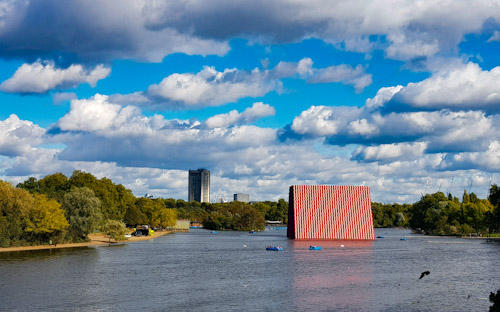
Clouds hover
Over the serene Serpentine:
Hyde park on a Sunday
When I worked in a dental practice near Portobello Road in west London, I met a lot of ‘colourful’ characters, many of whom I might have avoided had I saw them approaching me by chance in the street. One fellow, Ted, a large patient whose nose had been broken at least once and been badly fixed, said to me once: “If anyone ever causes you trouble in the street, just say you’re a friend of Ted. That’ll warn them.”
One day while I was standing in a queue at a takeaway counter waiting to order lunch, someone standing near me, a patient of mine, said: “Need a motor, doc?” I answered that I did not need a car at that point of time. “No problem, Doc,” he replied, “when you need one, just tell me what you want, whatever colour and make, and I’ll get it for you.” Not willing to sound ungrateful, I thought that when he said “get”, he really meant “steal.”
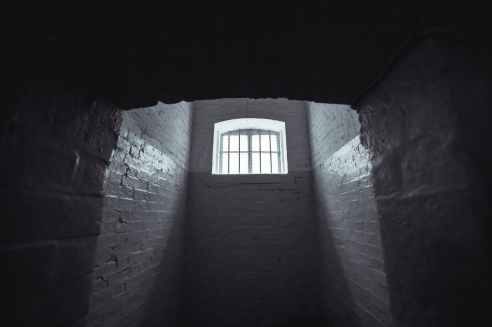
I had many patients who had been in and out of trouble with the law. Often, I would be told: “Look what the prison dentist did to this tooth, doc. Bleeding butcher, he was. Ought to be put behind bars.” I never asked why my patients had spent time ‘inside’. I felt it would be better not to know.
The last patient before one lunchtime was an aggressive young man. He was accompanied by his friend, a slightly older man. Before I had time to ask the young fellow what was wrong, he told me. Pointing to a lower left premolar tooth, he said: “Get it out. It’s f…..g killing me.” I looked at the chap. His mouth did not seem to close properly. “Don’t just stand there. Get it out, man”. I looked at the tooth. It looked alright. It was neither decayed, nor wobbly, nor tender. That strange mandibular posture bothered me.
“You’ve broken your jaw,” I said. “Don’t give me that crap. Just take it out.” I said: “If I take it out, you will still be in pain. You need to go to a hospital to fix your jaw.” This only angered the patient more, and I began to fear for the integrity of my jaw. “I’m not leaving until you take it out.” “Then,” I replied, “I’ll ring for an ambulance.” The patient’s friend said: “Come on, mate, let’s go.” Reluctantly, the patient allowed his friend to drag him out into the street. I locked the practice for the lunch break, relieved to see them leave.
Some days later, I met the patient’s friend in the street. I asked him whether the young man had been to hospital. He did not answer my question. Instead he said: “He’s gone away.” “On holiday?” I queried innocently. “Yes, on holiday.” “Long holiday?” I asked, beginning to understand what he meant by ‘holiday’. “Yes, very long holiday”.
New developments at King’s Cross, London

Once they stored gas,
now to dwellings converted
where trendy people reside

When I was a child living in north-west London in the early 1960s, I used to accompany my mother on shopping expeditions in the West End. I loved going into the centre of London because I considered that Hampstead Garden Suburb, where we lived, was pretty, but pretty dull – a cemetery for the living! We used to take the Underground to Oxford Circus. Our first port of call after leaving the ‘tube’ station was Dickins and Jones, a now no longer existing department store on Regent Street. It closed in 2007, long after my mother died.
Like many other department stores, Dickins and Jones devoted its ground floor to displays of cosmetics and perfumes. On one visit, when we were walking through the over-fragrant ground floor of the store, a sales-lady working behind one of the many stalls, each representing a different cosmetics company, beckoned to me. I pointed towards myself, and she nodded, meaning she really did mean me. I walked over to her, and then without my saying anything, she said: “Sonny, never ever use after-shave lotion on your skin. Now, get along.” I have never forgotten her advice, nor disobeyed it. I was about twelve years old then.
As I moved into my teens, and I began needing to shave, I was inundated with gifts of after-shave. Well-meaning friends of my parents and adult relatives gave me numerous gifts of cuff-links, which I have never used, and copious bottles of after-shave, which I dared not use. The unopened bottles piled up in my wardrobe and gathered dust.
Many years later, I became a dental student. From the second year onwards, we treated real live patients. They had either referred themselves for free treatment at the dental hospital or they had been referred by general practitioners who could not handle their problems. Many of them made multiple visits. Treatment at the hands of students was often slow. Some grateful patients gave me gifts either during their course of treatment or at the last visit.
One of my patients was a young lady from the Far East. She was always accompanied by her little son, aged not more than four years. Whenever I gave his mother a local anaesthetic, he would pipe up: “Look Mama, dentist man coming with needle. Look Mama, dentist man… etc.” When her course of treatment ended, she presented me with what I regarded as a wonderful gift, a treasure. It was a Casio digital watch with a tiny calculator keyboard attached to it. This was given to me in the late 1970s, and these watches had only been available for a very short time.
Someone, who came to dinner with my parents in the 1970s, brought us a gift of a box of chocolates made by Floris Chocolates, a company that no longer exists. I remember that the chocolates were far, far better than any I had ever tasted. So, it was with some excitement that I unwrapped a gift which a happy patient had given me after I had made him a set of dentures at the dental school. It was a box labelled ‘Floris’. At the end of the day, I took my gift home, and opened it with great anticipation and high expectations. My heart sunk when I found that the box contained not chocolates, but small bottles of fragrant perfumes. I gifted these to a friend.
J, an attractive young lady, became one of my patients at the dental school. I asked her what she did for a living. She told me that she sold men’s fragrances at a leading London department store (not Dickins and Jones). She asked me: “Have you heard of Brut?” I said that I had heard of the company. “Well, I represent Brut at the store,” she told me. “Do you use fragrances?” she inquired politely. “No,” I answered. “Oh, that doesn’t surprise me. Hardly any doctors or dentists seem to use them.” I was sure how to interpret this and hoped that I was not smelling unpleasant. “I’ll bring you some next appointment,” she told me cheerfully.
On the next visit, the Brut seller, true to her word, presented me with a large box, saying: “See how you get on with these.” I took the box home at the end of the day and examined its contents. It was filled with little bottles labelled with names that I found mysterious: ‘pre-shower splash’, ‘shower splash’, after-shower splash’, pre-shave rinse’, ‘shaving splash’, and (the to be avoided) ‘after-shave lotion’. No instructions were provided, so this well-meant gift was consigned to the wardrobe. After what the lady in Dickins and Jones had advised me, I was not going to risk the after-shave lotion nor any of the other even more curiously named products.
With the exception of the cosmetic products, I have received many other gifts over the years, most of which have given me great pleasure. These gifts, useful or not, have been given by grateful patients who have either also paid me or have been treated free of charge courtesy of the NHS. More than my earnings, which were, of course, very important, even a simple heartfelt ‘thank you’ made me feel that doing dentistry was worthwhile.
The sleeping brain
powerhouse of fantasy
fertile playground of dreams

Many of us experience dreams that recur periodically, not necessarily every night, but from time to time. Here is mine.
I dream that I am about to take a mathematics exam. I know that I have had a year to study for it, but have done nothing about it. Maybe, I can ‘wing it’ without study, but I am sure that I cannot. There are only a few days left to study, but something tells me that neither will there be enough time, nor will I ever get started. I will tell you how the dream ends later on.
Ever since I was about 8 years old, I have been writing examinations. First, there were simple tests to enter preparatory school. At the end of each school year, we sat a series of written tests. Then, there were more (and much more difficult) papers for admission to secondary school to be attempted when I was 12. At age 16, I had to write state examinations in eight subjects, the Ordinary Level (‘O Levels’, now ‘GCSE’). A year later, a few more state examinations, and then when I was 18, I had to take the difficult Advanced Level exams that could make or broke a candidate’s chances of entering a University.
At the end of each year of my BSc course in physiology, there were examination papers, the results of each of them counting towards the quality (grade) of the degree I would be awarded.
Following that, I had a three year break from exams while I researched and then wrote up my PhD thesis.
I entered dental school, where for five years I had to pass endless numbers of examinations of all sorts: practical, written, and viva-voce.
Eventually, I graduated as a dentist. However, there was one more examination to be taken: the driving test!
I have never found writing examinations stressful.
My recurring dream ends as follows. After pondering the hopelessness of my prospects via-a-vis the forthcoming mathematics exam in my sleeping brain, it occurs to me that it does not matter after all, because already I had a BSc, a PhD, and a dental degree. Then, I wake up.
This dream ending might have a basis in reality. When I was ready after completing the dental course, I took the set of dental qualifying examinations arranged by the Royal College of Surgeons. I passed them.
Three month’s later, after I had been working with patients in practice for most of that time, I returned to the dental school to take the university dental examinations. I was already qualified, and did not really need the extra qualification, but I went along nevertheless. The university exams required me sitting a number of written papers along with a clinical test. While sitting on an uncomfortable chair, scribbling exam essays at high speed, I paused for a moment. As in my dream, I asked myself why was I bothering to waste time on attempting to attain this superfluous qualification when I had so many already.
Colourful pictures of traditional boat-building techniques in western India…
Get to know Gujarat better: boat-building in Kutch Mandvi

Gujarat has long been an important maritime interface between India and the rest of the world, especially Europe, Africa, and the Middle East. Many of its folk have been, and continue to be, involved in mercantile activities, sailing, and boat-building.

Mandvi in Kutch, which until 1947 was an independent princely state and is now part of Gujarat, used to be an important sea port. It is famed for its boat-building, which continues briskly even today. The wooden dhows constructed in Mandvi are now mostly built for customers in Dubai. They are built alongside the River Rukmavati that runs through Mandvi.
The timber used is ‘sal’ wood (Shorea robusta) that grows in Malaysia. This wood is both extremely durable and water-resistant.
With the exception of electrical saws, much of the construction employs age old techniques as can be seen in…
View original post 54 more words


 yamey
yamey 