Unknown's avatar

About yamey

Active author and retired dentist. You can discover my books by visiting my website www.adamyamey.co.uk .

A French artist in London

Cocteau


The entrance to the Roman Catholic church of Notre Dame de France (‘NDF’) is on Leicester Place, a very shiort walk from London’s Leicester Square. Consecrated in 1868, the church occupied a circular building. After WW”, it iwas rebuilt retaining its ciricular plan. Today, when there are not services, amny of the pews in this lovely building are occupied by sleeping homeless people and a few other folk seeking a peaceful refuge in this busy part of central London.

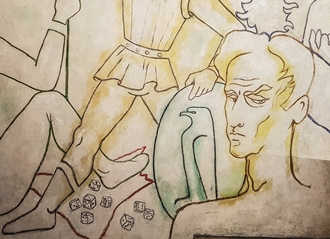
The Lady Chapel on the north ‘side’ of NDF is closed off by transparent thick glass panels. This is no doubt to protect the frescos lining its walls and the mosaic by the Russian-born Boris Anrep (1883-1969) on the altar. The frescos were created by the French writer/artist Jean Cocteau (1889-1963) in 1960. These beautiful pictures represent the Annunciation, Crucifixion, and Assumption. At the feet of one of the Roman centurions depicted in the central fresco, which illustrates the Crucifixion, there is a self-portrait of the artist. Cocteau drew this three years before his death.

Many people visit Leicester Square every day, but few of them visit NDF. For anyone interested in twentieth century art, seeing this church, which is open daily from 9 am to 9pm,  is a worthwhile thing to do.


Address: 5 Leicester Pl, London WC2H 7BX

A light bulb moment: sudden enlightenment

bulb


After I had completed my first (Bachelor’s) degree, I decided that I would like to apply to become a doctoral (PhD) student. In order to do this in the UK (and elsewhere) it is necessary to enlist a supervisor, an academic who guides you through the process of researching and writing a doctoral thesis.

I knew roughly in which field I wished to pursue my further studies. Someone in Cambridge was looking for a PhD student to work on something that sounded interesting to me. So, I visited the academic in Cambridge. First of all, I was not particularly keen on the man’s personality (albeit having only met him once) and also the project he was offering seemed far too difficult for me, way beyond my ability. 

After the Cambridge episode, I discovered that the Imperial Cancer research institute was offering amazingly generous scholarships for PhD stuents working in their laboratories. I applied, choosing two of the projects that seemed to be in harmony with my interests, and received an offer of interviews at the institute in Lincolns Inn Fields.

At the first interview, I was introduced to the eight or so members of the team i was applying to join. They sat around whilst the senior members of the team interviewed me. It did not take me long to feel uneasy about my future colleagues, and as the questioning continued I could not wait for it to end. Near the end of the session I was asked if I was interested in cancer. In an attempt to cut short the proceedings, I answered that I was uninterested in that subject. 

After an equally unpromising interview with another of the research groups that I had applied to join, I left the building and began walking across Lincolns Inn Fields, feeling relieved that the interviewing ordeal was over. It was then that an important tought entered my head.

A PhD takes about (or at least) three years to complete. During that time, I would have to work in a laboratory with the rest of a research team and in regular contact with my supervisor. I realised while walking in Lincolns Inn Fields that it would be important for me that I enjoyed the people with whom I would be working. A pleasant environment was more important for me than the precise nature of the research topic.

I returned to University College, having made the decision to ask Professor Robert Harkness, whom I liked and whose research interests attracted me, whether he would take me on as a PhD student. To my great delight, he accepted me. As one of his doctoral students, I spent a very happy three and a bit years working in his laboratory with his other researchers, all of whom were friendly and helpful.

Since that day in Lincolns Inn Fields and my ‘light bulb moment’, which happened there, I have attended other interviews (for positions in various dental practices). At each occasion, I have asked myself: would I feel happy working five days a week with the person(s) interviewing me? If I have not felt the right ‘vibes’ at the interview, I have always turned down the job however attractive it seemed. On only one occasion, I have been mistaken with that approach, which I was fortunate to have been able to take when looking for work.

Shrinking cabbages


Golborne Road intersects London’s famous Portobello Road. I practised dentistry in a clinic on Golborne Road between 1995 and 2001. In those days, Golborne was far less chic than it is today. Every day I used to pass E Price and Sons, a vegetable shop on Golborne.

The shop had a disorderly display of vegetables outside it and was run by a very old couple. I never entered their shop because it seemed to be impenetrable.

On the rare occasions that I purchased anything there, either the old lady or the old man would hurl the produce onto the scales and hardly waited to see the true weight. Then, they would mention a price, always adding the word ‘alright’, pronouncing it as if they were asking the question “is that alright?” They said the word ‘alright’ in such a way that suggested that something was not alright.

My lasting memory of this vegetable shop is of watching either of the man or woman sitting outside the shop removing withered outer leaves from the cabbages. Every day, I noticed that the cabbages on display got smaller and smaller; they seemed to be shrinking.

The shop closed a few years ago, and was later reopened by younger members of the Price family. Sadly, their lovely shop went out of business and the premises are awaiting their new reincarnation.

Bookshelf nonsense

bookshelf

Here is something based on an idea I saw posted on Facebook. I took a photo of some paperback books, which have been randomly piled up on a shelf for ages, and using their titles I composed the following:

GOD’S SECRET AGENTS reveal that LENI has MORE LIVES THAN ONE. 

RED PLENTY aka RED PRINCESS uses JITTERBUG PERFUME when visiting WOLF

HALL or escaping from THE SINGAPORE GRIP


Climate, cycles, and trees

cycle


Undoubtedly, there is much concern about the future of planet Earth’s climate. So much so that children are missing school to go on protest marches because they are worried that they might never complete their lives because of catastrophic flooding or abnormally high ambient temperatures. Whether or not the dire predictions will turn out to be fulfilled remains to be seen, but there is no harm in trying to do something to address and then ameliorate or extinguish the perceived causes of the predicted ultimate disaster(s).

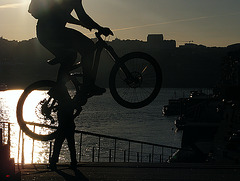
One of many measures being taken in London to reduce the output of gases toxic to the environment is to encourage the use of bicycles instead of motor vehicles. At present, cycling in London is fraught with dangers. There have been many collisions between cyclists and motor vehicles with quite a few fatalities amongst the cyclists. Many attempts are being made to segregate cyclists from other road traffic by constructing dedicated cycle lanes. Countries like the Netherlands have demonstrated very successfully that cycling can be made both safe and enjoyable by means of a comprehensive network of cycle lanes. 

Recently, there was a plan to construct a cycle lane along the tree-lined Holland Park Avenue in west London. From my frequent observations of this thoroughfare, there is only heavy cycle traffic in the morning and evening rush hours. Outside these busy times, there are few cyclists using this stretch of road. I felt that because of this a cycle lane was of questionable value.

To build the proposed cycle lane, planners faced a problem, which they might not have anticipated. In order to construct the cycle lane, twenty mature leafy trees would have had to be removed from Holland Park Avenue. This prospect aroused the anger of protestors in the area, who felt it was wrong to chop down trees to make way for a cycle lane. In a way they were correct.

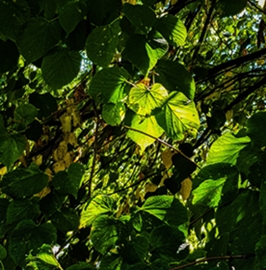
Trees, as most people now know, help to protect the climate, which motorists (in cars powered by fuels other than electricity) are destroying. One need only look at the recent international protests against cutting down the rainforests in Brazil to understand the perceived importance of trees. Granted, Holland Park Avenue is hardly a rain forest, but chopping down trees does not seem like a good thing. In Bangalore (India), many trees have been removed to accomodate the needs of a rapidly growing metropolis, and the city’s climate and water supply are being adversely affected by factors such as this.

So, we have a conundrum: cyclists or trees? Rather than sit on the fence, let me give you my answer. The object of encouraging cycling and preserving trees is to save the future of human existence. If that is accepted, then saving cyclists’ lives and protecting them from harm has to take preference over saving twenty undoubtedly attractive trees.

All I ask of the cyclists is to protect themselves and pedestrians by obeying traffic signals.

For more about the Holland Park cycle lane, see:

https://www.bbc.co.uk/news/uk-england-london-48635369

What is art?

art centre


A few days ago, I visited the Camden Arts Centre on the corner of Arkwright and Finchley Roads in north west London. This converted Victorian building has been enlarged with later additions and has a lovely café as well as a fine garden. Several galleries on the first floor are used to display artworks in temporary exhibitions.

We entered one gallery in which a video by the Hong Kong artist Wong Ping was being projected onto a large screen. At its base, there was a big pile of toy dentures with gold painted teeth.

Just after we sat down to watch the video, a group of young teenage school children were led into the gallery by an aducation officer employed by the art centre. After she had explained that the screen was the same kind as those used to display advertisements at Piccadilly Circus, she told the students:

This is art.”

Then, she added:

Anything in a gallery is art

My wife and I were sitting in the gallery. Does that mean that we were to be considered as art?

Riding the bus without paying


There are some advantages to growing older. When our daughter turned 18 and was no longer eligible for reduced price tickets, we reached an age above which our cinema tickets were subject to discount. Our daughter was not amused.


freedom


If you are a London resident, you are eligible to receive a Freedom Pass after you pass a certain age over 60 years. This pass allows the holder to travel free of charge on London’s buses, trams, Underground trains, and national railway lines within certain limits. A London Freedom Pass holder can also use most local bus services anywhere within England (but not in Scotland). So, if you have the time and patience, it is possible to travel long distances in England free of charge by using a Freedom pass on local bus services.

‘K’, an old friend of mine, enjoyed exploring England with her Freedom Pass. On one of her earliest explorations, she set off from London to somewhere deep in the heart of Kent. She reached her destination eventually, having used a series of local buses without having to pay. The return journey was less successful.

K began her homeward trip and arrived at Tunbridge Wells at about five pm. When she made enquiries about local buses heading towards London, she received a diappointing answer. The last bus of the day that would taken her in her desired direction had already departed. The next would run on the following day. So, K was forced to return to London by train. Instead of paying nothing, she had to spend money on a costly one-way railway ticket. Her anticipated day of free travel ended up quite expensive. Since then, she has been more careful with her trip planning and not had a repeat of her unexpected travel expenses.

We make great use of the Freedom Pass when we are out of London. One of the best ‘bargains’ we have so far encountered was at Exeter in Devon. We parked our hired car at an Exeter ‘Park and Ride’ and boarded the bus which was to take us into the city. We were fully expecting to have to pay for a day’s parking and also the bus ride. When we showed our passes to the bus driver, he told us that there was nothing to pay.

Mahatma Gandhi ate in Notting Hill

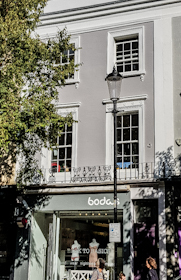
Today, 36 Ledbury Road (illustrated) in London’s trendy Notting Hill district (made famous by the 1999 film Notting Hill starring Hugh Grant and Julia Roberts) gives nothing away about its colourful past. It was once the home of the Indian Catering Company, a restaurant run by Nizam-ud-Din, who also owned the Eastern Café near Chancery Lane.

The Indian Catering Company, which was serving customers during the reign of Edward VII (1901-10) was not the first Indian restaurant to have been opened in London. The first curry house in London was opened by Sake Dean Mahomet (born in India in the 18th century). An employee of the East India Company, which he joined in 1769, he arrived in London in 1807. Two years later, he opened his Hindostanee Coffee House at 34 George Street near Portman Square. Although it was called a ‘coffee house’, it was actually a restaurant serving curries and other examples of Indian cuisine. The restaurant thrived until 1833, when it was closed. There is much more information about this establishment in Star of India, a book by Jo Monroe.

By the time that the restaurant at 36 Ledbury Road was serving customers, the Indian Catering Company was one of many Indian restaurants in early twentieth century London. The reason for my interest in this former eatery is that it was a meeting place for extremist Indian independence fighters in Edwardian London. I discovered this while researching my recently published book IDEAS, BOMBS, and BULLETS.

Although he cannot be considered an ‘extremist’, the famous Mahatma Gandhi partook of a meal at the Indian Catering Company in Ledbury Road in October 1909. Here is an excerpt from my book:

In October, the festival of Dussehra was celebrated at Nizam-ud-Din’s restaurant, The Indian Catering Company, at 36 Ledbury Road in Bayswater. Gandhi had been invited to chair the proceedings. He had accepted the invitation on condition that the food would be pure vegetarian and that discussion of controversial politics was avoided. The food was served by Savarkar’s followers: VVS Aiyar, Tirimul Acharya, and TSS Rajan, all sometime members of India House.”

Whereas Gandhi both preached and practised non-violence, the same cannot be said of VVS Aiyar, Tirimul Acharya, and Vinayak Damodar Savarkar ( a ‘father’ of Hindu Nationalism and Hindutva), who also attended the meal.

Although there is no plaque recording the interesting history of 36 Ledbury Road so near to Portobello Road, whenever I pass this house I feel a tingle when I remember the famous Indian freedom fighters who once entered it and ate there.

A SMALL house cover

“IDEAS, BOMBS, and BULLETS” is by Adam YAMEY

ISBN: 9780244203870

The book is available from on-line stores including:

Amazon, Bookdepository.com, and lulu.com

It may also be ordered from bookshops

There is an e-book edition on Kindle