A road through my childhood

IT IS BECOMING AN ADDICTION: I must write something every day. It is probably a harmless compulsion, but it gives me great pleasure. Today, I will write about a road that did not exist until 1835. It runs northwards from the centre of London. It was built to bypass the hills on which Hampstead perches. The old route to Finchley and Hendon from central London passed across these hills before Finchley Road, originally a toll road, was constructed. Part of Finchley Road connects the suburb of Golders Green with Swiss Cottage. For five long years I travelled along this stretch.

HALL BLOG

Swiss Cottage is named after a pub, Ye Olde Swiss Cottage, which still resembles many people’s idea of what a Swiss chalet should look like. The pub is a descendant of the Swiss Tavern, built like a Swiss chalet. Opened in 1804, it stood on the same spot as its most recent avatar. It stood on the site near one of the toll booths built for collecting money from people using Finchley Road in earlier times.

There was another toll collecting place at Childs Hill, between Golders Green and Swiss Cottage. This toll gate was next to the now demolished Castle pub. For five years, I passed through Childs Hill on my way to the Hall School near Swiss Cottage.

I attended The Hall between 1960 and 1965. The Hall, founded in 1889 (the year the Eiffel Tower was built) was a private school for boys preparing boys for entry into private secondary schools, misleadingly called ‘public schools’.

During my time at the Hall, several bus routes plied between Golders Green and Swiss Cottage: 2, 2a, 2b, and 13. The fare was five pence (less than 2.5p) for children. I used to say to the conductor: “five-penny half, please”.

The bus journey to and from The Hall was tedious and slow. This was because Finchley Road was being widened. The roadworks began before I entered The Hall and continued after I left it five years later. To widen the road, which was lined by houses and shops all the way between Childs Hill and Swiss Cottage, every garden by the roadside had to be cut short. There was a garden centre in a long greenhouse near Finchley Road Underground station opposite the present O2 Centre.  More than three quarters of its length was demolished to permit road widening. All in all, the long section of road being ‘improved’ caused the rush hour traffic to move sluggishly. After 5 years of enduring this, I used to be able to recite from memory and in the correct geographical order the names of all the shops along Finchley Road. Today, hardly any of them exist. Even the large, still extant department store John Barnes has changed its name to John Lewis. Gone is the remains of the garden centre and the Edwardian Swiss Cottage public swimming pool. During my time at The Hall, this place closed when the then new Swiss Cottage Library and swimming pools opened close to the swiss style pub. Another of many disappearances is that of Cosmo, a restaurant that used to be popular with refugees from Central Europe and later with my wife, who loved the Hungarian cherry soup served there.

The Camden Arts Centre stands at the corner of Arkwright Road and Finchley Road.  The arts centre faces across the main road the start of Lymington Road, which soon runs along the side of a large grassy open space. This is where Hall School boys played football and cricket. We used to walk two by two with one of our teachers from the school to and from the field, a distance of at least a mile.

The Hall School was an ‘elite’ establishment. Almost all the pupils had parents who were listed in “Who’s Who”, or royalty, or were extremely wealthy. Several of my fellow pupils were sons of Greek shipping magnates. One of these used to be driven from the school to Lymington Road in his chauffeur driven Bentley, which he pronounced ‘bantly’. Occasionally, he used to offer teachers a lift in his luxurious vehicle.

The sports field in Lymington Road was opposite a small newsagent-cum-sweetshop. We were not supposed to enter this during school hours, which included time at the sports field. And, because we walked back to school after a sporting session, there was little chance to explore it, but somehow, we managed. The shop was amazingly well-stocked with cheap sweets. I discovered that if I walked from Swiss Cottage to Lymington Road, the fare from there to Golders Green was two pennies (there were 240 old pennies in one Pound) cheaper than from Swiss Cottage. This gave me two pennies on top of what I was given daily to buy snacks (in my case, read ‘sweets’) on the way home.

At Swiss Cottage, there was one sweet shop near my bus stop. It was a branch of Maynard’s inside the subterranean foyer of the Underground station. The sweets it sold were poor value: there was nothing for under three (old) pennies. In contrast, the shop on Lymington Road was full of sweets costing less than one (old) penny. For example, one penny bought four ‘blackjacks’ or a large chewy item called a ‘refresher’. And, for three pence, a ‘Sherbet Fountain’ (still available on the internet for 132 [old] pence or 55p). This used to consist of a paper cylinder containing a fizzy lemon flavoured white powder into which there was a black cylindrical straw made of liquorice (used to suck up the powder). The thing looked just like an unexploded firework. In short, It was worth walking about a mile to save on the bus fare and then to spend it in a place where my money had much better buying power.

At the end of the day, I disembarked at Golders Green near the Underground Station. There used to be many children from other schools mingling there on their journeys home. One incident at this place remains in my mind, but before relating it, you need to know what we wore at The Hall. The colour that predominated in the school uniform was pink, which was considered rather strange for a boys’ school. Blazers and peaked school caps also contained black trimmings. One of these, which was prominently sewn on to our caps and the outer breast pocket of our pink blazers trimmed with black, was a black Maltese cross. The way that the school’s emblem was drawn was closer to the shape of the German Iron Cross than to the real Maltese cross. By the time I was attending The Hall, I had already become interested in the Holocaust (the Shoah). Golders Green had many Jewish people living there and several shelves of its public library were filled with books about the deeds of Hitler and his followers. I borrowed and read many of them. Therefore, I was horrified when I stepped off the bus at Golders Green one afternoon, and then some schoolboys from another school shouted at my friend and me:

“Look, the Nazis have arrived.”

Is it not strange what one cannot forget?


Picture from https://www.uniform4kids.com/ 

.
If you think you have seen the light, think again…

Hoop


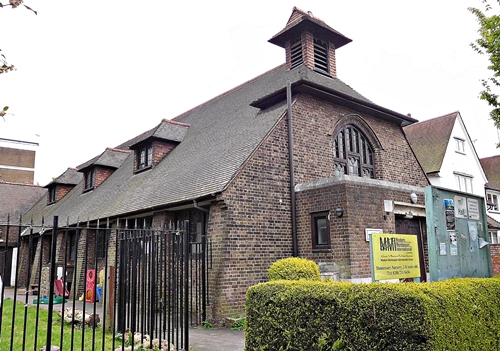
My earliest memories of Hoop Lane (in Golders Green, northwest London) date back to when I was three or four years old, and therefore are rather vague. At that age, I attended a kindergarten in Hoop Lane. This was in the hall attached to Golders Green’s Unitarian Church (see photograph above), which was designed in the ‘Byzantine revival’ style by the architect Reginald Farrow (opened in 1925). It contains interesting artworks including a mural by Ivon Hitchens (1893-1979), which I have not yet seen.

The kindergarten was under the direction of Miss Schreuer, who lived a few doors away in Hoop Lane. My only lasting memory from my time there was when my father appeared at the school with a white beard and a red outfit, dressed as Father Christmas. A few years later, my sister and my cousins attended Miss Schreuer’s. One day while my sister was attending, I was allowed to return to the school to act as an older helper. One of my fellow pupils was the late Micaela Comberti (1952-2003), who was later to become an accomplished violinist. Her German mother and Italian father were friends of my parents.

I am not sure what became of Miss Schreuer, but I heard rumours that the end of her life was unhappy. Today, the hall, where her school flourished, is now a Montessori kindergarten. When I lived in the area (I left finally when I was aged thirty), I often walked past the school and the Unitarian Church. The latter had a panel facing the road, upon which posters with pious messages were posted. One that I will always remember said:

If you think you have seen the light, think again”.


This is an excerpt from a piece I wrote a couple of years ago. If you wish to read the whole article, please visit:

https://londonadam.travellerspoint.com/48/

Chopsticks


My earliest recollection of eating Chinese food was in a restaurant called ‘Tung Hsing’ in Golders Green almost opposite the old Hippodrome Theatre. It opened in the 1960s and was one of the first restaurants in London to serve Pekinese food, rather than the then usual Cantonese cuisine. The restaurant was owned by a retired ambassador from Chiang Kai-shek’s nationalist China and his wife, whom I believe was responsible for the very excellent food served. 

Although I am sure they were available, I am not sure whether I used chopsticks when eating at the Tung Hsing. Maybe, I learned to use them there, but I really cannot remember. Whatever the case, I have been eating Chinese food with chopsticks for many decades. I would not say that I am 100 percent proficient with them, but I feel that using them to eat Chinese food satisfies me.

Chinese-style food is very popular in India. Most Indians eat in Chinese restaurants using western utensils such as plate, fork and spoon. If you ask for chopsticks, they are usually available, but they are not supplied as default table settings.

Some years ago, early this century, a new Chinese restaurant opened in Museum Road in Bangalore. We visited soon after its inauguration. It was a lovely restaurant and the food was good by Indian Chinese restaurant standards. As usual, we asked for bowls and chopsticks. The waiter disappeared for a while, and then returned empty-handed.

“There are no chopsticks,” he told us.

“Why not?” we asked.

“I will ask the manager.”

The Manager came over, and explained:

“We have been so busy since we opened, and many of the guests have taken them home as souvenirs. So, we have run out of them”


A young explorer

Green signal_500


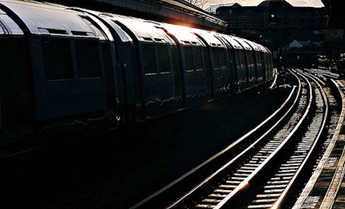
When I was a child, our local Underground station was Golders Green on the Edgware branch of the Northern Line. It was the first station on the stretch of the line, which remains open air, above ground, between Golders Green and Edgware. As a small child, I yearned to know what lay beyond Golders Green, where we always disembarked, but my parents did not share my yearning.

Long ago in the 1960s,  the trains bound for Edgware stopped at Golders Green on a stretch of line that ran between two platforms. The doors would open on both sides of the train. The platform on the left side of the train gave easy access to the centre of Golders Green and its large bus terminus. The right side, which we always used, led to an entrance that was on the way to Hampstead Garden Suburb, where our family home was located. 

One day, my father and I arrived at Golders Green after having spent some time in central London. As usual, we waited alongside a door on the right side of the train when we stopped in the station. Unusually, the doors on the right side of the train did not open, but those on the left did. By the time we realised that the right side doors were not going to open, the doors on the left side had closed, and we were beginning to travel beyond Golders Green above ground to Brent, the next station. My father was not happy, but I was delighted to be travelling along a stretch of the line that I had always wanted to see.

Since that time, I have always been excited at the prospect of travelling to the ends of the London Underground lines. Yesterday, I travelled to Watford, the terminus of one branch of the Metropolitan Line, and enjoyed it as much as I would have done when aged about ten!

Spaghetti House

My parents loved coffee. In particular, they enjoyed drinking well-prepared Italian espresso coffee. Every Saturday morning when I was a child in the late 1950s and early 1960s, we used to drive to the car park by Jack Straws Castle, a pub near Whitestone Pond in Hampstead. Now, the pub no longer exists; it has been adapted to become a block of flats. The car park behind it, where we used to leave our car, still exists.

We used to walk down Heath Street, passing the open-air art exhibition if it was summer-time. Our first stop was a café housed within a building with a triangular floor plan, which still stands on the corner of Heath Street and Elm Row. The Pimpernel café/restaurant, which was run by Italians, no longer exists, but this is where my parents used to take their espresso coffee on Saturday mornings.

In those far-off days, espresso machines were not equipped with pre-set electronic controls as they are today. The person making the coffee had to pull down a leaver, which forced the hot water through the powdered coffee and into the cup waiting below it. The speed at which the leaver is pulled determines the rate at which the hot water flows through the coffee and the length of time that the water remains in contact with the coffee grains. These factors help affect the taste and quality of the final cup of espresso and are dependent on who operates the lever. Thus, using the manual espresso machines requires skill and experience. In my parents’ view those who worked at the Pimpernel had these skills. Whenever we visited this café, the kindly staff would give my sister and me a small matchbox sized piece of Italian nougat (‘torrone’). I remember that the piece of torrone was coated on two sides with thin edible rice paper. That there was paper which was edible really impressed my young mind.

There was another place, whose coffee gained my parents’ approval during the 1950s. This was the Bamboo Bar on Finchley Road in Golders Green. It was located under the Northern Line bridge which straddles Finchley Road close to Golders Green station and opposite a now disused covered walkway which was once an entrance to the station.

SPAG 2

Although the walkway and the Bamboo Bar have been closed for many decades, there is still an eatery in the same place, the popular Artista Italian restaurant. The latter is much larger than its predecessor.

SPAG 1

The walls of the Bamboo Bar were lined with bamboo. It was run by two Italian men, Lorenzo Fraquelli and Simone Lavarini. My parents, who both loved Italy and her people, enjoyed chatting with these fellows. In 1955, they opened the first branch of what was to become the now widespread, extensive chain of Spaghetti Houses.

As mentioned, the Bamboo Bar closed years ago. Sometime in the 1960s, another café, Bar Linda, opened next to the bus station at Golders Green. This souvenir of my childhood still survives and is thriving.

SPAG 3

One branch of the Spaghetti House chain made headline news in 1975. It was the branch, now closed, in Knightsbridge. This was the branch where managers of the various outlets of the chain would meet occasionally to deposit their takings before they were deposited in a nearby bank’s night-safe. On the days of the meetings, this restaurant was closed to the public. On Sunday 28th September, three armed men burst into the restaurant and demanded the takings that had been collected from the branch managers, who were meeting there. They bundled the managers in the basement. Luckily, one of the managers escaped and alerted the police, who arrived promptly.  The bandits held the managers hostage for three days before giving themselves up to the police. This event became known as the ‘Spaghetti House siege’. I am pleased to report that nothing remotely exciting as that has ever occurred during my years of visiting this restaurant chain.

SPAG 4

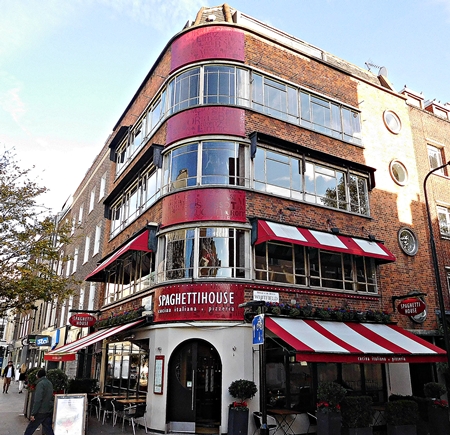
The first branch, which still exists, stands on the corner of Goodge Street and Whitefield Street (see picture above). When I was a young boy, my mother often treated me to a meal at this restaurant. We became quite familiar with the staff.

Many years later in 1970-71 during my first year as a BSc student at University College London (‘UCL’), I used to treat myself to lunch at the Goodge Street Spaghetti House. It was more expensive than the numerous canteens that were available on the UCL campus, but the food was far better. The ground floor of this multi-storey restaurant, like the Bamboo Bar, had walls covered with bamboo. This has long since been replaced by newer wall coverings.  Some of the waiters who were working at the Goodge Street Spaghetti House were getting on in age by the time I began my undergraduate studies. At least one of them used to greet me as she remembered me as a child. Not only had she worked at the Spaghetti House since its opening, but she told me that she had also been a waitress at the Bamboo Bar.

We still eat the occasional meals at various branches of the Spaghetti House chain. The food is usually of a good standard. A few years ago, I met a chap with whom I had been to school before 1960. I had not seen him since about 1971, and then only extremely briefly. We agreed to meet up at a Spaghetti House restaurant. He told me that he preferred meeting people on ‘neutral territory’ in places like restaurants, rather than in homes. Although he had aged quite a bit since we were both 8 years old, he was recognizable. Almost as soon as he met me, he said to me:

“Oh, I thought I was meeting someone else, not you.”  

Matterhorn

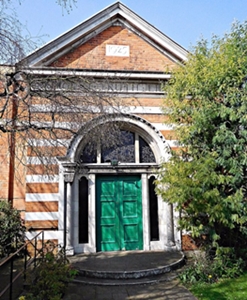
It is hard to say which is my earliest memory. I believe it was going to St Albans church hall in Golders Green (in north-west London) to collect orange juice with my parents. I was born in 1952. In the early 1950s, the government supplied young children orange juice free of charge. The juice, which was free of the ‘bits’ that are found in many of today’s orange juices, was supplied in glass medicine bottles with cork stoppers.


MATTER 1

St Albans church hall in 2017

Another early memory dates back to 1955. We had just disembarked from an ocean liner in Cape Town. There were tram-like tracks embedded into the concrete of the quay. Adventurously, I put my foot into the groove of one of the rails, and then could not remove it. This caused quite a commotion as my mother carefully detached me from the rail along which large cranes travelled. This might be an actual memory, or someone may have told me about it later.

I do remember my first morning at primary school, which I entered aged 4 years. My parents took me to Golders Hill School on the first day along with my little friend Anthony. We stood next to each other in the front row of the assembled school. Suddenly, another boy, a complete stranger, pushed himself between Anthony and me. He said: “I want to be your friend.” He was Nick, and we remained friends for almost twenty years. I have only seen Anthony once since that day at school.

Every day at Golders Hill began with assembly. We were lined up in rows while our names were called out. We were required to answer in Latin: “Adsum”. As I did not start learning Latin until after I had left the school, I had no idea why we were required to say this peculiar word, which I later discovered means ‘I am present’.

Following the roll-call, we had to recite something, which to my young mind began with something that sounded like “Our father widgeartahev’n”. This recitation included many other words that were new to me. No one ever explained why we were saying this, or what it was. It was years later that I realised that we had been saying the Lords Prayer at high speed.


MAT 2

Golders Hill School in 2017

During the morning assembly, we stood facing the teachers and the then Head Mistress, Miss Davis. The latter used to cycle to school with her three corgi dogs stuffed into the basket at the front of her bicycle. The dogs spent the day resting in her office. On the wall behind the teachers and facing us pupils there was a black and photograph of a snow-topped mountain. Why it was there, I never found out, but unlike the other mysteries of roll-call, we learned that the mountain in the picture was the Matterhorn.