Stung on the tongue: a careless diagnosis

Big bee_640

I cannot remember the name of the person who taught us dental pathology back in 1981 at University College Hospital Dental School, but one thing he told us made a deep impression on me.  He said that it was unlikely that we would see oral cancers frequently in general dental practice, but when we did see one we would feel a certain ‘jizz’ (our teacher’s word), a feeling that we were looking at something unusual and worrying.

One day when I was in practice, a delightful late middle-aged woman visited my surgery as a new patient. She said there was something on her tongue that had been bothering her for several weeks and was making eating and speech difficult. She had been to her doctor (medical), who told her that she had had a bee sting on her tongue. She told me that she had been taking antibiotics prescribed for it for  quite a time and the condition was only getting worse.

I had never encountered anyone with a bee sting on their tongue. The lady’s story and her doctor’s diagnosis sounded strange. She showed me her tongue. As soon as I saw the huge ulcer on the side of it and its peculiar border, I felt that ‘jizz’, which our pathology teacher had mentioned. I knew that the poor lady had, almost without a doubt, a carcinoma on her tongue. I told her my suspicions, and she looked relieved, and was grateful. Clearly, she had not believed her doctor’s story. I phoned the local oral surgery department, and they admitted her promptly.

About a year later, the lady reappeared. During the surgical treatment of her cancer, she had lost several teeth and wanted a denture to replace them. Sadly, her mouth was by now so distorted that making a prosthesis was beyond my competence. I referred her to a prosthetic specialist. Unfortunately, she did not live long enough for his work to be completed.

Whether earlier intervention would have saved her life, or at least prolonged it, is a question than cannot be answered. 

In my 35 years in dental practice, I only ever saw two patients with obvious oral cancers. However, I did refer many patients to have unusual looking lesions seen by oral surgical specialists. None of these gave me that ‘jizz’ nor turned out to be cancerous.

Your smile in my hands

People are naturally quite exacting about the appearance of their front teeth. Apart from self-esteem, people judge others by the state of the teeth in their smiles and while speaking. As a dentist, I was often challenged by my patients’ desires to have a smile which looked good.

man person face portrait

On one occasion, a young girl in her teens came to me with a loose denture, which she wore to replace a missing upper incisor. I suggested to her that she could get rid of the cumbersome dental prosthesis if I replaced her missing tooth with a barely invasive adhesive bridge attached to a tooth neighbouring the gap. She agreed, and the bridge was prepared. I fitted the new replacement tooth, which looked very realistic to me. Repeatedly, I asked the young girl whether she wanted have a look in a mirror to see the new tooth in place . Repeatedly, she refused, saying:

I’ll look at it when I get home.”

I never heard from her again. So, I can only assume that either she loved the bridge or she was so disappointed that she visited another dentist. I have come across this behaviour several times since then especially with patients who have been supplied with a denture bearing a complete set of teeth. However, most patients prefer to see what they are getting.

Many years later, I prepared two crowns (‘caps’) to restore a lady’s two upper central incisors, the most noticeable teeth in most people’s smiles. When the crowns arrived back from the laboratory, I removed the temporary crowns that had been protecting the prepared teeth. Then, without using cement (‘dental adhesive’) I placed the new crowns on the patient’s teeth so that she could say whether or not she approved of their shape and appearance. I noticed that the pocelain on the crowns had a pale greenish tinge. I looked up at my dental nurse. From her expression, I realised that she had also noticed the less than desirable dicolouration. I was fully prepared to sent the crowns back to the laboratory to have their colour improved when the patient exclaimed:

Oooh! These are lovely. They’re so beautiful. Oh, thank you, doctor!

Hearing this, and seeing the smile on her face, I felt that it would be foolish to have the crowns remade. So, I cemented them. She was a regular patient and never made any adverse comments about these crowns on subsequent visits to my surgery.

This only goes to show that there is no accounting for taste.


Photo by Pixabay on Pexels.com

Burger buns in Baldock: two for one

Shop


If, say, your dentist were to offer to take out two of your teeth for the price of one, and you  needed to have only one tooth extracted, would you be excited by this special offer? I bet you would not.

Supermarkets are always making offers such as buy one, get one free. Once, we needed four burger buns. We entered a branch of Tesco’s in Baldock (Hertfordshire, UK) and found that burger buns were sold in packets containing twelve buns. Reluctantly, as there were no smaller packs, we took one pack of twelve. As we were heading towards the check-out desks, a lady who worked for Tesco’s chased after us. She was carrying another pack of a dozen burger buns. She said:

You didn’t take these.”

We only want one pack,” I told her.

But you must take a second pack. There’s a special offer. Two for the price of one.”

I told her that we really did not need 24 burger buns; we only wanted four. As it was obvious that she was not going to take ‘no’ for an answer, we took the second pack of buns without any idea of what we were going to do with them. As far as I could see, we had simply helped Tesco empty their shelves of a perishable product, which if not sold would have had to be thrown away.

Another supermarket chain, tries to encourage purchases by offering the customer a free cup of coffee after paying for the goods. And if you have bought enough, a free newspaper is also on offer. These are nice gestures, but do they compensate for the higher than average prices of many of the goods on offer in their stores?

Parking in shopping centres can be costly. Some supermarkets have large car parks associated with them. They are often close to other shopping outlets, and charge a fee for parking. However, car owners who make a purchase in the supermarket are given a voucher that allows them to avoid paying for the parking.

Special offers are, of course, designed to attract sales. And, we as customers are often happy to take advantage of them. However, I still refuse to believe that many would go for a two for one offer on tooth extractions. But … maybe … I could tempt you to accept three extractions for the price of one!


Black beaches

beach


There was a young receptionist at one of the dental surgeries where I once worked. Let us call her ‘M’. Engaging her in conversation was not easy, but I tried often and succeeded occasionally.

Once, M announced that she was taking a week’s holiday. When she returned, I asked her:

“How was your holiday?”

“Ok,” M replied vaguely.

“And, where did you go?” I asked.

“I don’t know.”

“Really?” I queried.

“I just got a last minute package trip and got in the ‘plane,” she told me.

“If you don’t know where you went, what was it like?” I asked.

“Not very exciting, really. All of the beaches were covered with black rocks and stones.”

I guessed that M had probably been to one of the volcanic islands in the Atlantic. It surprised me that someone could take a flight somewhere and have no idea where she had landed. What if something awful had happened to her? Who would have known where she was? 

Fears of the dentist

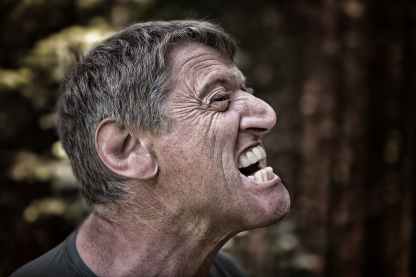
Faces

Most people are very apprehensive about making a visit to the dentist. But, how many dentists are filled with apprehension at the prospect of seeing patients? Almost every day during my 35 years of practising dentistry, I walked into my surgery with a feeling of worry, concern about what might happen during the day.

The average non-dental person might not realise that treating patients is like walking on thin ice. With many patients in the UK just itching to sue the dentists, whom they fear, even the slightest thing might lead to a legal confrontation between the patient and the dentist. Clearly when a patient suspects that the dentist has made a clinical error, pulled the wrong tooth for example or made a filling that keeps failing, recourse to compensation is sometimes reasonable. However, something far less ‘life-threatening’ like a verbal misunderstanding can lead a litigious person to attempt to obtain remedial compensation. So, to avoid trouble and also to ensure that a patient leaves satisfied, the prudent dentist must treat each patient with tact, delicately, and clinical excellence. All that seems quite reasonable.

However, there are patients, whom the dentist dreads. The very sight of their name on the day’s appointment list can ruin the dentist’s day from the moment he spots it. These people, many of whom I wish I had been courageous enough to dismiss, often exploit the dentist’s desire to provide them with excellence. They ask for the impossible, or for things they know that they cannot possibly afford, and they are never satisfied. Worse still, they keep coming back to the surgery for minor matters, which are often unresolvable because of their sad personalities. I may sound a bit harsh, but many of the persistent complainers that I saw were unemployed, receiving their treatment free of charge (because of state subsidies), and had little else to do apart from sit in dentists’ waiting rooms.

Then, there are the dental obsessives. These patients are often quite charming until they reach the subject of their teeth. Even what you and I might hardly notice becomes a major problem for them, even a life crisis. They will keep asking the dentist to redo some small repair on a tooth because they, and only they, can perceive that there is some minute imperfection. And because of fear of complaints and litigation, I used to plough on with these people and long for retirement. Sometimes, I felt like telling them that in the grand scheme of life, a minor ‘defect’ in the teeth is nothing compared with having a major illness, or starving during a famine, or being injured in a traffic accident, but I ‘bit my tongue’.

Despite my continual anxiety about keeping the patients on my side, there was the odd occasion when a patient was genuinely grateful for something I had done. Those expressions of gratitude were worth more to me than whatever fee my treatment had attracted.

So, next time you have to visit the dentist and are filled with fear, spare a thought for the dentist, who might well be feeling the same as you, but cannot show it because it would wreck your confidence in him or her.


Auto-biography

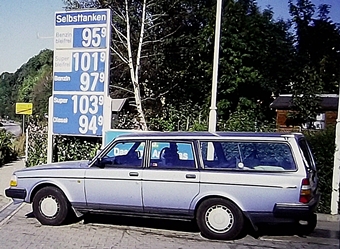
BAVARIA 87 Between Braunau and Munich Volvo


I passed my driving test in mid-1982, shortly after qualifying as a dentist. Like many dentists I have met, I went through a phase of fascination with cars.

My first car was second-hand. I was advised to buy something not to expensive just in case during my first months on the road I was to have had an accident. I bought an Austin Allegro from a local dealer. It seemed in great condition given its low price. However, it had at least one annoying defect: it would stop suddenly without warning. This defect was due to a loose connection in the ignition system.  After a very few months, the car began emitting blue smoke from its exhaust. This was due to some major defect in the engine, which would have cost more to repair than the car itself. When I confronted the dealer, who had sold me the Allegro, he reccommended that I bought a new car. I told him that I was not happy with his response because I had had the car for such a short time.

A local garage did something temporary to the engine to improve its part-exchange value, but also advised me to obtain another vehicle. To my great surprise, the local VW dealer offered me a very good part exchange price if I bought a VW. I bought a VW Polo Formel E. This was not a car for using on the Formula One racetracks, but a comfortable, very easy to drive, practical small car. The ‘Formel E’ related to the fact that the car had a gear setting that allowed low fuel consumotion. This car served me well and would have kept on going for many years, but I had my eyes on owning a Volvo.

The first Volvo I bought was a Volvo 340, a descendant of the Dutch DAF models. Like the Allegro, mine had a persistent problem. It also stopped suddenly and without warning. Despite many visits to the local Volvo dealer, no one could solve the problem. Eventually, Volvo recalled my car for a modification to rectify a design fault in the carburettor. After that, the 340 behaved well and survived a rear end shunt with very little damage. My lust for another car sent me back to the car showrooms after about two years.

I bought a Volvo 240 estate car. Though enormous and looking aerodynamically inefficient, this car was superb. It handled as easily as my relatively tiny VW Polo had done, and it could fly along if speed was needed. Once on the autobahn in West Germany, I managed to move the car at 105 mph uphill, and even then my foot had not completely pressed the accelerator pedal to its fullest extent.  This spacious, easily manoevrable car carried me right across Europe from Kent to Belgrade, and on another trip from Kent to Budapest. Why I traded in this Volvo 240 for a newer Volvo 240, I cannot recall. Both 240s were excellent, but a new model of Volvo had arrive on the market place.

I part exchanged my perfectly good Volvo 240 estate for a brand new Volvo 850 saloon. This was a complete disappointment after the 240 models. It looked good by Volvo standards but was not pleasurable to drive. When I took it to a Volvo dealer a couple of years later, I was offered a pathetic part-exchange price against a new Volvo. I was told that the 850 did not sell well second-hand.

Very disappointed with Volvo, I rang the local Saab dealership. When they learned my wife was pregnant, they offered to bring a model of the Saab (in our price range) to our home so that I could take it for a test-drive. As soon as I sat in the driving seat, I knew that we had to own a Saab. We bought a Saab 900, which lasted us well for a few years, and would have lasted us much longer had we not decided to trade it in for a newer model before its resale price dropped too far. We bought a Saab 9-3, which sadly lacked some of the quality of the first Saab we owned. 

Ten years ago, we set out to attend our friends’ golden wedding anniversary party in rural Kent. Before leaving London, we replaced our four tires as required after we had the results of our car’s official car inspection (MOT test). We arrived early and decided to visit a bonsai nursery that we had seen a few years earlier. When we returned to the car, ready to drive to the party, I turned the ignition key and all that happened was a grinding noise from the engine. We called the AA (roadside assistance), who arrived quickly. The engineer looked at the enging and discovered that the fan belt had slipped off its mountings. Worse than that, one of the parts of the engine thatrelied on the fan belt had a severely distorted metal part. We asked the enginner roughly how much it would cost to repair the fault. He said he thought it would be at least £300.

Now, when I had last visited the Saab garage, I had asked for a part-exchange quote for our now ageing car. I was told that £400 would be generous. Consequently, we decided not to replace the car, but to sell it to scrap dealers, who gave us a paltry sum for it. Since then, we have not owned an auto, and life has been, surprisingly, less stressful.

You may be wondering how we reached the party. The kind AA engineer took us to a local car hire place, and we picked up a car (paid for by the AA as part of our membership plan), and arrived quite late at the party. 

It has its uses

Psychedelic headscarf_240


In the UK, unlike some countries in Europe, we have a fairly liberal attitude towards Moslem women covering their heads and faces to a greater or lesser extent. In the last dental practice where I worked until I retired, our patients came from all over the world. A not insignicant number of our female patients were Moslems who wore some kind of head covering. A few of them insisted on being treated by female dentists, but most of them did not mind seeing one of the male dentists.

One of my female Moslem patients came to the UK from a north African country. She always wore a loose-fitting headscarf, but did not cover up her face. One day, she needed to have a front (incisor) tooth removed. I explained to her that the situation was such that she would have be without any replacement for it for 24 hours – I cannot remember why. 

Will you be able to cope without that tooth for a day. The gap will show every time you speak or smile,” I said.

Picking up the end of the scarf she was wearing, she covered her mouth with it, and then said humorously:

This has its uses!

And with that comment, she allowed me to remove the troublesome tooth, and then left the surgery with her face covered. She looked like a typical Moslem woman wearing a face-covering. Nobody would have guessed that she was missing a front tooth.

Keeping fit

Evening jogger_240


While I was engaged to my wife, she suggested that I join her at her health club and try some of its facilities.

The first time I went, I decided to go swimming. After swimming two lengths very slowly, I managed to climb out of the pool, exhausted and breathless.

For the next visit, my wife-to-be suggested that I try a session in the sauna. She thought it would do me good and would  not be particularly exhausting. I removed most of my clothes and sat alone in the poorly-lit sauna room. After a few minutes I began feeling cold, and started shivering. Fed up with this miserable experience, I left the sauna, and got dressed. The sauna had not been switched on!

Undismayed by this, I decided to give the sauna another try a week later.  This time it was switched on, and steaming hot. Because my first visit had been so boring, I decided to take a magazine into the sauna to read to pass the time. I took my place on a bench alongside some very muscular men and opened my copy of a glossy BBC clasical music magazine. Within minutes, the glue holding my magazine together melted. Numerous pages covered with fascinating information about classical music floated gently downward on to the floor of the sauna, Sheepishly, I recovered some of them, and then hurried out of the sauna.

“Why not try the exercise cycles next time? ” my wife asked. “Good idea,” I replied reluctantly. So, a week later, I sat in the saddle of an exercise bike. My wife was seated on a neighbouring cycle pedalling away while reading a book resting on the handle bars. The third cycle in the room was being pedalled furiously by a man lstening to his Sony Walkman through a pair of headphones. Meanwhile, I was just trying to move my cycle’s pedal … completely unsucessfully. After a few minutes, I abandoned the cycle, and after that I have never bothered with health clubs again. 

“That’s a pity,” you might think.

But, maybe not, as I will explain.

When I was practising as a dentist, quite a few patients, often young men, used to limp when they walked into my surgery. Almost everyone of them had injured knees or tendons whilst playing football or running, or trying to keep ‘fit’. When I saw them, I thought how lucky I was that I did not become addicted to ‘keeping fit’.

What? No kitchen…

During my early years in dental practice, I came across two instances of people living in houses without  kitchens.


antique burn burning close up


The first instance concerned one of my fellow dentists. He bought a house from a lady, who only used a microwave oven. Her home had no kitchen. My colleague had to convert one of the rooms in his new home into a kitchen. 

The second example was also connected with dental practice. It was the home of one of my dental nurses, whom we shall call ‘S’. She was a delightful young lady, who worshipped the late Marilyn Monroe. Sadly, her eyesight was not quite adequate enough for working in a dental surgery. She and the senior dental surgeon in the practice decided that she should seek another type of employment, which she did.  On her last day of working with me in my surgery, I gave S a small bottle of Chanel No 5 perfume as a ‘thank you present’. S was thrilled. I could not have chosen a better present. S told me that Chanel No 5 was all that her heoine Marilyn Monroe wore in bed. Well, I had no idea about the filmstar’s habits, but I was pleased that inadvertantly I had chosen the right gift for my visually-challenged dental assistant.

If you are now thinking that I have strayed from my subject, you are wrong. While S was working in our practice, she revealed that her mother hated cooking, so much so that there was neither kitchen nor dining room in the house where S lived with her family. S told me that the family ate every meal, including breakfast, at restaurants and cafés near their home.

Maybe I am too conventional, but I was surprised to learn that people who are able to afford accomodation with a kichen or kitchenette choose not to have one. In complete contrast, my wife told me that some of her ancestors lived in homes (in India) with two widely separated kitchens: one for meat and one for vegetarian food.


Photo by Fancycrave.com on Pexels.com

A precocious child

Sometimes it pays to keep your mouth shut at the dental surgery.

In the 1950s and early ’60s, our family dentist was a kindly German Jewish refugee called Dr Samuels. In those days, I learned later while I was studying dentistry, sugar used to be an ingredient of toothpaste made for use by children. I doubt that my mother provided us with children’s toothpaste, which she would have regarded as being gimmicky.

Dr Samuels had a very upmarket practice in London’s St John’s Wood. His waiting room floor was covered with thick pile oriental carpets and the reading matter was glossy journals such as Country Life.

The surgery, where Dr Samuels performed his dentistry, was old-fashioned. Instruments were kept on display in glass fronted metal cabinets. His x-ray machine looked antiquated even to my young, inexperienced eyes. So, did most of his other equipment, much of it made by the German Siemens company. One of my uncles, also a patient of Dr Samuels, once asked him if a museum might be interested in displaying this historic looking dental equipment. Samuels answer was that it was not quite old enough for a museum.

Dr Samuels drilled teeth with a cord driven dental handpiece. He told us that he had an air driven high speed dental drill, but he did not like it because it cut too fast in his opinion. So, having fillings in his surgery was quite a noisy and bumpy experience.

Dr Samuels was a gentle, kindly man, like a benevolent grandfather. He never frightened me.

At the end of an appointment, he used to reward me with a boiled sweet. I looked forward to receiving these. However, one day when I was about 8 or 9 years old and he offered me the sweet, I said to Dr Samuels: “No thank you. Sweets are filled with sugar and bad for my teeth.”

The price I paid for my precociousness was that he never again offered me a sweet at the end of my appointments with him. I should have kept my mouth shut and graciously accepted his kind but unhealthy gift.