Black and white

HAVING PARENTS WHO WERE BROUGHT UP IN RACIALLY conscious South Africa, I feel easier calling the two parts of old Pondicherry by their French names, ‘Ville noire’ and ‘Ville blanche’, rather than their English names, ‘Black Town’ and ‘White Town’. The English names are redolent of the sad days of racial segregation in apartheid South Africa.

While Pondicherry was a French colony, most Europeans lived in White Town, and people of local Indian origin lived in Black Town. This kind of racial separation was not unique to the French in India. The British were also keen to keep races separate. Bangalore, for example, was divided into the Cantonment (European area) and the City (local Indian area).

A rather malodorous partially covered canal or drain separates White Town from Black Town (now called ‘Heritage Town’). White Town lies between Black Town and the shore of the Bay of Bengal.

Today, more than 60 years after the French ceased to Govern Pondicherry, the White Town continues to retain its appearance as a French colonial town. Many of the buildings were built by the French and are distinctly European in architectural style. The streets are neatly laid out, tree lined, and wide. There is none of the hustle and bustle associated with most Indian towns and villages. This might be because there is little commercial activity apart from tourist related facilities (accommodation and eateries). You can enjoy a good but costly meal in White Town, but buying a newspaper or fruit and vegetables is hardly, if at all, possible.

Since our last visit to Pondicherry five years ago (just before the great storm that flooded Chennai in late 2015), the city’s authorities have placed plaques along the streets of White Town. Written both in Tamil and English (not French!), they provide short informative histories of the streets’ names.

Cross the covered drain into what used to be called ‘Black Town’, and familiar Indian urban life is flourishing. The streets are crowded; there are shops aplenty; the area is full of traffic: two, three ,four (and more) wheeled vehicles; and there are Hindu temples (as well as churches). Apart from tiny roadside Hindu shrines, the only places of worship in White Town are churches.

In contrast to White Town, the architecture in the old Black Town is not so fine. There are a few traditional Tamil style buildings, but much of the architecture is relatively new and generally lacking in visual appeal.

Apart from being a very pleasant place to visit, Pondicherry and its well preserved historical layout offer an interesting reminder of colonial life and its less savoury racist aspects. That said, the place and its beautiful seaside promenade is a joy for all visitors whether or not they have any interest in history.

Revolution in north London

65 ca


Between 1965 and 1970, I studied at Highgate School (founded 1565). Its main Victorian gothic building perches on the summit of Highgate Hill. About two fifths of a mile south east of the school, an architecturally unexceptional late Victorian residential building stands on Cromwell Avenue (number 65). Although this brick edifice may not look special, it harbours the ghosts of a lesser-known episode in the history of India’s struggle for independence from the British Empire. The only thing that hints at the interesting history of number 65 is a blue plaque commemorating the fact that the Indian patriot and philosopher Vinayak Damodar Savarkar, a father of Hindu nationalism, lived there once.

In 1905, a wealthy barrister and scholar of Sanskrit, Shyamji Krishnavarma, bought number 65 Cromwell Avenue and named it ‘India House’. He intended it to be a home away from home for Indian students studying in England. However, it became more than that. It became a centre where Indian politics was discussed and acted upon.

Very soon, India House became the nucleus for Indians who wanted India to break free from the British Empire by any means possible. These included: sending propaganda and literature (including bomb-making manuals) regarded as ‘subversive’ and ‘treasonable’ by the British to India; smuggling weapons and ammunition into India; and political assassinations both in England and India. Valentine Chirol, the Foreign Editor of the Times newspaper wrote that India House was “…the most dangerous organisation outside India…”. As such, India House was under the constant vigilance of Scotland Yard, but despite this, its members were able to carry out real-life exploits that rivalled the derring-do of characters in John Buchan’s fiction.

Apart from Krishnavarma, those who congregated or lived at India House included well-known Indian patriots and freedom fighters, such as Madame Bhikaiji Cama, VVS Aiyar, VD Savarkar, Lala Lajpat Rai, Madan Lal Dhingra, and Har Dayal. The place was also visited by MK Gandhi (the future ‘Mahatma’), Charlotte Despard, David Garnett, Dadabhai Naoroji, and VI Lenin.

India House thrived until late 1909. During that year, one of its members carried out an assassination in London. After that deadly deed, activities at India House declined rapidly, and it was closed for ever by the beginning of 1910.

My new book, “Ideas, Bombs, and Bullets”, describes the history of Highgate’s India House and the activities that originated there. In addition, it explores the ideas that led Krishnavarma to ‘create’ India House and the lives led by people who lived in, or congregated, at the place. Also, it contains the background to the replica of 65 Cromwell Road that can now be viewed and entered by visitors to Kutch, an arid part of the western Indian state of Gujarat.

Until I visited Kutch in 2018, forty-eight years after leaving Highgate School, I had not known that my alma-mater is situated so close to the site of such an exciting short episode in the history of anti-colonialism. Boldly, I suggest that this story is also unknown to most pupils, who have attended Highgate School since 1905. Furthermore, Highgate’s India House and Shyamji Krishnavarma are practically unknown amongst many educated Indians, with whom I have spoken. I hope that “Ideas, Bombs, and Bullets” will help to make the exploits and aspirations of the members of India House more widely known.


BUY a paperback version of IDEAS, BOMBS, and BULLETS here:

http://www.lulu.com/shop/adam-yamey/ideas-bombs-and-bullets/paperback/product-24198568.html

BUY an e-book version of IDEAS, BOMBS, and BULLETS here:

https://www.amazon.com/dp/B07W7CYKPG/ 

Thrown out of a library

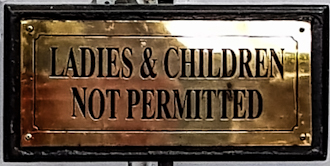
When she was about two years old, our daughter dressed in a unisex romper outfit, rushed into the Men’s Bar at the Bangalore Club. An elderly gentleman conducted her back to the entrance of the bar, saying: “You can’t come in here yet, young man. You’ll have to wait until you’re twenty one.”

My wife explained that our child is a girl. The gentleman replied: “In that case, my dear, you will never be able to enter the Men’s Bar.”

The Bangalore Club was founded by British officers in 1868 at the time when Mahatma Gandhi was born in faraway Gujarat. Until after about 1945, women were not allowed into the main Club House. There was a separate annexe reserved for women. And until 1947, with the exception of servants and a very few high ranking military officers, no Indians were permitted to enter any part of the Club.

The Bangalore Club and many other similar still existing colonial era clubs in India maintain many of the old-fashioned rules that applied in elite clubs in the UK. For many years, men could only enter the Club House at the Bangalore Club wearing ‘proper’ shoes, not sports shoes or sandals. Now, sandals are allowed providing they have a back strap around the ankle.

Once, I stayed at the Kodaikanal Club deep in the southern Indian state of Tamil Nadu. Dress code seemed to be non-existent there until I stepped into the club’s small library. Within a few seconds, a member of the library staff escorted me out of the library. I was wearing sandals. I was told that one could only enter the library if formal leather shoes were being worn.

Well, if you join a club, you should respect its rules however idiotic they might seem. Vide the UK and the EU.

As time moves on, rules change. A couple of years ago , for reasons best not explored here and they were nothing to do with gender equality, women were permitted to enter and use the Men’s Bar at the Bangalore Club. Since that date, the formerly masculine sanctuary has been renamed “The Bar”.

The old gentlemen who evicted our daughter from the Men’s Bar is probably no longer alive. I wonder what he would have thought when his prediction proved to be wrong. Let’s finish by raising a glass to his memory.

African Art Fair 2018

AFR 2

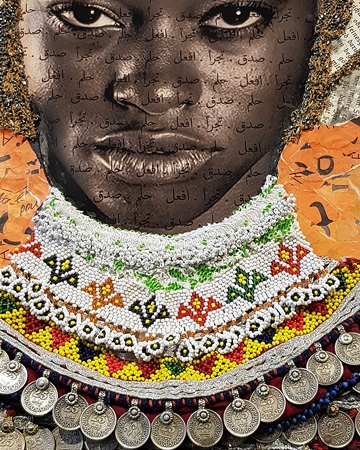
“The Contemporary African Art Fair (1 – 54)” is held annually at London’s Somerset House. This year it was a very exciting show full of vibrant, creative artworks mainly, but not exclusively, created by Africans with little or no European ancestry.

AFR 4

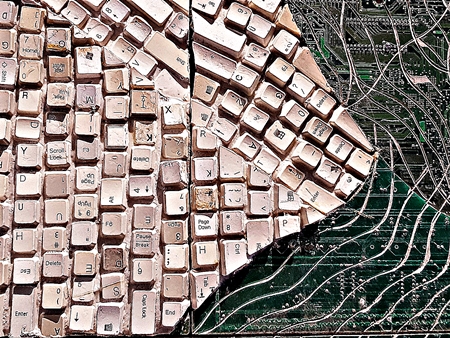
Many of the works use recycled waste materials such as bits of paper, engine parts, spent bullets and retired armaments, electronic components, and so on. Almost every art work is a fine aesthetic object when seen as a whole. Looking into any of these works in detail is like beginning to explore Africa, its troubled past and challenging present.

AFR 1

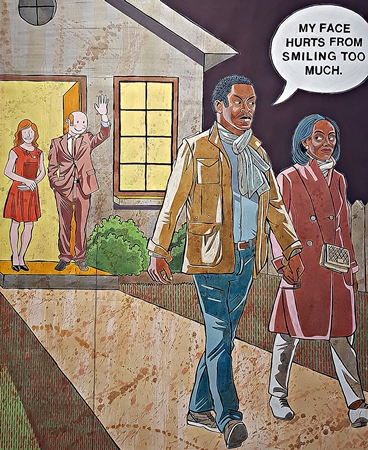
Africa is beginning to emerge from its colonial past. Africans are taking control of their destinies. Yet, at this exhibition, which is where a series of galleries display thier wares, mot of the dealers, who earn considerable commissions are ‘White’ Europeans. Maybe colonialism is not quite dead yet!

AFR 3