A precocious child

Sometimes it pays to keep your mouth shut at the dental surgery.

In the 1950s and early ’60s, our family dentist was a kindly German Jewish refugee called Dr Samuels. In those days, I learned later while I was studying dentistry, sugar used to be an ingredient of toothpaste made for use by children. I doubt that my mother provided us with children’s toothpaste, which she would have regarded as being gimmicky.

Dr Samuels had a very upmarket practice in London’s St John’s Wood. His waiting room floor was covered with thick pile oriental carpets and the reading matter was glossy journals such as Country Life.

The surgery, where Dr Samuels performed his dentistry, was old-fashioned. Instruments were kept on display in glass fronted metal cabinets. His x-ray machine looked antiquated even to my young, inexperienced eyes. So, did most of his other equipment, much of it made by the German Siemens company. One of my uncles, also a patient of Dr Samuels, once asked him if a museum might be interested in displaying this historic looking dental equipment. Samuels answer was that it was not quite old enough for a museum.

Dr Samuels drilled teeth with a cord driven dental handpiece. He told us that he had an air driven high speed dental drill, but he did not like it because it cut too fast in his opinion. So, having fillings in his surgery was quite a noisy and bumpy experience.

Dr Samuels was a gentle, kindly man, like a benevolent grandfather. He never frightened me.

At the end of an appointment, he used to reward me with a boiled sweet. I looked forward to receiving these. However, one day when I was about 8 or 9 years old and he offered me the sweet, I said to Dr Samuels: “No thank you. Sweets are filled with sugar and bad for my teeth.”

The price I paid for my precociousness was that he never again offered me a sweet at the end of my appointments with him. I should have kept my mouth shut and graciously accepted his kind but unhealthy gift.
Coffee by the yard

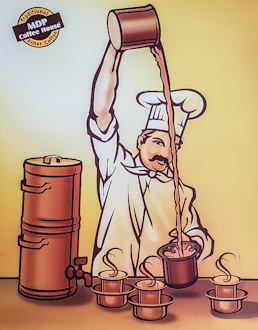
Traditionally, South Indian filter coffee is served piping hot in small conical metal breakers. The beakers, which are almost too hot to hold, stand in deep cylindrical metal saucers, as shown in the picture.

To cool the coffee so that it reaches a drinkable temperature, one lifts the hot beaker out of the saucer, and then pours the coffee from the beaker into the saucer from as greater height as you dare. Then, you pour the slightly cooler coffee back into the saucer. The procedure is repeated until the beverage reaches the desired temperature.

The person making the coffee repeatedly scoops the bubbling boiling milk, which is added to the coffee, from its pot on the heat, and then pours it back from a great height. The stream of boiling milk is often quite long.

My late father-in-law, a witty man, referring to the pouring from a height involved in filter coffee making and drinking, used to ask us when we visited a coffee house in Bangalore : “How many yards of coffee do you want?”

Note: 1 yard is a measure of length a little less than 1 metre

Thrown out of a library

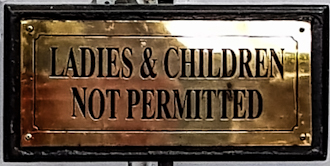
When she was about two years old, our daughter dressed in a unisex romper outfit, rushed into the Men’s Bar at the Bangalore Club. An elderly gentleman conducted her back to the entrance of the bar, saying: “You can’t come in here yet, young man. You’ll have to wait until you’re twenty one.”

My wife explained that our child is a girl. The gentleman replied: “In that case, my dear, you will never be able to enter the Men’s Bar.”

The Bangalore Club was founded by British officers in 1868 at the time when Mahatma Gandhi was born in faraway Gujarat. Until after about 1945, women were not allowed into the main Club House. There was a separate annexe reserved for women. And until 1947, with the exception of servants and a very few high ranking military officers, no Indians were permitted to enter any part of the Club.

The Bangalore Club and many other similar still existing colonial era clubs in India maintain many of the old-fashioned rules that applied in elite clubs in the UK. For many years, men could only enter the Club House at the Bangalore Club wearing ‘proper’ shoes, not sports shoes or sandals. Now, sandals are allowed providing they have a back strap around the ankle.

Once, I stayed at the Kodaikanal Club deep in the southern Indian state of Tamil Nadu. Dress code seemed to be non-existent there until I stepped into the club’s small library. Within a few seconds, a member of the library staff escorted me out of the library. I was wearing sandals. I was told that one could only enter the library if formal leather shoes were being worn.

Well, if you join a club, you should respect its rules however idiotic they might seem. Vide the UK and the EU.

As time moves on, rules change. A couple of years ago , for reasons best not explored here and they were nothing to do with gender equality, women were permitted to enter and use the Men’s Bar at the Bangalore Club. Since that date, the formerly masculine sanctuary has been renamed “The Bar”.

The old gentlemen who evicted our daughter from the Men’s Bar is probably no longer alive. I wonder what he would have thought when his prediction proved to be wrong. Let’s finish by raising a glass to his memory.

Ellis Bridge

Mahatma Gandhi might well have crossed this bridge…

yamey's avatarGUJARAT, DAMAN, and DIU

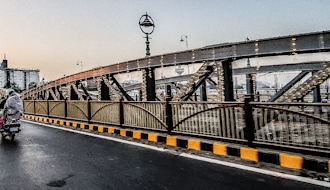
Ahmedabad was founded on the east bank of the River Sabarmati in the 15th century. Until 1871, there was no bridge across the river from the city to the west bank. In that year, a wooden bridge was constructed.

A few years later, the wooden bridge was destroyed by floods. In 1892, a steel bridge was constructed. This was designed by an Indian engineer HD Bhachech and named in honour of a British colonial official named Ellis.

The Ellis Bridge remained in use until 1997, when it was closed. By 1999, two concrete bridges were constructed, one on each side of the old bridge. These new, wider bridges form what is now known as the Swamivivekananda Bridge. The old Ellis Bridge flanked by the two concrete bridges, heavily laden with traffic, has been preserved as a heritage monument.

The old Ellis Bridge, which existed when Gandhi returned to India from…

View original post 22 more words

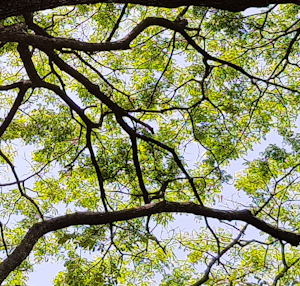
View of palms

I am not certain when I first saw palm trees. Maybe, it was when I was three years old. Then, my parents took me for a holiday in South Africa, where they were born.

Some of the first palm trees that I remember seeing are still growing in a small garden next to the entrance of St John’s Wood Underground station near Lord’s Cricket Ground in London. We used to visit St John’s Wood regularly when I was a child because our family dentist, Dr Samuels – a refugee from Nazi Germany, had his surgery opposite the station.

My first view of palm trees growing en-masse was from the air on an early morning in late December 1993. Our plane was landing at the airport in Colombo, Sri Lanka. We were travelling via Colombo to Bangalore in India. A week or so after seeing this vast plantation of palms, my wife and I were married during a colourful Hindu ceremony.

Although I have seen many, many palm trees since then, I still find them beautiful and exotic.

Spotted in Bhavnagar

You never know what you might find in a provincial museum…

yamey's avatarGUJARAT, DAMAN, and DIU

Mahatma Gandhi studied for a few months at Samaldas College in Bhavnagar. The Gandhi Smruti in that city contains a first class collection of photographs recording the life of the Mahatma. This echibition is on the first floor of a building. Its ground floor is occupied by the exhibits in the city’s Barton Museum.

The Barton contains some fine artefacts made in different eras. Amongst these, there are some lovely Jain stone carvings.

One area of the museum oncludes a case showing the evolution of the flag of what was to become post-colonial India. Near to this, there is a vitrine containing ageing historic postage stamps in various states of decay.

While looking at the stamps, I spotted several bearing the name “Ifni”. Never heard of it? Well, I had. I used to spot Ifni on the pages of atlases published before the 1960s. However, I had never seen stamps…

View original post 133 more words

Book sniffing

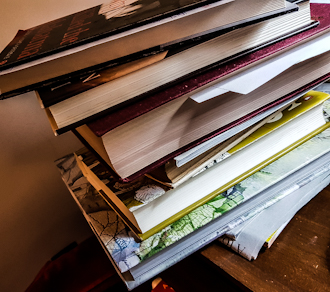
As long as I can remember, I have been sticking my nose into any book that I am reading so that I can smell its pages.

I suppose that in brand new, recently printed books I am smelling the paper and the ink. Books printed in different countries often have distinctly differing odours.

As books get older, the smells of their pages change. This is both the result of ageing ink and paper and also a consequence of the environment in which the book has been stored. For example, if the book has been housed in the shelves of a reader who smokes, the pages acquire a tinge of the smell of tobacco and its smoke.

At first, I believed that I was the only person who sniffs the interiors of books, but now I know that I am not alone. The world of book readers is divided into page sniffers and those who do not poke their noses into books for reasons other than reading.