
City of colleges
Towers lawns and bridg-es
That is Cambridge briefly


City of colleges
Towers lawns and bridg-es
That is Cambridge briefly

One of the many patients, whom I treated while I was studying dentisty at University College London, was a highly intelligent senior civil servant. There was much work that needed doing in his mouth, so he visited my clinic frequently and we got to know each other reasonably well. At least, that is what I began to think.
One morning, he arrived for his appointment and sat in my dental chair. After exchanging pleasantries, he said:
“You know those Martians, who have landed in Wales?”
“Mmmm,” I replied.
“Well, I’ve heard that they communicate without exchanging words.”
“Telepathy?” I asked.
“Yes, that’s it”
I turned away from him, ready to wash my hands, when he continued:
“Well, I was wondering whether when they are in Wales they communicate in English or Welsh.”
Feeling a smile coming on, I turned my back to him, and began washing my hands for long enough for my urge to laugh to wear off.
As the saying goes, it takes all sorts…
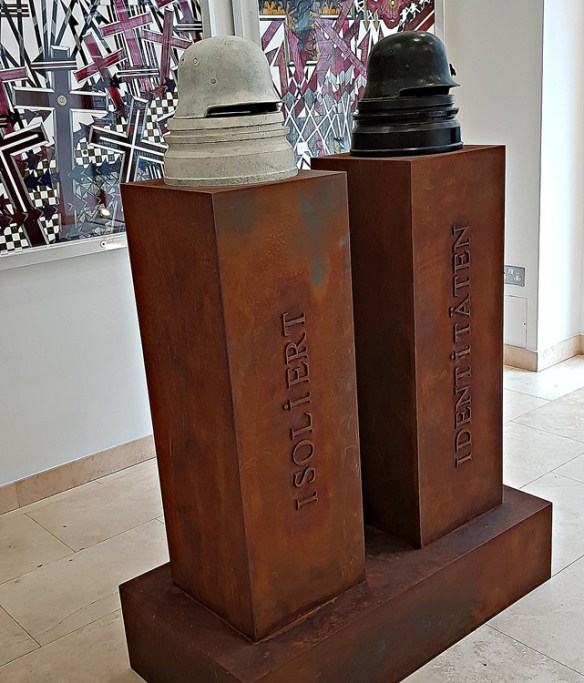
Cork Street, near London’s famous Burlington Arcade, has long been home to quite a number of art galleries. Recently, the greed of property developers has led to the closure and disappearance of many of these. Dadiani Fine Art, a small gallery, at number 30 Cork Street has survived so far. This gallery is hosting an exhibition of works by Paul Wager, entitled “Requiem for the Emblem of Power”. The show, which opened in January 2018, commemorates the centenary of the ending of the First World War ‘WW1’). Althoug the website states that the show was due to finish in April 2018, it was still available for viewing in September 2018. So, you might still be able to ‘catch’ it.
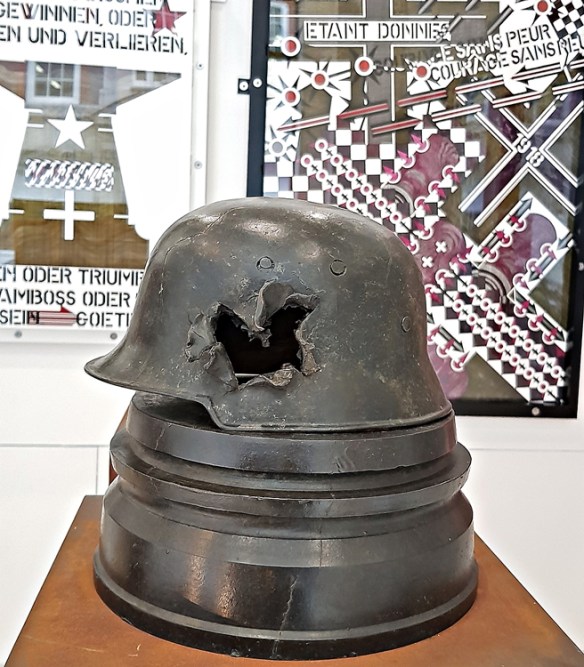
Paul Wager, British, was born in Hartlepool in 1949, four years after the end of the Second World War. According to the gallery’s website, Paul Wager wrote:
“I find myself at the interzone of painting and sculpture; my work is a heavy metal cocktail of male fantasies, obsessive and confrontational. It is a chemical haze of alternative sound and vision, religion and politics, conflict and war, tragedy and loss. A crucible of liquid observations and memories which stimulate my pending offering to the uncharted future of art.”

The works on display in Cork Street reinforce this statement this well. According to Umberto Eco:
“Art now in general may be seen as conveying a much higher degree of information though not necessarily a higher degree of meaning.
However, the Gallery notes:
“Wager’s paintings are a profound statement of information and meaning“
Be that as it may, I found the art works, visually alluring, powerful, and moving. Finely crafted, both in detail and as a whole, and creatively designed, they are fitting, original contributions to the large body of recent creations made to celebrate the passing of 100 years since 1918.
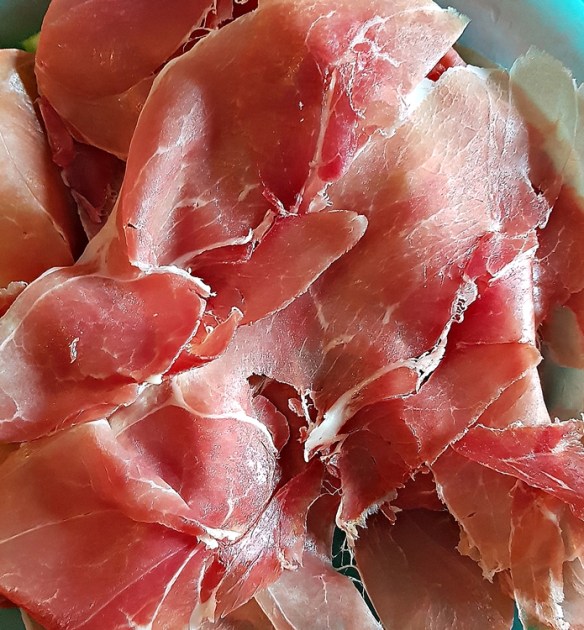
Portuguese presunto
pleasure on a plate:
no ordinary ham
Presunto is dry-cured ham from Portugal

By nature, I am most apprehensive about having to undergo any medical intervention. Even having my hair cut at the barber gets me worried, not because I am concerned about the final hairstyle but because I fret about what might go wrong. Recently, I had to undergo an MRI (Magnetic resonance imaging) scan for reasons that need not concern you, dear reader.
I first heard of magnetic resonance whilst studying biological chemistry as part of my physiology degree course at University College London. Nuclear magnetic resonance spectroscopy is used to investigate the physical and chemical properties of molecules and is of particular usefulness to organic chemists. On the other hand, medical MRI scanning allows a non-invasive investigation of body parts (including soft tissues) without any dangers such as harmful radiation.
Many people who have experienced MRI scanning have told me how fearful an ordeal it is. Their main concern is having to lie still for a long period of time in a noisy, featureless, confined space in a narrow tube barely large enough to hold a body. When I learnt that I was going to have undergo an MRI scan, I was filled with anxiety. For someone like me, who dreads even haircuts and eye-tests, you can imagine that I was not looking forward to having my scan.
I arrived at the scan and felt like the peanut which stood on the railway track, whose heart was all a flutter (when ‘around the track the engine came… toot toot peanut butter’).
Putting a brave face on it, I entered the scanning room through a reinforced metal door that looked like the entrance to an atomic bunker. I lay on a narrow bed, which turned out to be extremely comfortable. Before being given a set of headphones to protect my ears from the noise that would be produced during the scan, I was asked what music I would like to hear. I asked what was on offer. The choice was between Motown and classical. I opted for the latter.
The bed with me on it slid slowly into the circular tunnel in the centre of the Siemens ‘Magneton’. I continued entering it until only the crown of my head was outside it. When I looked up, all I could see was the grey funnel like rim of the entrance to the machine.
There was a sound like a fog horn, and then the sound of monotonous soporific classical piano music, rather tinny in tone. No decent composer would have had the gall to own up composing this pathetic attempt at ‘classical music’. Nevertheless, it was mildly distracting, and its lack of variety helped me to relax.
Then, the fun began. For reasons that the nurse could not explain the MRI machine produces a series of extraordinary noises, which must have been very loud because I could hear them quite clearly despite wearing the ear-protecting headphones. The first of these noises resembled someone hammering loudly at a building site. This was followed by bursts of sound (each lasting several minutes) that included ‘kerchunk, kerchunk, kerchunk,…’; ‘boop, boop, boop…’; ‘whooo, whooo, whooo,…’, ‘tak,tak, tak…’; and so on. All the time, the monotonous piano music droned on, barely competing with the miscellany of bursts of weird mechanical sounds coming from the magnets in whose womb I was confined. At several stages, the machine seemed to become over excited, not only emitting noises but also causing the bed on which I was lying to vibrate.
Far from hating the whole experience as I was sure that I would, I found it mildly entertaining. The 40 odd minutes of my scan shot by. Let me explain. First, I was extremely comfortable. Having to lie still on a comfortable bed was very restful and relaxing. It was far more comfortable than sitting for 40 minutes in an aeroplane or in some theatres. Secondly, the noises conjured up various images in my mind. During the vibrations described above, I felt as if I was on a reclining chair in Business Class on a long-distance flight. The odd combination of the repetitive classical music accompanied by the series of ever-changing mechanical noises being emitted by the scanner resembled the music of minimalist composers, notably the compositions Steve Reich. At times, I felt as if I was listening to a bad pianist giving a concert in a busy construction site. Many years ago, I attended a concert of Spanish Flamenco dancing. The endless racket produced by the dancers stamping their shoes on a hard floor was far less bearable than what I heard during my MRI.
At the end of the day, I realised that the horror stories that I had heard about MRI scans should possibly be discounted. I have written this to allay the fears of those who might one day need to undergo one of these investigations.

Staring at stairs
leading to galleries:
a Royal Academy
Awaiting a train
In a Costa café
Destination Cambridge
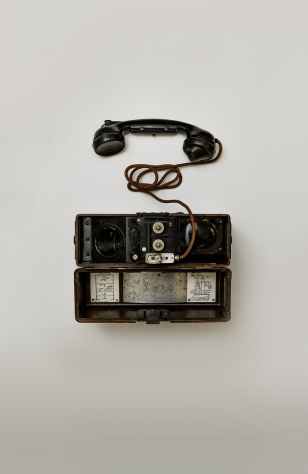
Photo by Alex Andrews on Pexels.com
Oh blast! annoying stoppages
with frustrating randomness:
BTinternet
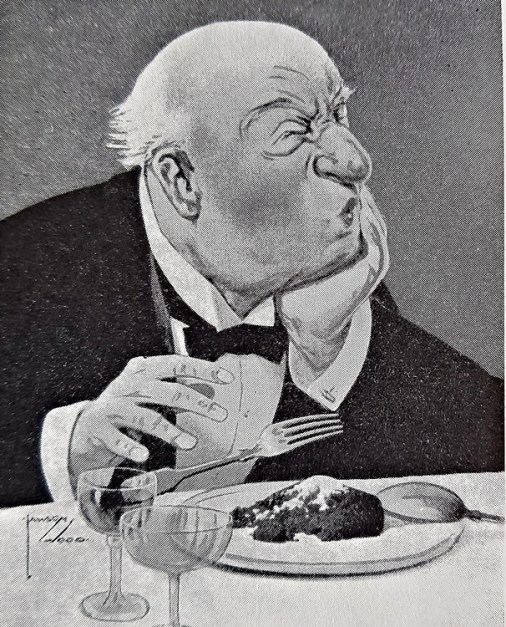
When I qualified as a dentist back in 1982, there was no vocational training period during which the newly qualified dental surgeon worked under the guidance of an experienced practitioner. Like others who graduated at that time, I was plunged into the ‘deep end’. I was fortunate that the owner of the first practice where I worked was understanding and helpful. He provided me with much valuable advice.
However, nothing can prepare you for the unexpected.
One day, a new patient sat in my dental chair. He spoke English with an eastern European accent. He may have been Ukranian. He said to me: “It is my philosophy that when I am having pain from a tooth, I remove it from my mouth.” Having just spent five and a half years training to save troublesome teeth, I asked him whether he was certain that he did not want an attempt to be made to save the tooth. He was adamant: he wanted the tooth out.
When he pointed at one of his upper incisors, a tooth that was visible when he spoke, I asked him again whether he would not prefer to save such a prominently visible tooth. Once again, he explained his philosophy.
With some reluctance, I administered the local anaesthetic to render the proposed extraction painless. While his jaw was going numb, I asked him once again whether he was sure that he wanted to lose the tooth. He did not change his mind.
It is usual to check for numbness the area around a tooth that is to be removed. This is done by prodding the area with a sharp-pointed probe. As I began to do this, the patient pushed my hand away sharply. Before I could ask him why he did this, he grabbed the offending tooth with his thumb and forefinger, twisted sharply, and cleanly extracted the whole incisor with its root intact. My assistant and I stared at the man, totally surprised.
He said: “All I needed was the injection. The rest I can do myself”. Needless to say, I did not offer him a discount.

Pictures from “Der Zahnarzt in der Karikatur” by E Heinrich, publ. 1963
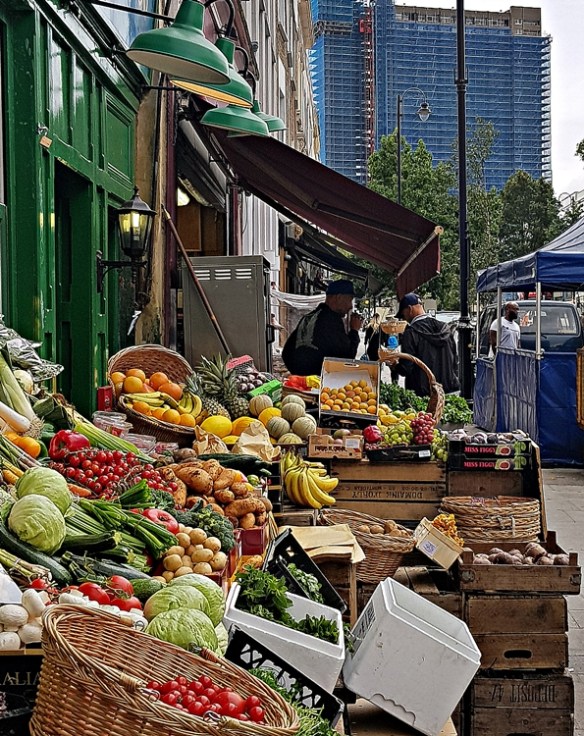
Trellick Tower in background
tall Trellick and grim Grenfell towers,
market stalls:
Portobello Road
 yamey
yamey 