Today, an artist would not portray an African this way

THE PAINTER REX WHISTLER (1905-1944) was commissioned by the Tate Gallery (now the Tate Britain) to create a mural for what was its refreshment room in 1926. Assisted by Katharine Ann West (1904–1930), it was completed by 1927. Completely surrounding the room, it illustrates a narrative, which has been summarised on the Tate’s website as follows:

Whistler’s mural depicts an expedition in search of rare food and drink, led by the fictional Duke of Epicurania. A hunting party sets off from the steps of the gallery. It travels across rivers and seas, through pastoral landscapes and wild forests. The group shoots at leopards and deer and meets unicorns and mermaids. They pass islands topped with Italian cities, encounter shipwrecks and ruins, and visit the Great Wall of China. They return home laden with spoils, greeted by a cheering crowd.

Usually, the former refreshment room and its mural are not open to the public. Recently, it has been opened and within it a large screen has been set-up. A short film is projected on the screen. The film has two actors, one playing the part of Rex Whistler, and the other of a fictional academic, Professor Shepherd, who discusses the mural with him. Unfortunately, because the film is being screened, the former dining room has subdued lighting, which makes it difficult to fully appreciate Whistler’s superbly painted mural.

Most of the mural is gloriously picturesque, and cannot give rise to any objections. However, if you look closely, there are two insensitive depictions of Black people that might easily cause offence to viewers today. Whether they would have upset the Tate’s visitors in the late 1920s, I do not know. The bulk of the dialogue in the film being screened in the room relates to the presence of these two frankly racist images on the mural. During the film, the fictional prof gives the artist a hard time about the way he represented the two Black people. I got the impression that the person who wrote the script wished to convey that Whistler could not see why the prof was upset by the way he had painted these figures.

The mural was painted eight years after WW1, during which Black and Asian soldiers fought and sacrificed their lives for the British who had colonised the countries from which they came. Whistler must have known about them. Only seven years before the mural was created, countless numbers of Indians were slaughtered at Jallianwala Bagh in the Punjab. Their massacre was ordered by Reginald Edward Harry Dyer. After he was reprimanded for this, and had returned to England, the public, regarding him as a hero rather than a murderer, raised over £26000 (approximately £1,485,000 today) for him. And that was after 1920. It might be a big leap, but it struck me that if the British public felt justified raising so much for such a man in the 1920s, maybe many of them would have seen nothing to complain about when seeing how Whistler portrayed people of colour in 1927.

Visiting the Open Wound at the Tate Modern in London

THE HUGE TURBINE Hall that forms the entrance and centrepiece of London’s Tate Modern is used for temporary exhibitions. Until 16 March 2025, the Turbine Hall is home to a somewhat weird but visually fascinating art installation, “Open Wound, created by Mire Lee, who was born in South Korea in 1988.

At first sight, it seems that discarded skins of various shapes and sizes are hanging from the ceiling. Standing on the floor beneath some of them is a tall tower that carries what looks like a piece of ageing industrial machinery suspended from an overhead crane. This rotates slowly while drops of liquid fall from it onto some of the skins and elongated sausage-like pieces of fabric before dropping into a pool on a large piece of stretched material. Set in the lofty, rather inhuman, Turbine Hall, this installation made me feel as if I were inside an enormous abattoir.

Apart from being intriguing to look at, I was not sure what to make of it. The Tate’s website noted:

“Lee believes ‘being moved is the strongest thing you can experience through art.’ Reflecting on our current historical moment, Open Wound conjures ‘the mood of a deserted construction site’, an atmosphere of ‘futility and melancholy, where something has started to wither.’ Despite this, the collective ‘skins’ of the living factory suggest an eerie solidarity. They mutate the Hall into an intimate space of ‘dream and distant memory’, in which such feelings can be shared.”

Well, having seen the work in the Turbine Hall, these words made sense. I am not sure that I would recommend people going out of their way to see this installation, but if you had other reasons to visit the Tate Modern, then do spend a few minutes looking at Mire Lee’s creation.   

Discovering the versatility and creativity of an artist born in Lancashire

UNTIL AUGUST 2024 when I visited Salford, I believed that there was little that excited me about the work of the artist Laurence Stephen Lowry (1887-1976). My first impression of this artist was back in the 1970s and ‘80s, when reproductions (posters) of his paintings of industrial landscapes crowded with stick-like depictions of people were popular items in print shops of the Athena chain. I liked the pictures, but there seemed to be little variety amongst the paintings that were reproduced for sale.

My appreciation of Lowry’s art was not improved after seeing a special exhibition of his paintings held at Tate Britain in 2013. The paintings were badly displayed. There were too many of them crowded on to the walls of the galleries. They were so densely packed into the gallery that they were difficult to examine carefully. As far as I can remember, there was little difference between the subject matter depicted in the paintings. Most of them were of the kind that I had seen reproduced in the Athena shops. I came away from the exhibition neither being impressed by it nor having gained more admiration for Lowry.

So, in August 2024 when we headed for The Lowry, a modernistic cultural centre at Salford Quays in Greater Manchester, which contains a collection of artworks by Lowry, my enthusiasm was somewhat dampened. The Lowry itself is a successfully adventurous example of modern architecture, which is well worth seeing. It contains a gallery devoted to the works of LS Lowry. Our visit to this gallery, which contains about 400 of his artworks, was, as the saying goes, ‘mind-blowing’. First of all, in comparison with the 2013 exhibition at the Tate, the works of art are extremely well displayed. Secondly, and more importantly, what we saw completely changed my mind about Lowry’s works.

Although there were several of Lowry’s works in the style favoured by customers of Athena’s outlets, these wonderful pictures were outnumbered by other images which demonstrate Lowry’s versatility as an artist. Lowry painted many faces and portraits, all of which convey the personalities of the people portrayed and the artist’s sometimes quirky or humorous perceptions. There are numerous images – both sketches and paintings – of ships. There are evocative landscapes devoid of people. Most surprising to me, are his paintings of seascapes, which are so brilliant that they put Lowry alongside Turner in his ability to capture the sea on canvas. Apart from paintings, there are numerous sketches and ‘doodles’ on display, each one of which demonstrates Lowry’s skill as a draughtsman.

The immense variety of what is on display in the gallery in The Lowry demonstrates the amazing diversity of LS Lowry’s depictions of life in Lancashire and elsewhere. The exhibition at Salford Quays opened my eyes to his brilliance, and now I realise how wrong I was when I came to a judgement of his talents before having discovered how wide a range of art he created so skilfully.

Brothers in art

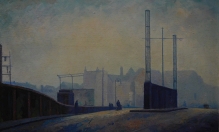
RECENTLY, WE DROVE to Southend-on-Sea in Essex to see an exhibition, “Brothers in Art”, at the town’s superb Beecroft Art Gallery. There, we enjoyed visiting a temporary exhibition of the paintings of two artists, about whom we knew nothing: the brothers Walter (1908-1997) and Harold (1911-1971) Steggles. They were members of the East London Group of artists, East End workers who created and exhibited together between 1928 and 1936. Influenced by the artists John Albert Cooper (1894-43) and Walter Sickert (1860-1942), the group produced pictures that often-depicted everyday scenes and mundane sites in a joyful way.

The Steggles were born in Ilford (east London), sons of the manager of a high-class footwear store in London’s Strand. They were not born into a family that had any history of artistic talents. At an early age, the brothers began visiting art exhibitions, including, in 1925, one at the Bethnal Green Men’s Institute Art Club at the Bethnal Green Museum. This led them to join the art classes there. Walter was 17 and Harold was 14. Unhappy with the classes at Bethnal Green, they joined the art classes conducted by John Cooper at the Bromley & Bow Institute. He encouraged the brothers to paint scenes near the institute. Soon they became members of the East London Group.

In 1928, the Group held an exhibition at the Whitechapel Art Gallery. The brothers exhibited several of their paintings at this prestigious public art venue. Many influential members of the art scene attended the show, one of them being the then director of the Tate Gallery. Several of the brothers’ paintings at the exhibition were acquired by the Tate.

The East End Group also held regular exhibitions at the Lefevre Gallery in London’s West End. The gallery, which existed from 1926 until 2002, represented leading artists including, to mention only a few, Seurat, Matisse, Degas, Picasso, Dali and Kandinski. The two brothers:

“… found themselves part of a cosmopolitan artistic milieu that included Ben Nicholson, Charles Ginner, Philip Wilson Steer, George Braque and Raoul Dufy … Before long they found themselves sought after by other galleries and Harold became a protégé of the flamboyant aesthete Eddie Marsh who lived near his office in Gray’s Inn as well as accepting a prestigious commission from Villiers David to paint the gentlemen’s clubs of St James.” (https://spitalfieldslife.com/2017/07/26/harold-walter-steggles-artists/).

Harold recalled that the first picture he sold was bought by the highly influential art dealer Sir Joseph Duveen (1869-1939) and was hung at the Tate Gallery in 1929. In 1936, Walter had one of his paintings exhibited in the Venice Biennale.

Walter and Harold sold their paintings and became prosperous enough to buy a car. This allowed them to make forays into East Anglia where they painted things they saw.  Some of these East Anglian scenes were on display at the exhibition in Southend alongside their paintings of sights in London; many of these places have disappeared since WW2.  Both Walter and Harold were commissioned by the Shell petrol company to create posters. These display places in England, beautifully depicted. Several of these were also on display.

Even though the brothers were successful as artists, they had to continue working in non-artistic jobs to gain a sufficient income. When Walter retired, he was able to concentrate fully on painting.

With the death of John Cooper in 1943, the East End Group declined and the works it had created faded from the artistic world’s limelight. What the group created was not as excitingly innovative as the art produced by the now better-known artists, some of which I mentioned above. However, the work of the Group and, in particular, of the Steggle brothers is of high quality and very pleasing aesthetically. It was well worth trekking out to Southend to see their paintings.

Born in Portugal, hanging in the Tate

THE TATE BRITAIN is currently hosting a wonderful exhibition of the works of Paula Rego, born 1935 in Lisbon, Portugal during the fascist dictatorship of Antonio Salazar (1889-1970), who was in office from 1932 to 1968.  Her father was anti-fascist and anglophile. He sent Paula to a finishing school in Kent (UK) when she was 16. Later, she enrolled to study painting at the Slade School of Fine Art, part of London’s University College. While she was studying there (from 1952 until 1956), she met her future husband, the painter Victor Willing (1928-1988). They married in 1959, following Victor’s divorce from his first wife. Paula and Victor lived between Portugal and the UK, finally settling in the latter in 1972.

Distributed within eleven rooms of the Tate Britain, Rego’s works are well displayed, some of them with informative panels placed beside them. Her paintings express her political (anti-fascist) and social consciousness, some of which is concerned with the ill-treatment of, and the indignities inflicted on, women, especially in the country where she was born.

Rego’s paintings are dramatic, colourful, powerful, and not lacking in a sense of humour. They are sometimes almost abstract, but the element of figurativeness is never completely absent.  Her paintings often lean towards surrealism.  Whether they are expressing subversion, or love, or depression, or pure fantasy, they are visually intriguing and cannot fail to engage the viewer. Throughout her works, which span several decades, the influence of her native land can be discerned, sometimes without difficulty, other times with the assistance of the informative labels by their side.

The exhibition, which opened on the 7th of July 2021, will continue until the 24th of October 2021. So, there is plenty of time for you to enjoy this superb exhibition of the fabulous works of this fascinating artist. It is an exhibition that once again demonstrates that great art is often created as a reaction to an oppressive regime.

Blockbusters

Bauhaus

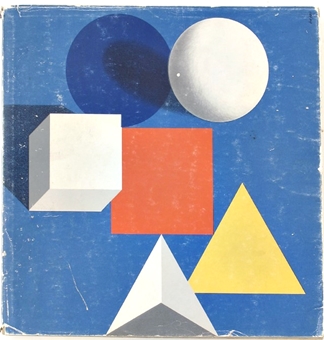
National museums in the UK do not charge entrance fees to view their permanent exhibits. However, they do charge, often quite high, fees to view special temporary exhibitions.  This is nothing new. In 1968, I saw superb exhibition at the Royal Academy about the Bauhaus school, founded in pre-WW2 Germany. It was so excellent that I visited it on three separate occasions. Likewise, with a wonderful exhibition about Tutankhamen, also held at the Royal Academy.

Now, several decades later, the museums and galleries have caught on to the idea of ‘blockbuster’ exhibitions. These try to attract vast numbers of visitors, who would not nomally visit the institution where they are being held. They often succeed in drawing the crowds, but by slightly devious means. For example, recently the Royal Academy held an exhibition called: “RUBENS AND HIS LEGACY. Van Dyck to Cezanne”. I thought, as I am sure many other visitors believed, that this was primarily an exhibition of works by Rubens. Well, it was not. There were a few paintings by this great master diluted by a far larger number of works by other artists. It would have been more honest, but less ‘sexy’ and attractive to the public, to have called this exhibition something like “THE LEGACY OF RUBENS”.

My wife visited the current exhibition at the Tate Britain, a real crowd-puller called “VAN GOGH AND BRITAIN”. Who cannot resist seeing pictures by Van Gogh? Few, judging by the crowds of people jammed into the rooms where the exhibition is being held. And, how many paintings and other works by the man who cut off his own ear were on show. There were only a few. The rest of the show was of paintings by other artists, who were definitely not of interest to the bulk of the visitors, who had paid £18 a head to see a Van Gogh show. Clearly the name of the exhibition draws in the ‘punters’. 

As with the Van Gogh exhibition, the recent Leonardo da Vinci exhibition at the National Gallery was also disappointing. A few works by the great Italian master were vastly outnumbered by works produced by inferior artists, in whom most visitors were uninterested. And, most of the ‘fillers’ in the exhibition had only tenuous connections with Leonardo.

Of course, not all blockbuster exhibitions fail to live up to their promise. Apparently, the Alexander McQueen exhibition at the Victoria and Albert Museum was a brilliant show that concentrated on the subject promised by the exhibition’s name. Another really good temporary exhibition, which attracted an entry fee, was one dedicated to Roy Lichtenstein at the Tate Modern.

Given the absence of entrance fees and the constant insufficiency of public funds, our national museums and galleries need to raise as much money as possible. The blockbuster exhibitions must be a good way of doing this. It would be better if their naming was a little more related to what the visitor is likely to see.

Burne-Jones in London

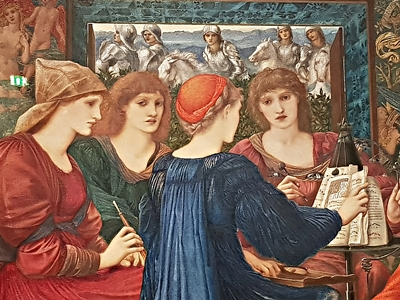
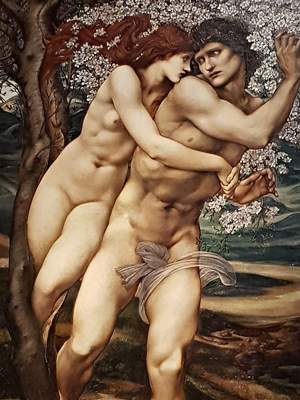
Until 24th February 2019, there is an excellent exhibition of the works of the Pre-Raphaelite artist Edward Burne-Jones (1833-98) at London’s Tate Britain.

BURNE 1


For Victorian art  

looking back to the past

Burne-Jones does excel


BURNE 2