Salvation in Sandwich

THE HIGH STREET runs through Sandwich (Kent) from south to north. At its northern end, it runs beneath an archway next to a former toll bridge across the River Stour. After 1977, the toll was abolished. Under the archway, which is part of the mediaeval barbican (built c 1470) that used to be a gateway through the town wall, there are several notices of interest.

One of the notices records the fact that tolls were collected from users of the bridge from 1759 to 1977, and the last toll was collected from the Mayor Councillor on the 30th of September 1977. Near this memorial, there is a table of tolls dated June 1905. Interesting as these two signs are, it is the third one that was a complete surprise to me. It read:

“This plaque is to commemorate Richborough Transit Camp 1939-1940 where 5000 men found refuge from Nazi persecution on the Continent. During the Second World War most of them volunteered to fight for the Allied cause.

Erected in gratitude to the citizens of Sandwich and East Kent who, as in the past, welcomed the refugees.”

I noted that this brief notice made no mention of the identities of the refugees. However, another plaque, attached to the nearby Bell Hotel, clarified the situation. The hostelry was:

“… A meeting place for Jewish refugees from the Kitchener Camp, Richborough, Sandwich 1939-40”

The Kitchener Camp was a former army barracks located north of the Stour, not far from the toll bridge, on the west side of Ramsgate Road. There is now no trace of it because it was demolished after the end of WW2. During 1939, 4000 mainly German and Austrian Jewish men were accepted for accommodation in the camp on condition that they would not be granted UK citizenship or work, and must emigrate to the USA. The camp received no government funding. It was paid for by Jewish organisations including The Central British Fund for German Jewry (founded 1933).  At the start of WW2, 887 of these men volunteered to join the Pioneer Corps, which carried out light engineering projects at the battle fronts. After the Dunkirk episode in May 1940, the British public became suspicious of German speaking refugees because they were worried about the possibility that some of them might be involved in spying and sabotage. So, those, who were not enrolled in the war effort, were shipped out to internment camps in Australia and Canada, and then Kitchener was closed.  

During its brief existence, the Kitchener Camp, which began accepting refugees on the 20th of January 1939, became a hive of cultural activity as can be discovered by looking at the highly informative website – https://kitchenercamp.co.uk/   There were concerts and a cinema provided by the Odeon Cinemas, run by it’s the  Jewish founder Oscar Deutsch. I had never heard of the Kitchener Camp (aka ‘Richborough Tansit Camp’) until I spent a few days in Sandwich recently. Regarding the plaque commemorating it beneath the arch of the barbican, it mentions 5000 men, but reliable sources always refer to 4000 Jewish men. This puzzles me, as it was placed by the Jewish Community of Great Britain ( according to https://www.warmemorialsonline.org.uk/memorial/263444/).

Remembering victims of war in Sandwich, Kent

Some of the WW1 names and the Falklands victim below

IN THE HEART of Sandwich in Kent, near to the deconsecrated Church of St Peter, there is a war memorial that was erected to commemorate those from the town who died in the ‘War to End All Wars’ – the First World War (1914 – 1918). Roughly 100 names are recorded on the lists of people who died during WW1. However, they are not the only people listed on this monument because ‘The War to End All Wars’ did not live up to its name.’

The memorial lists about 15 people who were killed in WW2 (1939-1945). In addition, three of Sandwich’s population perished in the Korean War (1951), and more recently, one of the townsfolk was killed in the Falklands Conflict (1982).

I sincerely hope that no more names need to be added to this war memorial as a result of the conflict in Ukraine, or any future wars.

A sandwich

lgbt

While looking for something to eat on the train between Cambridge and London, I spotted a sandwich in a colourful wrapping (illustrated above). It was a ‘LGBT’ sandwich containing Lettuce, Guacamole, Bacon, and Tomato. Well, the initials ‘LGBT’ usually refer to  ‘lesbian, gay, bisexual, and transgender’. The colours of the sandwich’s  wrapping are those associated with the LGBT ‘community’. 

I wondered whether M&S, the suppliers of this colourfully wrapped sandwich were:

  1. trying to appeal to LGBT customers
  2. trying to be ‘politically correct’
  3. both of the above
  4. neither 1 nor 2
  5. having a laugh at the expense of the LGBT ‘community’
  6. or, all of the above  

Who knows? I did not buy this sandwich, but selected a similar one, the BLT, which lacks guacamole.

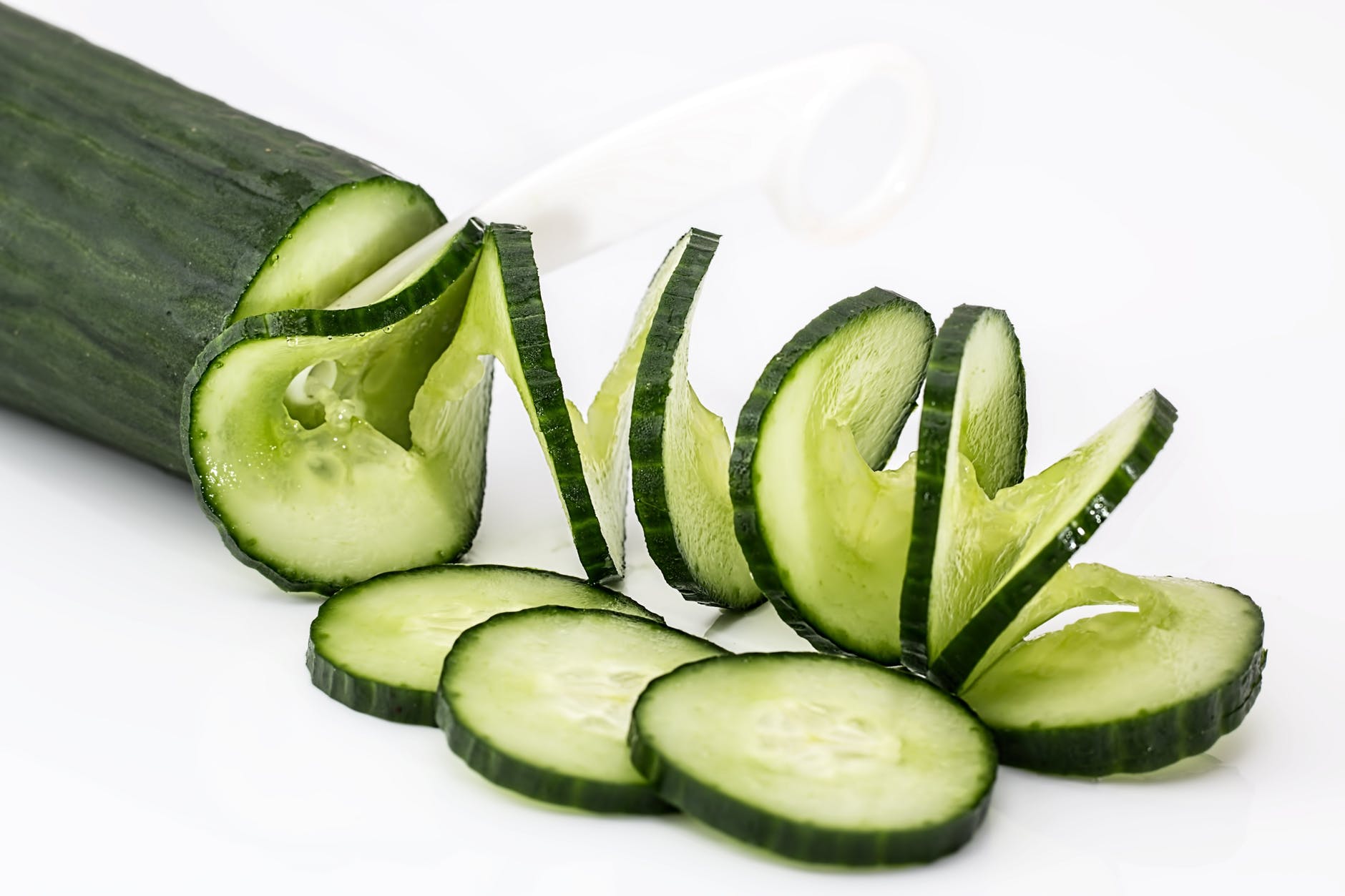
Cucumber sandwiches

My late mother-in-law, an Indian living in Bangalore, made the best cucumber sandwiches that I have ever eaten. She used fresh slices of thin white bread with crusts removed. Each slice was spread with a small amount of butter mixed with freshly mixed English-style mustard. Then, finely sliced, peeled and de-seeded cucumber was inserted as the sandwich’s filling. The result was both delicate and refreshingly delicious. Having eaten these superb snacks on numerous occasions, I formed the idea in my head that India is THE place for cucumber sandwiches. This led to an amusing incident.

sliced cucumber on white table

Photo by Pixabay on Pexels.com

Some friends of ours from England were spending a few days in Mysore, which is not far from Bangalore, where we were based. So, we decided to drive to Mysore to spend a day with them.

Our friends were staying in an old palace that had been tastefully converted into a hotel. After we had roamed around Mysore with them, they invited us to have afternoon tea in the lovely garden of the hotel. When we had sat down at a table, I said:

“This is the ideal place to eat cucumber sandwiches. The best cucumber sandwiches in the world are made in India.”

Everyone was happy to order a plate of these. When we asked the waiter for the sandwiches, he asked:

“You want vegetable sandwiches, with capsicum and all?”

“No, just cucumber sandwiches, no capsicums,” we replied.

Some minutes later, the waiter returned with A plate of sandwiches oozing with a bright red paste filling.

“What’s that?”, we asked him.

“Miner’s sauce”, came the reply.

“Miner’s sauce? What on earth is that?” asked one of our friends.

The waiter simply repeated the words “miner’s sauce”.

After a minute or two, the penny dropped, and I said:

“He means mayonnaise.”

Now, many non-English people pronounce this word as ‘my-on-nays’, which is closer to ‘miner’s sauce’ than the English pronunciation.

“We don’t want that sauce,” one of our friends protested, “Only cucumber.”

The waiter looked confused.

“What, no bread?” he asked.

“Let me show you what I mean,” said one of our friends, standing up and accompanying the waiter to the kitchen.

The waiter returned after a while with a very sub-standard collection of cucumber sandwiches.

Later my wife pointed out that just because her mother made excellent cucumber sandwiches, this was not necessarily the case all over India, as I had foolishly assumed.

Safety first!

Experience learn’d

damages suffer’d

must consider safety first


My late mother was involved in a motor car accident near Cape Town in South Africa when she was a young girl in the 1930s.

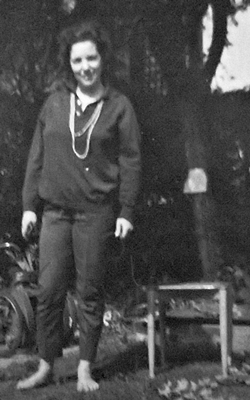
HBY 60s 36 HW

“Our family dentist, at least the first one who ever looked after me (during the 1950s and early 1960s), was Dr Samuels, an elderly Jewish refugee from Nazi Germany. This kindly man, who must have been in his late 60s or early 70s when he treated me, told my mother how he had to smuggle gold out of Germany. When he, and for that matter any other Jew, was fleeing from Germany in the 1930s, it was not permitted to carry anything of financial value out of the country. His resourceful wife prepared sandwiches for his journey. Instead of filling them with lettuce leaves, she filled them with sheets of gold leaf – a material that used to be used a great deal in dentistry. Thus, if he had encountered inquisitive Nazi officials on the train, he could have concealed the gold he was carrying by munching his precious sandwiches. I am not sure when he retired, but I remember him telling my mother that he would not cease practising until the last of his patients abandoned him. I do not know when this was, but I do know that he helped to conceal from us the fact that my mother was missing some teeth.


In all the 28 years that I knew her, I had no inkling that my mother had two missing front teeth. I knew that she had missing teeth because she often reminded us about the accident that she had suffered, but it was not until she was dead that I discovered, almost by chance, that it was two of her front teeth that she lost.


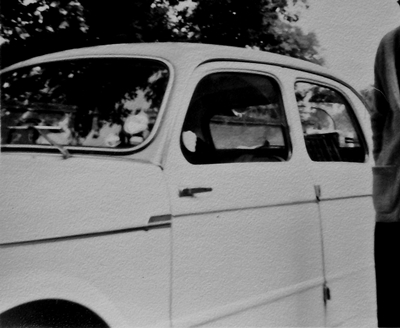
FIAT 1100 60s BSY

I am sure that it was having been involved in this accident that led to my mother having seat-belts installed in our Fiat Millecento. She arranged for this to be done at least 20 years before they became mandatory in the UK. I have no idea how and from where she got the idea of installing car seat-belts in 1960, but she did. And, with a little persistence she found somewhere where these items, which were almost unknown in cars, could be installed in our Fiat.


Seat-belts were not routinely fitted into cars before the 1980s, with the exception of some Swedish cars such as Saab and Volvo. There were very few of these on British roads in the early 1960s. Therefore, my mother’s idea of installing them into our Millecento in 1960 was little short of revolutionary. The two front seats of the car were fitted with complex harnesses. A strap went over each of the wearer’s shoulders and these were connected together by a waist strap. The people in the front ended up wearing what looked like the sort of safety harness worn by a jet pilot. These complicated straps were extremely difficult to adjust properly.


The rear of the car was fitted with two lap straps such as are found in aircraft passenger seats. My sister and I used one each except when there was a third person in the back. In this case, my sister and I had to share one strap. To avoid fighting, my mother separated us in the strapby placing a pillow between us.”


The passage written above is an extract from a book, “Charlie Chaplin Waved to Me”.  It does not mention the extra locks my mother had fitted in the rear doors of our car. These were to prevent my sister and me from opening the doors while were diving. Had we been in an accident, it would have made it very difficult for rescuers to open these doors as the keys were attched to the ring with the car keys.


I only learnt about my mother’s missing fron teeth when after her tragic demise, I found her partial denture lying around in our house.


Charlie Chaplin Waved to Me” is available by clicking : HERE

Also available on Kindle