An eating complex in London’s Carnaby Street district

IT WAS DIFFICULT to believe that the UK is suffering a cost-of-living crisis and other economic difficulties when we entered Kingly Court on a Wednesday evening in late October 2025. Each of its over 20 restaurants and bars were almost full of diners and drinkers. And many of these establishments are not for those on a tight budget.
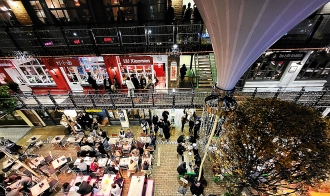
Kingly Court is a three-storey building surrounding a large rectangular courtyard filled with tables and chairs. The courtyard is surrounded by galleries, each of which is flanked by several eateries. There are also restaurants and bars on the ground floor. The place was literally buzzing when we arrived there at about 7.30 pm.

Kingly Court is bounded by Kingly Street, Ganton Street, and Carnaby Street. I can not determine when the place was built for its present purpose as a mecca for hungry people. In the 1890s, the block in which Kingly Court now stands was occupied by buildings of various sizes that surrounded an open space. The redevelopment of Kingly Court was carried out by Rolfe Judd Architects. The initial aim was:

“… the refurbishment and extension of four buildings, with the aim of creating unified, high-quality office spaces on the upper floors while retaining the bar and restaurant uses of the ground floor and basement.” (www.rolfe-judd.co.uk/planning/projects/kingly-street-2/)

However, since that project was undertaken, the Court’s main purpose has become a centre for restaurants and bars.

There is a wide range of food choice available at Kingly Court.  There, you can feast on dishes from a multitude of different cuisines from around the world. And it seems to be very popular despite the financial problems afflicting the UK at present.
Taramosalata and going Greek in London’s Charlotte Street

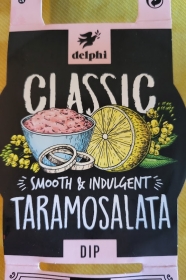
WE OFTEN BUY taramosalata (taramasalata) from the Athenian Grocery in London’s Bayswater district. They sell a brand called Delphi. It comes in a small plastic tub surrounded by a cardboard sleeve. Within the sleeve, there is a brief history of the company. The story begins as follows:

“It all started when our dad Tony started working in his family fruit and veg store on Goodge Street, London…”

Reading this brought back memories of shopping with my mother in the early 1960s. Being keen on Mediterranean dishes, we used to visit the shop in Goodge Street, mentioned above. Round the corner from this store, there was another Greek food shop, Hellenic Stores, in Charlotte Street. My mother preferred this shop, and only went to the one in Goodge Street if what she wanted was unavailable in Charlotte Street. It was close to the now long-since closed Schmidt’s German restaurant. Neither of these shops exists anymore.

Back in the 1960s and while I was at University College (until 1982), there were several Greek restaurants in Charlotte Street. These included Anemos, which was famous for its lively party atmosphere; Andreas, which I never visited, and is now called Ousia; the White Tower, which opened in 1938, and was highly regarded for its food, but is now closed; and Venus. My uncle, who worked in Bloomsbury, was fond of lunching there, and invited me to join him ther occasionally. It was less frenetic than Anemos, but pleasanter.

The reason that there were, and still are, many Greek or Greek Cypriot restaurants in and around Charlotte Street is more likely related to the huge demand for eateries in the busy area than to where Greek communities live in London. In London, the highest concentrations of Greeks (not Cypriots) is in Hyde Park, Regent’s Park, Chelsea and Kensington census districts. As for Greek Cypriots in London, some of whom run Greek restaurants, they are mostly living in Enfield, Haringey, Barnet and Hackney. In particular, they often live in Southgate, Palmers Green, Upper Edmonton, Cockfosters, Lower Edmonton, Tottenham North and Tottenham South. The Greek restaurants in the Charlotte Street area cater for the large numbers of students and office workers in the districr.

Returning to the story of the Taramosalata maker, Delphi, Tony decided to manufacture Greek food products. So, in 1984, he founded Delphi, which (according to the cardboard sleeve):

“Delphi is proud to be among the first UK producers of authentic houmous, taramosalata and many flavourful dips and salads …”

And the taramosalata they make is truly delicious.

IN SEARCH OF A SOUP AND AN UNEXPECTED TRAGEDY

WE MADE ANOTHER visit to Beykoz (on the Asian shore of the Bosphorus), hoping to eat paça soup at the place where we had enjoyed it a few days earlier.

The closed restaurant

We were surprised to find it closed, and shocked to discover that the man who ran it had just passed away. A notice to that effect was stuck on the windows of the small restaurant. As my late father often said when faced with disappointment: “these things happen” and “such is life”

Saddened, but hungry, we found another place which served the delicious meat soup. Its tiny dining area overlooked the waterfront. The food was good.

Having lunch with my father at the White House

AFTER MY MOTHER DIED in 1980, I began practising dentistry in Kent. Almost every weekend, I used to spend Saturday nights at my father’s house in Hampstead Garden Suburb. We used to have Sunday lunch together in one of his several favourite restaurants in Golders Green and Hampstead. Many of these restaurants no longer exist.

There were a few Chinese restaurants, which my father liked, in the Golders Green area. One of them was in Temple Fortune near the branch of Waitrose, which has been in existence since I was a child in the 1960s. The Chinese restaurant, which served a wonderful hors d’oeuvre that included a scallop in its shell, has long since closed.

In Golders Green Road, there were two more Chinese restaurants, both now gone. In one of them, my father was always greeted by the friendly manager (or, maybe he was the owner) with the words:

“Hallo Professor. How are you, professor?”

The food was well-prepared and tasty in both of them, just as it was in the Temple Fortune eatery.

Almost opposite the Hippodrome theatre, on the corner of North End Road and West Heath Drive, there was an Italian restaurant. Here, my father and I always received a warm welcome and enjoyed reasonably good Italian food. Currently, the site is occupied by a Turkish restaurant, which I have not yet tried.

Some weekends, we travelled up to Hampstead village. One of the two restaurants we visited occasionally was La Cage imaginaire, which still exists at its original location at the lower end of Back Lane, where it meets Flask Walk. Back in the 1980s, this place served classic French cuisine prepared to a high standard. I remember the cheese trolly which was richly supplied with ripe French cheeses. We revisited the place in about 2021 for ‘old times sake’. The management had changed and the food was nothing to write home about.

Today, the 3rd of November 2023, we ate at Mani’s in Hampstead’s Perrins Court. It was our third visit there, and the quality of the food in this busy eatery is highly satisfactory. Near the corner of Perrins Court and Hampstead High Street, there stands the Villa Bianca (‘white house’). This Italian restaurant must have first opened its doors to customers sometime in the 1980s. Never cheap, this restaurant was one of my father’s favourites in northwest London. Being a regular diner there, he was always welcomed like an old friend. Unlike many of the places where my father and I ate Sunday lunches in the 1980s and early 1990s, The Villa Bianca still exists, and is popular. Today, I looked at the menu. Although not suitable for those on a tight budget, many of the dishes did not seem much more costly than those served in far less fancy looking establishments.

DISCOVER MUCH MORE ABOUT HAMPSTEAD BY READING MY BOOK AVAILABLE FROM AMAZON, e.g., :https://www.amazon.co.uk/BENEATH-WIDE-SKY-HAMPSTEAD-ENVIRONS/dp/B09R2WRK92/

Cloud with a silver lining

AFTER A VERY DISAPPOINTING experience at a café we have often enjoyed when staying in Fort Kochi, we went to another eatery, which had been recommended by our friend Sharada S , when we visited Kochi at Christmas in 2019.

Our friend had introduced us to Oceanos. In this pleasant but unpretentious restaurant, we have enjoyed some of the best prepared sea food in Kochi. The dishes served at Oceanos are not only tasty but also authentic, by which I mean that they are not prepared to be ‘fine dining’ fancy; instead they give a good experience of genuine Keralan food.

Currently (February 2023), In addition to an á la carte menu, there is a seafood set lunch – a seafood thali. This included deep fried mackerel; clams (vongole) out of their shells; Aleppey fish curry; roasted prawn curry; sardine steamed in a banana leaf; Malabar paratha; rice; chhaas (buttermilk); and payasam (a local dessert). Every item was exquisitely prepared and tasted very fresh. This wonderful, faultless meal was 390 INR (£3.90) per head. We plan to explore the rest of the menu at Oceanos in the next few days.

Had it not been for the incompetent management at Kashi Art Café today, we would have eaten lunch there. However, as we had not been served our food for almost one our after ordering it, we asked for an explanation of the delay, and were told that there was a problem with the gas in the kitchen. Having been told that we would have our food “in about 10 minutes”, we walked out. If we had been served our food sooner, or been given an explanation without having to ask for one, we might have missed out on the superb lunch at Oceanos.

The writing on the wall

ALL THAT REMAINS now are the French words ‘moules’, ‘huitres’, and ‘langouste’ (mussels, oysters, crayfish). They are written in large white capital letters attached to a brick wall overlooking Leicester Place, which is a short street running between London’s Leicester Square and Lisle Street.

I am glad these words have not been removed,not only because I enjoy consuming shellfish and crustaceans but also because they provide a reminder of an establishment that thrived between the 1950s and 2006, when it closed for ever: Manzi’s restaurant.

Run by an Italian family, the eatery was famous for its seafood. Although I only ate there a few times, it was always an enjoyable experience.

Another restaurant, which has also closed, was on Lisle Street near Manzi’s. It was a Chinese restaurant called Mr Kong. Like Manzi’s, it had seafood on its menu. Their mussels in black bean sauce were superb. Kong’s also had a vegetarian menu – Chinese vegetarian dishes. I am not a lover of veg dishes, but the vegetarian offerings they rustled up at Kong’s were outstandingly tasty.

Usually, I often remember Mr Kong when I visit Chinatown around Gerrard Street, but it was only when I noticed the French words on the wall that memories of Manzi’s came flooding back.

Eating in The Ark

THE SHED IS aptly named. It is a restaurant in a long lean-to shed amongst the more solidly built edifices on Palace Gardens Terrace in Notting Hill Gate. This ramshackle-looking wooden structure has been home to a restaurant for many decades. For most of that time, it was called ‘The Ark’. It served lovely French-influenced food including my favourite on its menu, rack of lamb. The Ark was a popular local eatery, which attracted some celebrities including Prince Charles and Ingrid Bergman in the 1960s.

On one occasion a friend, let us call him ‘X’, who had eaten at our home many times,offered to treat us at The Ark. We accepted willingly. As soon as we sat down, X ordered the restaurant’s most expensive bottle of red wine. When, during our meal, it came to an end, he ordered another of the same. When the bill arrived at the end of our dinner, X fumbled in his pockets, blushed, and then, stammering, said:

“Oh, I have left my wallet at home.”

His home was a long way from Notting Hill Gate. He continued:

“This is all I have got”,

and placed a £10 note on the table. £10 barely covered half the cost of one of the bottles of wine he had ordered. Naturally, we paid the bill, and he said he would refund us the money, which he must have forgotten to do.

The Ark closed and then re-opened as a branch of the restaurants run by the chef Jean-Christophe Novelli. It served what I considered to be rather over-priced pretentious food. On one occasion, the Novelli restaurant took part in a scheme run by the Evening Standard newspaper. For £15, restaurants in the scheme offered a full meal without drinks – a bargain. My wife rang Novelli at the old Ark and asked whether we could book a table that day and use the voucher in the newspaper for the discounted meal. She was told that the restaurant was fully booked. So, I rang about two minutes later and asked to book a table, but without mentioning the newspaper offer. The lady, who answered the ‘phone at the restaurant, told me:

“Certainly, we have plenty of tables. Come when you like.”

Novelli’s closed, and the old Ark building remained empty for a while.

In 2012, the Gladwin brothers opened The Shed restaurant in the shed that once was home to The Ark. Time Out magazine (www.timeout.com/london/restaurants/the-shed) described it well:

“Tucked away behind a curtain of tousled ivy, The Shed serves up small, resourceful dishes built with foraged and locally-grown ingredients from the countryside. Led by the Gladwin Brother trio, who have their own farm and vineyard in Nutbourne, West Sussex, as well as two additional London restaurants, their flagship Shed was quick to become a local neighbourhood favourite when it first opened in 2012.

Though the menu changes seasonally, the original plates are still the best bet. (Note: everything is served tapas-style and 2-3 dishes per person is the recommendation.)”

I have been there a couple of times and found it to be both pleasant and original from the culinary vantage point. The serving staff, which briefly included our daughter, are obliging and well-trained. When ordering, the waiter or waitress discusses the dish and its ingredients knowledgeably. Pleasant as it is, it is not as enjoyable as The Ark was in its time.

Ignorance is bliss

DURING MY UNDERGRADUATE student days in the very early 1970s, a good friend, who is now my wife, suggested that a group of us should visit one of the then very few Japanese restaurants in London. The one we chose was in St Christopher’s Place, close to Oxford Street.

We decided to order sashimi, raw fish. I chose to have a plate of tuna sashimi. I had never eaten raw fish before, but after my first bite I decided this was a very superior way of serving fish. The sashimi was more than delicious. I would have loved much more than the five neatly cut pieces of tuna, which was the portion size. However, I could not afford that luxury.

The five bite sized pieces of tuna cost £7. And, in the early 1970s that sum could pay for a lot of food or other goods. For example, a Penguin paperback book cost 12.5 or 17.5 pence and a gallon (4.5 litres) of petrol was well under £1.

I was left hungry after our visit to the Japanese restaurant, and had to assuage my appetite at a fast food outlet.

Today, the price of Japanese food in London has dropped relative to what it was almost 50 years ago. Outlets like Itsu can provide a satisfying Japanese set meal for little more than £7. Better quality Japanese restaurants are justifiably more expensive, but not usually way out of reach, as was my plate of sashimi in St Christopher’s Place.

We used to visit a lovely Japanese restaurant in Holland Park side street. It was run by an elderly couple from Japan. It closed when they retired. For a year or two, we did not eat Japanese food in London.

One Saturday evening, we were watching a play at the National Theatre. It was not satisfactory. So, we walked out after the first act. We decided to drive to Ali Baba, an Egyptian eatery near Baker Street.

On the way, I thought that if we were to see a Japanese restaurant, we would stop and eat there. I stopped the car outside a Japanese restaurant near Bloomsbury and suggested to my wife that we ate there. She agreed and we entered the small eatery.

We looked at the menu and then looked at each other across the table. By chance, we had walked into a very (no kidding) expensive place. We were on the point of walking out when I said to my wife:
“Let’s eat here. I will enjoy it if I don’t see the bill. You check it, and I will hand over the card.”
Ignorance is bliss, and so was the food.

Pictures taken at Harima restaurant in Bangalore, India

Italian abroad

I ENJOY ITALIAN FOOD. Very occasionally, I discover Italian restaurants abroad that serve authentic Italian dishes, food that makes no compromises to non-Italian tastes.

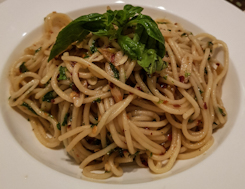
Back in the 1980s, Giovanni’s in Chatham (Kent, UK) was an oasis of superb food in the then desert of mediocrity, the Medway Towns. Apart from other beautifully prepared dishes, his spaghetti with pesto was perfect. Unfortunately, Giovanni’s, a justifiably expensive place pf good taste, went out of business several years before I ceased practising as a dentist in the Medway Towns in about 1993.

Grahamstown in South Africa was another surprising place where, in 2003, we discovered a remarkably good Italian eatery rin by an Italian family. I do not remember its name but it was near where we were staying on Somerset (?) Street. I doubt tje restaurant still exists.

Manhattan is rich in Italian eateries. One which we visited by chance on a street in East 50s, was superb. I forget what we ate, but after we had eaten we read the reviews hanging on the window. We might have missed this restaurant’s gastronomic treats had we read the review which related that the establishment’s prices were “vertiginous”. The reviewer was not kidding.

When Unity Mitford was in Munich in the 1930s, she developed a crush on Adolf Hitler. His favourite restaurant in Munich was the Osteria Bavaria, an Italian restaurant, which still exists but has been renamed Osteria Italia. Unity used to sit in the Bavaria at a table near to that occupied by Adolf, and was often invited to join him and his dining companions. In the early 2000s, I had a meal at Adolf’s renamed restaurant, which has retained much of its original decor. The Italian food served there was magnificent. I was amused by the establishment’s apt motto: “In touch with history”.

One of the best Italian meals I have eaten in London was at Asaggi near Westbourn Grove. Another memorably good Italian place I have tried is Zafferano near Knightsbridge. I forget what I ate, but that evening Sean Connery also ate there as well as the shorter of the Two Ronnies (British comedians). Sean Connery ate in a private room, guarded by a waiter, who told us: “We ‘ave to be careful this evening. We don’t want no trouble with James Bond.”

In India, there are plenty of restaurants offering Italian inspired food, but most of them produce disappointing dishes. Chianti in Koramangala (Bangalore) is one notable exception. I have eaten there at least twice, always most satisfactorily. Their food is very close to authentic Italian cuisine. However, the branch of Chianti in MG Road is disappointing.

It was two visits to Baroda (Vadodara) in Gujarat that prompted me to write this piece. The Fiorella in a hotel in the Alkapuri district serves truly excellent Italian food. It was set up by an Indian chef, who had trained in Italy and worked in restaurants there for more than fourteen years. Ravichandra, who became a master chef in Italy, qualified to supervise the running of kitchens in Italian restaurants, was employed by the hotel in Baroda. His brief was to set up a restaurant serving Italian food that made no compromises to pander to local tastes.

Fiorella is the successful result. We first ate there in early 2019, when Ravichandra was in the kitchen. Then, we returned in January 2020, by which time he had left. We were sad to miss him, but overjoyed to discover that, even without him, the food is still a great gastronomic delight. It is a case of ‘when in Baroda, eat as the Romans do’.

Check the toilet!

One of my cousins in France gave me a useful tip.

He said that clean toilet facilities are often associated with satisfying restaurants. What he meant was that if the restaurant’s management took care of small details such as the toilets, it was likely that they would take care over the more savoury aspects of the business such as the food and customer care.

Since I was given that tip, I have noticed that there is a remarkably high correlation between my degree of satisfaction with the restaurant and the state of their ‘loos’.