DISCOVER THE EXCITING RANGE OF TOPICS IN MY NEW BOOK ABOUT MY TRAVELS IN INDIA DURING THE LAST 30 YEARS

Here is a list of the chapters in Adam Yamey’s anthology of his often entertaining travel experiences in India. The book is both for those who know India and for those who do not.

The book and/or Kindle can be bought by clicking on the picture below.

LIST OF CHAPTERS

Introduction … page 9

Prologue: A book from India … 12

Saved by a nosebleed … 14

You married him? … 16

It began with a bang … 18

Shantiniketan … 20

. Maria and Job … 23

Please use the meter … 27

Mixed couples … 29

Coracles … 31

West End Hotel … 35

Less than one degree … 39

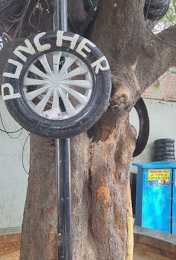
Puncher …42

Dining with the dead … 48

A generous gratuity … 50

Miner’s sauce … 52

From Kutch to Norway … 54

Looking so lovable … 56

Beneath the banyan trees … 58

Meeting Khushwant Singh … 61

A palace by the sea … 64

Monkey business … 67

Chicken 65 … 70

Diplomatic amnesia … 72

Meeting the Mahatma … 74

Feeding the cows … 79

Montecatini Terme … 83

Hummus in Hampi … 86

Clothing can be critical … 89

Traditional but trendy … 94

Facial prejudice … 96

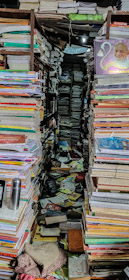
Paradise for bookworms … 99

Wrapped up … 105

The personal touch … 108

He worked with Le Corbusier … 111

My Ferrari … 115

From Gandhi to Hitler … 117

An unusual invitation … 121

Looking for literature … 123

Of dargahs and dyeing … 127

Before my time … 130

Improperly dressed … 132

Dining at Limra … 135

Hitler on the shelf … 139

Beefsteak not biryani … 144

Independence Day … 146

Large snakes … 148

One wife four husbands … 150

One day it might be you … 153

Waterfalls and water closets … 155

Cunning old fox … 158

Kutchi beer … 161

Albanians in India … 163

Bodies in the dark … 167

Don’t let it go viral … 169

Clubbing …171

Lopchu … 175

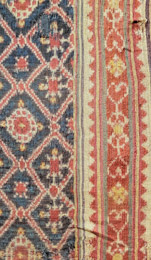
Threads of faith … 179

Nizam’s … 184

Teapots and politics … 187

A refreshing breeze … 190

Buried not burned … 193

Gandhi’s spectacles … 197

Tea at Lothal … 201

They came from Persia … 207

Don’t take the train … 211

Defying inflation … 215

In your face … 217

Cops and crocs … 219

A curious hotel … 222

Denmark by the sea … 225

No bill food is free … 231

Espresso in Diu … 234

Maurice and Bob … 237

An Indian welcome … 242

The pandit’s wife … 244

Royal encounter … 247

Unlocking a secret … 253

Curious coffee … 255

Do they speak Hindi in Russia? … 257

Dashiki … 260

Field of cars … 263

I love Stalin … 267

Jeremy Bentham and Calcutta …269

India’s first mosque … 273

Eggs excepted … 278

Saving their necks … 280

Reclining on a rug … 283

Bollywood in Bangalore … 285

A coffee house … 289

Bargaining in Mount Abu … 291

Not long in Nepal … 295

An unexpected sight … 299

Four bangles … 303

On the safe side … 306

PHD … 308

In touch with history … 311

James and Adeline … 316

Ladies only … 318

Lost property … 320

Plants from paper … 323

A soaking in Calcutta … 325

Mapusa market … 331

Introducing my NEW BOOK ABOUT MY TRAVELS IN INDIA

SOME SOUVENIRS FROM MY VISITS TO INDIA DURING THE PAST 30 YEARS

 —  A new book with a curious title  —

True love drew me to India. Since my first trip there in late 1993, I have visited the country more than fifty times.

After I married Lopa in London in October 1993, we travelled to her native land, India, a few weeks later. From the moment I first landed on Indian soil, my eyes opened wide with amazement, and ever since then, India has filled me with a delightful sense of wonder. 

You might be curious about the book’s title. This relates to a chance one-off sighting (in the 1990s) of a padlock made by an Indian company with the same name as that of Germany’s former Führer. From that day onward, whenever I have been in India and seen a shop or market stall selling locks, I have always looked to see whether any of this company’s locks are on sale.

To discover some of the many things that endear me to India and whether I ever managed to find one of these curiously named locks, you need to read my new book. Illustrated with my photographs, it contains over one hundred short prose vignettes, which can be enjoyed by both those who are familiar with the country and those who are not.

Paperback: https://www.amazon.co.uk/HITLER-LOCK-OTHER-TALES-INDIA/dp/B0CFM5JNX5/

Kindle: https://www.amazon.co.uk/HITLER-LOCK-OTHER-TALES-INDIA-ebook/dp/B0CG3DX1LP/

In the Shadow of Freedom: Indians in Nazi Germany

Subhas Chandra Bose (1897-1945) is probably the most famous Indian to have spent time in Nazi Germany. Less well-known is Ayi Ganpat Tendulkar (1904-1975), who spent much longer in Germany than his illustrious compatriot. While studying in Paris, he married Sasha Alexandra Passini in about 1924. Soon after this, the marriage ended, and Tendulkar began studying in Berlin. He married one of his professor’s daughters – Eva Schubring. In 1933, after Hitler had come to power and Tendulkar had divorced again, he began a close relationship with the screenwriter Thea Von Harbou (1888-1954). Thea had just divorced her second husband, the great film director Fritz Lang (1890-1976) – one of my favourite film directors.  The relationship between Tendulkar and Von Harbou was very close, and had Hitler’s racial laws (against marriages between ‘Aryans’ and others) not been enacted, there is a good chance that they would have married.

Tendulkar returned to India just as WW2 broke out. There, he met and fell in love with Indumati Gunaji (died 2006). From the start, her family were against the relationship, and Indumati ran away from home to live with Tendulkar. Both were followers of Mahatma Gandhi – she more than he. Soon, Tendulkar, who had published anti-British articles in Berlin and elsewhere and was under suspicion because of his long stay in Germany, was imprisoned by the British. Meanwhile, Indumathi helped the villagers where she lived. Her life was not easy, and she missed Tendulkar greatly.

Eventually, Indumathi and her family, who were concerned about her and her romantic attachment to Tendulkar, became reconciled to some extent. Her father, a Gandhian, suggested that they ask Mahatma Gandhi what he thought of the relationship. His reactions to the situation were far from simple, as is revealed in the pages of “In the Shadow of Freedom” by Laxmi Tendulkar Dhaul – the daughter of Indumathi and Tendulkar.

Ms Dhaul’s well-researched book is a fascinating read. It covers the extraordinary lives and relationships between Tendulkar, Indumathi, and Thea Von Harbou, both in Germany and in India – before and after independence. Despite some unfortunate errors missed by the proofreader, this is an un-put-downable book. It opened my eyes to the interesting subject of Indians living in Nazi Germany as well as Gandhi’s rather intriguing views on the purpose of marriage.

Impressions of India in preparation

At the moment, I am preoccupied with carrying out the final editing of my latest book, which I have described briefly below. When I publish it, which I hope will be soon, I will post more about it here in my blog and elsewhere.

A lock made by Hitler; Bollywood encounters; jackals on the golf course; teamakers and politicians; banyans and monkeys; Gandhi’s optician; coracles and crocodiles; and Denmark in India: these are just a few of the topics covered in Adam Yamey’s collection of 101 intriguing vignettes of life in India. This book with illustrations is the author’s love letter to India, a country he has been visiting frequently for almost 30 years.

The importance of being methodical

I HAVE NUMEROUS albums full of photographs that I have taken in India and many places in Europe over the years since about 1993. Before that date, for about 10 years, I used to take pictures on slide film, and have them processed into slides for projecting. I still have most of these, and each one is labelled. For some mysterious reason, when I began putting my photographic prints in albums, I hardly ever labelled them. Consequently, I have a vast collection of – dare I say it – interesting photographic prints taken at locations I can either not remember or can only vaguely recall.

Yesterday (5th August 2023), I chose to look at one of my albums randomly chosen from a box containing several of them. As I flicked through the pictures, I came across one showing an advertisement for an institution called Einstein College, somewhere in India. The location was easy to identify because the college’s address was in the city of Trivandrum (Thiruvananthapuram) in Kerala. Having looked on the Internet, I see that the college still exists.

Two other prints were stored close to the college photograph in the album. So, I guessed they might also have been taken in Trivandrum. One of them shows a building with geometrically decorated walls and numerous small roofs. At first, I thought it might be a temple, but then I wondered whether it was the palace-like museum in Trivandrum, which houses a fine collection of paintings by the Keralan artist Ravi Varma. I checked on the Internet, and discovered my picture shows apart of the museum’s exterior. The third print shows what looks like an enormous terracotta coloured ‘multi-storey’ pigeon coop. It is a cylindrical structure with some helical decorative features. The edifice bears a sign that reads “India Coffee House”. Using that clue, I found that is one of the three branches of the India Coffee House chain in Trivandrum.

Had I labelled these photographs, I would not have needed to do any detective work to identify them and their locations. Sadly, many of my unlabelled prints do not have obvious clues that can help me identify them, and most likely they will remain a mystery. The moral of this story is that it pays to be methodical and systematic occasionally.

One at each corner of the square

NOW FILLED WITH TOURISTS and pigeons, the area which is currently Trafalgar Square was where Royalty kept their hawks between the 13th century and 1534. In that year the Royal Mews, where the hawks were kept, burnt down, and were replaced by stables for the royal horses. The stabling was moved to Buckingham Palace in the reign (1820-1830) of King George IV. In 1826, the clearance of the stables from the area began, and following the plans of John Nash, a new square began to be laid out. Initially named in honour of King William IV, it was later named Trafalgar Square to commemorate Nelson’s victory at the Battle of Trafalgar in 1805. Nelson’s Column (145 feet tall) was erected in May 1854.

At each of the four corners of the Square there is a stone plinth designed to support a sculpture. At the northeast corner, the plinth supports a statue of King George IV. Major-General Henry Havelock (1795-1857), who was involved in suppressing the First Indian War of Independence, is perched on the southeast plinth. He died of dysentery in Lucknow after relieving Kanpur from a siege. General Sir Charles James Napier (1782-1853) is portrayed sculpturally on the southwest plinth. His mother was the great-granddaughter of King Charles II. As a Major-General in the Bombay Army, he led the British conquest (1843) of the Indian province of Sindh. It is said that on achieving this, Napier reported in Latin “Peccavi”, which means ‘I have sinned.’

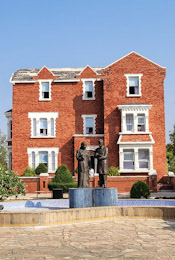
The fourth plinth on the northwest corner of the Square was destined to have a statue of King William IV. Because of insufficient funds, the king’s statue was never made, and the plinth remained empty until 1999 when the Royal Society of Arts (‘RSA’) conceived the idea of using the plinth to display a series of artworks by contemporary artists. Three artists displayed works between 1999 and 2001 on what is now known as The Fourth Plinth. Since 2005, under the supervision of London’s Lord mayors, a series of artworks by different creators have been displayed on the Fourth Plinth. Currently (since September 2022), the plinth (see photograph) displays a sculpture, “Antelope”, by Samson Kambalu. Recently, I heard this highly intelligent artist speak at a conference. His work on the plinth, based on a photograph taken in 1914, portrays the Baptist preacher and pan-Africanist John Chilembwe and the European missionary John Chorley. As the website www.london.gov.uk explained:

“The photograph was taken in 1914 at the opening of Chilembwe’s new church in Nyasaland, now Malawi. Chilembwe has his hat on, defying the colonial rule that forbade Africans from wearing hats in front of white people. A year later, he led an uprising against colonial rule.  Chilembwe was killed and his church was destroyed by the colonial police.

On the plinth, Chilembwe is larger than life, while Chorley is life-size. By increasing his scale, the artist elevates Chilembwe and his story, revealing the hidden narratives of underrepresented peoples in the history of the British Empire in Africa, and beyond.”

Kambalu’s piece is a powerful work of art, and its message of resisting colonialism, makes stark contrast to the exploits of the other people portrayed on the Square’s plinths.

Come with me in my Ferrari

Fort Kochi (Fort Cochin) is the picturesque, historic part of Kochi – a port on the coast of Kerala in southwest India. Occupied at various different times by the Portuguese, Dutch, and British, this small urban area at the northern tip of an island contains many buildings that recall the town’s former foreign occupiers.

Essentially, the historic town centre consists of a few short streets and some open spaces. Fort Kochi is built on flat terrain, and is a paradise for walkers even in the hot, humid weather that prevails most of the year. As a consequence, the large number of autorickshaw (‘auto’) drivers often seems to outstrip customer demand.

From dawn to after dusk, auto drivers cruise around the town in their empty vehicles, looking for customers. We usually spend at least a week in Fort Kochi every year, especially when the excellent Kochi-Muziris international art biennale is in progress. So, individual auto drivers get to know us as we stroll around. They stop and ask us if we need a ride. We tell them that we are walking. So, when they next see us, optimistically they invite us to take a ride. When we turn them down, they say to us in an understanding way:

“Walking, walking! – always walking.”

Other auto drivers, who either do not recognise us or are trying to tempt other tourists into their cabs, say:

“See my Ferrari. Come and take a ride in my Ferrari.”

This always amuses me because to describe an auto as a Ferrari is rather like describing a pigeon as an eagle.

On the subject of Ferraris, there are some in India. One of them, an eye-catchingly bright yellow, belongs to, or is driven by, a young man who is the late teenaged son of a wealthy family in Bangalore. Because this is not a type of vehicle that could be safely parked in most parts of the city, he can only use it to drive to and from the exclusive Bangalore Club, where he can park it in an area well policed by security guards. At his home, he parks it in the safe compound containing his residence. Given the density of traffic and the daring driving in Bangalore, it is amazing that he feels safe enough to flaunt his precious car on the roads between his home and the Club.

Three elephants

During my first visit to India (in early 1994), my in-laws encouraged my wife and me to take sightseeing trips organised by the Karnataka State Road Transport Company (‘KSRTC’). These coach trips, each of which lasted more than 12 hours, involved seeing many interesting sights. During one of them, we visited the old (12th century and earlier) temples at Belur.

After viewing the temples, we left the area in which they are enclosed, and stood waiting to board our bus. A small boy approached us. In his hand there were three small carved stone elephants, which he offered to sell us. They were quite attractive, but not something that we wanted. He began by saying:

“Two hundred rupees only.”

We declined his offer.

“One hundred and fifty rupees,” he said.

We were not tempted.

“One hundred?”

We said “No, thanks.”

“Fifty?”

Again, we refused. He brought the elephants closer to us.

“Twenty-five?”

“We really don’t want them,” we explained to him. Then, he said:

“Have them for nothing.”

We told him that we did not want them, and he wandered off,

Today, almost thirty years later, I still wonder what would have happened next if we had accepted the three elephants without paying anything to the little chap. Even though we did not buy or accept the three cute little carvings, I can still see them in my mind’s eye.

Imported from India

IN THE FIFTEENTH century, the Portuguese made an important set of discoveries, which were kept a closely guarded secret. These discoveries brought great wealth to Portugal. The Portuguese navigators found routes from Portugal to India via the Atlantic Ocean and the Cape of Good Hope. By using these, they were able to transport spices and other valuable commodities from Asia to Portugal directly. Prior to the discovery of this sea route, goods from India and further east arrived in Europe via Egypt and the former Ottoman Empire. This overland route undoubtedly added various middle-man costs to the goods.

Once the Portuguese began sailing in the Indian Ocean, they successfully created a monopoly over trading in this area. However, after a period of uninterrupted use of the Indian Ocean, competition arrived in the form of mainly Dutch and British trading vessels.

Mother of pearl bowls from India

Madeira was one of the places that the early Portuguese ships called in at during their voyages. This was brought home to me during a visit to Funchal’s superb Museum of Sacred Art. In two of its rooms we saw religious artefacts – sculptures and two mother of pearl bowls – which were labelled as having come from India. There were others that came from ‘Portuguese Asia’. One item, a beautiful inlaid tortoise shell box, came from Japan.

Unlike the religious sculptures we have seen in old Portuguese churches in Goa, which often feature Indian looking faces, those in the museum had European facial appearances. An exception is a 16th century carved panel depicting St Francis Xavier asleep on the Island of Shangchuang. He is accompanied by two saints – one Indian and the other Chinese.

Seeing these beautiful old sculptures and other objects, which were made in Asia and then brought to Madeira, helped make the history of Portugal’s former pioneering navigational achievements a little more vivid for me.