Was I an inventor of rewilding?

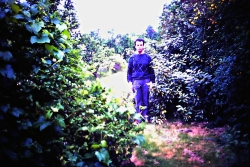
BETWEEN 1983 AND 1994, I owned a house in Gillingham, Kent. Number 148 Napier Road was a detached dwelling with a narrow garden that stretched 180 feet behind it. Most of this long stretch was covered with grass.  After I first moved into the house, I purchased an electric lawn mower, and regularly trimmed the lawn. All went well at first. However, after a few months and several mowing sessions, I found that when I was cutting the lawn my eyes streamed, and I sneezed uncontrollably. I tried wearing a facemask when mowing, but this did not relieve the symptoms. Eventually, I decided not to bother mowing the lawn.

The grass grew. So did the anger of my immediate neighbours, both of whom were elderly and believed in tidy gardens. One of them said that because my lawn was so unkempt, insects were travelling from it into her garden and destroying her plants. She was so upset by this thought that she did something extremely unwise. One summer evening, I returned home after nightfall, and because the weather was pleasant, I decided to spend a few minutes in my back garden. It was dark. I sniffed, and believed that I could smell burning. I saw no flames, and retired to bed. On the next day, I met my other neighbour – a very practical old gentleman who had built his own house. He told me that during the previous day, he had had to enter my rear garden to extinguish a fire which had been started by the lady, who believed that my garden was infecting hers with pests.

Meanwhile, the grass grew longer. It reached a point where it was so tall that if someone sat down, they became hidden by it. As autumn approached, the tall grass just fell over, and seemed to disappear gradually. It returned without fail every spring, and despite not being mowed, it grew healthily. However, the neighbours were unimpressed by my lawn, the untidiest in Napier Road. I decided that I would have to do something to give the impression that my wild garden was by design, rather than simply the result of neglect. So, what I did was to use the mower to create a sinuous, narrow mowed path that ran along the length of the lawn – I created what might be described as a landscaped lawn. I am not sure that this impressed my neighbours, but I felt that I had ‘done my bit’.

In addition to the lawn, I planted shrubs, which I allowed to grow ‘willy nilly’. My seemingly wild garden was a haven for butterflies. As I walked along the garden, following my sinuous path, clouds of butterflies used to shoot out of the shrubs and other plants.  Unwittingly, I had ‘wilded’ or ‘rewilded’ my garden, which in the 1980s and early 1990s was not something that was done. Had I invented what is now known as ‘wilding’, also known as ‘rewilding’?  Probably not, but it only began to be adopted as a strategy for reducing loss of biodiversity following work done in the mid-1980s (see https://en.wikipedia.org/wiki/Rewilding). I must confess that my pioneering rewilding in Gillingham did not result from a desire to save the natural world, nor from laziness, but to save myself from symptoms of allergy.

In the late 1990s, we put the house up for sale. The garden had become such a veritable jungle that our estate agent described it as being “… in a natural state.” Interestingly, the people who bought the house from me liked it because they were looking forward to taming the garden – there is no accounting for taste!

Just let it grow

BETWEEN 1983 AND 1994, I owned a house in Gillingham, Kent. It was not an exceptional building, but it had a long back garden – 180 feet in length and about 22 feet wide. Much of the garden was covered with a lawn bordered by plant beds. When I first moved in, I attended the garden keenly even though I had little idea about gardening. As soon as I unearthed weeds, they re-appeared. It was most disheartening.  I discovered that planting shrubs was the best way to hide the weeds, about which I soon stopped worrying.

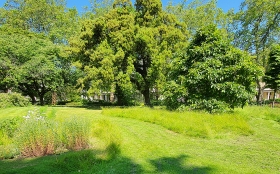
As for the lawn, I acquired a mowing machine, and for some months, or maybe years, I trimmed the grass regularly. Then, I found that whenever I cut the lawn, my nose would start streaming and I would have fits of sneezing. I realised that I had a grass allergy. So, I decided to cease mowing the lawn. I let the grass grow higher and higher. When it reached its greatest height, people sitting in the garden would be hidden by it. At the end of the year, the grass collapsed and more or less disappeared – only to begin growing again the following spring. I let nature take its course, and ceased worrying about it until a deputation consisting of my immediate neighbours came to my house to complain about my unruly lawn and garden. One of them, an elderly lady, was convinced that all the weeds and insects in her garden had come from mine.

One summer evening, I came home after dark and as it was a pleasant evening, I stood in my back garden looking up at the stars. As I did so, I was aware of a slight smell of burning. The following day, one of my neighbours saw me in the street as I was setting off for work. He told me that the neighbour on the other side of the garden had set fire to mine, hoping that the flames would kill the weeds. Luckily, he had spotted the conflagration, and extinguished it before it did too much damage.

Following the neighbours’ complaints, I conceived an idea about how to deal with my lawn. I decided that I would let it grow without interference, but I would mow a narrow sinuous path along its length. The idea was that I could then explain to the neighbours that the wild grass was part of my garden design. Meanwhile, my shrubs increased in size steadily and the weeds flourished. In the warmer months of the year, whenever I strolled in my garden, clouds of butterflies used to billow from the luxuriant vegetation.

Today, in June 2023, whilst walking in Kensington Gardens, I noticed that much of the grass was growing wild – not being mowed. Here and there, the gardeners had trimmed small areas of grass with a lawnmower, much as I used to do back in Gillingham in the 1980s.

To be honest, I let my garden grow wild because I could not be bothered to spend hours of my life making it look neat and tidy. Today, what I was doing – letting the plants ‘do their own thing’ – is known as ‘wilding’. Maybe, unwittingly I was a pioneer of wilding.

Three men and a trolley

One man pulls the trolley. Another stands on the trolley, pulling a lever back and forth. The lever operates a pump that sends water from a tank (on the trolley) along a hosepipe to a third man, who is holding its end and spraying the flowers.

In India, there is no shortage of manpower and wages are not high. So, employing three men to do what a costly sprinkler system would do in Western Europe makes sense and gives employment to those who have families to feed.

From paper come plants

A TALL MINARET OVERLOOKS Ebrahim Saheb Street in Bangalore’s busy Commercial Street bazaar district. Not far from the lofty structure stands the premises of a printing firm called Sundaram. It is here at this efficient enterprise that I have often had visiting (business) cards printed.

Recently, I went to Sundaram’s to collect my latest batch of cards. While I was waiting to have them packed, I noticed a man in the shop, folding what looked like A3 sized sheets of plain white paper. He folded them in half lengthwise. I asked him what he was doing, and he replied:
“Seed papers”
I must have looked puzzled because the owner of the business added:
“You put them in the ground and plants will come. You leave them in the ground after plants have come. The papers have seeds in them.”
He told me that these seed papers were made in Coimbatore, a town south of Bangalore. Then, he went to the rear of his shop and brought me a few offcuts of the seed paper.

The paper is quite thick and rather stiff. It has a slightly rough surface. When you examine it you can see well spaced, small darkish thickenings. These spots are the seeds, which have been incorporated into the biodegradable paper.

Not being a gardener, I had not come across seed paper before. It has been around for many centuries. Until 1941, it used to be handmade in small batches, but after that year it began to be made on an industrial scale.

The paper can incorporate a variety of seeds from flowers to edible plants. I suppose that the advantages of seed papers include appropriate spacing of seeds and protection from consumption by birds etc.

When I entered Sundaram’s to pick up my cards, little did I expect to learn about seed paper, or to discover horticultural material being processed in a printing shop. It is surprises such as these that make visiting India so much fun.

A floral fireworks display

SOME OF LIFE’S PLEASURES are seasonal. Such is the case for the explosion of colour that can be seen in the Isabella Plantation in London’s Richmond Park. During late April and most of May, the azaleas and rhododendrons in the Isabella burst into flower. These alongside many other flowering plants, including seas of bluebells, provide a sumptuous banquet of colour for the visitors’ eyes. It is not so much the immense number of flowers that provides so much joy but the way the shrubs and other plants have been planted that creates a visual experience that easily rivals the best of fireworks displays. Even if I were able to express myself better in writing, words cannot possibly recreate the experience of seeing the Isabella Plantation in full bloom. Although I am keen on photography, I feel that even good photographs of the place can only hint at the impact of seeing the flora in real life. In brief, if you can, you must try to visit the plantation when the blooms are at their most magnificent.

The Plantation is in the southwest part of Richmond Park, not far from both the Robin Hood and Kingston Gates. The latter is open to motor traffic currently (May 2021). Richmond Park was a royal deer park, a hunting ground, established by the 14th century when it was part of the Manor of Sheen (https://historicengland.org.uk/listing/the-list/list-entry/1000828).  King Henry VII was particularly fond of the park, which he named ‘Richmond’ after his earldom in Yorkshire (Richmond is a town in that county). He also had a palace built there, of which precious little remains because by the Restoration of the Monarchy in 1660, it was already dilapidated and was never rebuilt. In its heyday, it was one of the few places fitted with a flushing lavatory. This was installed by Queen Elizabeth I’s godson, Sir John Harington (baptised 1560- died 1612; https://en.wikipedia.org/wiki/John_Harington_(writer)).

The history of public access to the park is of interest (www.trpg.org.uk/perch/resources/newsletter-005.pdf). Between 1637 when King Charles I enclosed the park and the 1730s when Robert Walpole forbade it, there was pedestrian access to the park. In 1758, a certain John Lewis (1713-1792) won a court case that re-established the right of some public access to the paths and roadways within the park. By the mid-19th century, the public could drive their carriages through it. Today, its roadways are popular both with cyclists and motorists.

The history of the Isabella Plantation is detailed on the website of The Royal Parks (www.royalparks.org.uk/), from which I obtained the following information. By the 17th century, the waterlogged area in the south west corner of Richmond Park was known as ‘The Sleyt’, a sleyt being a word for boggy ground or an open space between woods and banks.  The area where the Plantation is today was marked as ‘Isabella Slade’ on maps published by 1771. The name Isabella either referred to a lady with that name, or, more likely, it was a corruption of the word ‘isabel’, which as far back as the 15th century meant ‘dingy’ or ‘greyish yellow’, which is the colour of the soil in the area of the park where the Plantation is located.

A Deputy Park Ranger, Henry Addington, Lord Sidmouth (1757-1844), fenced off an area of 42 acres of the Isabella Slade in 1831, planted various kinds of trees for timber, and gave the land its present name, ‘Isabella Plantation’. Sidmouth, a Tory politician, was briefly Prime Minister at the beginning of the 19th century, lived in the White Lodge of Richmond Park from 1801 until his death (https://whitelodgetimeline.royalballetschool.org.uk/1800/item/161/). He had been given it as a residence by King George III, who appointed himself the park’s Ranger and Sidmouth his Deputy. Currently, the White Lodge houses The Royal Ballet school.

Getting back to the Plantation as we see it today, it was created chiefly by the work of the Park Superintendent, George Thomson, done between 1951 and 1971. The Royal Parks website explains that:

“The present garden of clearings, ponds and streams was established from the 1950s onwards. It is largely the work of George Thomson, the park superintendent from 1951-1971. Along with his head gardener, Wally Miller, he removed Rhododendron ponticum from large areas and replaced it with other rhododendron species. They established evergreen Kurume Azaleas around the Still Pond and planted other exotic shrub and tree species.”

The Plantation has three ponds, of which the Still Pond is the most spectacular. Surrounded by azaleas and Rhododendrons, its waters are still, that is they are mirror-like. The flowers of the shrubs surrounding the water are reflected in the water, producing a delightful and dramatic visual effect. The other ponds, Peg’s Pond, and one named after Thomson, have their own charms but lack the drama of the Still Pond. Streams and rivulets lined with ferns and other plants flows across the Plantation. The longest stream was dug in 1960 and includes Peg’s Pond.

So far, we have visited the Isabella Plantation three times. Twice, we saw it in its full floral glory and once a few months before the flowering began. Timing is important if you want to enjoy the full floral impact. So, get there in late April or during the first few weeks of May in order to best experience the forms, colours, and fragrances of this beautiful collection of flowering shrubs.

Glass, iron, and Syon

KEW GARDENS CONTAINS several magnificent Victorian plant houses made mainly of glass and iron. These include: The Palm House built 1844-1848; The Waterlily House built 1852; and The Temperate House built in about 1859. Although they are early examples of massive glass and iron structures for the cultivation of plants, they are not the earliest. The conservatory in the gardens of nearby Syon House predates them, having been built in 1827, ten years before Queen Victoria came to the throne. As a work of architecture, it rivals the best of those Victorian ‘glasshouses’ that can be seen at Kew.

The Grand Conservatory at Syon

We had parked in the grounds of Syon House several times before we visited its gardens in April 2021 and each time, I noticed the large glass and iron dome towering over the high garden walls. Until we entered the gardens, I had not realised that this splendid dome is attached to one of the most attractive plant conservatories that I have ever seen.

The extensive gardens of Syon House were landscaped by Lancelot ‘Capability’ Brown (1716-1783) in 1760 but were replanned in the 19th century.  The architect Charles Fowler (1792-1862), who designed the market buildings in London’s Covent Garden, designed The Great Conservatory at Syon Park. It was built for Hugh Percy the Third Duke of Northumberland (1785-1847), who served as Lord Lieutenant of Ireland under the Duke of Wellington from 1829 to 1830 (https://en.wikipedia.org/wiki/Hugh_Percy,_3rd_Duke_of_Northumberland).

Writing in 1876, James Thorne, author of “Handbook to The Environs of London”, noted:

“The Great Conservatory designed by Fowler is in the form of a wide crescent, with pavilions at the extremities, and a lofty central dome. The centre, 100 feet long, is a tropical house, and is said to contain the finest collection of tropical plants in any private establishment in England. It is noteworthy that here only in this country has the cocoanut palm fully ripened …”

Thorne also noted that the vases on pedestals on the terrace in front of the conservatory were carved by Grinling Gibbons (1648-1721). The circular pool in front of the conservatory has a statue of Hermes (Mercury), which is a copy of one by the Italian sculptor Giambologna (1529-1608).

Although we were unable to enter The Great Conservatory, we could see most of it through its clean windows. The central dome is supported by a ring of perforated semi-circular arches held aloft by slender iron pillars. Even without entering it, the central area of the building can be seen to be a beautifully designed, airy space. Though not as crowded with plants as the conservatories at Kew Gardens, the one at Syon contains a collection of palms, cactuses, and other warm weather plants, mostly large and well-established. Unlike the glasshouses at Kew, much of the rear wall of The Great Conservatory is constructed with brickwork instead of glass and iron.

Much time can be spent enjoyably exploring the lovely gardens at Syon House, but despite their beauty, the pièce-de-rèsistance is without doubt The Great Conservatory, an impressive and beautiful example of construction in glass and iron. It is well worth purchasing an admission ticket even if only to see and admire this great work of Regency architecture.

Continuity, salad, and Brexit

ROBERT AND MARGARET, my PhD supervisor, and his wife, became my close friends during the execution of my doctorate and for many years afterwards. I had the feeling that they were not as keen as some about Britain joining what we now call the European Union (‘EU’). Today, the 31st of December 2020 at 11 pm, the UK will leave it. Thinking about this reminded me of my old, now sadly deceased, friends and how joining Europe almost wrecked one of their dietary habits.

Robert was an extremely keen and energetic gardener. His home had extensive grounds. Looking after these kept him blissfully busy. The tennis court was separated from the conservatory by a large lawn surrounded by bushes. This was the ornamental garden. It contained one or two benches and a table where tea could be enjoyed in hot weather.  A path led from this into an even larger kitchen garden that was lined on one side by a series of long low huts, known as the ‘goat sheds’. Although they did not contain any goats, they were filled to the brim with … well… maybe many people might have called it ‘junk’. My friends would have disagreed with this assessment. 

At one end of these sheds, Robert, who was a first-class handy man as well as a brilliant scientist, kept a wide selection of tools.  There were few repairs in and around his home for which Robert lacked the skills to perform competently. Once plastic piping became widely available, he carried out many successful plumbing repairs. More than once he said to me with great seriousness that it was senseless teaching children Latin or Greek; they should be taught something useful like plumbing. Amongst these tools, there was also a hand operated mill that he used to grind flour, which he used to bake his own bread.

Almost whenever I arrived at his home, I would find Robert somewhere in the garden. Often, he was hunched over a bed of seedlings, weeding. Sometimes, he would be looking after his crop of potato plants which grew in a field accessed by way of the path between the goat sheds and the stables. He liked this patch of ground because it bordered the large meadow where his horse, Hobo, grazed.  This horse enjoyed company and used to stand by the fence close to where Robert was toiling. Robert valued Hobo’s company as well as that of his Burmese cat, which followed him around the garden.

Beyond the goat sheds and separated from them by a pathway were two adjoining stables. One was occupied occasionally by the family’s pet horse; and the other was filled with the contents of a long-lost friend’s flat. Amongst the various plots for growing fruit and vegetables, there was a spacious elegant Victorian glasshouse. A rusty wide-bore pipe ran around the walls that made up the rectangular base of this. This pipe had once been connected by underground pipes to the house, which was about 70 yards away. In its heyday, the piping in the glasshouse had been part of the house’s central heating system circuit and served to keep the plants warm in winter. By the time that my friends had bought their home, it had been disconnected.

Robert grew a variety of edible plants in the greenhouse. The lettuce he grew there was some of the best that I have ever eaten. Freshly picked, it was so tasty that it required neither salad dressing nor salt nor any other additive. It was grown from seed of a strain of lettuce called ‘Continuity’.

When the UK joined the European Economic Community (‘EEC’) in 1973, something of which I doubt my friends fully approved, the days of Continuity were numbered. Amongst the many regulations that the EEC planned to impose on its members was the banning of the sale of some kinds of seeds including those of Continuity breed of lettuce. This annoyed Robert and Margaret, and it became yet one more reason for them to disapprove of joining the EEC. Not one to be defeated by authority, Robert made sure that he let some of his lettuce plants flower and he collected their seeds in anticipation of the ban. For long after the seeds were no longer on sale, Robert and Margaret and others who ate with them were able to enjoy Continuity lettuce.

Although many people, including my friends Robert and Margaret, benefitted greatly from joining the EEC, later the EU, their disquiet about European judgement about what they could grow in their own gardens was not entirely misplaced. For, over the years, what began as a primarily economic union gradually assumed an overarching political role. We wait with bated breath to see whether leaving the EU will allow Britain to truly ‘regain control’, as Boris Johnson hopes, or, as many people fear, to degenerate into an insignificant archipelago lying off the west coast of Europe.

Two gardens: one old and one new

DURING OUR TEENAGE YEARS, my friends. Francis, Hugh, and Michael, and I used to take short trips to places of interest outside London. Amongst the many places we visited were Oxford, Cambridge, Salisbury, and Winchester, to name but a few. In those days, the mid to late 1960s, none of us could drive. So, we had to rely on getting to places by public transport. On one occasion, we arrived in Cirencester, hoping to find some way of getting to the remains of the Roman villa at Chedworth, which is about ten miles distant from it. The situation looked desperate. We were worrying that we would have to walk when I spotted an old-fashioned looking bus arrive. The driver told us that he operated a once a week service that passed Chedworth. We boarded and reached our goal.

Pavilion by Smiljan Radic in the Oudolf Field garden

One place that we always wanted to visit was the garden at Stourhead in Wiltshire. Famed for its spectacular landscaping including many architectural ‘follies’, this place was, despite our extensive research, impossible to reach using public transport. It remained one of our greatest wishes to see Stourhead, as great as the Jewish people’s desire to see the so-called Holy Land. Stourhead was almost our ‘Goldene Medina’. We never managed to  reach it together.

Many years later, in the 1990s, my wife and I made our first visit to Stourhead, travelling by car. We saw the place at its best on a bright sunny afternoon. In late September 2020, we returned to Stourhead on a grey, rainy afternoon during the covid19 pandemic. Despite the inclement weather and the restrictions as to where we could walk, we had a wonderful time. Every footstep we took led to one after another exciting view of the landscaped parkland. Wherever we looked, we saw fine trees and a wide variety of shrubs and other plants. Much of the walk is around an irregularly shaped man-made lake, the shores of which are dotted with architectural ‘follies’, constructed to enhance the romantic landscape. Many of these are built to resemble Greek or Roman classical temples. There is also a cottage built in Gothic Revival style and a wonderful and rather weird artificial grotto containing statues and fountains. Words cannot begin to do justice to the beauty of the gardens at Stourhead. The place has to be seen to be believed, and the weather, both good or bad, simply enhances the delightful experience that has been produced by nature skilfully assisted by mankind.

The gardens in the 2650-acre estate of Stourhead were designed by Henry Hoare II (1705-1785), a banker and garden designer. They were laid out between 1741 and 1780 in a classical 18th century design, based on the landscape paintings by artists such as Claude Lorraine and Poussin. The Hoare family owned paintings by some of these great masters. Many of the monuments or follies that adorn the garden were designed by the architect Henry Flitcroft (1697-1769), who died in Hampstead, the area in which I grew up. The slightly over one-mile long walk around the lake was designed to try to evoke a journey similar to that of Aeneas’s descent into the underworld. The design of this path was conceived to produce alterations in the mood of the visitor as he or she walks along it, moods reflecting those of Aeneas on his journey. If that was the intention, Aeneas must have had a wonderful trip.

In brief, the grounds at Stourhead should not be missed by anyone with even the very slightest interest in gardens. In the words of the Dutchman Baron Van Spaen van Biljoen (1746-1827), who visited the garden in the late 18th century:

“Nothing in England could compare with Stourhead … we were in such ecstasy we had the utmost difficulty in tearing ourselves away from this charming spot…”

This noble Dutchman visited many gardens in England with his stepfather-in-law, Baron W. C. H. van Lynden van Blitterswijk (1736–1816) during the summer of 1791. His opinion is still valid today. The Dutch visitors would have seen Stourhead when the oldest part of the garden would have been only fifty years old. The plants would have been far less developed than they are today. As my wife said wisely, Hoare and his family were not only creating the garden for themselves but for the many generations that would surely follow in their footsteps.

On the day we visited Stourhead, we visited another garden not far away, near the charming town of Bruton in Somerset. Like Stourhead, created in the 18th century to depict nature naturally but under the guiding hand of man, the Piet Oudolf Field next to the Somerset branch of the Hauser & Wirth art gallery is a carefully curated ‘wilderness’, an attractive sea of wild flowers and shrubs. Piet Oudolf (born 1944), a Dutch garden designer, began creating the one-and-a-half-acre garden next to the gallery less than ten years ago.

The garden grows on a plot that slopes gently down to the buildings housing the gallery. At the highest point in the garden, there is what looks like an oversized donut or, perhaps, a huge whiteish mushroom (when viewed from outside it). It is in fact a structure that was the temporary summer pavilion at London’s Serpentine Gallery in 2014.   It rests on giant rocks and was designed by Smiljan Radic, a Chilean architect born in 1965. Made of a semi-transparent fibre-reinforced plastic shell, it is hollow and allows the visitor to walk around in what looks like part of a large snail shell. Although it looks quite different from the plants growing around it, its fungal resemblance makes it blend with them in a remarkably pleasing way.

Incidentally, the Oudolf Field is worth visiting in combination with the spacious art gallery and its associated restaurant that provides exceptionally good food. I recommend their Sunday roasts!

Both Stourhead and the nearby but much younger Oudolf Field, are fine and beautiful examples of man’s interaction with nature. Visiting these gardens lifted our spirits despite the rain that fell almost incessantly.  I had to wait for over thirty years before my wish to visit Stourhead was fulfilled, but it was well worth waiting for.

Gardening and me

I LOVE GARDENS BUT I am not, and never have been, a great gardener. As a child, I used to mow the lawn and cut parts of the privet hedge surrounding our garden in Hampstead Garden Suburb. Neither of these activities endeared me to gardening. In 1983, I became a homeowner in Gillingham, Kent. My house had a 180-foot-long garden which was about 30 feet wide. About 120 feet of it was lawn bordered by narrow beds and the rest of it was, I imagine, once dedicated to growing fruit and vegetables. On taking possession of my new home, I was determined to make a success of the garden.

For a few weeks, I dug up weeds, hoping to clear a space to plant potatoes and onions. Day after day, I would return home from a session of pulling out teeth and other dental activities and then get down to pulling up weeds. It was disheartening to discover that a patch, which I had cleared a day earlier, was already becoming refilled with weeds. What I did not know at the time was that my garden was infested with a weed that was extremely difficult to eradicate manually or even with chemicals. The smallest fragment of this horrendous plant was enough to ensure its rapid and thorough propagation.

After a while, I abandoned my grand ground clearance plans and lowered my ambitions. I decided to clear a small patch to grow some parsley, a herb that was only available in local shops at Christmas time. I planted the seeds as instructed on the packet, watered them as required, and inspected the parsley patch every day.  Soon, tiny green shoots began appearing. I was horrified. I thought that once again the weeds were beginning to defeat me. So, I plucked them out to clear the ground for my parsley to have the best chance of its survival. It was only later that I realised that what I had regarded as weeds was in fact the parsley I was hoping to grow.

My solution to managing my garden was simple and effective. I began visiting garden centres to buy fast-growing shrubs. I had decided to let them compete with the weeds instead of me. This plan was successful. Soon, I had plenty of attractive plants that were growing larger in height and volume at high speed.

The long lawn proved problematic after a while. I bought an electric mowing machine that trimmed the grass nicely. However, it was not long before I began sneezing violently whilst mowing the lawn or even driving past a lawn that was being mowed. I tried mowing while wearing a paper face mask such as is commonly seen today during the covid19 pandemic. The mask proved to be useless even though it covered nose and mouth. My solution was to abandon mowing and just to let the grass do ‘its own thing’.

My neighbours were not happy about my wild looking garden, which, incidentally, became a haven for butterflies. They complained to me. My solution was to mow a winding path, the width of the mowing machine, through the savannah that was developing on my lawn. I explained to my neighbours that this was a carefully conceived plan to create a wildlife garden. I am not sure that this convinced them, but the level of complaining diminished. My neighbours were not so keen on wildlife as the following will demonstrate. One evening, someone living in my neighbourhood rang my doorbell. He asked me whether I wanted to contribute some money to help pay for the hire of a professional gun man to shoot the local foxes. I sent him away empty handed.

One evening, I returned from dinner with friends and as it was a pleasant night, I stepped out into my garden. I was surprised to smell burning but could see no fire. On the next morning, I met one of my neighbours and mentioned the burning to him. He told me that he had extinguished the fire before it reached my house. He said that the elderly lady who lived on the other side of my house had become fed up with the state of my garden and had set fire to it hoping that might prevent the spread of weeds from my garden to hers.

What is interesting is that when I came to sell my house back in 1995, at a time when the property market in the area was sluggish, it was the garden that appealed to the buyers. Apart from the fact that the house was the kind that they were seeking, it was the prospect of taming the garden, which the estate agent had described as being “in its natural state”, that appealed to the buyers. Sometime after the purchase was over, we dropped in to say hello to the new buyers. They showed us the garden. It looked as if it had been sprayed with a strong herbicide. The grass had gone, so had the atmosphere of wildness; the garden seemed sterile. However, I noted that all my shrubs had been preserved.

Now, I do not want you to get the impression that I have something against gardening. I do not like doing it, but I admire those who do it. Gardening is a complex art form in which human beings have to harmonise with nature to produce aesthetically pleasing results. Not only does the geometry of the laying out of plants have to look good, but garden planning must take into consideration the passage of time, the seasons, meteorology, the behaviour of pests and weeds, and ecology. In addition, there is also the distribution of form, colour, and odour that must be planned. And above all, the maintenance of healthy growth adds to the complexity of gardening successfully. A successful garden is multi-dimensional artform involving all the six senses as well as the relentless passage of time and the endless changes in the weather.

Rather like music, which I enjoy listening but cannot perform, I gain great pleasure from gardens, but prefer others to create and maintain them.