
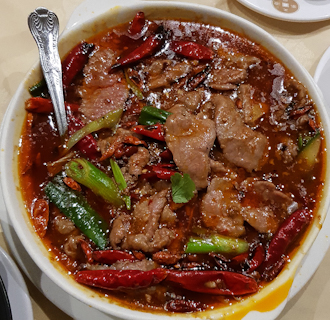
I love eating Chinese food. So, do many people in India, where this cuisine is served everywhere from simple, unsophisticated street stalls to dedicated, smart Chinese restaurants.
Indian Chinese food is prepared to suit Indian peoples’ tastes. To people used to eating Chinese food in London or elsewhere in the UK, the Chinese food in India may seem somewhat different, especially its taste. Although I much prefer eating Chinese food in London, where the restaurants serve food to many people of Chinese origin, I also enjoy eating Indian Chinese food, which is prepared mostly for Indian diners. On the whole, the Chinese food in India is less ‘authentic’ than that served in London, where there is a large population of Chinese from Hong Kong and mainland China.
Once when we were visiting Mangalore on the coast of the Indian State of Karnataka, we entered a Chinese restaurant. Its main entrance was almost hidden in a dingy yard that would have made an excellent setting for a performance of West Side Story. This establishment was staffed mainly by a Chinese family, rather than people with slanting eyes who had originated in the north eastern states of India. I was delighted to find steamed pork dumplings on the menu amongst the starters. I ordered these, and was told that I would have to wait atleast 45 minutes. I said that was alright, and we ate other dishes whilst we awaited the dumplings.
When the dumplings arrived, we found them to be as delicious as the best we had eaten in London. They were made without making compromises to satisfy Indian tastebuds. The reason that they had taken so long to arrive was, I believe, that they had been made fresh, from scratch. Of all the Chinese food I have eaten in over 25 years of visiting India, these dumplings are the best Chinese food I have been served in the country. I have eaten other enjoyable Chinese meals in India, but none matched those dumplings in Mangalore.
There is one feature of Indian Chinese food that particularly displeases me: the over use of fresh coriander. I like this herb in some Gujarati vegetarian dishes and some Mexican food, but I do not think it enhances Chinese food. Almost every Chinese dish served in India is tainted with fresh coriander.
I am fond of Hot and Sour Soup, both in London and in India. However, in India my enjoyment of it is marred by the obligatory addition of fresh coriander. Recently, a friend of mine in Bangalore made the very sensible suggestion that I should ask for this soup to be made without coriander added. So, the next time I ordered the soup I followed his advice. The waiter noted my request and the soup arrived without coriander. I tasted it. To my great surprise, the soup was tinged with a taste I associate with Polish food. The chef had replaced coriander with freshly chopped dill leaves!


 yamey
yamey 