A church beside a canal in London’s Paddington

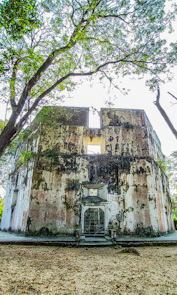
THE GRAND JUNCTION café is a peasant little place in a modern building a few feet away from the footpath that runs alongside the Paddington Arm of the Grand Union Canal, not far from Little Venice. This refreshment place is attached to a much older building, the church of St Mary Magdalene Paddington. It is a gem of Victorian gothic architecture. This is what I wrote about it in my book “Beyond Marylebone and Mayfair: Exploring West London”:

“[the church] … was designed by George Edmund Street (1824-1881), and completed in 1878. It was built in what was then an area with poor quality housing, where often several hard-up families used to live crowded together under a single roof. The parish in which it is located began life as an offshoot of All Saints in Margaret Street (near Oxford Circus). Like All Saints, St Mary Magdalene’s was established as an Anglo-Catholic church. Its website (grandjunction.org.uk) revealed that Anglo-Catholicism:

‘… emphasises the Catholic heritage and identity of the Church of England. In the mid-nineteenth century Anglo-Catholicism was very controversial and provoked riots. Anglo-Catholic churches were often built in very poor areas, and their clergy believed that their services, full of light, colour, music and ritual, were likely to appeal to the poor.

Like All Saints Margaret Street, the interior of St Mary Magdalene’s is a masterpiece of Victorian gothic extravaganza, a glorious riot of colour. The nave has a magnificent painted ceiling which includes faces of various saints. This was painted by Daniel Bell, a Victorian artist. Sculptures of saints carved by Thomas Earp (1823-1893) look down on the nave. The floor of the vast nave is decoratively tiled. Street did not believe in fixed pews such as are found in many other Victorian churches and were rented out to parishioners to raise money. He believed in ‘free seating’, especially in a church like St Mary Magdelene’s that was built to serve the poor. The apse is unusual in that it is polygonal, reminiscent of apses that the widely travelled Street had seen in mediaeval French and Flemish churches.

An unusual feature of this out of the ordinary church is that although the nave is flanked by a south and a north aisle, the latter is barely wide enough to accommodate one person, whereas the south one is almost as wide as the nave. The reason for the narrow north aisle was related to building regulations in force when the church was being constructed.”

We entered the church recently (in October 2025), after not having seen its interior since one quiet day in about 2021 during a respite in the covid19 lockdown regulations, and it looked as glorious as I remembered it. The church is still used for religious services and often as a centre for many local community events. Both the church and the café attached to it are well-worth visiting.

PS my book about west London is available from Amazon https://www.amazon.co.uk/BEYOND-MARYLEBONE-MAYFAIR-EXPLORING-LONDON/dp/B0B7CR679W/

A Nigerian who created artworks for a British daily newspaper

SEVEN CARVED WOODEN figures stand in a line at an exhibition in London’s Tate Modern gallery. Each of them is depicted holding something that looks like an book or a pair of wings. Their faces are all different, as are their expressions and heights. They were carved by the Nigerian artist Ben Enwonwu (1917-1994), and form part of a superb exhibition, “Nigerian Modernism”, which is showing until 10 May 2026.

Ben Enwonwu was born in Nigeria. His father was a traditional sculptor. Ben studied art first at Government College in Ibadan (Nigeria), and then at Government College Umuahia. At both places, he studied art under Kenneth Murray (1902-1972). In 1944, Ben was awarded a scholarship that allowed him to study both at The Slade School of Art in London and at The Ruskin School in Oxford. Also he undertook postgraduate studies in West African anthropology at the University of London. Thereafter, he taught art in Nigeria, where he created many of his sculptures and paintings. Since completing his education, Enwonwu has received international acclaim for his work.

In 1960, Ben proposed making a sculpture to commemorate Queen Elizabeth II’s visit to Nigeria in 1956. It was to be placed in the Nigerian House of Representatives in preparation for Nigeria’s independence in 1960. At the Tate’s exhibition, there is a photograph of Enwonwu working on this sculpture in the studio of his friend, the sculptor William Reid Dick (1878-1961), who was Sculptor in Ordinary for Scotland to Queen Elizabeth. At around this time, Ben received another commission in England.

The British newspaper, the Daily Mirror, commissioned Ben to create 7 sculptures for their headquarters. Carved in ebony, these are the works mentioned above. The diversity of their forms and expressions is supposed to represent the variety of people reading thepaper. According to a label in the exhibition, Enwonwu said:

“I tried … to represent the wings of the Daily Mirror, flying news all over the world.”

The statues were placed in the headquarters public courtyard in Holborn. Currently, they are in the Tate Modern, but after having been lost for several years, they were sold at public auction. They are now owned by Access Holdings PLC, a Nigerian company.

In addition to what I have already described, there are many more works by Enwonwu in the exhibition, both paintings and sculptures. Each one of them is wonderful. His works show the influence of European Modernism, but at the same time they reflect the artist’s African background and his involvement in the traditional art of his homeland. He was sympathetic to the Négritude movement, an anti-colonial cultural and political movement founded by African and Caribbean students in Paris in the 1930s, but was also affected by twentieth century artistic movements in Europe and the USA. It was fascinating to see how the modern art trends of the mid-twentieth century were successfully integrated with the artist’s desire to portray the life and traditions of Africa.

A small detail in a large painting by an artist from Flanders

DURING A VISIT to the Frieze Masters art fair in London’s Regents Park in October 2025, we looked at a collection of Flemish paintings being exhibited by the De Jonckheere Gallery. One of these was “Allegory of Sight: A Collector’s Cabinet with Venus and Cupid”. It was painted in Antwerp between 1601 and 1678 by “Workshop of Jan Brueghel the Younger”. It is an example of several paintings with this title. According to Wikipedia, these artworks:

“… showcases varied objects associated with sight, the arts, and navigation. The painting was heavily influenced by The Five Senses, a series of allegorical paintings done by the younger Brueghel’s father, Jan Brueghel the Elder.”

Indeed, the picture we saw at Frieze is chockfull of objects: paintings, sculptures (many of them portrait busts), navigational & astronomical instruments, documents, animals, a mirror, and many other things. The painting is a depiction of a Kunstkammer, which is (https://galleryintell.com/artex/allegory-of-sight-by-jan-brueghel-the-elder-and-peter-paul-rubens/):

“…translated as “rooms of art” and are meant to offer a glimpse into the depth and variety of these collections accumulated by the Dutch aristocracy.

The painting at Frieze contains a gold chandelier that hangs from the ceiling. It is a decorative example, which includes an object that has interested me greatly since I was a teenager. At the top of the chandelier there is a double-headed eagle (‘DHE’). This is a bird with two heads, each on its own neck. In the painting, each of the heads is surmounted by a crown topped with a small cross. My interest in the DHE began when my fascination with Albania, whose flag contains a DHE, began in the mid-1960s. Chandeliers with  DHEs appear in several other paintings by members of the Brueghel family (and their studios) in which the subject matter described above was depicted. I asked one of the gallery assistants about the DHE on the chandelier, and she had no idea about it. I was hoping that she would confirm my suspicion that the two-headed bird in the painting was related to the Holy Roman Empire and the Habsburgs, both of whose emblems included the DHE.

On returning home, I investigated further, and found a book (available online), “Rubens & Brueghel, A Working Friendship” by Anne T. Woollett and Ariane van Suchtelen. It deals mainly with paintings by Rubens and Jan Brueghel the Elder (1568-1625), the father of Jan Brueghel the Younger (1601-1678). In relation to the painting of “Sight” by Brueghel the Elder, it noted:

It has often been assumed that this costly series of paintings was commissioned by Archdukes Albert and Isabella. Rubens had, after all, held the post of court painter since his return from Italy in 1 6 0 8, and Brueghel regularly worked for the court at Brussels. The couple’s palaces serve as background scenery in three of the five depictions, and Sight contains a double portrait of the regents and an equestrian portrait of Albert, as well as a brass chandelier crowned with the Habsburgs’ double-headed eagle.”

This being the case and because Brueghel’s son (and his workshop) would have been influenced by his father’s art, it is perhaps unsurprising to see the DHE on the chandelier in the painting we viewed at Frieze.

How much would you spend to own a giant gogotte?

THE MOST FASCINATING exhibit I saw at the Frieze Masters art fair in London’s Regents Park, was unlike most of the other exhibits, not man-made. The item was about four feet high and slightly less wide. At first sight, it looks like a piece of modern sculpture, and one side of it resembles a vorticist version of the famous Michelin Man. But it is neither modern, nor made by human hands. It is between 300000 and 50000 years old, a fine example of a gogotte.

Made of silica, gogottes are (see https://www.robertsimon.com/gogotte-first-journey):

“… natural creations formed out of sands deposited in Northern France during the Oligocene Period, approximately 30 million years ago. Much later, in a process that has only recently become understood, groundwater rich in silica flowed through the sands, creating swirling organic shapes and cementing the sand into the fluid forms that we see today. This geological process took place during two cold periods of the Quaternary—one approximately 300,000 years ago, the other more recent, during the last glaciation, between 30 and 50,000 years ago.”

Apart from being interesting looking geological specimens, they have attracted the attention of artists. Some of them collected gogottes, and they and others have been influenced by their forms. These artists included: Henry Moore, Jean Arp, Constantin Brancusi, Barbara Hepworth, the Surrealists, and others. In addition, the curious gogottes have attracted the interest of collectors since as early as during the Song Dynasty (960–1279).

Gogottes are quite easily available. Their price depends on size. The specimen on display at Frieze is large. I asked one of the gallery assistants working on the stand where it was displayed for how much it was being sold. Sadly, she did not know.

An Epstein from New York (NYC): Jacob not Jeffrey

THE DUVEEN GALLERIES in London’s Tate Britain provide a wonderful space to display sculptures. The rooms are wide, long, and have high ceilings. Their walls are plain and do not distract the viewer. Until 30 March 2026, these magnificent spaces contain a selection of sculptures by Jacob Epstein (1880-1959), who was born in New York City. He joined the Art Students League in New York, before moving to Paris in 1902, where he studied sculpture at the École des Beaux Arts and Académie Julian. He settled in London in 1905. Both in Paris and London, he studied non-European sculpture, and what he learned from it often influenced his work. Some of the stone carvings in the Duveen Galleries are evidence of this. Soon after arriving in London, he began receiving important commissions to produce sculptures for significant institutions in London such as the British Medical Association (now Zimbabwe House). He became naturalised as a British citizen in 1910.

The collection of sculptures in the Duveen Galleries includes several stone carvings in different styles. The Tate’s website noted:

In the 1910s, Epstein became a key figure in the ‘direct carving’ movement in Britain. This approach emphasised a ‘truth to materials’, in which sculptors worked directly with the stone, using its natural qualities rather than making wax or clay models first. He was influenced by the techniques and imagery used in ancient Egyptian, West African and Oceanic carvings, which he collected. At the time, his portrayal of sexuality as well as the simplified forms of his monumental figure carvings drew both admiration and intense criticism, limiting his opportunities for public commissions.

Some of the sculptures on the former British Medical Association (now Zimbabwe House) building were criticised as being too explicit for Edwardian tastes, when they were completed in 1908. Sadly, these sculptures that can still be viewed from the Strand are badly damaged by being exposed to the weather and pollution.

The stone carvings in the Duveen, which vary from figurative to almost abstract, were all new to me. The bronze busts of famous and not-so-famous people include portraits of family members, artists, writers, entertainers and other public figures. These are the works that I tend to associate with Epstein. So, seeing his stone sculptures was a new and pleasant revelation for me. Each of the sculptures on display is accompanied by an informative panel. The works are well spaced so that each one can be admired in splendid isolation. This is an exhibition worth seeing.

An artist from China who is creating works of art using gunpowder

CAI GUO-QIANG IS an artist who was born in Quanzhou, Fujian Province, China, in 1957. Many of his artworks involve the extravagant and clever use of explosive materials, as can be seen in a documentary film being screened at the White Cube Gallery in Bermondsey (south London) until 9 September 2025. The film is accompanied by a collection of the artist’s images created on canvas, glass, and mirrors. Pleasing to the eye, these images have been created by an unusual method.

Guo-Qiang uses gunpowder, and ignites it, to assist him produce his pictures. The gallery’s website outlined his technique:

“… each composition is first mapped by sprinkling the powder, then covered and weighted before ignition, so that the blast disperses, recomposes and fuses matter into image.”

The unpredictability of the explosive material adds an interesting chance element to the finished product, but despite this, the composition was initially planned by the artist. In some of the works on display, not only was gunpowder placed on the base (i.e., paper, glass, etc) but also pigment powders. The explosions caused by igniting the gunpowder cause interesting spreading and scattering of the pigment.

The artist began experimenting with using explosives in his works on materials such as canvas and paper in the early 1980s in Quanzhou. Occasionally, the work in progress would ignite, and the fire had to be smothered to save the artwork. The works on display at White Cube were created after 2015, mainly in the 2020s. By now, he has refined his technique so that wholescale conflagration does not happen. However, as a gallery assistant told us, if you look carefully at some of the works, small burn marks can be found here and there.

Apart from being created in an intriguing way, I found the pictures being displayed in the gallery to be both attractive and beautiful.

When seeing the catalogue outshines viewing the exhibition

AT TATE BRITAIN in London, there is an exhibition of photographs taken by the highly talented Lee Miller (1907-1977), which is showing until 15 February 2026. We visited it today, 15 October 2025. There is a vast number (about 250) of Miller’s photographic works on display. And there was a vast number of people looking at them. Plenty of the images are quite small, and viewing them was not easy because of the crowd of other visitors.

After leaving the exhibition, I looked at the catalogue that has been prepared for it. Many of the exhibits are reproduced well in this huge volume. Whereas in almost all other exhibitions, viewing the actual artworks in ‘real life’ is far more satisfactory than seeing them in a catalogue. I felt the reverse was the case with the Lee Miller show. With the catalogue in your hands, you cans get close to the images, and enjoy them for as long as you wish without being disturbed by others around you.

Unless you are a Member of the Tate, you need to pay about £20 (per person) to see the exhibition. The catalogue costs £32 (paperback). In the case of this exhibition, but not most others, I would suggest buying the catalogue without purchasing an entry ticket. It is a case of see the book, not the exhibition.

A house of music in London’s Kensington Gardens

THE ARTIST PETER DOIG was born in Edinburgh in 1959. He grew up in Trinidad and Canada. He moved to England, where he studied art at Saint Martins School of Art and Chelsea School of Art, both in London. Until 8 February 2026, there is a superb exhibition of his paintings being held at the Serpentine South Gallery in Kensington Gardens. Many of the works on show reflect the years (2002-2021) that Doig lived in Trinidad.

The exhibition is called “House of Music” because that is exactly what has been created in the gallery. Not only can Doig’s pictures be viewed, but also there is music to be heard. The curators have created a “multi-sensory environment”. Along with the paintings, there are some beautifully restored loudspeakers originally designed for use in cinemas and large auditoriums during the first half of the twentieth century and the 1950s. The gallery’s website noted:

Spanning the last 25 years, the exhibition brings together the artist’s paintings with sound for the first time. At the core of the exhibition are two sets of rare, restored analogue speakers, originally designed for cinemas and large auditoriums in the early and mid-twentieth century. Music selected by the artist – from his vast archive of vinyl records and cassette tapes accumulated over decades – plays daily through a pair of original ‘high fidelity’ 1950s wooden Klangfilm Euronor speakers. A rare Western Electric and Bell Labs sound system, produced in the late 1920s and early 1930s to meet the demands of the first ‘talking movies’, is installed in the central gallery.

Doig’s beautifully executed, often colourful and quite delicate, paintings are the ‘stars’ of the show. Many of the 25 paintings depict life in Trinidad. Six of them include musicians and/or musical instruments. And Lions appear in many of the images. One of the paintings is Doig’s image of the large kind of loudspeaker that reminds one of the actual speakers on display in the exhibition.

Chairs are distributed randomly in two of the rooms of the gallery, and viewers are invited to sit down, contemplate the paintings, and enjoy the background music. On their own, the paintings would satisfy most people, but the careful use of background sound results in a show that should not be missed.