AT TATE BRITAIN in London, there is an exhibition of photographs taken by the highly talented Lee Miller (1907-1977), which is showing until 15 February 2026. We visited it today, 15 October 2025. There is a vast number (about 250) of Miller’s photographic works on display. And there was a vast number of people looking at them. Plenty of the images are quite small, and viewing them was not easy because of the crowd of other visitors.
After leaving the exhibition, I looked at the catalogue that has been prepared for it. Many of the exhibits are reproduced well in this huge volume. Whereas in almost all other exhibitions, viewing the actual artworks in ‘real life’ is far more satisfactory than seeing them in a catalogue. I felt the reverse was the case with the Lee Miller show. With the catalogue in your hands, you cans get close to the images, and enjoy them for as long as you wish without being disturbed by others around you.
Unless you are a Member of the Tate, you need to pay about £20 (per person) to see the exhibition. The catalogue costs £32 (paperback). In the case of this exhibition, but not most others, I would suggest buying the catalogue without purchasing an entry ticket. It is a case of see the book, not the exhibition.
THE ARTIST PETER DOIG was born in Edinburgh in 1959. He grew up in Trinidad and Canada. He moved to England, where he studied art at Saint Martins School of Art and Chelsea School of Art, both in London. Until 8 February 2026, there is a superb exhibition of his paintings being held at the Serpentine South Gallery in Kensington Gardens. Many of the works on show reflect the years (2002-2021) that Doig lived in Trinidad.
The exhibition is called “House of Music” because that is exactly what has been created in the gallery. Not only can Doig’s pictures be viewed, but also there is music to be heard. The curators have created a “multi-sensory environment”. Along with the paintings, there are some beautifully restored loudspeakers originally designed for use in cinemas and large auditoriums during the first half of the twentieth century and the 1950s. The gallery’s website noted:
“Spanning the last 25 years, the exhibition brings together the artist’s paintings with sound for the first time. At the core of the exhibition are two sets of rare, restored analogue speakers, originally designed for cinemas and large auditoriums in the early and mid-twentieth century. Music selected by the artist – from his vast archive of vinyl records and cassette tapes accumulated over decades – plays daily through a pair of original ‘high fidelity’ 1950s wooden Klangfilm Euronor speakers. A rare Western Electric and Bell Labs sound system, produced in the late 1920s and early 1930s to meet the demands of the first ‘talking movies’, is installed in the central gallery.”
Doig’s beautifully executed, often colourful and quite delicate, paintings are the ‘stars’ of the show. Many of the 25 paintings depict life in Trinidad. Six of them include musicians and/or musical instruments. And Lions appear in many of the images. One of the paintings is Doig’s image of the large kind of loudspeaker that reminds one of the actual speakers on display in the exhibition.
Chairs are distributed randomly in two of the rooms of the gallery, and viewers are invited to sit down, contemplate the paintings, and enjoy the background music. On their own, the paintings would satisfy most people, but the careful use of background sound results in a show that should not be missed.
I AM AWAITING the arrival of a proof copy of my NEW BOOK about exploring lesser-known places in England to arrive from the printer.
After I have checked it for quality issues, it will soon be available for you to read.
SO, WATCH THIS SPACE!
A little introduction to the forthcoming book:
TRAVEL THROUGH ENGLAND FROM ABBEY WOOD TO ZENNOR, passing on the way places such as Abingdon Piggotts, Barcelona, Come-to-Good, Freshwater, Indian Queens, Little London, Long Melford, New York, Outgate, Queen Camel, Six Mile Bottom, and Veryan.
In this book, Adam Yamey describes a collection of mostly lesser-known places in England, many of which he visited during and after the period when covid19 pandemic restrictions made travelling abroad difficult. On the tour Adam will reveal aspects of life in England from before the Neolithic era to the reign of King Charles III. Adam’s profusely illustrated book contains historical as well as current information, along with personal observations. It will open your eyes to the delights and curiosities of England that can be discovered when you stray off the ‘beaten track’.
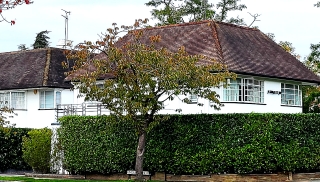
EXAMPLES OF THE ART DECO style that was popular during the era between the two World Wars can be found all over London. In the newer part of Hampstead Garden Suburb (north London), there are a few examples of this style.
Kingsley Close, which leads west from Kingsley Way, contains only houses built in the Art Deco style.
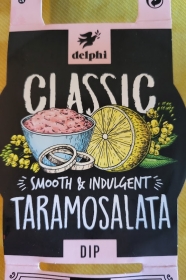
WE OFTEN BUY taramosalata (taramasalata) from the Athenian Grocery in London’s Bayswater district. They sell a brand called Delphi. It comes in a small plastic tub surrounded by a cardboard sleeve. Within the sleeve, there is a brief history of the company. The story begins as follows:
“It all started when our dad Tony started working in his family fruit and veg store on Goodge Street, London…”
Reading this brought back memories of shopping with my mother in the early 1960s. Being keen on Mediterranean dishes, we used to visit the shop in Goodge Street, mentioned above. Round the corner from this store, there was another Greek food shop, Hellenic Stores, in Charlotte Street. My mother preferred this shop, and only went to the one in Goodge Street if what she wanted was unavailable in Charlotte Street. It was close to the now long-since closed Schmidt’s German restaurant. Neither of these shops exists anymore.
Back in the 1960s and while I was at University College (until 1982), there were several Greek restaurants in Charlotte Street. These included Anemos, which was famous for its lively party atmosphere; Andreas, which I never visited, and is now called Ousia; the White Tower, which opened in 1938, and was highly regarded for its food, but is now closed; and Venus. My uncle, who worked in Bloomsbury, was fond of lunching there, and invited me to join him ther occasionally. It was less frenetic than Anemos, but pleasanter.
The reason that there were, and still are, many Greek or Greek Cypriot restaurants in and around Charlotte Street is more likely related to the huge demand for eateries in the busy area than to where Greek communities live in London. In London, the highest concentrations of Greeks (not Cypriots) is in Hyde Park, Regent’s Park, Chelsea and Kensington census districts. As for Greek Cypriots in London, some of whom run Greek restaurants, they are mostly living in Enfield, Haringey, Barnet and Hackney. In particular, they often live in Southgate, Palmers Green, Upper Edmonton, Cockfosters, Lower Edmonton, Tottenham North and Tottenham South. The Greek restaurants in the Charlotte Street area cater for the large numbers of students and office workers in the districr.
Returning to the story of the Taramosalata maker, Delphi, Tony decided to manufacture Greek food products. So, in 1984, he founded Delphi, which (according to the cardboard sleeve):
“Delphi is proud to be among the first UK producers of authentic houmous, taramosalata and many flavourful dips and salads …”
And the taramosalata they make is truly delicious.
I ENJOY VIEWING sculptures displayed in the open air. Every autumn, there is an exhibition of sculptures in London’s Regents Park. It is part of the annual Frieze art fair. Sculptures by various artists are provided by the commercial galleries who deal with them.
This year’s exhibition was small and somewhat disappointing. It seemed to me that the galleries had not exhibited their better works or works by their better-known artists. Maybe they are worried about them being vandalised or stolen. Whatever the reason, the 2025 outdoor show is not nearly as exciting as similar shows in previous years.
THE COUNTY OF Wiltshire contains some remarkable souvenirs of Neolithic times (c10000BC- c2000BC).
The most famous of these is Stonehenge And because of its justly deserved fame, it has become one of the most popular tourist sites in the UK. It can be seen easily from the A303 road that passes it, but if you wish to see it more closely, you need to pay an entry fee, which for adults is currently (October 2025) more than £23. This allows visitors to circumnavigate the ring of standing stones, without getting close to them, without being able to touch them. Visitors are kept well away from the stones to prevent damaging them or the ground in which they stand.
If you wish to touch Neolithic stones, get close to them, and avoid crowds and the feeling of being herded, then head to Avebury, which is in Wiltshire, about 20 miles north of Stonehenge. The area around Avebury is full of standing stones. Some of them seem randomly placed, and others are more orderly: some are arranged in circles, and others are arranged in parallel lines, rather like trees along an avenue. Although the stones at Avebury are not as uniformly carved as those at Stonehenge, they look like superb examples of modern sculpture. Many of them contain features that, with a little imagination, resemble human faces. Whether these were carved to resemble faces or it is just my imagining that, I cannot say. The best thing about them is that, unlike at Stonehenge, you can walk right up to them, and touch them. As you feel their texture, you become very much in touch with stones placed in position by our ancestors many, many centuries ago.







 yamey
yamey 