Unknown's avatar

About yamey

Active author and retired dentist. You can discover my books by visiting my website www.adamyamey.co.uk .

Healing hand

hand


In the UK, dentists cannot refuse to treat patients who admit to having serious illnesses such as AIDS (HIV). Dentists are supposed to have taken precautions to protect their patients, their nursing staff, and themselves against the risks of spreading disease by cross-infection. However, human nature being as it is, some dentists fear catching diseaes from their patients despite adhering to the appropriate requisites to prevent cross-infection. Irrationally, they try to ‘palm off ‘ patients whose medical conditions they fear by referring them to dental hospitals and specialist clinics. This is unfair to the patients who are forced to wait for long periods to be seen at these referral places for ‘specialist’ treatment that they do not actually need. I was not one of these over cautious fear-filled dentists. I treated everyone whatever their medical status.

I have treated many patients who have been infected with AIDS and other worrying illnesses such as Hepatitis B and C. I followed cross-infection guidelines and treated them no differently than I did for other patients. 

Many, but by no means all, of my patients were grateful for whatever I had done to deal with thier dental problems. Some of them, but not all of them, used to shake my hand and the end of an appointment or of a course of treatment. I appreciated that. What I noticed over the years was that the patients most likely to shake my hand were those who had been diagnosed with AIDS. I had the feeling that they were really grateful that I was prepared to touch their mouths without making a fuss about, or showing any fear of about their undoubtedly serious medical condition. The AIDS patients seemed to appreciate that I did not treat them as pariahs.


In the post

white and blue cardboard box


As a young boy in the early 1960s, I loved receiving mail. My parents were sent far more letters and packages than me and I was envious of them. With the experience of age, I guess I should not have been jealous of them because many of their mail items must have contained undesirable material such as bills, tax demands, and official notices.  As I received only a very few things from the post man, I took action to increase the amount of mail I received.

I used to scour newspapers and magazines for forms that when filled in and sent off, led to holiday brochures being sent to me free of charge. I received booklets extolling the virtues of holiday resorts like the Norfolk Broads and seaside towns all over the UK. Also, I wrote to the town halls of every London Borough to ask them to send me their official handbooks, which they did.

Once, my parents received a colourful package from the Readers Digest. They gave it to me to enjoy. It contained beautiful pictures extracted from a world atlas they were trying to sell. There was also a piece of paper with two stickers on it. One said ‘no thanks’ and the other ‘yes please’. I stuck the latter onto a pre-paid reply form and posted it. Some weeks later, a beautiful world atlas was delivered to our home. My parents were not too thrilled by its arrival, but saw its value and sent a cheque to pay for it.

Some months later, more publicity material arrived from the Readers Digest. This time it advertised a three volume encyclopaedia of gardening. It looked irresistibly wonderful, even to a non-gardening youngster like me. Without consulting my parents, I sent off the ‘yes please’ sticker. After some delay, a huge parcel was delivered to our home. I unwrapped it. It contained the three beautifully illustrated hardback volumes of the gardening encyclopaedia and a fine wooden case to contain it. My parents were not at all pleased. They re-wrapped the lovely encyclopaedia and at great expense posted it back to the Readers Digest. From then on, they made certain that no more post from the Readers Digest reached me before first having been torn up.

The best coupon I ever filled in was to a Roman Catholic organisation. The coupon promised to send me twenty one booklets about Roman Catholicism. They arrived at weekly intervals, providing me with at least one package a week for 21 weeks. I never read any of them because for me it was the thrill of receiving post that I enjoyed rather than what was in the post.

Even though a lot of the mail I receive from the post man/woman is unexciting, I still get a thrilling sense of expectation when letters and packages addressed to me arrive in our letter box.


Photo by Ylanite Koppens on Pexels.com

From Norway to Bengal

Doll hse


We were attracted to the latest theatrical production at the Lyric Theatre in Hammersmith (West London) because it was a play set in Calcuttta (Kolkata) in the late 1870s. It was not any old play set in Victorian Bengal, but a new adaptation of Henrik Ibsen’s the Dolls House (first performed 1879), which was originally set in a Norwegian town in the 19th century.

What we saw at the Lyric was a new version of Ibsen’s play created by the playwright Tanika Gupta. In Ibsen’s play the main protagonists are Nora Helmer, her husband Torwald Helmer, Dr Rank, Nora’s school friend Kristine Linde, and one of  the employees in Torwald’s bank, a desperate widowed father, Nils Krogstad. In Gupta’s play Torwald becomes Tom Helmer, an Englishman, who has married Niru,  a Bengali beauty, and has become a senior official in the British administration of India. Dr Rank remains Dr Rank, but is also an Englishman. Kristine becomes Krishna Lahiri, an impoverished widow and schoolfriend of Niru. Nils Krogstad is transformed into Mr Kaushik Das, a widowed Bengali father of four children and a lowly employee in Tom’s office.

In its new guise, Gupta’s Dolls House sticks to the spirit and main ideas in Ibsen’s plot but causes it to be played out in the steamy tropical climate of Calcutta. Gupta explores the relationship between the representative of British imperialism and his very sweet Indian wife. The arrival of Krishna and then Mr Das on the scene soon unsettles the happy home life that the Helmers had been enjoying. Without giving the story away, Mr Das, whom Tom does not like, holds a secret that could bring about Tom’s downfall if revealed. Tom is blisfully ignorant of the threat that Das poses, but the opposite is the case for Niru, whose great anxiety Das stimulates.

Although I had some reservations about the new version of the play, I enjoyed it and the often excellent performances of the actors. What fascinated me was how successfully Ibsen’s play had been ‘relocated’ from the gloom of Norway to the colourfulness of Bengal without losing the feeling that it was a play inspired by Ibsen. By translating the play from one cultural milieu to another, Gupta has preserved and enhanced Ibsen’s messages about the role of women and social class. She has added another fascinating ingredient: the portrayal of British racism towards Indians in pre-independence India. I feel that many of the Anglo-Saxon members of the audience might have been blissfully unaware of their ancestors’ unpalatable attitude to Indians they ruled. They would have left the theatre better informed about this blot on Britain’s history.


The play is on at the Lyric until 5th October 2019.

See: https://lyric.co.uk/shows/a-dolls-house/


Image adapted from lovetheatre.com

If you think you have seen the light, think again…

Hoop


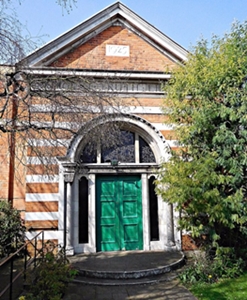
My earliest memories of Hoop Lane (in Golders Green, northwest London) date back to when I was three or four years old, and therefore are rather vague. At that age, I attended a kindergarten in Hoop Lane. This was in the hall attached to Golders Green’s Unitarian Church (see photograph above), which was designed in the ‘Byzantine revival’ style by the architect Reginald Farrow (opened in 1925). It contains interesting artworks including a mural by Ivon Hitchens (1893-1979), which I have not yet seen.

The kindergarten was under the direction of Miss Schreuer, who lived a few doors away in Hoop Lane. My only lasting memory from my time there was when my father appeared at the school with a white beard and a red outfit, dressed as Father Christmas. A few years later, my sister and my cousins attended Miss Schreuer’s. One day while my sister was attending, I was allowed to return to the school to act as an older helper. One of my fellow pupils was the late Micaela Comberti (1952-2003), who was later to become an accomplished violinist. Her German mother and Italian father were friends of my parents.

I am not sure what became of Miss Schreuer, but I heard rumours that the end of her life was unhappy. Today, the hall, where her school flourished, is now a Montessori kindergarten. When I lived in the area (I left finally when I was aged thirty), I often walked past the school and the Unitarian Church. The latter had a panel facing the road, upon which posters with pious messages were posted. One that I will always remember said:

If you think you have seen the light, think again”.


This is an excerpt from a piece I wrote a couple of years ago. If you wish to read the whole article, please visit:

https://londonadam.travellerspoint.com/48/

An Indian patriot from Kutch

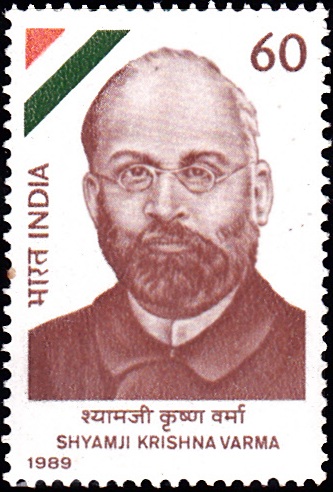
Brief excerpts from a new book about Indian patirots/revolutionaries in Edwardian London between 1905 and 1910. They were inspired by Shyamji Krishnavarma whose early years are described in these excerpts.

yamey's avatarGUJARAT, DAMAN, and DIU

My new book “IDEAS, BOMBS, and BULLETS” explores the brave exploits of Indian patriots living at India House in London between 1905 and 1910. They dedicated their efforts towards gaining independence for India – complete liberation from British imperialist rule. India House, which was in north London, was purchased by Shamji Krishnavarma, a barrister and leading scholar of Sanskrit. If his origins in Mandvi (Kutch, now Gujarat) were humble, his academic acheivements were quite the opposite as these excerpts from my book explain:

Shyamji Krishnavarma[1] (‘Shyamji’) was born in Mandvi, an estuarine seaport in Kutch, in 1857. Until June 1948[2], Kutch, a largely arid desert area, was one of the semi-autonomous Indian Princely States controlled by the British Government in India. Sandwiched between Sindh (now in Pakistan) and the Saurashtra peninsula, Kutch is now part of the State of Gujarat.

FACE

Mandvi was an important trading centre. It…

View original post 1,290 more words

Foolish on foot

Taxi!_240


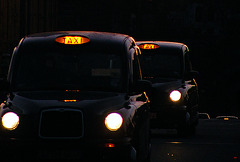
Years ago, I had friends who lived south of Hampstead Heath in South End Green, near where the writer George Orwell lived during the 1930s. I often visited my friends there and usually stayed with them until long after public transport ceased working late at night – those were the days long before 24 hour bus services. In those days, I was a student with limited means. Taxi and minicab rides to my home in Hampstead Garden Suburb to the north of Hampstead Heath were costly and if used too often would eat too deeply into my meagre funds.

So, often I used to walk through the darkness to my home, a distance of well over 2 miles. Most of this walk was across the wooded stretches of Hampstead Heath. Even back in the 1970s, this vast expanse of urban woodland was far from safe. Murders and attacks were not unknown. My parents and others would have been horrified to learn that I was risking my life to save paying a cab fare. Was I scared? The answer was both yes and no. I was concerned because of the news stories I had read. Yet, on the other hand I was not so afraid.

I felt that anyone encountering me on my nocturnal wandering deep in the secluded heart of Hampstead Heath might have had one of two reactions. Either he or she might have imagined that I was up to no good and possibly on the prowl for victims and would therefore steer clear of me, or that the person  whom I encountered was up to no good. If he or she was ill-intentioned, the person would have still had to be a little bit cautious because I might have turned out to be more than a match for him or her. This reasoning would have done me no good had the person I met been severely evil. 

Fortunately, luck was on my side. I never encountered anyone, innocent or evil, on my nocturnal strolls. However, I would never even dream of making this kind of journey across Hampstead Heath again, and would not advise anyone else to attempt it because London has become more dangerous than it was in the 1970s and before.

Fear of flames

Coiffure_500

” I have always been filled with fear at the prospect of any physical intervention on my body. This may come as a surprise to anyone who knows that I am a dentist, who makes a livelihood from trying to assist people who fear my interventions, but this is the case.

For example, from an early age, I have feared going to the barber, an experience that most people enjoy. I am not certain whether this fear of having my hair cut originated from hearing the tale of the barber of Fleet Street, who used to deliver his unsuspecting customers to the basement of the butcher next door, in order for them to be turned into sausage meat. I still cling onto the armrests of the barber’s chair, just in case… Or, did my fear arise from the worry that I might be injured or infected by the scissors or the cut-throat razors, which are still used today?

There is yet another possible source of my ‘pre-barber angst’. This dates back to the 1950s, when I was less than ten years old. In those days, I used to be taken to a large hairdressing salon in Golders Green Road, where Mr Pearce attended to my coiffure. The salon was filled with a nauseous odour, that of people having the split ends of their hair singed with the flame of a lighted taper. What, I wondered, would have happened had Mr Pearce begun to singe my hair? Would my head have erupted into a fiery ball? Well, this never happened. My beloved, but neurotic, mother would never have allowed anyone to approach my hair with a flaming taper. Indeed, as a child, I was never allowed to hold a box of matches, even safety matches, because, my mother was concerned that it might have spontaneously burst into flames. She should have known better. Her grandfather manufactured matches in South Africa. “


This is a short extract from my book “Going without the Flow“, which is about the fear of surgery. It is available on Amazon, Bookdepository.com, Lulu.com, and Kindle

PHD on arrival

Arriving_240


A few years ago, the new airport at Devanahalli just north of Bangalore (Bengaluru) was opened for use. It was already too small when it opened and in recent years there has been much new construction to more than double its size and passenger handling capacity. 

On arrival passengers from some flights enter the airport by airbridges that connect the aeroplanes to the terminal building. Passengers proceed up escalators to the first floor where they walk along a gallery overlooking the departure lounge. We have spent many hours in the departure lounges awaiting the departures of flights which often depart in the dark early hours of the early morning. For a few years, there used to be a branch of the Pizza Hut chain available for passengers awaiting departure.

One year, I was truly surprised to reach the gallery overlooking the departure lounge because there was a large sign above the Pizza Hut counter, which bore the letters ‘PHD’. What, I wondered connected the Pizza Hut with the academic degree of Doctorate of Philosophy (‘PhD’)? ‘Surely some mistake’, as the British satirical magazine Private Eye often says.

Very soon I learnt that according to Pizza Hut, PHD stood for ‘Pizza Home Delivery’. Sadly, the Pizza Hut outlet has long since closed. It has been replaced by costlier eateries hoping for wealthy foreign travellers.


PHD-offer

Taking a plunge

blog Plunge

Whatever happens in the UK’s current tumultuous parliament, it is more likely than not that the UK will leave the European Union (‘EU’). Whether this happens on the 31st of October 2019 or later, the UK is certainly taking a plunge into a possibly frightening unknown. When a majority of the British people voted in favour of leaving the EU, nobody could foresee the problems that we are now facing and will face as time moves on. Sadly, many of those who voted (largely without understanding what is involved and often for xenophobic reasons) for ‘Brexit’ will suffer the consequences more than many who voted not to leave the EU. Our present Prime Minister is optimistic about the future of the UK outside the EU, but as Boris Johnson’s hero Winston Churchill wrote:

There is no worse mistake in public leadership than to hold out false hopes soon to be swept away. The . . . people can face peril or misfortune with fortitude and buoyancy, but they bitterly resent being deceived or finding that those responsible for their affairs are themselves dwelling in a fool’s paradise.”

(Winston S. Churchill, The Second World War, Vol. 3 [1951])