Somewhere snooty in Ooty (Ootacamund in south India)

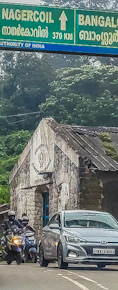
ABOUT TWENTY-FIVE years ago, we spent a short holiday in the southern hill station at Ootacamund (Udhagamandalam) in India’s Tamil Nadu state. Often called ‘Ooty’, the town is the home of one of India’s most prestigious colonial-style clubs, the Ootacamund Club, which was founded in 1841. It was there that my in-laws arranged for us to stay for a few nights. Our bedroom with a working wood fireplace was comfortable enough. It reminded me of rooms in old-fashioned hotels in which I had stayed in with my parents in the English countryside in the late 1950s.

When we stayed at the club in 2000, it seemed to be quite a ‘snobby’ or ‘snooty’ place. We were travelling with our then five-year old daughter. Apart from our bedroom, there were only two parts of the club that she was permitted to enter. One was a lobby, and the other was a children’s dining room. The latter was depressing to say the least. Because we did not want to abandon our daughter, we saw little else of the inside of the club.  The rest of the club house could only be entered by adults wearing appropriate clothing. For men in 2000, this included a jacket, shirt, proper shoes (not trainers or sandals) and tie. It seemed crazy to enforce such rules as we were the only people staying in, or using, the club  during the off-season. I wonder if these rules have been relaxed at least a little since our visit.

It was not my first visit to Ooty. My wife and I had spent part of our honeymoon there after our marriage in Bangalore in January 1994. That time, my father-in-law had arranged for us to stay in the St Margarets guest house that belonged to the company in which he had worked, ITC. Our stay at St Margarets was not without small problems, but the place suited me much more than the hallowed Ooty Club.

They never returned to the Netherlands and the slaves they sold never saw India again

PULICAT IS ABOUT FORTY miles north of the centre of Chennai.  It is one of the very few natural harbours on the Coromandel Coast (east coast of India). As early as the third century BC, it was a thriving port. The unknown author of the “Periplus of the Erythraean Sea” wrote that Pulicat was one of only three ports on the east coast of India. 


Today, it is a busy little village where freshly caught fish and other seafood are packed with ice before being transported elsewhere.  In earlier times, it was an important trading centre.


Between 1502 and 1609, the Portuguese had a trading station (‘factory’) in Pulicat. They built a fort there. In 1609, the Dutch defeated the Portuguese,  and took over Pulicat. They controlled it until 1825, when Dutch possessions on the Coromandel Coast were handed over to the British.


The Dutch built a fort, Fort Geldria, at Pulicat. This is in ruins today, and what is left is covered by seemingly impenetrable vegetation.  I did not feel intrepid enough to enter the tangled plants that cover the site of the fort. The Dutch also built a gunpowder factory in the town.


Pulicat was a port from which the Dutch exported a wide variety of goods from India, including for example, textiles, coins, and gunpowder. They also exported Indians as slaves to work in some of the other Dutch colonies in places as far apart as Ceylon and the West Indies. It is said that between 1625 and 1665 alone, over 38000 slaves, procured mostly by brokers in Pulicat,  were exported in Dutch boats. Many more were carried away from India after that.


Seeing Pulicat today, as we did in January 2025, it is difficult to imagine that this large village was once a thriving centre of international trade, and even more impossible to realise that it was an important market place for selling slaves. However, there is one very visible reminder of the erstwhile Dutch presence in the town: a small cemetery containing many well-preserved graves and mausoleums of Dutch people who died in the district.


Before describing the cemetery,  I will mention the small museum near it, and next door to a school named ‘Dutch Academy Nursery and Primary School’. The very basic museum is housed in what must have once been a small shop. Its  walls have some interesting informative panels attached to them. These outline the history of Pulicat. As for the exhibits, they are a rather shambolic assembly of unlabelled odds and ends. In one glass fronted cabinet, there were some fragments of ceramic vessels. I wondered whether these were bits of things left behind by the Dutch. On close examination, I noticed one of these broken pieces was labelled “made in Japan”.


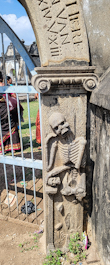
The Dutch cemetery is a fantastic sight. It is well worth making the 2 hour road trip from Chennai to see it. The entrance to the walled graveyard is made of carved stone. On each side, it is flanked by stone carvings of skeletons. One is resting its skull on its right hand and holding another in his left, and the other is balancing a double-sided drum or tabla on its skull. Although there are several obelisks and elaborate mausoleums in the cemetery,  most of the graves are marked by horizontal stones upon which there are carved inscriptions. The inscriptions, which are all easy to read, are often framed with decorative floral carvings. Most of the inscriptions are in Dutch. A few are in Latin. The oldest of the deceased died in the mid to late 1650s. At the far end of the cemetery, we found two graves of British people. Although  the British took over Pulicat in 1825, they used it more as a place for picnics than as a trading station.


The Dutch cemetery is a reminder that not every Dutch person who came to India to make a fortune returned home. What it does not recall is the vast numbers of Indians who were exported by the Dutch as slaves, and had no hope of ever seeing their homes again.

It pays to be perceived as being senior citizens

Chennai Airport is very modern and user-friendly until you leave its terminal building. To get a taxi or a hired car, you need to join a queue to board an electric buggy that carries you to a distant car park where you then wait again for your vehicle. Oh, and while travelling on the crowded buggies, you need to hang on to your possibly heavy and/or bulky luggage.

Fortunately, in the eyes of the team handling the buggy loading, we were considered to be elderly people. Therefore, they took us and some other aged people out of the queue and summoned taxis to pick us up outside the terminal building instead of at the distant car park, reached in the buggy.

Three Indian men in London’s Bloomsbury

MAHATMA GANDHI IS commemorated by a statue in Tavistock Square in London’s Bloomsbury. He is probably the most famous of three Indians with statues in Bloomsbury. Crafted by the sculptor Fredda Brilliant and presented by the Indian High Commission, it was unveiled by Prime Minister Harold Wilson in 1967.

The next most famous Indian represented by a sculpture in Bloomsbury is a Nobel Prize winner, the celebrated writer and polymath from Kolkata (Calcutta), Rabimdranath Tagore (1861-1941). The memorial depicts Tagore’s head. It was created by the sculptor Shenda Armery, and unveiled by the Prince of Wales, now King Charles III, on Tagore’s 150th birth anniversary year in July 2011. The bust stands in Gordon Square, close to University College London, where Tagore studied law briefly. His face looks away from the college towards the southeast. – towards India, his homeland. On one side of the plinth, there are some words written in Bengali script. On another side, there is a translation of this brief text (by Tagore) in English:
“Thou hast made me endless, such is thy pleasure. This frail vessel thou emptiest again and again, and fillest it ever with fresher life. This little flute of a reed thou hast carried over hills and dales and hast breathed through it melodies eternally new. At the immortal touch of thy hands my little heart loses its limits in a great joy and gives birth to utterance ineffable. Thy infinite gifts come to me only on these very small hands of mine. Ages pass and still thou pourest and still there is room to fill.”
This is from Tagore’s collection of poems – “Gitanjali”, translated into English from Bengali by the author in 1913. It was this collection that led to Tagore being awarded the Nobel Prize for Literature in 1913. In 1915, King George V awarded him a knighthood, but following the Jallianwala Bagh massacre of 1919, he renounced his knighthood to express his horror at the murders that had been perpetrated on innocent Indians by British troops in the Punjab.

Thiruvalluvar

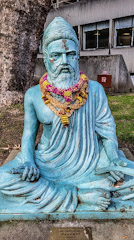
Call me ignorant but I had never heard of Thiruvalluvar, whose bust stands in a garden next to the School of Oriental and African Studies in Bloomsbury. According to a plaque next to the bust, this man was author of “Thirukkural”, which was a classic of Tamil philosophy and ethics. The bust was donated by the Governent of Tamil Nadu in 1996, and unveiled by the then Indian High Commissioner Dr ML Singhvi. Celebrated as he is in Tamil Nadu, little is known about his life. It is possible that he was born or lived in Mylapore (now a district of Chennai) in the south of India. According to Wikipedia:
“His work Tirukkuṟaḷ has been dated variously from 300 BCE to about the sixth century CE.”
As for his great work “Thirukkural”, the online version of Encyclopaedia Britannica remarked:
“…Tirukkural (“Sacred Couplets”), considered a masterpiece of human thought, compared in India and abroad to the Bible, John Milton’s Paradise Lost, and the works of Plato.”

I have described monuments to three notable men from India, but omitted one woman, whose memorial is close to those already described. The WW2 heroine Noor Inayat Khan (1914-1944) is commemorated by a bust, which, surprisingly, I have never noticed, in Gordon Square. Sculpted by Karen Newman, it was placed in the square in 2012. This artist also sculpted a bust of Violette Szabo (1921-1945), which is on the embankment of the Thames near Lambeth Palace. Both Noor and Violette worked for the British SOE, and perished in Nazi concentration camps.
Once the epicentre of the British Empire, it is not at all surprising that one comes across memorials to notable Indians whilst wandering about in London and other places in the UK.

The bodies which came back to life

AT ABOUT FIVE in the morning, a taxi dropped us off at the Madras Gymkhana Club in Chennai. It was late February 1994, and we had just disembarked from an overnight train from Bangalore. We were going to rest at the Club before taking a flight to Colombo in Sri Lanka.

Today, the 8th of January 2023, we revisited the Gymkhana Club, and seeing the place reminded me of a strange experience we had there back in February 1994. The Club, which was founded in 1884, has as its main building an edifice gifted by the Rajah of Venkatanagiri in 1886. Compared with the Madras Club, south of it, its architecture is far less refined.

When we got out of our taxi before daybreak in February 1994, we entered the main building, which was unlit at such an early hour. The night watchman at the reception desk asked us to sit in some armchairs near the entrance until the morning receptionist arrived. After sitting for a while in the hot, humid reception area, the sun began to rise and the Club’s interior began to become visible slowly.

I noticed that we were sitting close to a very large room. As the light improved, I saw that the room was filled with tables. The tables were covered with napkins, cutlery, and plates of unfinished food. Alongside the tables, there were bodies lying on the floor. Soon after dawn, these bodies came to life. They belonged to the Club’s staff – waiters and so on. These people then proceeded to clear up the remains of the previous night’s banquet. Maybe, they had finished too late at night to make it worthwhile to return to their homes for a few hours.

Seeing these people lying in the gloomy light of daybreak and then coming back to life was a memorable experience. Visiting the Gymkhana Club today, 29 years later, evoked this memory powerfully.

Our brief visit to the Club today was quite different. The place seemed far from sleepy, and we received a warm welcome.

The elephant in the …

THE ELEPHANT IN the room is something about which we prefer not to speak. This is not the case for the herd of over one hundred elephants that can be found in London’s Green Park today. This is not a change in the creatures’ habitat caused by global warning, because the elephants are not real. They are life-size models of the creatures, constructed with strips of Lantana camara, an invasive weed that thrives in the tropics. Despite being made of strips of this woody material, each one is a fine representation of an elephant. From afar, the sculptures look quite lifelike. Some of the elephants have models of birds found in the UK perched on their backs.

The elephants, so we were informed by a helpful volunteer from Goa who is working for an organisation called Coexistence, are manufactured by local craftsmen living the district of Gudalur in the Nilgiri Hills of Tamil Nadu state in the south of India. By using the Lantana, the craftsmen not only create the models but also clear deleterious plants from their land.

Apart from looking great, the model pachyderms have arrived with a message. Known as the ‘Coexistence Herd’, the beasts have arrived:

“… at a unique moment in time when a global reduction in human activity has had a positive effect on wildlife. Elephants may be giants but they tread softly. This 100-strong herd reminds us that when we lighten our footprint, wildlife bounces back.” (https://elephant-family.org/coexistence/)⁠⁠

So, it seems that the herd has not arrived merely to enhance our enjoyment of Green Park but also to heighten our awareness of the desirability of humans living in harmony with the rest of the animal kingdom.

Green Park is not the only site in London where these elephants from India can be spotted. There are others currently on display at places such as Berkeley Square and St James Park. The elephants are all for sale. The proceeds of the sales:

“…will be directed to grass-roots organisations across India that allow people and wildlife to live together more peacefully.” (https://coexistence.org/elephant-shop/).

Whether or not you are concerned about the message that is supposed to be conveyed by these superb models of elephants, it unlikely that you will be disappointed by seeing them.

A river and a canal

THE GREAT BED of Ware is eleven feet long and ten feet wide. Constructed at the end of the 16th century, this four-poster bed dwarfs the modern king size bed (six and a half feet by five feet). The Great Bed was housed in various inns in the town of Ware in Hertfordshire until the early 1930s when it was acquired by the Victoria and Albert Museum in London. A few days ago, we visited Ware, not expecting to see its Great Bed but for other reasons. One of these was that it is a small town not far from Perry Green where the Henry Moore Foundation is located. Another was to see the upper reaches of the River Lea and the point along it where water enters the New River.
 

BLOG W 10

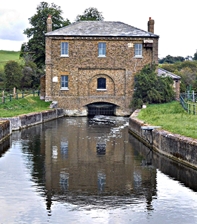
The Gauge House and the New River emerging from underneath it

The 42 mile long River Lea, a tributary of the River Thames, rises near Luton in the Chiltern Hills in Bedfordshire, flows through Hertfordshire, and then makes its way south through parts of  northeast then eastern Greater London, reaching the Thames at Bow Creek. The river flows through the centre of Ware. A short walk (1.3 miles) along the bank of the river westwards from Ware, brings one to the start of the New River, which is not actually a river. It a canal built to bring fresh water from the clean upper reaches of the Lea into London.

The history of the New River involves the London district of Islington, where the reservoir that used to collect water from the New River was located. To quote from something I wrote a couple of years ago (https://londonadam.travellerspoint.com/44/):

“At the triangular Islington Green, Essex Road branches off from Upper Street at an acute angle. At the apex of the triangle, there is a statue of Sir Hugh Myddelton (1560-1631) sculpted by John Thomas (1813–1862). He stands bare-footed, wearing a ruff and breeches, which stop short of his uncovered knees and lower legs. Below his plinth, two carved children sit or kneel with pitchers between their legs. Once, they issued water, but no longer. Myddelton, a Welsh entrepreneur, was the driving force behind the creation of the New River water supply project. The 38-mile-long canal, which he helped to finance, was constructed between 1608 and 1613 …”

Roseberry Avenue in London’s Islington is now best-known for the Saddlers Wells Theatre. However, one of its near neighbours was of great importance in connection with the New River. Quoting from my piece again:

“Across Roseberry Avenue, which flanks Spa Fields, there is a large brick building with white stone trimmings, now a block of flats. Completed in 1920, New River Head House was designed by Herbert Austen Hall (1881-1968) as the headquarters of the Metropolitan Water Board. Above two of its windows, there are carved inscriptions. One reads “Erected MDCXIII”, and the other “MDCCLXXXII”. These dates are 1623 and 1782 respectively, which are carved in archaic lettering. The inscribed stones must have been saved from an earlier building. The land on which the house stands was formerly the ‘New River Head’.

The New River, a canal constructed to bring fresh water from Hertfordshire into London ended at the reservoir called ‘New River Head’. It was high enough above what was the city of London in the 17th century to allow the flow of water from it to be ‘powered’ by gravity alone (see: http://www.british-history.ac.uk/survey-london/vol47/pp165-184). The brick-lined reservoir was constructed in 1623, when the first building at the reservoir, the ‘Water House’, was also built. The architect Robert Mylne (1733-1811), surveyor to the New River Company, repaired, enlarged, and refaced it in the 18th century. The refacing was done in 1782 … The old building, which had been enlarged many times, was demolished by 1915.”

Having seen the site of the destination of water carried by the New River, I was keen to see the point of its origin. Hence, our visit to Ware.

We parked near the centre of Ware in a car park (Burgage Lane) next to a footbridge that crosses the Lea. Then, we followed the riverside path after traversing the river. At first the path runs sinuously beneath trees that line both banks the stream. Their different coloured leaves are reflected in the water that ripples as waterfowl swim past. We met many other people enjoying their morning walks, but the path was never crowded.

After a short distance, the river flows around and between a network of islands and the path loses its lining of trees. Soon, there is open country on one side and on the other a series of modern industrial buildings partially hidden from view by occasional trees including lovely weeping willows. We reached the impressive weir of Ware. To enable boats to pass this hazardous waterfall, a lock exists. Ware Lock was first built in 1855 but looks as if it has been modernised since then.  Continuing west from the weir, we became aware of traffic noise as we approached the concrete bridge that carries the busy A10 dual-carriageway road over the river.

A third of a mile upstream from the road bridge, there is a tall brick house. It is not attractive and can be seen from afar in the flat landscape surrounding it. This building, The Gauge House, was built in 1856 to the design of William Chadwell Mylne (1781-1863), a son of Robert Mylne, who was involved with the terminal reservoir at New River Head in Islington (see above).  The building is constructed on an arch, a bridge that straddles the start of the New River at the point where water enters the canal from the River Lea. The ground floor of the building houses a mechanism for regulating the flow of water from the Lea into the New River. This is explained on the historicengland.org.uk website as follows:

“… [The] ground floor contains the gauge which measures the intake of water from the River Lee; it consists of 2 iron boats 5m long floating at Lee level which are joined by a chordal segmental iron beam 9m long, and the rise and fall with the level of the Lee controls the flow of water over the sluice which can be further adjusted by weights hung from the gate, the daily intake from the Lee being 22 1/2 million gallons.”

Another website, engineering-timelines.com, gives details of the predecessors of the Gauge House:

“At first, the flow from the river was monitored by a wooden ‘balance engine’ – a rocking beam-and-float device. It was later replaced with the Marble Gauge, built by Robert Mylne inside a Portland stone chest. Though now empty, this is still visible a little downstream.”

We were able to see the exterior of the Gauge House including the grille through which water leaves the Lea to flow under the building and that from which it flows from the House into the first stretch of the New River. The canal flows about 300 yards south before making a right angle beyond which it begins flowing east.  Having visited the London terminus of the New River and walked along attractive stretches of the canal lined by parkland in Canonbury, near Islington, I was very satisfied seeing where this historic waterway commences. We retraced our steps along the riverbank to Ware before driving to visit the Henry Moore Foundation at Perry Green.

Returning to the subject of beds, which is associated with the town of Ware, my mind leaps a quarter of the way around the world to Ootacamund (‘Ooty’) in the south Indian state of Tamil Nadu. In January 1994, we spent part of our honeymoon at St Margarets in Ooty, a guesthouse belonging to the ITC company. The room we occupied in this typical colonial style bungalow was huge. And it needed to be to accommodate the enormous bed that we occupied. This bed, whose width rivalled that of the Great Bed of Ware was not so long as the latter. Its sheets must have been specially made to fit this enormous bed.  Although there were only two of us sleeping in it, I think that that it would have been wide enough for four or five couples to sleep in it without it becoming overcrowded.

Both Ooty and Ware have their charms, but the latter is far more accessible from London especially in these times of restricted travel caused by the wholly unwanted presence of the Covid-19 microbe.  



The kiss

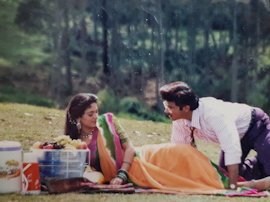
SHE LAY ON A RUG on the well-trimmed lawn of the Ootacamund (Ooty) Golf Club, propped up by one of her elbows. Dressed in a colourful sari, her long black hair was partly hidden by a picnic box filled to the brim with fruit. There was a thermos flask and a cylindrical container for warm food next to and in line with the fruit filled box.

Soon, a bespectacled young man with well coiffured hair and dressed in a white shirt with brown trousers began crawling towards the lady’s feet. Then, he manoeuvred his body over her knees and towards her face. Then, just as he was about to kiss her, both of these figures lowered themselves so that their heads were hidden from view by the picnic box, the hot food storage and the thermos flask.

This amorous couple were neither alone nor unobserved. Apart from my wife and me, local women carrying unwieldy bundles of wood on their heads passed by. Also, the couple were surrounded by a large film crew with lights and cameras.

Soon after their heads disappeared from sight, they reappeared as the film director came running towards them. He talked to them and they repeated what we had just watched after a man with a clapperboard bearing the film name “Andaz” had stood close to them for a few seconds.

“Andaz”, a Bollywood film, was released in April 1994. By chance we had stumbled on this outdoor film shooting in January 1994 during our honeymoon, part of which was spent in Ooty.

In 1994, and certainly until quite recently, intimate displays of affection were not included in Bollywood and other Indian films. What we saw in rehearsal was one of many ways from which film audiences would be saved from seeing an intimate moment. At the moment the audience would expect the male actor was about to plant a kiss on the young lady, they disappear from sight behind the picnic items. Nowadays, the audiences in India get to watch the intimate moment, often in surprising detail for someone, like me, used to watching the older more prudish Bollywood productions.

Although my love of Bollywood films began around 1994, seeing this scene being shot only increased my affection for them. My addiction to Bollywood films began in 1993 when in London some Maharashtrian friends of my wife-to-be insisted that watching the Bollywood film “Sholay” (1975) was important for acclimatising me to the Indian milieu I was about to marry into.

Although many of the latest Bollywood films are extremely good, my preferences is for the older ones. Though often with very complex plots, they have, I believe, an enjoyable innocence that transports the audience temporarily away from the harsh realities of the world beyond the walls of the cinema. Many of the more recent films do the opposite: they remind the audience of the problems they are facing.