
MRS SWART IS DYING, lying on her bed in a farmhouse in South Africa during the last years of the apartheid regime. Her husband and three children are close by. One of her daughters, Amor, hears, or believes she has heard, her mother promising that Salome, the family’s African maid, will be bequeathed the small outhouse in which she lives. Mrs Swart dies. Nobody else remembers hearing that Salome has been promised that she could own her humble abode, and she is not given possession of it. Many years go by, apartheid ends, and one by one Amor’s father, her brother, and her sister die. Yet, still Salome has not been given ownership of her residence on the farm. Amor, who has largely dissociated herself from her family, becomes the sole inheritor of the family’s farm after her father and siblings have died. Without giving away too much of the story, she honours the promise that her mother made, but what should have been a straightforward happy ending turns out not to be. In between the events I have mentioned, much more takes place, as is revealed in “The Promise”, an excellently written novel published in 2021 by South African author Damon Galgut.

Galgut’s novel contains vivid descriptions of peoples’ lives and their difficulties in South Africa before and after the apartheid regime ended in 1993. In his novel, the personalities of the various people in it are described brilliantly. In addition, he portrays the troubles, physical and psychological, that South Africans must face daily even after the end of apartheid. Reading this book has reinforced what I had already heard about South Africa being a country filled with its own distinctive range of problems.
I believe that Galgut’s novel is a metaphor for what has happened to South Africa after the death of apartheid, a regime that severely suppressed the non-white majority of South Africans. When apartheid eventually ended, many South Africans must have believed and hoped that they had been promised, and could expect, a better life, one from which each person would derive benefit. Sadly, for many, just as Mrs Swart’s promise to Salome was fulfilled but unsatisfactorily, the assumed promise of an improved life post-apartheid has not been fulfilled entirely satisfactorily (if at all) for most of the country’s population.
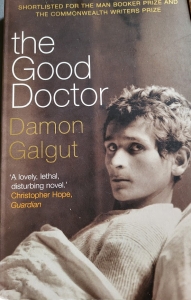
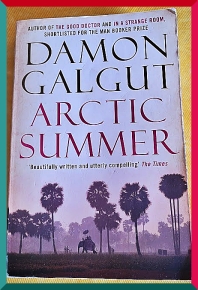
“The Promise” is the third of Galgut’s novels that I have read to date. Each of the three is beautifully written, interesting, compelling, and moving. Of the three, “The Promise” has appealed to me most, but only a little bit more than the other two (“The Good Doctor” and “Arctic Summer”).
 yamey
yamey 