
TO ENHANCE RACIST policies, the apartheid government of South Africa set up a series of ‘homelands’. These were areas in less desirable parts of the country in which black African people were ‘encouraged’ or compelled to set up homes. Notionally self-governing, these territories were, in reality, black ghettos, often impoverished. “The Good Doctor”, a novel by Damon Galgut, who was born in South Africa, (published 2003) is set after the end of apartheid in a run-down, almost deserted, god-forsaken town in what had been a former homeland close to one of South Africa’s borders.
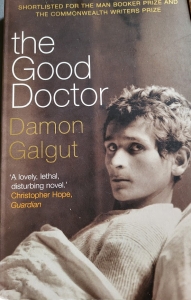
Most of the novel’s action is centred on the town’s under-staffed, poorly equipped, almost unused hospital. Frank is a doctor, who has been working there for several years. He seems quite content with the boring, uneventful life he has been experiencing while working there. Everything begins to change when Laurence, a young and idealistic doctor, arrives to spend a year at the hospital. He wants to make changes, to give the almost moribund hospital more of a sense of purpose.
Frank is obliged to share his quarters with Laurence, and inevitably they get to know each other well. Following Laurence’s arrival, a series of events begins to affect both Frank and his young room-mate. These occurrences, which Galgut relates beautifully, disturb the life of the hospital. Things get worse after a troop of soldiers, who are patrolling the border, settle in the town for a few weeks. Their commander is an unpleasant man, under whom Frank served while he was in the army before apartheid had ended.
At first, I felt that one of the two doctors was ‘The Good Doctor’ in the book’s title, but by the end of the story I was left wondering whether it was Frank or Laurence who was the good doctor. You will have to read this wonderfully written, compelling tale to be able to assess which of the two deserves your sympathy. Or are they both to be criticised?
I enjoyed this novel, the second by Galgut that I have read, and look forward to reading a third. I have a copy of his “The Promise” waiting close by.

