Reversed cultural colonialism at an institution in west London

THE RIVERSIDE STUDIOS in west London’s Hammersmith was built on the site of a demolished ironworks in 1933. Many films were made there including “The Seventh Veil”. In 1954, the studios were taken over by the BBC for making television programmes including the well-known “Dr Who”. A dalek such as would have appeared in this series stands in the café/restaurant near the entrance of the present building. The BBC left the Riverside in 1974 and two years later, it became what it is now, a vibrant arts centre with performance spaces, cinema halls, and the above-mentioned refreshments area. Between 2014 and 2019, the Riverside was closed and rebuilt. We often visit the place to see films and plays, as well as to enjoy morning coffees in its café, which has a fine view of Hammersmith Bridge.

Recently, the Indian industrialist Anil Agarwal (born 1954), founder and chairman of Vedanta Group, acquired the Riverside Studios, which have now been renamed ‘The Anil Agarwal Riverside Studios Trust’.  Although some have criticised certain of the Vedanta Group’s activities, it is a great thing that Mr Agarwal is helping to finance such a worthy institution as Riverside Studios during a period when there is a great shortage of money available to encourage cultural activities in the UK.

Two sculptors: one famous and one forgotten

DURING THE 1950S and the first half of the 1960s, my mother, Helen Yamey, created sculptures in the sculpture workshops of St Martins School of Art, which was then located on Charing Cross Road. Although my mother was not a student at St Martins, she worked alongside one of the school’s teachers of sculpture, the noted sculptor Anthony Caro (1924-2013). Caro became famous for his metal sculptures that consist of pieces of metal either welded or bolted together. While my mother was making sculptures at St Martins, she like other sculptors including Phillip King, Tim Scott, and William Tucker, was undoubtedly influenced by, and learned from, Caro’s work. She learned welding and created several abstract sculptures that consist of pieces of steel welded together. Unlike Caro, who achieved great fame, my mother, who was unambitious and only created sculpture to fulfil a creative urge, my mother and her sculptures became forgotten.

Today, 8 March 2025, we visited the Annely Juda Fine Art Gallery in central London to see a small exhibition of sculptures by Anthony Caro. Unlike many of Caro’s works, the metal sculptures on display, are not enormous. They are small enough to be fitted comfortably into one’s living room or a small garden. Indeed, one of the sculptures, in my opinion the most attractive, has the title “Table Piece CCCXLI”. It was constructed in oxidised steel. The five Caro pieces in the exhibition display a variety of compositional style, and together demonstrate the artist’s versatility. They were all made between 1970 and 1990. My mother left St Martins before this period, sometime in the mid-1960s. I know that she maintained an interest in Caro’s output, but. Sadly, I cannot recall what she thought of its quality.

The exhibition at Annely Juda continues until 15 March 2025. You can read about my mother’s life in art and her time at St Martins in my book “Remembering Helen: My Mother the Artist” [ available from Amazon, e.g.: https://www.amazon.co.uk/REMEMBERING-HELEN-MY-MOTHER-ARTIST/dp/B0DKCZ7J7X/ ]

A disused passageway in north London’s Golders Green

DURING MY CHILDHOOD and teenage years, there used to be two entrances to Golders Green’s tube (Underground) station, which is on the Edgware Branch of the Northern Line. One of these entrances, which is the only one in use today, is from the bus station (bus yard) next to the old Hippodrome Theatre and opposite the clock tower.

The other entrance, which has been closed for several decades, was beneath the bridge that carries the railway tracks over Finchley Road. The canopy at this entrance is still standing. Passengers used to walk beneath this canopy and then along a long walkway covered by a wooden canopy supported by timber pillars with simply ornamented capitals. . This passageway , which still exists, led to a ticket hall. Neither the ticket hall nor the passageway are accessible to the public.

You can discover much more about Golders Green, its past and present, in my book, which is available from Amazon, e.g.:

The brief but creative life of an artist from America

BORN IN SEATTLE (USA), the black American artist Noah Davis (1983-2015) led a brief but productive life. Son of a lawyer and an educator, Noah became addicted to painting during his early teenage years. By the age of 17, he had his own studio. He studied art at the Cooper Union School of Art in New York City between 2001 and 2004, and from 2004 onwards he lived and worked mainly in Los Angeles. Until 11 May 2025, there is an excellent exhibition of his works (mainly paintings) at the Barbican Centre Gallery in London. Until I visited this show, I had never heard of Noah Davis, but I am pleased that I have now ‘discovered’ him and his work.

Noah’s lifelong aim was (to quote what is recorded in Wikipedia as having been said by him):

“… to just show black people in normal scenarios, where drugs and guns are nothing to do with it …”

And to portray these scenarios in images created to illustrate:

“… where black aesthetics and modernist aesthetics collide …”

Although most of the paintings illustrate mundane or normal aspects of the lives of Black American people, Noah does so in ways that make the ordinary seem less ordinary and more magical.

In a documentary film that visitors to the exhibition can watch, Noah, who comes over as being a delightful person, made an interesting point. He said that in some forms of art like film, theatre, and literature, a story can gradually develop as the performance or novel proceeds. In painting, on the other hand, the artist must create an image that tells the whole story from start to finish, all on one canvas. This is something he does successfully.

In 2015, Noah was diagnosed with a rare but usually lethal carcinoma. Even while lying in bed in hospital, he continued to create images. In fact, he made 70 wonderful small works (many of them experiments in abstraction) while undergoing treatment for the disease that tragically ended his life. Many of these works are shown in the exhibition. During the month before his death, he made three large canvases, each one expressing his anticipation of his life’s imminent ending. One depicts two girls asleep on a sofa. This picture honours togetherness and restfulness. Another depicts a funeral. And the third shows a man walking in front of self-storage lockers. This image represents the loneliness in which each of us leaves the world of the living.

Having become acquainted with the creativity of Noah Davis, I feel that it is a great tragedy that this wonderfully poetic artist lived for such a brief time.

A British artist inspired by paintings in Venice

THERE IS SOMETHING SPECIAL about the quality of ambient light in Venice (Italy). It enhances the attractiveness of the many beautiful buildings that the city contains. Maybe the special nature of the light is because it both shines on Venice and then gets reflected back by the water that both surrounds and flows through the city. Whatever the explanation might be, Venice’s natural lighting conditions have attracted, and continue to attract, artists from all over the world. One of these is the British painter David Price (born 1970), who has made many trips to Venice, and is currently exhibiting his paintings influenced by these visits at the Frestonian Gallery (in London W11 4BE) until 17 April 2025.

David has written (quoted from the Frestonian’s website):

“For as long as I can remember I have drawn from paintings. As a child, my only access to art was through the few books that my parent’s kept, some of which had tiny black and white reproductions within them. These books were my first art teachers and I drew from the Rembrandts and Poussins and Titians inside … All of my life I have made drawings in galleries and from books and these sketches have informed and inspired my practice for over 40 years.”

The paintings on display at the gallery were largely inspired by seeing late Renaissance paintings in various locations in Venice including the Scuola Grande di San Rocco, the Accademia Gallery, the Church of Madonna del’Orto, and other churches in the city. At first sight, the connection between David’s exuberantly coloured and beautifully executed paintings and the great works he saw that inspired him are not immediately obvious. Someone well-trained in the art of the late Renaissance might after a while discern something that reminded him or her of the original old masters. However, no knowledge of the history of art is necessary to gain enjoyment from David’s creations. The paintings are neither copies nor parodies of the old originals, but express the artist’s reactions to them.

What struck me as I viewed the paintings is that many of them capture both the quality of the light in Venice as well as well as the city’s rich tradition of carnival and other similar spectacular events. Whether or not this was one of the artist’s intentions. I have no idea, but seeing his works evoked memories of a city that I have visited many times during the last seven decades.

Although the Frestonian is a little way off the main London commercial galleries’ ‘beaten track’, it is well worth visiting. Housed near Shepherds Bush roundabout in what is the only survivor of the short-lived Republic of Frestonia (see: www.linkedin.com/pulse/frestonia-londons-independent-republic-exhibition-adam-yamey/), the gallery hosts a regular series of well-curated temporary exhibitions.

Once it celebrated Muhammad Ali Jinnah now it honours Subhash Chandra Bose

Subhash Marg, a busy bazaar street in Bikaner (Rajasthan, India), It leads northwest from the 16th century Kote Gate in the heart of the city and runs alongside a railway track.

In the past, this road had been named Jinnah Road in honour of the founder of Pakistan. Still known as Jinnah Road by many of its Muslim inhabitants, in 1967 it was given its new name (Subhash Marg). According to an article published in the Hindustan Times in 2016, neither Muhammed Ali Jinnah nor Subhash Chandra Bose ever visited Bikaner.

We ate an uninspired non-veg lunch at the Muslim run Simran Restaurant on the road. On the bill, its address was given as “Subhash Marg (Jinnah-Road)”, and that was 57 years after the street’s name was changed.

Street name changes are not uncommon in India, but usually the old names of a thoroughfare are remembered better than the often-forgotten new names

A wonderful film from Brazil

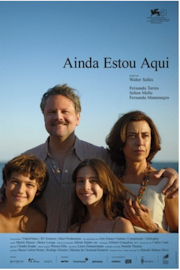
WE HAVE JUST WATCHED a superb film from Brazil, “I am still here”. It was released in 2024 and has deservedly just won an Oscar for being ‘the best foreign film’.

Sensitively and beautifully, it charts the catastrophic life of a family after one of its members is kidnapped during Brazil’s military dictatorship (mid-1960s until the 1980s). This film based on the life of one of those who was ‘disappeared’ by the military authorities, Rubens Paiva (1929-1971), is both terrifying and moving. Each character in the film acts perfectly. This is docu-drama at its best.

This great ‘movie’ is well worth watching.

A not quite religious experience in a temple in rural Rajasthan

IN DECEMBER 2024, we hired a taxi to take us from Jaisalmer to Bikaner: both are cities in Rajastahan (India). As it was a journey that was going to take over five hours, we decided we needed a break en-route.

When we asked our rather sullen driver to find a place for us to stop for a light lunch, he drove us off the main road into a small town (an overgrown village) called Ramdevra. The modest place where we ate satisfactory vegetarian food was not one frequented by foreign visitors. People hanging around the establishment were clearly curious about us, but in a friendly way. After lunch, our driver encouraged us to walk to the Sree Baba Ramdev Temple, for which the town is famous. It was much further away from the restaurant than the “few minutes” our driver had told us. Near the temple, there were many stalls where lumps of different coloured crystalline dhoop (aromatic products made with herbs and resins, which when heated or burned release fragrant smoke) and incense sticks were for sale. It was very clear that his choosing to stop in Ramdevra was to visit the temple, which turned out to be a crowded place in a huge shed filled with Hindu shrines.

It was mass-production Hinduism. Impatient crowds of people, including us, were hurried along narrow passageways demarcated by metal railings. The maze of railings made the place look like a cattle market filled with animal holding pens.  The idea seemed to be to get the devotees to donate money at the several shrines in exchange for blessings that were performed by pandits as quickly as they could manage. Rather than feeling like a spiritual experience, it felt more like being a product on a fast-moving industrial conveyor belt. Our driver seemed pleased that he had visited the temple complex. We did not share his enthusiasm, and were pleased when we returned to the highway.

Fascinating paintings by an artist from Japan

THERE IS A SONG by Sam Cooke that begins “Don’t know much about history, don’t know much biology, …”. Well, I do know something about both history and biology, but I do not know much, if anything, about Japanese art history. It turns out that this is not a great impediment if you wish to enjoy an exhibition showing at the Gagosian Gallery in Mayfair’s Grosvenor Hill until 8 March 2025. The visually spectacular show is called “Japanese Art History à la Takashi Murakami”.

Takashi Murakami was born in 1962 in Tokyo, where he lives and works. Apart from being a painter and a sculptor, he is also, as Wikipedia explained, involved in:

“… commercial media (such as fashion, merchandise, and animation) and is known for blurring the line between high and low arts.”

Many of the paintings in the exhibition at Gagosian are Murakami’s own interpretations of various styles used by Japanese painters in the past. Others gave me the impression of being less historically inspired, but more whimsically contemporary. The exhibition as a whole and in detail is a feast for the eyes. These beautifully executed, often intricately detailed, creations are joyous and uplifting. Maybe, if I knew more about the history of art in Japan, I would have gained even greater enjoyment from seeing them, but in this exhibition, the sentence ‘ignorance is bliss’ is certainly not inapplicable.