
A British artist inspired by paintings in Venice

THERE IS SOMETHING SPECIAL about the quality of ambient light in Venice (Italy). It enhances the attractiveness of the many beautiful buildings that the city contains. Maybe the special nature of the light is because it both shines on Venice and then gets reflected back by the water that both surrounds and flows through the city. Whatever the explanation might be, Venice’s natural lighting conditions have attracted, and continue to attract, artists from all over the world. One of these is the British painter David Price (born 1970), who has made many trips to Venice, and is currently exhibiting his paintings influenced by these visits at the Frestonian Gallery (in London W11 4BE) until 17 April 2025.

David has written (quoted from the Frestonian’s website):

“For as long as I can remember I have drawn from paintings. As a child, my only access to art was through the few books that my parent’s kept, some of which had tiny black and white reproductions within them. These books were my first art teachers and I drew from the Rembrandts and Poussins and Titians inside … All of my life I have made drawings in galleries and from books and these sketches have informed and inspired my practice for over 40 years.”

The paintings on display at the gallery were largely inspired by seeing late Renaissance paintings in various locations in Venice including the Scuola Grande di San Rocco, the Accademia Gallery, the Church of Madonna del’Orto, and other churches in the city. At first sight, the connection between David’s exuberantly coloured and beautifully executed paintings and the great works he saw that inspired him are not immediately obvious. Someone well-trained in the art of the late Renaissance might after a while discern something that reminded him or her of the original old masters. However, no knowledge of the history of art is necessary to gain enjoyment from David’s creations. The paintings are neither copies nor parodies of the old originals, but express the artist’s reactions to them.

What struck me as I viewed the paintings is that many of them capture both the quality of the light in Venice as well as well as the city’s rich tradition of carnival and other similar spectacular events. Whether or not this was one of the artist’s intentions. I have no idea, but seeing his works evoked memories of a city that I have visited many times during the last seven decades.

Although the Frestonian is a little way off the main London commercial galleries’ ‘beaten track’, it is well worth visiting. Housed near Shepherds Bush roundabout in what is the only survivor of the short-lived Republic of Frestonia (see: www.linkedin.com/pulse/frestonia-londons-independent-republic-exhibition-adam-yamey/), the gallery hosts a regular series of well-curated temporary exhibitions.

Once it celebrated Muhammad Ali Jinnah now it honours Subhash Chandra Bose

Subhash Marg, a busy bazaar street in Bikaner (Rajasthan, India), It leads northwest from the 16th century Kote Gate in the heart of the city and runs alongside a railway track.

In the past, this road had been named Jinnah Road in honour of the founder of Pakistan. Still known as Jinnah Road by many of its Muslim inhabitants, in 1967 it was given its new name (Subhash Marg). According to an article published in the Hindustan Times in 2016, neither Muhammed Ali Jinnah nor Subhash Chandra Bose ever visited Bikaner.

We ate an uninspired non-veg lunch at the Muslim run Simran Restaurant on the road. On the bill, its address was given as “Subhash Marg (Jinnah-Road)”, and that was 57 years after the street’s name was changed.

Street name changes are not uncommon in India, but usually the old names of a thoroughfare are remembered better than the often-forgotten new names

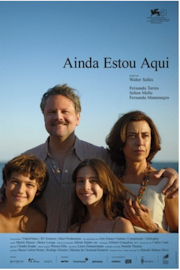
A wonderful film from Brazil

WE HAVE JUST WATCHED a superb film from Brazil, “I am still here”. It was released in 2024 and has deservedly just won an Oscar for being ‘the best foreign film’.

Sensitively and beautifully, it charts the catastrophic life of a family after one of its members is kidnapped during Brazil’s military dictatorship (mid-1960s until the 1980s). This film based on the life of one of those who was ‘disappeared’ by the military authorities, Rubens Paiva (1929-1971), is both terrifying and moving. Each character in the film acts perfectly. This is docu-drama at its best.

This great ‘movie’ is well worth watching.

A not quite religious experience in a temple in rural Rajasthan

IN DECEMBER 2024, we hired a taxi to take us from Jaisalmer to Bikaner: both are cities in Rajastahan (India). As it was a journey that was going to take over five hours, we decided we needed a break en-route.

When we asked our rather sullen driver to find a place for us to stop for a light lunch, he drove us off the main road into a small town (an overgrown village) called Ramdevra. The modest place where we ate satisfactory vegetarian food was not one frequented by foreign visitors. People hanging around the establishment were clearly curious about us, but in a friendly way. After lunch, our driver encouraged us to walk to the Sree Baba Ramdev Temple, for which the town is famous. It was much further away from the restaurant than the “few minutes” our driver had told us. Near the temple, there were many stalls where lumps of different coloured crystalline dhoop (aromatic products made with herbs and resins, which when heated or burned release fragrant smoke) and incense sticks were for sale. It was very clear that his choosing to stop in Ramdevra was to visit the temple, which turned out to be a crowded place in a huge shed filled with Hindu shrines.

It was mass-production Hinduism. Impatient crowds of people, including us, were hurried along narrow passageways demarcated by metal railings. The maze of railings made the place look like a cattle market filled with animal holding pens.  The idea seemed to be to get the devotees to donate money at the several shrines in exchange for blessings that were performed by pandits as quickly as they could manage. Rather than feeling like a spiritual experience, it felt more like being a product on a fast-moving industrial conveyor belt. Our driver seemed pleased that he had visited the temple complex. We did not share his enthusiasm, and were pleased when we returned to the highway.

Fascinating paintings by an artist from Japan

THERE IS A SONG by Sam Cooke that begins “Don’t know much about history, don’t know much biology, …”. Well, I do know something about both history and biology, but I do not know much, if anything, about Japanese art history. It turns out that this is not a great impediment if you wish to enjoy an exhibition showing at the Gagosian Gallery in Mayfair’s Grosvenor Hill until 8 March 2025. The visually spectacular show is called “Japanese Art History à la Takashi Murakami”.

Takashi Murakami was born in 1962 in Tokyo, where he lives and works. Apart from being a painter and a sculptor, he is also, as Wikipedia explained, involved in:

“… commercial media (such as fashion, merchandise, and animation) and is known for blurring the line between high and low arts.”

Many of the paintings in the exhibition at Gagosian are Murakami’s own interpretations of various styles used by Japanese painters in the past. Others gave me the impression of being less historically inspired, but more whimsically contemporary. The exhibition as a whole and in detail is a feast for the eyes. These beautifully executed, often intricately detailed, creations are joyous and uplifting. Maybe, if I knew more about the history of art in Japan, I would have gained even greater enjoyment from seeing them, but in this exhibition, the sentence ‘ignorance is bliss’ is certainly not inapplicable.

Dwarfed by dogs in Mayfair’s Dover Street

SOME SAY SMALL is beautiful. But can colossal also be beautiful? This is something that can be explored at the Thaddeus Ropac Gallery in London’s Dover Street until 2 April 2025, where three much larger than life realistic looking sculptures of dogs are on display. These dogs, each about 10 feet high, have been created by the artist Ron Mueck, who was born in Australia in 1958. He now works in the UK.

As the gallery’s website explained:

“Over a career spanning three decades, Mueck is celebrated for exploring the physiological implications of scale. Whether miniaturised or enlarged, his use of scale heightens our awareness of the relative spaces our own bodies occupy, as he charts the full spectrum of human experience with striking perceptiveness.”

The three dogs on display in the exhibition ought to feel menacing, but I did not experience this sensation. I was more amused than over-awed.

Benjamin Disraeli the Prime Minister lived here

IN 1847 ISAAC D’Israeli (1766-1848) purchased Hughenden Manor in the Chiltern Hills west of London. When he died in 1848, the manor became the property of the Conservative politician Benjamin Disraeli (1804-1881), who was Prime Minister of the United Kingdom twice (1874-1880 and for a few months in 1868). Apart from Hughenden, Benjamin Disraeli also had a home in London, where he died. Both he and his wife are buried in the church near to his country home at Hughenden Manor. In addition to his many impressive political achievements, Benjamin wrote novels. I have read one of them, “The Rise of Iskander”, which is about the Albanian hero Skanderbeg. It is not a novel that I would recommend reading.

The mansion at Hughenden Manor was constructed near the end of the eighteenth century, and was heavily remodelled according to the tastes of the Disraeli family when they acquired it. The ground floor rooms are good examples of the gothic revival style. Some of the ceilings on this floor have fan-vaulted ceilings. We were lucky to have visited the place on a bright sunny day because even then, the rooms are pretty gloomy. On an overcast day, the place would seem quite melancholic. The dining room, which we saw at just before midday was depressingly dark, and made even worse by the presence of an enormous portrait of Queen Victoria that overlooks the round dining table. Disraeli (Benjamin) must have been a great ‘fan’ of Victoria because his bedroom on the first floor is filled with portraits of Victoria and her family, which the Royal Family gave him. The bedroom and other rooms on the first floor  are far brighter, better illuminated through the windows, than those on the floor beneath, These first floor rooms are, luckily, not adorned with the ‘over-the-top’ gothic revival décor, which mars the ground floor’s appearance.

The mansion at Hughenden Manor is certainly not one of the most beautiful houses maintained by the National Trust, but the hilly grounds surrounding it are wonderful. When (if) we visit Hughenden again, we will miss out entering the house, and concentrate on enjoying the gardens and countryside around it.

It is amazing what can be created with Lego bricks and old buttons

THE PROVOCATIVE CHINESE artist Ai Weiwei was born in Beijing in 1957. He now works in places around the world including Beijing. In 2011, he was arrested in Beijing and held without charge for 81 days. At other times, he has been harassed by the Chinese state. Despite this and his overtly artistic criticism of the ruling regime of the People’s Republic of China and several periods of exile from that country, he now spends some time working in his studio in a house near Beijing. The rest of his time is spent working in various places including Cambridge (UK), Lisbon (Portugal), and Berlin (Germany). At the Lisson Gallery in Bell Street (near London’s Edgware Road stations), there is a small but wonderful exhibition of works by Ai Weiwei, which will continue until 15 March 2025.

The exhibits on display at the Lisson Gallery demonstrate the incredibly inventive and imaginative nature of Ai Weiwei’s creations. Two of the works on display are rusted cast-iron sculptures. Two huge images, one in the style of Van Gogh and the other in the style of Gauguin, are made using many thousands of tiny toy (? Lego) bricks of different colours. From a distance these, and other large pictures made with the tiny bricks seem as if they are painted, but seen close-up it is obvious that the images are a complex mosaic of toy bricks.

Other exhibits also employ Lego bricks. These are not flattish creations like the ones mentioned above, but three-dimensional sculptures. In each case, the artist has taken an object (e.g., a rusting military helmet or a porcelain model of a lion) and partially enclosed it within a structure made of Lego bricks.

Buttons are extensively employed in other exhibits. Ai Weiwei sourced the buttons from the now closed A Brown and Co Buttons factory. The buttons, which are variously coloured, are used like the Lego bricks to produce mosaics depicting words and images. The buttons are sewn on to fabrics and in one case onto a ring of sandals.

Without doubt, each of Ai Weiwei’s creations are based on his interpretation of events historical and contemporary. However, although knowing the ideas behind his artworks adds to the understanding of the show, the exhibition at Lisson Gallery can be enjoyed without any knowledge of what was going through the artist’s head while he was creating the works.

Visiting the Open Wound at the Tate Modern in London

THE HUGE TURBINE Hall that forms the entrance and centrepiece of London’s Tate Modern is used for temporary exhibitions. Until 16 March 2025, the Turbine Hall is home to a somewhat weird but visually fascinating art installation, “Open Wound, created by Mire Lee, who was born in South Korea in 1988.

At first sight, it seems that discarded skins of various shapes and sizes are hanging from the ceiling. Standing on the floor beneath some of them is a tall tower that carries what looks like a piece of ageing industrial machinery suspended from an overhead crane. This rotates slowly while drops of liquid fall from it onto some of the skins and elongated sausage-like pieces of fabric before dropping into a pool on a large piece of stretched material. Set in the lofty, rather inhuman, Turbine Hall, this installation made me feel as if I were inside an enormous abattoir.

Apart from being intriguing to look at, I was not sure what to make of it. The Tate’s website noted:

“Lee believes ‘being moved is the strongest thing you can experience through art.’ Reflecting on our current historical moment, Open Wound conjures ‘the mood of a deserted construction site’, an atmosphere of ‘futility and melancholy, where something has started to wither.’ Despite this, the collective ‘skins’ of the living factory suggest an eerie solidarity. They mutate the Hall into an intimate space of ‘dream and distant memory’, in which such feelings can be shared.”

Well, having seen the work in the Turbine Hall, these words made sense. I am not sure that I would recommend people going out of their way to see this installation, but if you had other reasons to visit the Tate Modern, then do spend a few minutes looking at Mire Lee’s creation.