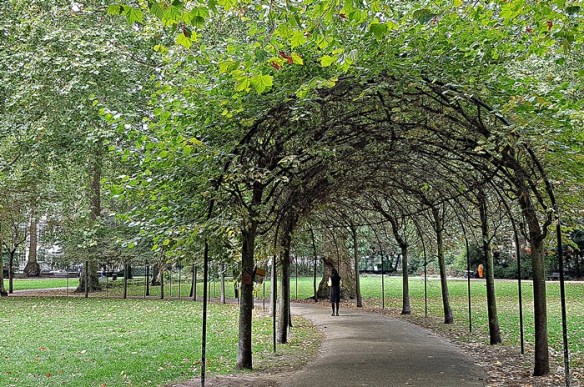
SHE WALKS BENEATH THE ARCHES
HER EYES ON HER PHONE
IGNORING NATURE

SHE WALKS BENEATH THE ARCHES
HER EYES ON HER PHONE
IGNORING NATURE
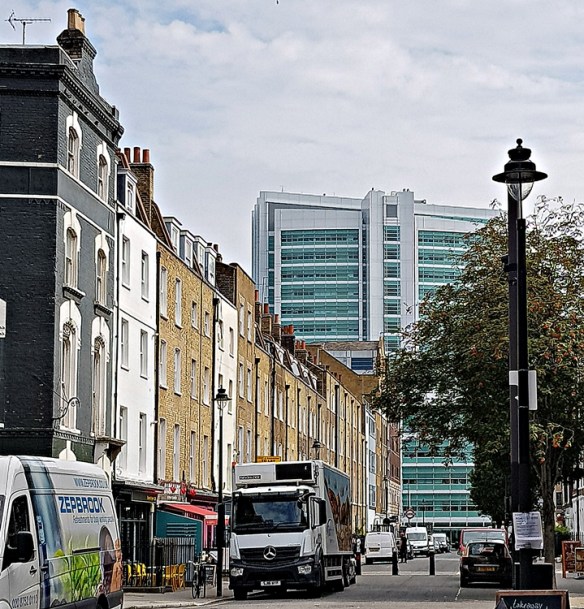
Warren Street is a station on the Northern and Victoria Lines of London’s Underground network. Situated at the intersection of Tottenham Court Road and Euston Road, both important arteries, Warren Street itself is comparatively small and of minor significance in the greater scheme of things. Be that as it may, this short street, which runs south of and parallel to Euston Road, has had some importance in my life.
When the Underground Station was opened in 1907, it was named ‘Euston Road’. In 1908, it acquired the present name. By the time that I began using the station regularly (in 1970), the Victoria Line had been serving the station for two years. Warren Street itself was built in the late 18th century as part of the Fitzroy Estate. It was named after Anne Warren (1737–1807), who married Charles Fitzroy (1737-1797), First Baron Southampton.

In the early 1970s, when I was studying at University College London (‘UCL’), one of my fellow students on my BSc course in physiology was a young Indian girl, Lopa, who is now my wife. She spent a couple of years living at the International Students House (‘ISH’) which faces Great Portland Street Underground Station. She and other Indian students introduced me to really good Indian food. This was served at the now no longer existent Diwan-i-am restaurant on Warren Street. It was here and at other nearby restaurants, such as Diwan-i-khas, Lal Qila, and Agra, that food was cooked by Indians and Pakistanis rather than by Bangladeshis, who operated the majority of so-called Indian restaurants in the UK. While Bangladeshi cuisine might be excellent, much of the ‘Indian’ food cooked by Bangladeshis is less satisfactory.

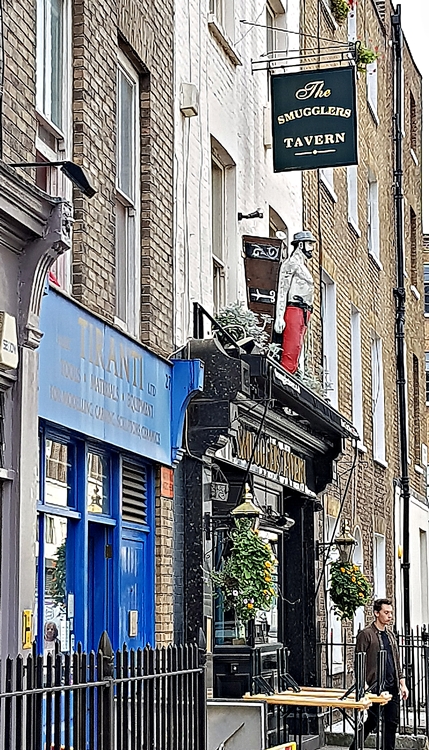
When the Diwan-i-am was in business, so were many car dealers who had their premises on Warren Street. These have long since disappeared. One business that still exists and predates the Diwan-i-am is Tiranti, an important supplier of, to quote their website: “…materials, equipment and tools to sculptors, modelmakers, mouldmakers, designers, prototypers, woodcarvers, stonecarvers, specialist plasterers, building picture and furniture restorers, potters and ceramicists.” Giovanni Tiranti started this enterprise in High Holborn in 1895. The company first began using premises near Warren Street in 1945. I am not sure when the Warren Street shop opened, but it was about 20 years ago at least. I never purchased anything there but my late uncle S, an engineer by profession and a keen sculptor in his spare time, was a regular customer.
I studied at UCL for twelve years. During the last five of these, I was studying dental surgery at the now, sadly, no longer existing Dental Hospital. Warren Street Station was the most convenient place from which to reach the Dental School from my home in Golders Green. It was a few yards from the station to the passage that led from Tottenham Court Road into Mortimer Market, where one part of the Dental Hospital was housed. In those days, the passageway was flanked by an official Iraqi Tourist Office. I used to visit this occasionally to look at the fine exhibitions of photographs shown there. The staff, no doubt agents of the late Saddam Hussein, were friendly. Once, they gave me a gift of four LPs of Iraqi folk music. Many of the ancient sights in the photographs might well now have suffered damage during the troubles that afflicted Iraq long after I had become qualified as a dentist.
There were several photography suppliers’ shops on the stretch of Tottenham Court Road near Warren Street. Their windows displayed a huge range of camera bodies and lenses. I bought my first SLR camera at one of these shops. They have mostly gone now. So also has Sterns. This electrical shop was well-known for its superb stock of African music LPs. Some years after I had left UCL finally (in 1982), Sterns, which opened in the early 1950s, moved from its somewhat aged premises on Tottenham Court Road to a newer shop around the corner on Euston Road. This has also disappeared, but Sterns still goes on in the form of an on-line firm.
One rainy early Monday morning, I emerged from Warren Street Station, and walked to the Dental School. The streets seemed emptier than usual. When I arrived at the school, the doors were locked closed. I was puzzled. Then, I bumped into another student, also soaking because of the weather. Shamefacedly, we realised that we had turned up on a bank holiday.

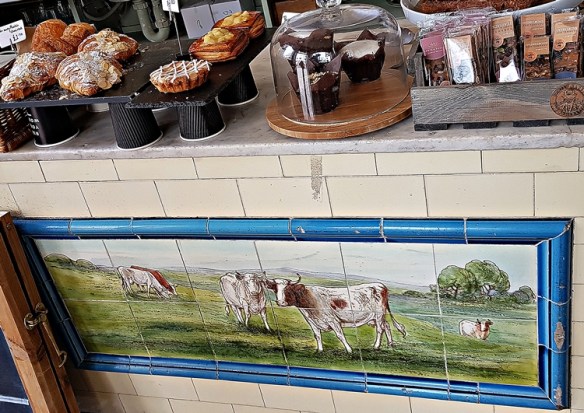
Some time during the mid to late 1970s, a branch of McDonalds opened on the corner of Warren Street and Tottenham Court Road. Occasionally, I used to pop in there for a snack on my way home. Now, some decades later, Warren street is lined with ‘trendy’ eateries, one of which is housed in an old dairy on the corner of Conway Street. Much of the original tilework of the former dairy of J Evans has been preserved. Although there are many newer buildings on Warren Street, a few of the original late 18th century structures have survived.
While Warren Street is not worthy of a long detour, it provides much more than a name for an Underground Station.
Glimpses of Parsi presence in Gujarat and Diu
 A Parsi dharamshala (guest-house for pilgrims) near Udvada Station
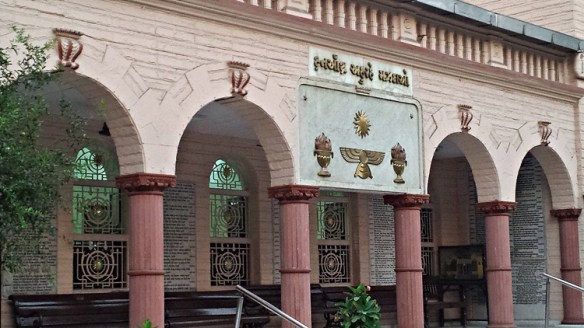 Fire Temple in Ahmedabad
View original post 737 more words
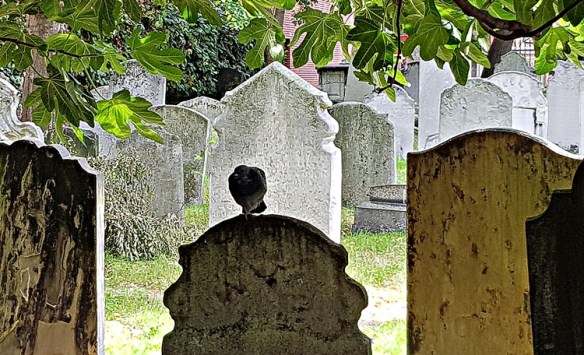
PIGEON ON A STONE
SURROUNDED BY MORTALITY
A SIGN OF LIFE
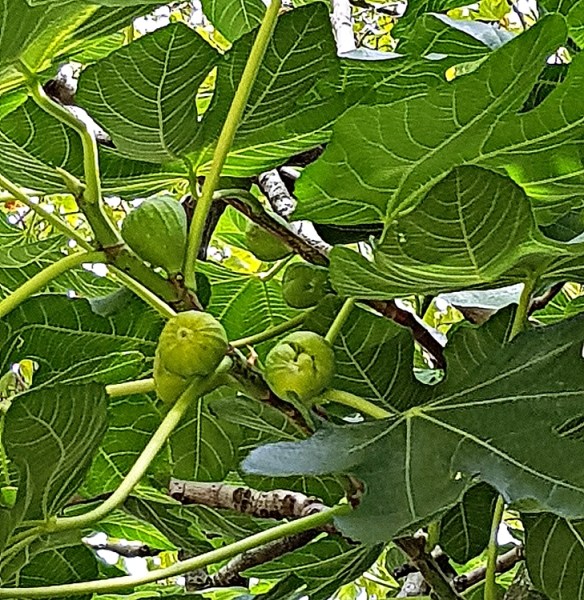
FIGuratively speaking
fruifully regarded:
arborial

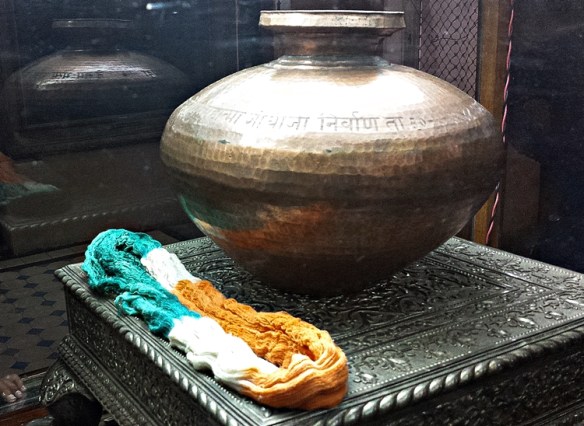
A copper urn that contained the ashes of Mahatma Gandhi …

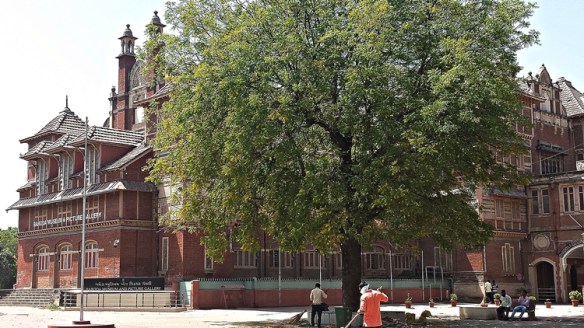 Baroda Museum
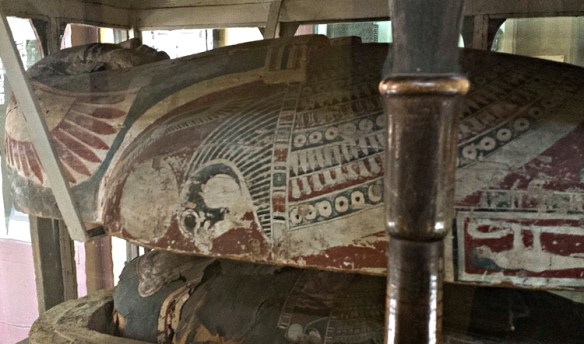
View original post 70 more words
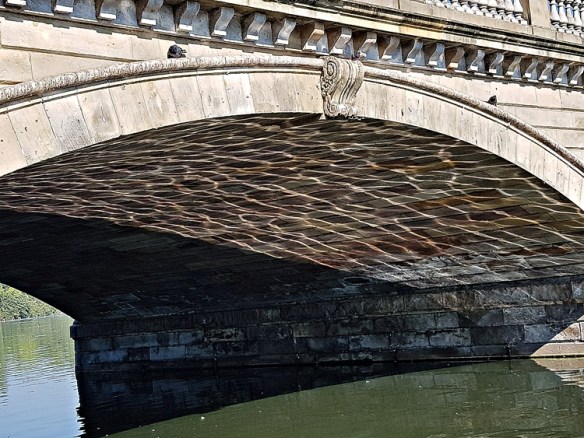
RIPPLING RIVULET BELOW
THE OLD STONE ARCH
WATCH WAVELETS REFLECTING

SEEING RED
STOP, WAIT, REFLECT
BEFORE TAKING ACTION OR REACTION

I apply for a Hungarian visa in Belgrade in 1979
The Hungarian Embassy in Belgrade was located in a smart residential
building on a tree-lined street near to the Hotel Slavija. I waited at a
small curtained window in one of the embassy’s reception rooms, and
after a while the heavy green canvas curtain covering it was swept
aside suddenly. The lady on the other side of the window asked me for
my passport. I handed it to her. It was stuffed full of bits of paper that I
wanted to keep for one reason or another. She removed this extraneous
material, and holding it gingerly between the tips of her thumb and
forefinger, flung it back at me, saying,
“This, I do not need.”
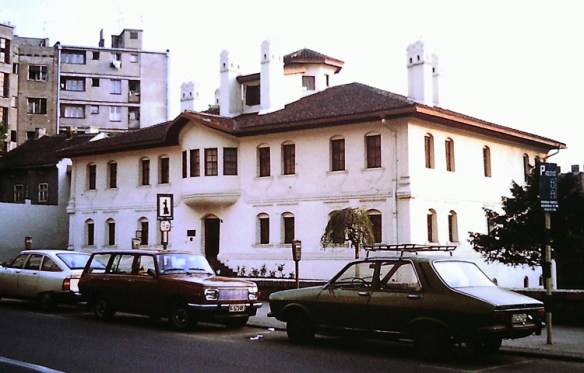
Konak Ljubica, Belgrade
I filled in a short visa application form whose questions were in
Hungarian and English. One of these related to the colour of an
applicant’s motor car, should he or she be planning to drive it into
Hungary. The motorist was required to tick one of several boxes, each
labelled with a colour in Hungarian and also its English translation. The
form included a mysterious colour: ‘drab’. I imagine that this must
have been a mistranslation of the Hungarian word for ‘grey’. I paid a
modest fee in Deutschmarks rather than Yugoslav Dinars; the official
kept the passport, and asked me to return the next day….
After arriving in Hungary
…We did a lot of sight-seeing during our brief stay in Budapest (pic below). Not only
did we see the better known sights, but we also explored the lesser-known attractions, including the Museum of the Hungarian Workers’
Party and the Young Pioneers’ Railway.

Budapest
This narrow-gauge railway
line, which wound its way along the ridges of the hills behind and
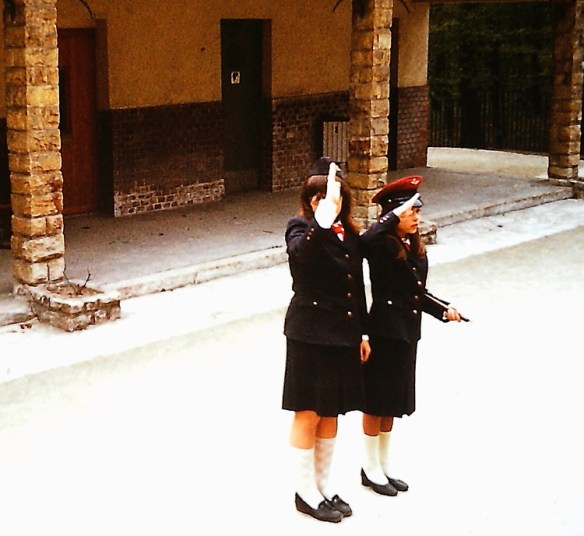
above Buda, was staffed and run by schoolchildren. Dressed in the
uniform of Hungarian State Railways, these youngsters operated the
scenic train service under the supervision of a few adults. The railway
was high above the city, and to reach its terminus we rode the cograilway
that travels up into heights of the Buda Hills from its terminus
near the ugly but huge triangular Moskva Ter (Moscow Square), one of
Buda’s transport hubs.

Just as I had a yearning to shop for LPs, especially in the Hungarian
shops in Vaci Street and the fascinating East German Cultural Centre
shop in Deak Square, Peter also had a special desire. He wanted to visit
a Hungarian night club. We asked our hosts in Obuda about this, and
they suggested the Astoria Hotel in the city centre. One evening after
eating dinner in an enormous art-nouveau restaurant during which I ate
a portion of the amazingly pungent and highly smelly Pálpuszta cheese,
we turned up at the main entrance of the Astoria. We were directed to a
smaller side entrance, where we paid a modest entry fee to enter the
night club.
We were led upstairs into a dimly lit smallish room furnished with a
small stage, tables, and chairs. Most of the chairs were occupied by
middle-aged couples dressed-up for an evening out, but wearing
somewhat dowdy outfits. I felt that they did not look like city dwellers,
nor did their appearance fit in with my preconceived idea of typical
habitués of night clubs. I suspected that they might have been a group
of visitors who had come from the provinces to visit Budapest. After a
few performers had regaled us with folk-songs, to which many of the
audience joined in, a magician appeared on stage. He performed a
number of conjuring tricks, after which we left. I don’t believe that the
homely show that we had just observed was exactly what Peter had
hoped for.
Read more:
Yesterday (30 Aug 2018), I visited an exhibition that fascinated me. Held at the Brunei Gallery on the campus of SOAS in London, it will continue until 23 September 2018.

The exhibits are replicas of postcards sent from Bangalore and Madras (Chennai) during the early 20th century when India was part of the British Empire. I have visited both Chennai and Bangalore many times, but it is the latter that I know best.

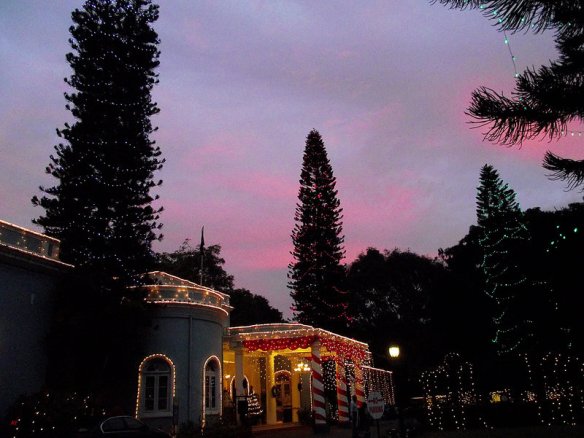
The building that housed United Services Club, which used to be a place that British Officers relaxed in Bangalore, still stands today. It is now the main building of the prestigious Bangalore Club. Unlike so many old buildings in Bangalore, this one has been well-preserved.

Commercial Street was and still is an important shopping street in Central Bangalore, but it has changed in appearance greatly since this postcard was produced. It has changed yet again since my coloured photograph was taken.

Queen Victoria’s statue in Cubbon Park was placed by the British near the end of her reign. It still stands today, but the cannons in the postcard are no longer in place.

That this statue of a former foreign ruler still stands is a tribute to Indian tolerance, as i point out in my latest book, “TRAVELS THROUGH GUJARAT, DAMAN, AND DIU” (see:https://gujarat-travels.com/):
“It is a sign of Indian tolerance that a monument celebrating the deeds of invaders has been left intact. I have seen examples of this elsewhere in India. For example, Cubbon Park in Bangalore has two well-maintained British statues, one of Queen Victoria and the other of King Edward VII, and in Calcutta there is the Victoria Memorial.”

If you can find a short time, I can strongly reccommend visiting this fine temporary exhibition.


 yamey
yamey 