
Some trees in the gloaming
swan on the lake
imminently eventide

Some trees in the gloaming
swan on the lake
imminently eventide

SEE THE COUPLE AT TABLE
EYES AFFIXED ON THEIR PHONES
TOGETHER BUT ALONE
‘Duck Duck Goose’ is the name of a restaurant in London’s Swiss Cottage area. The food in the picture was made at ‘4 Seasons’ restaurant in Queensway, London
Two minority religions in India: the Parsis and the Jews
Cyrus the Great, King of Persia and a Zoroastrian, ended the Jews’ long captivity in Babylon, and commanded them to rebuild the temple in Jerusalem
 Market near Bhadra Fortress, Ahmedabad
The places of worship of two of India’s minority religions face each other at one end of a small street in central Ahmedabad, not far from the busy market-place by the Bhadra Fortress. One building is the Magen Abraham Synagogue. Opposite, is a Parsi Fire Temple (‘agiari’). Both the Parsis and the Jewish people settled in India long ago and have lived there peacefully ever since. In proportion to their small numbers compared with the rest of India’s huge population, both communities, especially the Parsis, have made a disproportionately large positive contribution to the success of the country. In view of the great benefits they have provided to the country, some say that the Parsis are the ‘Jews of India’…
View original post 840 more words
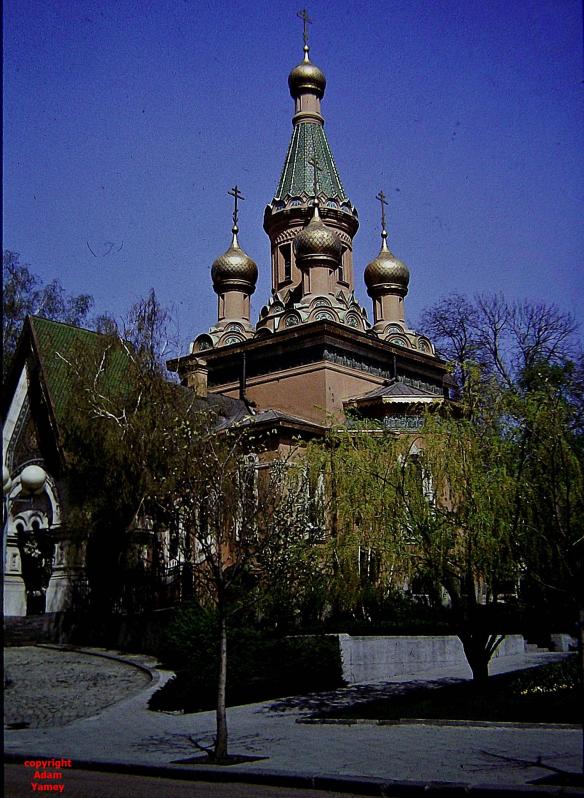
A church in Sofia, 1983
I decided to travel to Bulgaria in Easter 1983; it was close to Yugoslavia and I had not been there before. I wanted to travel by train rather than air, and to visit friends on the way. I planned to start my journey from Rainham, the village in Kent where I had been practising dentistry for just over a year.
I went to the local station and asked about buying a return ticket from Rainham to Sofia. I was told that as this was not a commonly made journey I needed to go to a special office at London’s Victoria Station to get this prepared. I did as I was instructed, paid the fare, and was informed that my ticket would be ready for collection a week later. Armed with this bespoke ticket and a Bulgarian visa, I left Rainham for Dover, crossed the English Channel by steamer, and then boarded a train bound for Milan.

A factory on the outskirts of Sofia, 1983
My future wife, Lopa, was living in Milan, where the company for whom she worked as a management consultant was based. During the few days that I stayed with her, I met Dijana (from Belgrade) and her then boyfriend quite by chance in the Piazza del Duomo, the huge square in front of the cathedral. They came to eat with us at Lopa’s flat, where her mother was also staying during a long visit from India. Dijana, whose interests in feminism were developing rapidly at the time, was impressed that Lopa’s mother was a doctor, a gynaecologist. She held female professionals in much higher regard than male ones.
After dinner, Dijana and her friend washed the dishes. I remember that when her unshaven boyfriend, who was desperately attempting to empathise with her burgeoning feminism, was washing a pan, he pointed out that he was washing the outside of the pan as well as the inside. He claimed vociferously and self-righteously that most men ignored the outsides of cooking pans, whereas women always washed them. I believe that his close relationship with Dijana was short-lived.

University of Sofia, 1983
I continued my rail journey to Belgrade, where I stayed, as usual, with Raša. I learned that disaster had struck: there was a grave shortage of coffee in the city. This was truly a tragedy amongst its citizens, most of whom drank vast quantities of the stuff. I promised Raša that if I saw coffee for sale in Bulgaria, I would bring him some on my return. A few days later, I met my friend Shabnam at Belgrade’s railway station. She had arrived from London, and was joining me on the trip toBulgaria.
When our train had crossed the border and entered Bulgarian territory, a Bulgarian immigration official came into our compartment and examined our passports. After handing them back to us, he sat down and asked us where we were going. When we said that we were visiting Bulgaria and going no further, he smiled. It was, I felt, an expression of genuine joy. He was so pleased that we were taking the trouble to visit his country rather than simply using it as a corridor, as most travellers did on their way to Turkey.
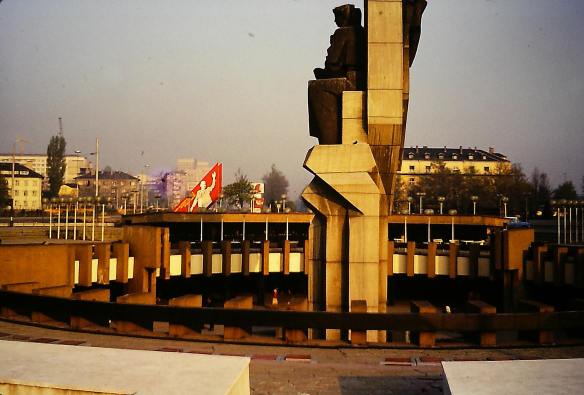
A railway station in Sofia, 1983
At the main railway station in Sofia we exchanged some of our Sterling for Bulgarian Lev at an official bureau-de-change. I had read that it was best to avoid black market currency exchanges because, even though a highly favourable rate of exchange could be expected, there were serious penalties for foreigners who used unofficial money-changers. Even at the official rate of exchange, we found everything in Bulgaria to be ridiculously cheap by our standards.
The station was quite far from the city centre. We hired a taxi to take us there. When we reached the destination, I asked how much we needed to pay. I spoke in my primitive Serbo-Croatian which was useful for making me understood in Bulgaria. This was not surprising as Bulgarian and Serbo-Croatian are quite closely related on the family tree of languages. The driver replied,“One Pound, one Dollar, one Deutschmark, one Swiss Franc…” “But we have Lev,” I interrupted, waving some Bulgarian currency notes at him. The driver stuck his nose into the air contemptuously, and said, “Two.” I pointed at the meter, which indicated a fare of one Lev, and said, “It says ‘one’.” He turned around and pointed at the two of us, and said, “Two, you are two people.” I gave up and paid. After all, 2 Lev was worth about 3 pence in those days.

Mausoleum of Bulgarian Communist politician Georgi Dimitrov[1882-1949] in Sofia, 1983
A lady at the tourist office arranged for us to stay in some private accommodation, and then explained how we should reach the place. I asked her to repeat the information as I had not heard it properly. She looked at me sternly, and said in English, “You need to concentrate better.”
This is an excerpt from my book “Scrabble with Slivovitz”, which is available on Amazon and bookdepository.com

While away an hour and a bit
On a London bus
Public transport

People seated staring
-imagination-
players, viewers, united

The graffiti on the wall fades
the stones weather
memories wither

Guide books and garages
I am not sure that we would have discovered the collection of cars assembled by the maharajahs of Gondal had we not had a detailed guidebook to Gujarat. Maybe we might have learned about it by chance but being in possession of a guidebook made certain that we were aware of it.
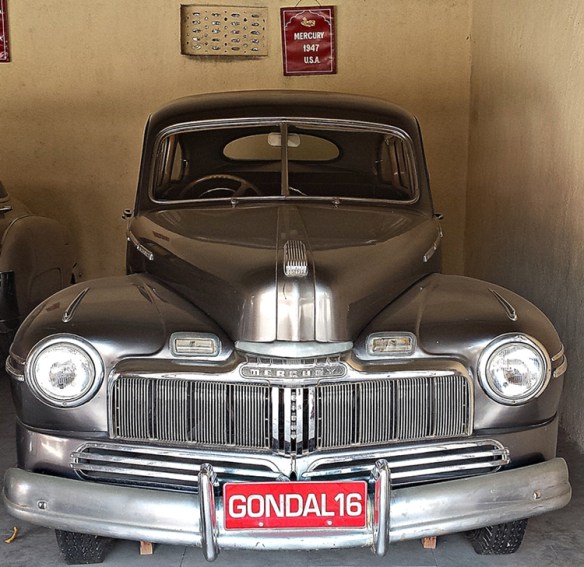
Detailed guidebooks of Gujarat, written in English, are few and far between. During the planning and our actual trip, we made use of two books.

Philip Ward’s “Gujarat Daman Diu – A Travel Guide” was published in 1994. Like his excellent guidebook to Albania, Ward presents Gujarat and its associated former Portuguese colonies in the form of a detailed, informative travelogue. It is a book that is both designed to be read in an armchair and to be used ‘on the road’. However, it was written before the earthquake of 2001 and its practical information is out of…
View original post 568 more words
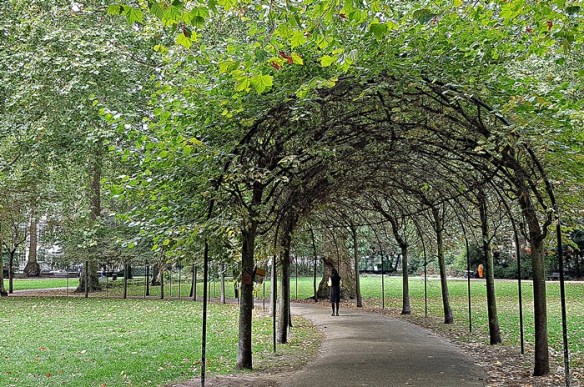
SHE WALKS BENEATH THE ARCHES
HER EYES ON HER PHONE
IGNORING NATURE
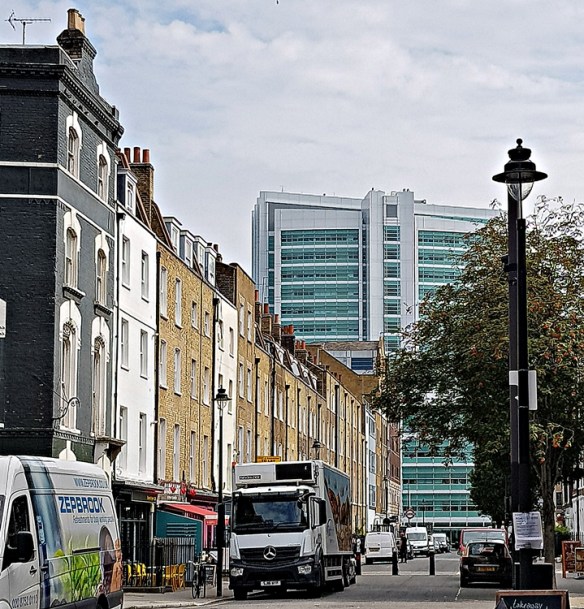
Warren Street is a station on the Northern and Victoria Lines of London’s Underground network. Situated at the intersection of Tottenham Court Road and Euston Road, both important arteries, Warren Street itself is comparatively small and of minor significance in the greater scheme of things. Be that as it may, this short street, which runs south of and parallel to Euston Road, has had some importance in my life.
When the Underground Station was opened in 1907, it was named ‘Euston Road’. In 1908, it acquired the present name. By the time that I began using the station regularly (in 1970), the Victoria Line had been serving the station for two years. Warren Street itself was built in the late 18th century as part of the Fitzroy Estate. It was named after Anne Warren (1737–1807), who married Charles Fitzroy (1737-1797), First Baron Southampton.

In the early 1970s, when I was studying at University College London (‘UCL’), one of my fellow students on my BSc course in physiology was a young Indian girl, Lopa, who is now my wife. She spent a couple of years living at the International Students House (‘ISH’) which faces Great Portland Street Underground Station. She and other Indian students introduced me to really good Indian food. This was served at the now no longer existent Diwan-i-am restaurant on Warren Street. It was here and at other nearby restaurants, such as Diwan-i-khas, Lal Qila, and Agra, that food was cooked by Indians and Pakistanis rather than by Bangladeshis, who operated the majority of so-called Indian restaurants in the UK. While Bangladeshi cuisine might be excellent, much of the ‘Indian’ food cooked by Bangladeshis is less satisfactory.

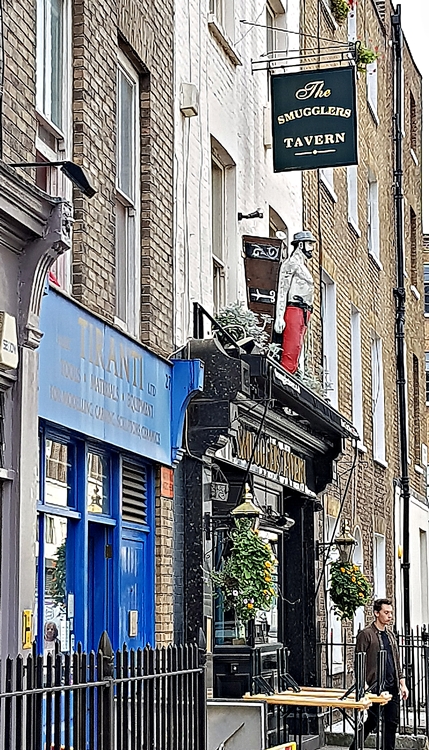
When the Diwan-i-am was in business, so were many car dealers who had their premises on Warren Street. These have long since disappeared. One business that still exists and predates the Diwan-i-am is Tiranti, an important supplier of, to quote their website: “…materials, equipment and tools to sculptors, modelmakers, mouldmakers, designers, prototypers, woodcarvers, stonecarvers, specialist plasterers, building picture and furniture restorers, potters and ceramicists.” Giovanni Tiranti started this enterprise in High Holborn in 1895. The company first began using premises near Warren Street in 1945. I am not sure when the Warren Street shop opened, but it was about 20 years ago at least. I never purchased anything there but my late uncle S, an engineer by profession and a keen sculptor in his spare time, was a regular customer.
I studied at UCL for twelve years. During the last five of these, I was studying dental surgery at the now, sadly, no longer existing Dental Hospital. Warren Street Station was the most convenient place from which to reach the Dental School from my home in Golders Green. It was a few yards from the station to the passage that led from Tottenham Court Road into Mortimer Market, where one part of the Dental Hospital was housed. In those days, the passageway was flanked by an official Iraqi Tourist Office. I used to visit this occasionally to look at the fine exhibitions of photographs shown there. The staff, no doubt agents of the late Saddam Hussein, were friendly. Once, they gave me a gift of four LPs of Iraqi folk music. Many of the ancient sights in the photographs might well now have suffered damage during the troubles that afflicted Iraq long after I had become qualified as a dentist.
There were several photography suppliers’ shops on the stretch of Tottenham Court Road near Warren Street. Their windows displayed a huge range of camera bodies and lenses. I bought my first SLR camera at one of these shops. They have mostly gone now. So also has Sterns. This electrical shop was well-known for its superb stock of African music LPs. Some years after I had left UCL finally (in 1982), Sterns, which opened in the early 1950s, moved from its somewhat aged premises on Tottenham Court Road to a newer shop around the corner on Euston Road. This has also disappeared, but Sterns still goes on in the form of an on-line firm.
One rainy early Monday morning, I emerged from Warren Street Station, and walked to the Dental School. The streets seemed emptier than usual. When I arrived at the school, the doors were locked closed. I was puzzled. Then, I bumped into another student, also soaking because of the weather. Shamefacedly, we realised that we had turned up on a bank holiday.

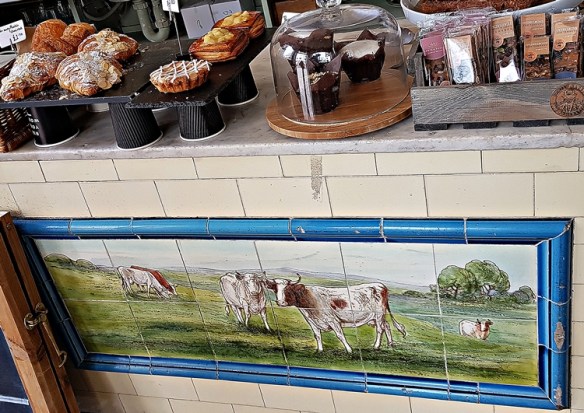
Some time during the mid to late 1970s, a branch of McDonalds opened on the corner of Warren Street and Tottenham Court Road. Occasionally, I used to pop in there for a snack on my way home. Now, some decades later, Warren street is lined with ‘trendy’ eateries, one of which is housed in an old dairy on the corner of Conway Street. Much of the original tilework of the former dairy of J Evans has been preserved. Although there are many newer buildings on Warren Street, a few of the original late 18th century structures have survived.
While Warren Street is not worthy of a long detour, it provides much more than a name for an Underground Station.

 yamey
yamey 