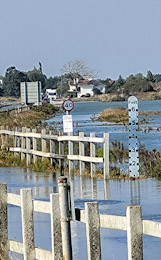
West of London but not an attraction for tourists

OVER THE YEARS. We have made many visits to Slough, a town in Berkshire, just west of Heathrow Airport. It would usually not figure on tourists’ lists of places that they feel they must see. And there is little in Slough that would entice people to visit the place. Yet, since the early 1970s, we have visited there often.

My PhD supervisor, Robert Harkness, and his wife, Margaret, lived in the countryside not far from Slough. They used to travel between Slough and Paddington stations when they were travelling to and from University College London (‘UCL’). While I was studying with them, they became my close friends. Until they died in the early years of this century, I, and then later my wife and our daughter, often spent weekends in their large Victorian home, Margaret, who played the violin, was involved with the Slough Philharmonic Orchestra (Slough Philharmonic Society). For many years, she not only played in the second violin section but also, she was the orchestra’s honorary accountant. We were often invited to the orchestra’s concerts, many of which were held in concert halls in Slough. A few of the concerts were held in Slough’s ‘posh’ neighbour Eton.

Because Robert and Margaret lived near Slough and we visited them often, we hired a storage unit (‘godown’) in Slough. We could combine visiting our friends with making trips to add things to our storage place. Sadly, Robert and Margaret are now no more than fond memories. However, our storage locker remains in Slough. So, visits to the town continue.

Recently, the company that stores our stuff moved from the edge of Slough to a place closer to the centre. It has a good car park and is close to a wonderful range of food shops. Slough has many inhabitants whose ancestors hail from the Indian Subcontinent and a sizeable Polish population. On the outskirts of Slough, there is at least one large Polish sporting/country club. Near our newly located storage place, there are two well-stocked Polish food supermarkets, which sell many products including things that would not be found at the nearby halal food shops and eateries. In addition to food shops catering for people of Indian and Pakistani origins, there are gift shops where decorated Hindu idols can be bought. There is also a jewellery store whose gold and diamond-studded items are just like what I have seen in India.

Drab as Slough undoubtedly is, the ethnic mix of its inhabitants add a welcome touch of colour and exoticism to the place. Having said that, I am not sure that I would recommend going there unless you have a reason to do so.

Stafford Cripps, Mahatma Gandhi, and an art gallery in London’s Islington

JUST OVER SEVEN years ago, I bought a book, which I put on a bookshelf without reading it, and then forgot about it. This September (2024) I found it whilst sorting through our book collection. It is a biography of the British politician Stafford Cripps (1889-1952), who visited India in March 1942. Winston Churchill had sent him there to negotiate with leading Indian Nationalists (including Gandhi, Jinnah, and Nehru) to keep them loyal to the British war effort in exchange for self-government when WW2 was over. It was up to Cripps, then a Labour politician, to formulate the proposed deal. The mission was not a success because Churchill thought that Cripps had offered the Indians too much, and the Indians thought his offer was not enough: they wanted independence immediately.

There have been many books written about Stafford Cripps. The one I found in my collection, “Stafford Cripps. A biography”, was published in 1949, when Cripps was still alive. When I looked at the book after ‘discovering’ it, what surprised me was the name of its author: Eric Estorick.

Until I looked at the book today (3rd of September 2024), I had only associated the name Estorick with a fine museum of 20th century Italian art – The Estorick Collection of Modern Italian Art. This is housed within Northampton Lodge, a Georgian building which was once the home and offices of the architect Sir Basil Spence (1907-1976), who was born in Bombay. This is in Canonbury, which is just north of Islington. The collection was established by the American Eric Estorick (1913-1993) and his German-born English wife Salome (1920–1989) after WW2.

Eric Estorick was none other than the author of the biography of Cripps, which I ‘unearthed’ today. Born in Brooklyn (NY), son of Jewish emigrés from the Russian Empire, he was awarded a PhD in sociology at New York University. In 1947, he married Salome (née Dessau), who was an artist. Eric’s interest in art began before that when he met the American photographer and gallery owner Alfred Stieglitz (1864-1946). The Estoricks began collecting art soon after the end of WW2. During their honeymoon, the Estoricks were introduced to the works of the Italian Futurists. The Collection contains several good examples of their works. In 1960, Eric opened the Grosvenor Gallery in London’s Davies Street. His first exhibition was a display of modern sculpture. It was in his gallery that my mother exhibited some of her sculptures in 1965, in an exhibition called “Fifty Years of Sculpture. Some aspects 1914-1964”.  She must have been introduced to Eric at the time.

Apart from his interests in art, Eric Estorick was a prolific author. In addition to writing three books about Stafford Cripps, he wrote others about politics as well as art. One of his books, which was published privately, was a history of the Marks and Spencer firm, in which he worked for some time. It was in that company that Salome Estorick had worked. Marks and Spencer had been a customer of her father’s textile manufacturing firm.

Having found my copy of Estorick’s book and skimmed its contents, I will not be putting it into our storage unit as I had originally intended, but will begin reading it soon.

Caught in time in west Buckinghamshire

DUE TO BE DEMOLISHED in 1900, the newly established National Trust (founded in 1895) saved it from this terrible fate that year. The building is a long, narrow half-timbered, brick and wattle structure in the attractive village of Long Crendon in the west of Buckinghamshire. Built sometime between the 14th and 15th century, it served as the manorial courthouse.

Meetings of the manorial court of Long Crendon are believed to have begun before the 13th century. Until 1233, they were held in the lord of the manor’s house, which was demolished that year. In 1275, the manor was divided equally among three female heirs, and courts were held in the farmhouses of their families. By 1558, the courts of the three lords of the manors combined, and it must have been around this time that the courthouse began being used for judicial procedures. The building was not only used by the court but also as a facility for the poor. By the 19th century, it was used by one family to store wool. Some historians question this. In Victorian times the courtroom was used as a Sunday school and a place where occasional public lectures were given.

In 1900, the National Trust purchased the venerable edifice and began repairing it to keep it standing.  The Arts and Crafts architect and designer Charles Robert Ashbee (1863-1942) and his wife lived in the courthouse. They used to invite groups of apprentices from London for arts-based holidays lasting a fortnight. In 1902, the Ashbees, whose bohemian activities disturbed the locals, left for Chipping Camden where they established the Guild of Handicrafts. In 1918, Ashbee was sent to Jerusalem as civic adviser to the British Administration for Palestine.  In 1937, the courthouse became used as a clinic by the area’s District Nurse. This continued after the NHS was established in 1948. The courtroom then served as a Welfare Clinic.

Between 1985 and 1987, the building was intensively restored. Now, the long room, which occupies most of the upper floor, and was once the court room, is now a village museum. It is reached by a steep flight of wooden stairs. The upper rooms are the only part of the building open to the public. The long courtroom has a timber floor made with irregularly shaped planks. The arched ceiling is supported by massive timber crossbeams. Each one differs in shape from the others. Various exhibits and boards with historic photographs line the walls of this otherwise empty room, in which long ago trials were held.

We visited Long Crendon to see the courthouse. However, many other buildings in this village are incredibly picturesque and well-worth exploring.

About Space at an exhibition in a gallery in south London’s Bermondsey

THE TROUBLE WITH temporary exhibitions is that they come to an end. So, if you miss it, you might never see the same works of art together again. I am very pleased that we just managed to catch a superb exhibition at the White Cube gallery in Bermondsey on its final day (1st of September 2024). Called “About Space”, it is a show of paintings by an artist, of whom I had not come across before: Al Held (1928-2005).

Al Held was born in Brooklyn (NYC). His Jewish family was impoverished during the Great Depression and had to survive on welfare payments.  Having served in the US forces during WW2, he was eligible (under the terms of the GI Bill) for financial assistance with his education after the war. He studied painting first in New York City, and then in Paris (France). Over the years, he explored different styles of painting, and after exhibiting at major art museums in the USA, his work began to be shown at prestigious galleries outside the USA.

The paintings on display at the White Cube date from the 1960s onwards. Many of them are huge, dwarfing the viewers. A few are smaller. All of them are visually spectacular. Although two-dimensional, they depict complex three-dimensional abstract imaginary constructions. Viewing these amazing compositions is like looking through a huge window at the kind of fantastical geometric abstracted landscapes that might now be produced by digital means. As the title of the exhibition implies, Held’s paintings are literally about space. Painted with precision, these compositions explode with energy.

I am glad that we did not miss the exciting experience of seeing these paintings created by a man, who had shown no interest in art until he left the US Navy in 1947. It was his friend the artist Nicholas Krushenick (1929 – 1999), who inspired him to take up art, and I am very pleased that he did.

From the Dominican Republic to South London via the USA

FIRELEI BÁEZ WAS born in the Dominican Republic in 1981. She studied art in the USA, where she now lives and works. The South London Gallery (‘SLG’) in South London’s Peckham district is hosting her first solo exhibition in the UK. The show continues until the 8th of September 2024. The exhibition is distributed between the main gallery building and a converted fire station, which is a few yards away.

The large exhibition space in the main building is occupied by a wonderful immersive installation. The viewer walks beneath a huge blue canopy with multiple small oval holes suspended from the ceiling. Light filters through the material of the canopy producing the effect of sunlight dappled by leaves of trees, creating the feeling that one is walking in a forest. Recordings of bird sounds enhance this illusion. On the walls of the room there are large, boldly coloured aluminium cut outs, representing silhouettes of Ciguapas – figures from the folklore of the Dominican Republic.  

In the converted former fire station, there are yet more works by Firelei Baez. On the ground floor, there are huge floor-to-ceiling, extremely colourful abstract paintings. The artist’s idea is to immerse the viewer in an excitingly vibrant sea of colours. The first floor has two galleries. In one, there are large, richly coloured silhouettes depicting Ciguapas. In the other, there are many pages from books, which the artist has transformed by overlaying parts of each of them with paint or ink. In doing this, she provides the viewer with alternative versions of what was originally on the page before she added her artwork. Although libraries and book-collectors might well object to extracting pages from books and then painting over them, the effects Firelei produced are both witty and attractive. In addition, they make you think twice about what was originally on the page.

For a north Londoner like me, Peckham seems to be a distant part of the world, but actually it is not to difficult to reach it by public transport. And many of the exhibitions we have viewed at SLG, including the one described above, makes the trip to Peckham well worth making.

Do you have middle name(s) and do they embarrass you?

FREQUENTLY PEOPLE HAVE more than one name other than their family name (surname). For example, I am Adam Robert Yamey. My father, an economist, had suggested that I should be called Adam Smith Yamey to commemorate the famous early economist Adam Smith. I would not have minded that, but my mother was not happy with the idea, so I learned much later. More famous examples include the painter John Mallord William Turner and the politicians Winston Leonard Spencer Churchill and Mohandas Karamchand Gandhi. My PhD supervisor at University College London had even more ‘middle’ names. He was Robert Douglas Mignon Innes Kerr Harkness. Often, the middle names are those in memory of ancestors. Such must have the case for Robert Harkness, as well as for Churchill and Gandhi.

Photo source: wikipedia

My mother hated her middle name. It was Bertha. I often wondered why she had been given that name. When I began researching the history of my mother’s family, I discovered why she might have had that name on her birth certificate. Her mother had a cousin called Bertha. The reason my mother disliked this name was that during WW1, the Imperial German Army had a large canon, the 42 centimetre kurze Marinekanone 14 L/12, which was manufactured by the Krupp company in Essen (Germany). What upset my mother was that the artillery piece was commonly known by its nickname ‘Big Bertha’. My mother was born only two years after WW1 ended, and the Big Bertha must have been reasonably well-known when she started going to school. You can imagine how much teasing she got when the other pupils discovered her middle name.

Do you have a middle name (or several middle names) and does it (or they) embarrass you?

A chance discovery in a shop in Covent Garden

I ALWAYS ENJOY looking through the books on sale in charity shops (thrift shops). First of all, one often sees books that are either out of print or that you did not know existed. Secondly, occasionally, one finds real treasures.

Today, I was in an Oxfam shop near Covent  Garden when I found a book called “Muslims in India.” Edited by Ratna Sahai, it was published in the mid to late 1990s. What made it interesting is that this illustrated and quite learned book was produced for the Indian Ministry of External Affairs. In other words, it was commissioned by the Government of India. I wonder whether the present Indian Government will produce a new version of this volume.

I paid very little for the book – about 10% of what booksellers on the Internet are charging.

Portraying travels around the world in colourful Japanese woodblock prints

THE DULWICH PICTURE Gallery is the oldest building in Britain designed specifically to display art works. It was designed by the architect Sir John Soane (1753-1837) and opened to the public in 1817. Completed long before the advent of electric lighting, the rooms of the gallery were illuminated by daylight that entered them from windows on the roof. Nowadays, it is illuminated by modern lighting. It would be interesting to see how it looks when it is lit solely by daylight. The institution houses a magnificent collection of works by famous ‘old masters’ and puts on temporary exhibitions, one of which is on until November 2024. The current show is dedicated to colourful woodblock prints created by three generations of a Japanese family: the Yoshida dynasty.

Yoshida Hiroshi (1876-1950) was married to Yoshida Fujio (1887–1987). They were both printmakers. Their sons, Yoshida Tōshi (1911–1995) and Yoshida Hodaka (1926–1995), also made prints, as did Hodaka’s wife Yoshida Chizuko (1924–2017). Chizuko and Hodaka’s daughter, Yoshida Ayomi (b. 1958), continues the family’s tradition of printmaking. She has created a site-specific installation (based on cherry blossom trees) for the exhibition. Examples of all these artists’ fine works, which range from figurative to abstraction, are displayed in the exhibition. Each exhibit is a feast for the eyes.

For me, the highlight of the show are the prints by Yoshida Hiroshi. Each one is exquisitely executed and brilliantly composed. Several of his prints on display depict scenes in Japan, ranging from a view of Mount Fuji to the interior of a shop. Hiroshi and his wife also travelled extensively: through Africa, America, Asia, and Europe. When in London in 1901, Hiroshi paid a visit to the Dulwich Picture Gallery. His signature is on a page of the Gallery’s visitors book, which is shown in the exhibition. I was particularly fascinated by the prints he made after seeing sights in the USA, Canada, Switzerland, Italy, Greece, and Egypt. The exhibition includes two beautiful depictions of the Taj Mahal in Agra (India).

Although the rest of the exhibition was fascinating, I was intrigued to see famous tourist sights so beautifully depicted by a traveller from the Far East – a man with great powers of observation and immense artistic talent.

The woodblock prints on the display are without doubt masterly creations. A short video described how they were created. The artist draws the scene to be depicted. A wood carver carefully transfers this image by carving it in reverse on a wooden block. Then a coloured ink is applied to selected parts of the block. Paper is placed on top, pressed down, and a print is created. The process is then repeated using another colour on different or the same parts of the block. This adds the second colour to the print. This process can be repeated carefully well over 30 times (up to 100 in some cases) until the desired coloured image is completed. At each stage the paper must be accurately positioned on the inked block to ensure it is placed in exactly the same place as on all the previous ink applications. The artist supervises the carver and the printer throughout the production. The process must require supreme concentration and dedication, but the end justifies the means.

One might wonder why bother with such a complex and labour-intensive process, when a scene could more easily be depicted using a brush and paints or pen and inks. I cannot answer this, but will say that the results in the hands of the Yoshida family are remarkably and delightfully distinct from pictures created by other means. If you can visit the Dulwich Picture Gallery to see the Yoshida show, then do not miss it.