
THE HUMBLE BRICK is a much used material in the construction of many kinds of building. It can be used unimaginatively, as it often is, or imaginatively to create visually intriguing textures.
During a visit to one of Bangalore’s art schools, the Chitrakala Parishath, we watched architecture students participating in an outdoor “brick techtonics” workshop. This was being supervised by the noted Indonesian architect Andy Rahman.
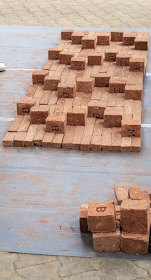
We watched small groups of students arranging bricks so as to make interesting patterns, following plans drawn up by Andy Rahman. As they worked, Mr Rahman moved from group to group, discussing with them what they were doing.
All around the area where the workshop was taking place, labourers were working noisily on a construction site where new buildings were being built for the art school. Thus, the architects working on realising theoretical bricklaying design ideas were surrounded by real life applications of established building practices.
I hope that when the budding architecture students begin designing ‘for real’ that they will recall the interesting brickwork creativity that Mr Rahman was introducing to them. For he was showing them that even the humble brick can become a component in a visually fascinating design.

 yamey
yamey 