Locks of love unlocked a distant memory

About 20 years ago, I visited the waterfalls at Sivasamudra in Karnataka state, India. At one viewpoint,  there was a  fence to which padlocks had been attached. The fence was special; it surrounded the tomb of a Muslim saint.  I had never seen anything like this before.

I asked our well-educated driver, Rahim,  about the locks. His explanation was that people  who had a wish that they wanted fulfilled, attached a lock to the fence and discarded the key. Their belief was that when their wish was granted, God would unlock the padlock.


Some years after visiting Sivasamudram, I began noticing bridges in Europe to which padlocks had been attached, often in great numbers. Each lock usually bore a name that had been written on it. These locks are known as ‘love locks’. Their supposed origin was at a bridge in Vrnjačka Banja in Serbia in 1914 (see: https://en.wikipedia.org/wiki/Love_lock). Loving couples place padlock is on a bridge or railing, and throw away the key. The lock is placed to symbolise their undying live for one another, rather than to fulfil a wish, such as hoping for a baby or  a spouse, or success in some other venture,  as Rahim explained to us at Sivasamudram.


Some bridges have had so many locks attached to them that the weight of these attachments can threaten the structural integrity of the bridge.
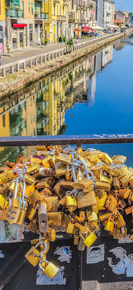
 

Locks on a bridge over one of the navigli in Milano

Today, 15 September  2026,when visiting the navigli – the canal network of Milano in Italy  – I spotted neat clusters of lo e locks, which looked a bit like bunches of misshapen grapes. Seeing these lo ks brought back memories of my visit to Sivasamudram,  and inspired me to write this.


Revisiting old haunts in Milano (Milan)

Between 1978 and 1982, long before we married, my wife Lopa lived and worked in Milano – Milan.

Today, 13 September 2026, more than 40 years after she left the city, we did a little sightseeing – the Duomo, the Galleria near the cathedral, La Scala, and the Stazione Centrale – and then we headed away from the tourist-infested areas to Via Paolo Sarpi, which is the main street in the district where Lopa resided.

One of the attractions of Via Paolo Sarpi is Pizzeria da Giuliano, which was founded in 1969. With a justifiably good reputation for its pizzas, this unpretentious restaurant was around the corner from the building in which Lopa had an apartment.  She used to collect pizzas to eat at home from this pizzeria. For old times sake, we ate lunch there, and enjoyed the tastier-than-average wood fired pizza slices. The place was filled with families enjoying Sunday lunches.

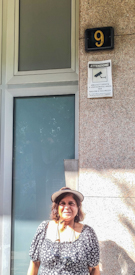
9 Via Albertini

The exterior of Lopa’s flat at number 9 Via Albertini looks the same as it was when she lived there, but both Via Albertini and Via Paolo Sarpi have been pedestrianised since she left the area. Also, the shop that used to make and sell fresh filled pasta has gone, and has been replaced by a restaurant serving Japanese food.

Revisiting old haunts is always interesting.  Finding that some things have remained the same is satisfying. And in the case of Lopa’s former neighbourhood,  the changes since she left have not caused the area to deteriorate.

Train to Florence

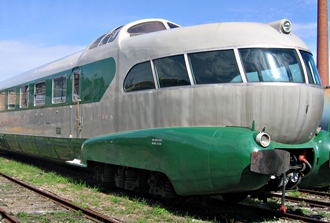
Settebello_power_car


Until I was about 17 years old, my parents used to take my sister and I for long trips to Florence and Venice every year. Often, we would fly from London to Milan, and then take a train to Florence. Frequently, our reserved seats were occupied by other passengers, who would only shift elsewhere when we had got the carriage’s conductor to intervene on our behalf.

Here is an extract from my reminiscences of childhood travel in Italy from my book “Charlie Chaplin waved to me“:

“Once we were seated in our reserved seats, we began to enjoy the 3 hour journey to Florence. Within minutes of entering our carriage or compartment, my mother would begin to strike up a conversation with whoever was sitting nearby. My mother and two of her three brothers, one of whom lived in London and the other in Cape Town, were always happy to initiate conversations with complete strangers. Her only sister and other brother were less inclined to do this. Mostly, our fellow passengers were Italian, but once I recall sharing a compartment with an elderly American lady who was considerably older than my parents. After a few minutes of friendly conversation, she revealed that her son was none other but the world-famous violinist Isaac Stern (1920-2001), who was born 3 months before my mother.

Occasionally we were lucky enough to travel on a Settebello train. These high speed streamlined electric trains, which plied between Milan and Rome and stopped briefly in Florence, were the pride of Italian State Railways. At each end of the train there was an observation saloon. The driver’s cabins were located above these. When travelling in the front observation cabin, one experienced a driver’s view of the track ahead. As a child who loved trains, sitting in these was a great treat for me. I still gain great enjoyment sitting at the front of trams and trains. One of the attractions of London’s Docklands Light Railway, which weaves its way through London’s former docklands and other reclaimed parts of the East End, is that there are seats at the front of the train where a driver would normally be seated had the train not been automated.

About an hour away from Florence after passing through Bologna, the train entered a long tunnel. Even the fastest trains took almost half an hour to travel through this. Soon after we emerged from it we sped through the town of Prato, and then the suburbs of Florence (Firenze in Italian) began. I knew that after we had passed the marshalling yards at Firenze Rifredi, we would soon be entering the huge terminal, Florence’s Stazione di Santa Maria Novella.“


Charlie Chaplin waved to me is available from:

Amazon, bookfinder.com, lulu.com, and on Kindle


Picture: Front of a Settebello train showing the observation lounge and the driver’s cabin above it. Source: it.wikipedia.org