
CURRENTLY MANY MUSEUMS in the ‘Western World’ are pondering over the idea of returning some of their exhibits to the territories from where they were obtained. A controversial example of this quandary are the fragments from Athen’s Parthenon, which are known as the Elgin Marbles.
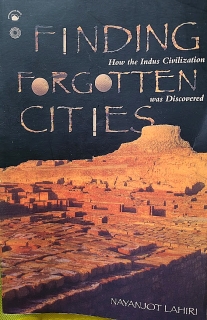
From 1899 to 1905, Lord Curzon was the Viceroy of British India. In her book “Finding Forgotten Cities”, Nayanjot Lahiri describes how Curzon was concerned about preserving and conserving India’s many archaeological and historical sites, and promoting the work of archaeologists in what was to become the Archaeological Survey of India (‘ASI’). Concerning artefacts removed from India, it was Curzon who arranged for some ancient artefacts to be returned from the British Museum to where they came from in India. The most important thing that Curzon did in relation to Indian archaeology was to appoint the archaeologist John Marshall (1876-1958) to supervise and plan archaeological activities within the Indian subcontinent. It is Marshall and his highly trained colleagues including many Indians such as Rakhaldas Banerji, DR Bhandarka, KN Dikshit, and DR Sahni, who are important protagonists in Lahiri’s story about how the extensive remains of Harrappan (or Indus Valley) civilisation came to be discovered. The book also includes much information about the Italian archaeologist Luigi Pio Tessitori (born 1887 in Udine, Italy, died 1919 in Bikaner, Rajasthan), whose discoveries eventually contributed much to the unravelling of the mystery of Harrapan civilisation.
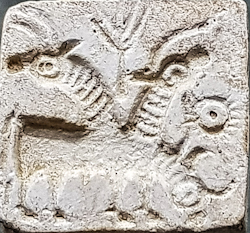
Apart from the above-mentioned, Lahiri describes the lives and archaeological work of a whole host of other people working in India. She describes how the earlier archaeologists were fixated on finding remains of places mentioned in early texts including the Vedas, classical author’s histories of Alexander the Great’s incursions into the Indian subcontinent, Buddhist and Jain sources, and accounts by early Chinese travellers in India. When the remains of what is now recognised as the very old Harrapan civilisation (as early as about 3000 BC) began to be discovered, it was gradually realised that these were not compatible with the stories written in the ancient texts. Although at first nobody knew the age of these findings, the fact that they were discovered deeper beneath the ground than the artefacts that could be dated, Marshall and his colleagues believed that they had stumbled on remains from a time far earlier than had been hitherto discovered by archaeologists in India. Amongst these and at various different locations, seals inscribed with pictograms or symbols began to be discovered. Later, these seals became important in dating the Harrapan civilisation.
Lahiri’s well-documented, scholarly account reads like a thriller. Not only does she relate the story of the discovery of the Harrapan civilisation and the archaeologists who found it, but also she tells of the difficulties that Marshall encountered ensuring that the ASI was adequately funded. And she tells of the remarkable way that the ageing of the civilisation became possible after Marshall had published his findings with many illustrations in the widely read, non-scholarly Illustrated London News in 1924.
I never believed that I would read a book about archaeology and find it un-put-downable, but Lahiri’s fascinating book was just that. It is a book that should interest both archaeologists and lay readers. I began reading it soon after revisiting one of India’s major Harrapan sites, that at Dholavira in Kachchh (Gujarat), and I am pleased that I did.
 yamey
yamey 