Leaning over but flourishing in Fulham

I ARRIVED EARLY for a committee meeting of the Anglo-Albanian Association, which was being held in a house in Walham Grove in London’s Fulham district. It was a warm afternoon, and as I did not want to disturb our host by arriving too early, I sat on a bench in the small yard next to the north side of St Johns Church – a rather unexceptional example of early 19th century church architecture.

Soon, I noticed a tree in the middle of the yard. Its trunk was growing at about 30 degrees to the ground, and was supported by a wooden prop. Branches were growing out of the trunk, more or less vertically. There was a small commemorative notice at the base of the tree – where it had been planted originally. It bore the words:

“This mulberry tree was planted by His Worship the Mayor of Fulham Councillor JF Perotti JP on Victory Day June 8 1946”

On that day, celebrations were held in London to commemorate the Allied victory in WW2, the British Commonwealth, and the Empire. The Mayor, Mr Perotti, was a fitter at London Transport’s Lots Road electricity generating station.

In my mind, mulberry trees conjure up visions of silk growing and exotic landscapes of yesteryear. To be honest, until I saw the notice by the tree in the yard in Fulham, I would not have been able to identify a tree as being a mulberry. I stood up and examined it closely. To my great delight, I saw that the tree has berries. They looked like larger than average raspberries. I have read that when they ripen, they become darker in colour and resemble elongated blackberries.

I was curiously excited to find a mulberry tree with its fruit. I had not expected to find one in a busy part of Fulham. Mulberry trees have been grown in Britain since Roman times. One of the oldest surviving examples is in the garden of Canonbury Tower in Islington. It might have survived since the 16th century. There are several other slightly younger mulberry trees in London. So, the leaning example I saw in Fulham is a youngster on the scene.

Eight bells and a bridge

BELIEVE IT OR NOT, busy Fulham in west London was a small country village in the early 19th century. Today, what was once the heart of the village, is the site of two bridges spanning the Thames. One carries the District Line railway tracks and pedestrians, and the other, an elegant stone bridge with five arches carries a road across the river. Known as Putney Bridge, the latter was completed in 1886 and designed by the prolific civil engineer Joseph Bazalgette.

Inside The Eight Bells in Fulham

Prior to the construction of the stone bridge, there was an earlier wooden bridge, known as ‘Fulham Bridge’. With roofed gatehouses at both ends and 26 arches (or openings), it was designed by Sir Jacob Acworth and completed in 1729. Its approach road was Fulham High Street. The bridge has long-since been demolished but a blind-ended, short inlet of the river, now named Swan Drawdock Nature Reserve runs right next to where the old bridge would have once begun.

The Eight Bells pub, which still serves customers, stands on Fulham High Street. Now housed in a Victorian building, it might have been first established as early as the 17th century. When the old bridge stood, it would have attracted much business from folk using the wooden crossing. Things changed when the new, current, bridge was constructed.

The approach to the new crossing, Putney Bridge, was not via Fulham High Street but by way of a new road, the present Putney Bridge Approach (the A 219), which does not pass the front of the Eight Bells. This led to a considerable loss of business for the pub, whose owners received £1000 in compensation: a great deal of money in the late 1880s.

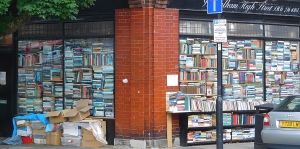
The Eight Bells and its neighbour, a wonderful second-hand book shop, along with a few other shops near Putney Bridge station, although definitely not rural in appearance, retain a ‘villagey’ feel.

A slave trade abolitionist in Fulham

LESS FAMOUS THAN William Wilberforce (1759-1833), but equally important in helping to end Britain’s involvement in the slave trade, was Granville Sharp (1735-1813). Born in Durham, Sharp was apprenticed to a linen draper in London at the age of 15. A scholar at heart, he left his apprenticeship to become Clerk in the Ordnance Office at the Tower of London, a job that gave him more time to pursue his scholarly studies and music. One of his brothers, William Sharp (1729-1810), was a physician, who is believed to have treated King George III.

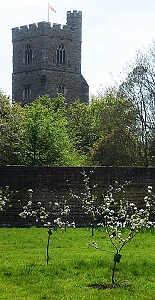
All Saints church in Fulham

One of William’s patients was Jonathon Strong (c1747-1773), a black slave from the West Indies, who had been badly beaten-up by his master, a lawyer called David Lisle. William and Granville helped tend to Strong’s injuries and paid for him to spend four months in St Bartholomew’s Hospital. Lisle instigated a number of court cases to protect his ‘possession’ of Strong. Granville was deeply involved with making sure he lost them and that Strong became a freed man. The Strong case was the beginning of his keen and active involvement in the movement to abolish slavery. His involvement with this and subsequent legal cases connected with the unjustness of the slave trade gave him the reputation of being a “protector of the Negro”.  

In 1787, Granville became one of the founder members of the Society for Effecting the Abolition of the Slave Trade. Though sometimes overshadowed today by other abolitionists such as Wilberforce and Thomas Clarkson (1760-1846) played a major role in hastening the end of the slave trade and slavery in places ruled by the British.

By the 1780s, there were approximately 15,000 ‘black’ people in Britain, many of them without employment. Ideas began to circulate that it would be a good idea to form a settlement in Africa to which the Africans could ‘return home’ and live as free individuals. One place that was suggested was Sierra Leone. Granville Sharp was consulted on this and felt that it would be an ideal location to set up a model community for the ‘blacks’. He suggested calling it ‘The Province of Freedom’. Sadly, the well-intentioned province that included a settlement called Granville Town was a failure.

Granville lived long enough to learn that the Act of Abolition received Royal Assent in 1807, but not long enough to know about the final abolition of the slave trade in the British Empire (in 1833). Granville’s brother William had a country dwelling, Fulham House, in Fulham. It was here that the ageing Granville moved after William died. He lived there with William’s widow, Catherine, and her family. It was in this house that Granville breathed his last.

Probably Fulham’s greatest resident, Granville Sharp was buried in the cemetery of Fulham’s parish church (All Saints). His funerary monument, which stands close to the boundary fence of Fulham Palace commemorates him, his brother William, and his sister Elizabeth Prowse. William’s wife Catharine (née Barwick) is also buried beneath this stone, which was restored in 2007.