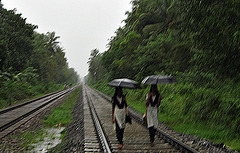
LIKE MANY OTHER YOUNG BOYS, the idea of being a train driver appealed to me. I am pretty certain that my parents would not have been ecstatic had I ended up in the driving cab of a railway train. Once my father told me that he did not mind what I studied or what profession I took up eventually, so long as it was not economics (he was a professor of economics). He had no need to be concerned about that, as what I could gather about economics made it sound unappealing to me. So, what did I consider after my urge to drive trains diminished?
From an early age, I used to spend much of my spare time drawing and painting, pursuits encouraged by my mother, who was an accomplished, but lesser known (and not self-promoting) painter and sculptress. In addition, in my early teens, I began to develop an interest in ‘modern’ architects including Le Corbusier, Mies Van der Rohe, and Frank Lloyd Wright. I read books about them and the idea of studying architecture, to become an architect, entered my head. My hope was to create structures as beautiful and innovative as those, which I had read about. After a year or so, I was walking back to school from our dining hall when I was struck by a depressing thought. If I studied architecture for the required seven or so years, there was a good chance that I would not be undertaking major, exciting projects like those which had made my architectural heroes famous. Instead, I might very well have ended up designing loft rooms, domestic garages, garden room extensions, and similar important but mundane structures. This thought dampened my enthusiasm to pursue architecture as a profession.
My next idea was to become a schoolteacher like those who taught me at my secondary school. I am incredibly pleased that this idea was short-lived because over the years the conditions that many schoolteachers have had to endure have deteriorated continuously.
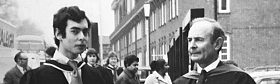
My father, now long retired, was a university teacher (he became a senior professor at the London School of Economics). From my young vantage point, his lifestyle looked good. Despite working hard, which he did, he had lovely colleagues and many pleasant students as well as long holidays. His profession appealed to me and set me on the path of pursuing studies which I hoped would lead to an academic career. After completing my BSc, I worked on a research topic that led to me being awarded a PhD.
As I reached the completion of my doctoral work, two things began to worry me. One was that none the other British-based workers in the field that I was working (connective tissue physiology), whom I met at conferences and seminars, seemed like people with whom I would enjoy working. The prospects for obtaining post-doctoral work abroad were not good, and at that time I had no yearning to live outside the UK. Another thing that worried me, which I only realised after I left research, was that it was a lonely pursuit.
To cut a long story short, I began studying dentistry. I had an idea that with a clinical qualification, a wider range of research possibilities would become available to me. However, I discovered during the clinical dentistry course that I enjoyed working with people, members of the public, who were willing to risk their teeth in the hands of students. So, when I qualified as a dentist, instead of going back into research and academia, I began working as a practising dentist. I did this for 35 years with varying degrees of enjoyment and satisfaction. Overall, it was a valuable life experience for me, as I hope that it was for my patients.
I have been retired for over two years now and love it. Jokingly, I often tell friends that my main reason for going to work was to retire eventually. But there is an element of truth in this. Even now, so many decades since my childhood, I still enjoy railways and rail travel. I have not yet completely lost that juvenile desire to drive a train. Maybe someday, I might get to ‘have a go’ at the controls of a train. I have heard that these days drivers of London’s Underground trains make quite a good living. The money would be satisfactory but, more importantly, the thrill of controlling the train would be a fine reward.
Have you, dear readers, been satisfied with the tracks along which your working lives have travelled?


 yamey
yamey 