It’s enough to drive you around the Benz

Of my attempts to learn to drive a car, I will write on this subject at another occasion. Suffice it to say that by the summer of 1982, when I had been practising dentistry for several months, I passed the Driving Test at the age of thirty years. I began to enjoy driving and cars in general. I changed my car often. Over a period of eleven years while I practised in Kent, I possessed (in the following order): an Austin Allegro, a Volkswagen Polo, a Volvo 340, then two Volvo 240s, and then a Volvo 850. The last two cars I owned after those were Saabs.
 

MERC 2


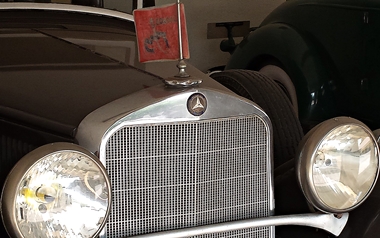
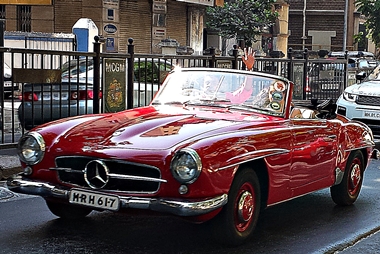
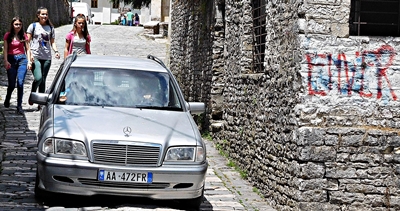
Some time during my eleven year stay in Kent, I fancied owning a Mercedes Benz. In my mind, this make of car rated above all others. Apart from the company’s long heritage (it started in the late 1880s), the cars it produced were reputed to be strong, reliable, and very roadworthy. It is of interest to note that Adolf Hitler rode around in Mercedes cars. I suppose he must have known that the Mercedes in the company’s name was chosen because Mercedes was a daughter of Emil Jellinek (1853-1918), a motor manufacturing entrepreneur who created the Mercedes trade mark in 1901. Emil, the son of a rabbi, was married to Mercedes’ mother Rachel Goggmann Cenrobert, who was of French-Sephardi descent. Therefore, the car Hitler enjoyed was named after a Jewish woman. But I digress.

A new Mercedes Benz dealership opened close to the practice, where I worked. One lunchtime, I drove to the dealership to test drive a Mercedes estate car. A salesman drove me about a mile, and then let me take the wheel on the way back. At a certain stage, I needed to operate the handbrake. I looked for it in the usual place on the central console that separates the two front sets, but it was not there.

“Where is the handbrake?” I asked the salesman.

“I have no idea,” he replied, “I have never driven this model before.”

He thought for a minute, and said:

“Try that handle beside your left leg.”

He was right, but my confidence in him diminished.

When I had driven the car back to the dealership, I asked to be shown some pre-owned cars, as the new ones were way beyond my price-range.

Another digression seems appropriate at this point. Many years after visiting the Mercedes dealership, I hired a car at Heathrow Airport. It was an up to the minute luxurious Vauxhall estate car. A charming young Asian lady handed me the keys and told me where to find the vehicle. I sat in the driver’s seat and started the engine. Immediately, I noticed a warning light telling me that the handbrake was engaged. I looked for the handbrake. It was neither on the central console nor was there a handle near the foot pedals. I was flummoxed. I returned to the car hire office feeling rather foolish and described my problem to the young lady. She smiled before explaining that the handbrake was operated by a small button on the central console near the gear change stick. After returning to the car, I found the button, which was no bigger than the surface of a dice such as is used in board games. It was flush with the rest of the console and looked like a decoration.
 

MERC 1


I was quite taken with a greenish Mercedes saloon car, which was almost favourably priced, but still some way beyond my reach. The salesman opened the vehicle and invited me to sit in the driver’s seat.

“What do you think?” he asked.

“Very nice,” I replied, “but I’m not so keen on that plastic trim on the central console around the gear stick.”

“Sir,” he exclaimed, affronted, “that’s not plastic. It’s highly polished wood trim. The very best. This is a Mercedes, you know.”

“Sorry,” I replied, not totally convinced, and continuing, “I like the car. Are you prepared to lower the price?”

“Oh no, sir, that is totally against our company policy. The price we offer is the only price. Our company does not haggle.”

Lunchtime was nearly over, so I said that I would think about the car and would let him know my decision soon.

Twenty-four hours later, I was eating my lunch in the practice when the telephone rung. One of my colleagues answered it and then handed me the receiver. It was the salesman, whom I met the day before.

“Mr Yamey,” he said, “I have good news for you. I have spoken with my manager, and he says that we can offer you the car for £1000 less.”

“Thank you,” I replied, “let me think about that.”

Even with the discount, the car was still beyond my means.
 

merc 3


Twenty-four hours later, two days after visiting the Mercedes dealership, I received another call from the salesman, again whilst I was eating lunch.

“I have more good news for you, My Yamey,” he began, “my manager has authorised a further thousand-pound reduction in the cost of the car you are interested in. That’s a discount of two thousand pounds. Makes the motor very reasonable, don’t you think?”

I told him that I was not sure about buying at that moment, and that I would get back to him if I changed my mind. I had by then decided that not only was the car too expensive even with the unexpected discounts from a firm that never offered discounts, but, also, I was actually happy with the car I already owned.
The road to Hogsback

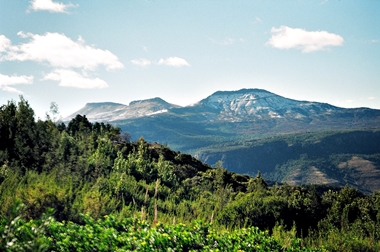
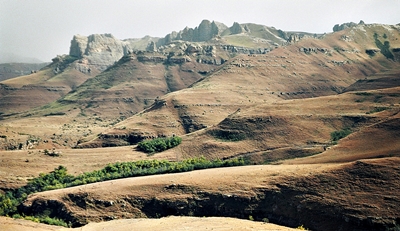
In August 2003, the middle of winter in South Africa, we made a long tour around the Cape Province, visiting small places that figured in the history of my family’s sojourn (beginning 1849) in South Africa. Here is an account of our journey to Hogsback in the Eastern Cape. The writer JRR Tolkien is supposed to have been inspired by the landscape near Hogsback, but not all are agreed on this. The author was born in South Africa (in Bloemfontein), but left the country aged less than three years.

HOG 0

Between Barkly East and Dordrecht

We sped on from Barkly East to Dordrecht. It was at Dordrecht in 1884 that my great grand uncle Sigmund Seligmann with his partner, another Jewish gentleman, Moss Vallentine opened their first business, a retail store. Later, he opened a general store in Barkly East, where his nephew, my mother’s father, became the town’s only Jewish Mayor.

HOG 1

Dordrecht Museum

Dordrecht, a smallish place, still has several nineteenth century buildings including one with an elegant arcade supported by cast-iron pillars that serves as a museum. Andre Coetzee, the museum’s curator, pointed out an old shop opposite the museum that he believed had originally been Seligmann’s.  He seemed very certain that this was the building, but he could not show me any evidence to confirm this.

The rain and snow continued to shoot past us, propelled by a fierce wind. Between Dordrecht and Queenstown, we crossed a plain that was quite different to anywhere we had been so far. The plain was quite literally dotted with thousands of ‘black’ peoples’ dwellings, some with rondavels as out-houses. There were few fences. People and animals wandered across the road. The countryside was much less manicured than any other inhabited places we had so far visited in the Cape. Derelict cars were frequently seen. We were in Chris Hani District that includes the town of Queenstown and was under the Apartheid regime part of one of the so-called ‘Homelands’. 

Queenstown is not an attractive town but has a lively buzz and good shops. A sign in the town centre advised motorists to pay for parking at a “mobile parking meter”. This meter turned out to be a person who hangs around the parking area carrying a machine on which he or she records your arrival and departure times and based on these determines how large a parking fee needed to be collected. We found a wonderful spice shop run by a Pakistani man. He had a special table on which he can make spice mixtures to order and, also, had ready-made mixtures including one, very strong in flavour apparently, called “Mother-in-law Masala”. We visited a large branch of Woolworths as many people had commended this chain store to us. We were disappointed: it was like Marks and Spencer’s used to be in the UK many years ago.

We drove via Whittlesea to the tiny village of Seymour. A road marked incorrectly on our map as “narrow but with tarmac, not for four-wheel drive vehicles alone”, led from Seymour up the side of a mountain to Hogsback. This road proved to be the worst surface that I have ever driven on. Compared to it, Joubert’s Pass (near Lady Grey), was a motorway. It got progressively worse as we painfully slowly approached Hogsback.

The road had everything against it and us. There were potholes, and deep furrows where streams of water had eroded the gravel. Bare rock showed through the road and made steps that had to be carefully negotiated. Worst of all were large rounded boulders, which were difficult to drive around as the narrow road was bounded either by ditches or by walls of rock. We were lucky that we neither capsized the car nor grounded it, nor damaged the sump or some other vulnerable part of its under surface. Navigating around or across some of these dangerous obstacles reminded me of performing a particularly difficult surgical dental extraction. Just as I had to take care not to damage a hidden nerve or blood vessel during an extraction, I had to drive to avoid injuring some important part beneath the car. Had we broken down on this deserted, barely frequented road, we would have been in big trouble. There was no mobile ‘phone coverage in the area. Hair raising to say the least: I still shudder when I remember this journey. Later, a cousin in Cape Town told me that when he had used this road, he had grounded his vehicle and thereby damaged its fuel line. Things improved at the end of the road. We were amused to see a road sign at the Hogsback end of this road that advised “Road not recommended for caravans.”

HOG 2

A view from Hogsback

We found our accommodation: a collection of cottages called The Edge. The name refers to the position of the cottages which is at the very edge of the summit of the Hogsback ridge over which can be seen a view of the coastal plain over a thousand feet below. Our cottage was large but unheated except for a small, inadequate fireplace poorly located in one corner of the cottage remote from the bedrooms. We ate an excellent curry made by Dion and Shane who own a restaurant near our cottage. All night the snow fell, and the wind howled.

HOG 3

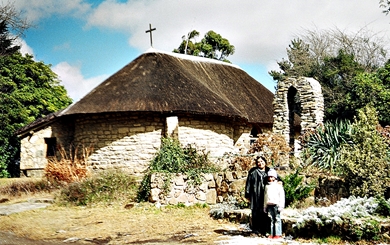
A church in Hogsback