Drafting an introduction to a book about England – your comments, please!

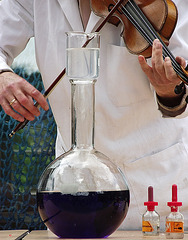
I am writing a book about visiting places in England. Here is a part of the introduction to the book. As it is only a draft, please feel free to comment on it, and also to let me know whether it would entice you to want to read further. What I have written is below this photograph.

This is what I have written:

There are plenty of remarkable places in England. For as the author Daniel Defoe (1660-1731) wrote in his “A Tour Through the Whole Island of Great Britain”:

In travelling thro’ England, a luxuriance of objects presents itself to our view: Where-ever we come, and which way soever we look, we see something new, something significant, something well worth the travellers stay, and the writer’s care…”

What Defoe wrote so many years ago in the mid-1720s, is still true today. My book is about exploring a selection of places in England, especially many of them that are not on tourists’ usual itineraries. I have written about locations, which have intrigued me.  Although some of them will not be familiar to most readers, I hope they will be found to be interesting. I have visited most of them since the onset of the covid19 pandemic in early 2020.

For about 10 years prior to 2020, we did not own a car. When the covid19 lockdown regulations began to ease a little in the UK, and greater freedom of movement was permitted despite the high prevalence of the infectious disease, we felt the need to roam around – to ‘escape’ from our neighbourhood. However, we had become uneasy about using public transport. So, in May 2020, when car showrooms reopened, we acquired a car, and began making day trips into the countryside. At that time, staying in hotels etc was not allowed. After a few months, it became possible to stay in hotels, guest houses, and so on.

Before the onset of the pandemic, we had, like so many others, chosen to holiday out of England, believing places abroad to be more interesting than our own country. During the pandemic, we were compelled to travel within its confines. And having travelled extensively in England during the last 5 years, we have discovered that the country is as least as interesting as many lands across the sea on the mainland of Europe. This book gives an account of some of the places we have been to in England since May 2020, and a few that we had already seen before the pandemic.


Between chance and control on sheets of paper

THE ARTIST BARBARA Nicholls (born 1963) invited us to the opening of her solo show at the Patrick Heide Contemporary Art gallery in Church Street, near Edgware Road. All her creations on display are watercolours on paper. Each of them resembles what looks like a natural phenomenon, but an imagined one. Although her pictures do not depict actual natural occurrences, each one of them is a result of the artist exploiting the unpredictability of the behaviour of the materials she is using at the same time as exerting some control over how they behave. To give some idea of what I am trying to say, here is something written in the notes issued by the gallery:

Nicholls’ operations begin at times with large-scale sheets of heavyweight paper laid flat on the studio floor. The physicality of her practice is vital; she moves across and over the surface, first guiding water into pools or creating delicate lines with transparent washes. Once water touches the paper, it no longer remains flat, requiring Nicholls to carefully manage the buckling surface as she introduces pigment, experimenting with how much liquid the paper can handle. The drying process can be natural or carefully controlled through appliances like electric fans and heaters, which create microclimates that accelerate evaporation, allowing layers of colour to settle and crystallise over time.”

In other words, the artist chooses the places on the paper  where the pigment and the water can be allowed to act as nature determines, and then lets them get on with it, producing whatever result the conditions permit. Thus, she covers the paper with a composition that is partly her choosing and partly the result of chemical and physical processes within the areas she has chosen for them to occur. The results are colourful abstract images, which are both beautiful and intriguing.

The exhibition continues until 21 June 2025.

So near, but so far

WRITING


I have been working on the manuscript of my latest book, about whose subject I will write sooner or later.

I have reached a stage at which I keep reading through the whole text, trying to put myself in the place of a potential reader, and from that position I make modifications, which I hope will improve the quality of the book. Each time I look at it, I make more changes, many corrections, some additions, and many more deletions to eliminate my natural tendency towards verbosity. So, my book is nearing completion, but has far to go before publishing it.

Soon, I will be ready to show my manuscript to some kind volunteers to get their candid (I hope) opinions, comments, and criticisms on what I have produced so far.  If I do not do this, I will become self-satisfied and the book might begin to suffer. Also, I need to know whether what I have written is, in priciple, likely to be worth reading! Then, it will be back to the ‘drawing board’ to modify my work in the light of what my test readers tell me.

Finally, I will need to proof-read my book, format it properly, and add a few illustrations before publishing my ‘oeuvre’. From conceiving an idea to finishing a book based on it is a long process, frustrating at times but largely enjoyable.

Sounds new

Sound and science_240


Last week, I attended two concerts that showcased the works young composers studying at the Royal College of Music (‘RCM’) in Kensington, London. Most of the compositions were no longer than five minutes in duration. They were performed by musicians, vocalists and instrumentalists, also studying at the RCM.

I am not a musician, but I do enjoy classical music, both historical and contemporary. As a musically uneducated member of the audience, I was puzzled by many of the pieces that I heard. It struck me that many of the budding composers were aiming to make the performers produce extremely unusual sounds from their instruments or with their voices. It seemed to me that the compositions were written to make the performers produce the most unexpected sounds, many of them although interesting were not too pleasing to my ears and definitely atypical of the instrument making them. Tunefulness was of little or no importance in most of the pieces I heard. Many of the vocal pieces performed involved making various hissing sounds without using the vocalists’ vocal cords.  The object semmed to be to intrigue the audience rather than to please it.

Each piece, despite my misgivings, attracted generous applause. Either the audience was being kind as many in it were members of the RCM, or they really enjoyed what they heard. I could not decide which was the case.

At the end of the second concert, I wondered how the composers, whose works I had just heard, would ever be able to make a living if they continued composing such unmusical (to my ears) music as I had experienced. Well, I wish them luck.

A musical offering

Maestro_240


This evening, I attended a performance of A Musical Offering by JS Bach (opus BWV 1079) at the Royal College of Music in Kensington. Each of the sections of this work was introduced by the conductor, Joe Parks, who explained what was musically interesting about them.

The whole piece is based on a theme composed by King Frederick II of Prussia. He gave it to Bach on the 7th of May 1747, and challenged the composer to do something interesting with it. A Musical Offering is what Bach did with the King’s theme. I am no musician, so can hardly explain the compositional procedures with which Bach exploited the King’s somewhat dull theme. For example, in one of the sections improvisations on the theme are played with musicians simultaneously playing the modified theme both forwards and in reverse. In another section, the theme is improvised in a range of different keys. In brief, this piece by Bach is both intriguing and challenging for musicians. Although this aspect of the music is lost on me, my enjoyment of the work was not impaired.

What fascinates me is that a piece of music so full of compositional twists and turns is a delight to hear. Bach has not only satisfied his desires to hone his compositinal technique in this piece, but also he has created a work that is highly satisfying to the listener.

Great music like great paintings reach into the the inner subconscious of the listener or viewer and thereby evoke an almost visceral sensation of joy. It does not matter that the music is full of compositional magic or the painting might be impressionistic or abstract because the great artist knows how to produce a work that reaches those hidden parts of the body that evoke feelings we call emotion. Without doubt, A Musical Offering did that for me.