In the pink for cod’s sake

IN THE LATE 1960s, my mother used to buy taramasalata from the two Greek Cypriot shops that used to be in London’s Goodge Street area: one was in Charlotte Street, the other in Goodge Street. Taramasalata is a pink* paste made with fish roe (‘taramas’ in Greek; ‘tarama’ in Turkish).  I still enjoy eating the stuff. Typically, good taramasalata contains about 8 to 10 % cod’s roe by weight and other ingredients. When my mother discovered that most of the bulk of the taramasalata was bread, she felt swindled. She felt that it was unfair to describe taramasalata as a fish paste when most of what was in the container was bread. It was, she felt, an expensive way to purchase soggy bread.

So, one day she decided that she would make her own taramasalata, and hers, unlike that which she had purchased from the Greek Cypriot shops, would be unadulterated with bread. Her version omitted the bread. The result was so incredibly salty that it was inedible. What she had demonstrated was that the traditional way to prepare this fishy dip using bread was not a load of ‘codswallop’.

[* There is also a white version]

My uncle and his joke

MY MOTHER’S BROTHER, my Uncle Felix, told a joke that goes like this. A man is told that eating ‘poy’ was the secret to having a good life. So, he travelled the world in search of poy. He visited each continent and many countries, but to no avail.

Eventually, he reached a remote monastery in the highest Himalayas, and asked one of the monks for poy. The monk invited him into the kitchen, and said to him: ”Today, we have Shepherds poy, cottagepoy, fish poy, steak and kidney poy, apple poy … just choose which you want.”
Thus, the joke ended.

Goan poyie

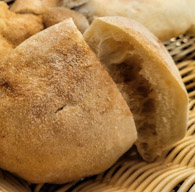
During our visit to Goa, we have really discovered poy. Actually it is spelled ‘poyie’. It is not a pie as is suggested by my uncle’s joke, but a circular bread with a hollow interior. So, unlike the man in the joke, we have truly found ‘poy’. My uncle died many years ago. I would have liked to have been able to tell him about our discovery.

Victoria slept here once

LOVINGTON BAKERY AND CAFÉ in Wincanton (Somerset) provides a superb range of breakfast items, all prepared beautifully. No effort was spared to ensure that we had a most enjoyable breakfast. The café, which is housed on the Market Place close to the Town Hall, is almost opposite a former coaching inn, once called ‘The Greyhound’.

The elegant three-storey building that used to be the Greyhound has a centrally located archway that has a cobbled driveway passing beneath it. There is a bas-relief depicting a royal coat of arms above the archway. A cast-iron inn sign showing a greyhound with its broad neck collar remains suspended over the pavement above the archway. An oval panel above the archway but at the level of the roof has a faded painting of a greyhound.

The Greyhound was built in the 18th century, probably by the local builder Nathaniel Ireson (1685-1769), whose impressive funerary monument, which includes a handsome statue and carvings of builder’s tools, can be seen in the graveyard that surrounds the town’s large church of St Peter and St Paul.  The building was first mentioned in parish records in 1743 and advertised as being “new” in 1760 (https://historicengland.org.uk/listing/the-list/list-entry/1238740). The greyhound is the armorial symbol of the Churchey Family of Tout Hill.

In 1825, when the future Queen Victoria was a child aged about six years, she visited Wincanton and stayed for one night at The Greyhound. This visit is recorded on a plaque attached to the building. Where she was going, I have not yet been able to ascertain, but she was not the only royal visitor to be associated with Wincanton. In 1688, William of Orange (reigned 1698-1702) not only visited the town but also his Dutch troops fought and won a battle against troops loyal to the deposed King James II in the town. After his victory, he spent a night in Wincanton A plaque attached to a picturesque old building not far from the former Greyhound inn commemorates the Battle of Wincanton (20th of November 1688).

The Greyhound is one of many pubs (former and still working) that line the main road through Wincanton. In the olden days before motor transport superseded horse-drawn transport, these inns served as staging posts for travellers, places for being fed and for resting overnight. The Greyhound no longer serves the traveller but houses a gallery and has also become part of a housing unit. We spent the night in a modern hotel not far from the modern highway (the A303), which takes traffic past Wincanton rather than through its winding hilly streets. From our bedroom window, we can see a concrete factory and a tall sign advertising a KFC food outlet. Had Victoria been staying here, I am certain that she might have said or thought “We are not amused”.

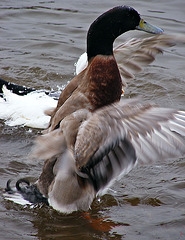
Is the duck ok?

BLOG Flutter_240


THERE WAS A LOVELY restaurant on the estuary of the River Medway in the 1980s. Once, I took a friend, ‘P’, to lunch there. We sat down, and a waitress brought us some slices of baguette. When the owner of the restaurant came to hand us the menus, P said:

“This bread is delicious.”

The owner replied:

“We get it freshly baked from France every day.”

We were impressed. P ordered duck and I ordered something else.

As soon as the restaurant’s owner disappeared, the waitress reappeared. She came to our table and said in a low voice:

“Actually, the bread comes from Tesco in Chatham.”

We became less impressed by the owner.

Our food arrived. It was more than satisfactory. As we were finishing, the restaurant’s owner came to our table. He asked P in a manner that reminded me of John Cleese on “Fawlty Towers”:

“Duck ok?”

“Delicious,” P replied.

“That’s good … we’ve had a few complaints about our duck today,” the owner said, wandering off nonchalantly.

Buttered buns in Bombay

LOOKING A BIT LIKE A GRUBBY SWISS chalet, Yazdani Restaurant and Bakery is in a busy lane within a stone’s throw of Bombay’s elegantly designed Horniman Circle. Named after the Persian city of Yazd, where one of the nine Athash Behrams (the highest grade of Zoroastrian fire temples) still stands, this establishment was founded by a Parsi family in the very early 1950s. It has been suggested that the premises occupied by Yazdani were previously occupied by a Japanese bank.

Yazdani, which looks as if it has not been redecorated for many decades is one of Bombay’s many ‘Irani cafés’, which were founded by Iranian zoroastrian refugees, who had fled to India (in the early 20th century) from other parts of Asia to escape religious persecution. Irani cafés, like Yazdani, retain a nostalgic charm, providing an atmosphere that transports the customer’s imagination back to a gentler and simpler past. Sadly, the number of Irani cafés in Bombay is diminishing.

It was at Yazdani, when I first visited it a year ago, that I bit into my first bun maska. It was love at first bite. What is it, you may well ask, that gave me so much pleasure? It is simply a round bread bun, often very soft, filled with a generous, if not excessive, amount of butter. Some of the buns available at Yazdani contain bits of raisin and others, the brun maska, have crisp crusty coverings (similar to ‘crusty rolls’ available in England).

Bun maska has become popular outside Bombay.For example, I have discovered good ones in Ahmedabad (at Lucky’s and also at the New Irani Restaurant).

In addition to bun maska and brun maska, Yazdani sells bread, apple pie, and a variety of delicious biscuits. Everything is baked on the premises at Yazdani, which calls itself “La Boulangerie”. Tea is served at simple tables within sight of the aging glass fronted cabinets that are constantly being restocked with freshly baked products. It is common for customers to dip bits of bun maska into the tea.

On one wall, there is a large poster in German advertising Bauernbrot. Apparently, Yazdani is popular with German visitors to Bombay. Portraits of various Parsi personalities also hang on the walls.

Unless you are gluten intolerant or trying to lose weight, a visit to Yazdani is a real treat, and not a costly one.

A few footsteps away from Yazdani, stands another treat. This is the Peoples Book House. It is a small extremely well stocked bookshop which supplies mainly, but not exclusively, left wing books. Whatever your political leaning, you are likely to find fascinating books here (in English, Hindi, and Marathi, mainly). In its window, you can spot, for example, “Das Kapital” and books about Karl Marx translated into Marathi. I bought what promises to be an interesting book about the naval mutiny in Bombay that occurred just after the end of WW2 (early 1946), an event that hastened the British decision to quit India for good.

So, visit Yazdani to fill your stomach and Peoples Book House to feed your brain.