
Some men of history

HIST 1


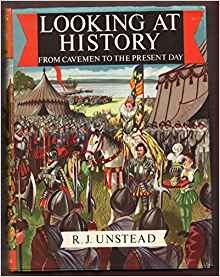
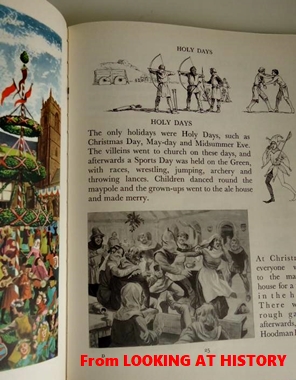
My interest in history began when I was about six years old. I could read well by that age. My parents gave me a book called “Looking at History”. It was a simply written thoroughly informative book with many line drawings illustrating everyday life in the British Isles from earliest times to the twentieth century. The book, published in 1955, was one of my treasures. I loved leafing through it. It was created by the historian RJ Unstead (1915-88). This book kindled my life-long interest in history.  One birthday, my parents gave me another book by Unstead, “People in History: Caractacus to Alexander Fleming”. Published in 1959, it contains a series of simple but informative biographies of important British historical personalities.” This was another book that I read over and over again.
hist 1a

In 1960, I entered The Hall School, a prestigious educational establishment in London’s Swiss Cottage area. This school’s main aim was to educate boys sufficiently well so that they could enter the best private secondary schools. To enter these schools, an examination called ‘Common Entrance’ had to be passed with high marks. One of the papers in this test was history. At The Hall, history was taught with only one goal: passing the Common Entrance. Year after year, our history teachers guided us from Julius Caesar’s arrival in Kent to the end of Queen Victoria’s reign. What seemed to be important was knowing the dates of events rather than the significance of these happenings. History was reduced to monotonous chronology.

hist 00

Things did not improve when I entered my secondary school Highgate (founded 1565). History was compulsory in the first year. It was taught by a well-known historian AW Palmer, who has published many books. For some unaccountable reason we had to study the history of the USA. Palmer managed to make it both incomprehensible and uninteresting. This was one of the many reasons that I gave up history in favour of the school’s alternative to it: physics. In fairness to Palmer, his “A Dictionary of Modern History, 1789-1945” (published in 1964) fascinated me. It covered a period of history that was poorly covered at The Hall and had fascinated me from an early age. I believe that my interest in what Palmer termed as “Modern History” began when I was about twelve. It was then I began looking at the adults’ section of Golders Green’s public library and discovered books about Nazi Germany and the Holocaust.
HIST 2

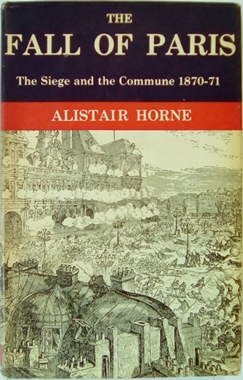
Gwyneth Klappholtz, who was married to Kurt – one of my father’s colleagues at the London School of Economics, taught history at a state school. I used to visit the Klappholtz home regularly in my teens. Gwyneth picked up on my interest in history and recommended me an author whom I feel can write history superbly. The historian Alistair Horne (1925-2017) has written over twenty-six books. I have read several of those. My favourite is “The Fall of Paris: The Siege and the Commune 1870-71” (published 1967, during the time when I used to visit the Klappholz family regularly). Horne writes history as if he were a really good novelist, yet everything he wrote was based on solid, reliable historical research. His books are a joy to read. This is something that the other writers of history, whom I am about to mention, share: an ability to present, often complicated historical situations, in a clear, easily readable form.

hist 3

At about the time I discovered Horne, I found an exciting book amongst my father’s library of mostly erudite books on economics. It was called “The Golden Trade of the Moors”. Written by Edward William Bovill (1892-1966), it describes how the Moors crossed the Sahara with salt to exchange for gold in sub-Saharan Africa, where salt was scarce, and worth its weight in gold. Although I enjoyed this book, I have not read anything else by this author.
hist 4

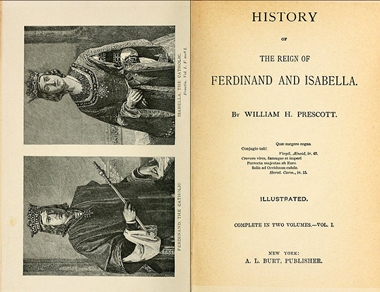
My PhD supervisor, a medical doctor and physiologist, introduced me to another very readable historian, the American William Hickling Prescott (1796-1859). This remarkable historian had very poor eyesight. Often, whist he was doing historical research an assistant was required to read documents and other literature to him. He had a phenomenally good memory, which must have been a great help if he had to perform most of his research through the eyes of another. He wrote mainly about aspects of Spanish and Spanish-American history.
hist 000

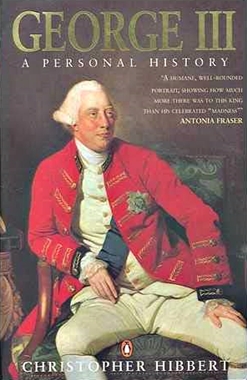
Christopher Hibbert (1924-2008) is another very readable historian. He has written over fifty books, many of which are historical biographies. I have particularly enjoyed his accounts of the lives of King George III and his son King George IV.  Like the other historians I have been describing he combines erudition with literary skill. In 1983, he edited the magisterial, splendid “The London Encylopaedia” with Ben Weinreb.
hist 5

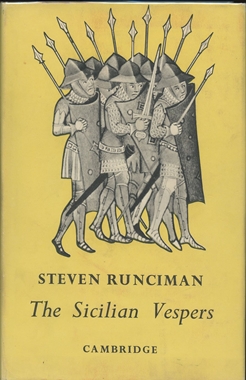
About four years ago just before my first trip to Sicily, I read “The Sicilian Vespers.” This deals with a complex series of events leading up to a revolt of the Sicilians against their French occupiers in 1282. Although the author Steven Runciman (1903-2000) does not make the story appear simple, he skilfully navigates the reader through the complicated intertwining strands of history leading up to the event. Some decades before visiting city, I read Runciman’s “The Fall of Constantinople 1453”, another captivating but historically accurate account of an important turning point in the history of Europe.
hist 6

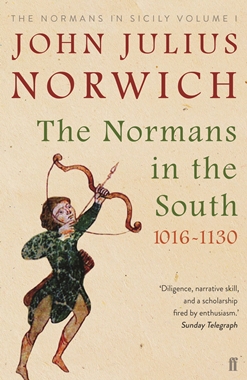
In October 2018, I made another visit to Sicily, mainly Palermo. That city and nearby Cefalu contain buildings erected while the Normans occupied Sicily. They took over the island several years before invading Britain. The Normans in Sicily built fine churches and palaces. Often these buildings contain elements of Arabic architecture. I was intrigued and wanted to know more. The leading account of the Normans in Sicily (and southern Italy) was written by the prolific John Julius Norwich (1929-2018). Although he claimed to be no expert on the subject, his two-volume history of the Normans in Sicily is both scholarly and very readable. As with the works of the other authors mentioned, reading this history is both informative and pleasurable. In addition, Norwich injects humour at appropriate places. I am looking forward to reading other books by him including his highly-rated history of Venice.
Dentistry and dictatorship

Between 1944 and 1991, Albania was ruled by a Stalinist dictatorship under the leadership of Enver Hoxha until his death in 1985, and then under Ramiz Alia. The country was even more isolated from the rest of the world than North Korea is today. It was impossible for individuals to visit the country unless they were members of a tour group. In May 1984, I joined one of these groups and spent a most interesting fortnight in the country. Our hosts, the state-run Albturist company, made sure that we had little or no contact with Albanians other than our tour guides and driver, who was a trusted Communist party member. Our hosts hoped that we would only see what the authorities wanted us to see. Their aim was to make us come away from Albania feeling that its repressive regime was one to be admired. I was the only dentist in our group. I managed to gain a tiny insight into the state of dentistry in Albania. The following extracts from my book “Albania on my Mind” reveal something of what I learned. ‘Aferdita’ and ‘Eduard’, mentioned below, were our Albanian tour guides. Although their job included keeping us ‘under control’ and away from other Albanians, they were curious about the world beyond Albania’a watertight borders.

ALBDENT 0

Our tour began in the northern city of Shkodër.

“Our coach headed out of Shkodër along the main road leading southwards. Once we were out of town, Aferdita delivered the first of her brief daily lectures. Every day, she treated us to a discourse on one of a variety of different aspects of life in Albania. The one that I can recall best was on the subject of medicine. She informed us, whilst we were travelling towards Sarandë some days well into our tour, that since the advent of the communists not only had malaria been eradicated, but also tuberculosis and syphilis. After extolling the virtues of her country’s medical facilities, she offered to answer any questions that had arisen in our minds as a result of her lecture. No one said anything. Then, Julian, our British chaperone, knowing already that the young lady doctor travelling with us was a reticent person, asked me, the dentist on board, to pose a question. I asked whether antibiotics were readily available in Albania. My reason for asking this was that I believed that the country, which was clearly trying to be totally self-reliant, would have been reluctant to import costly pharmaceuticals. Aferdita replied indignantly: “Why, of course they are.”

And then, spreading her hands wide apart, she exclaimed:

“When we reach the next town, I will get you a packet of antibiotics this large.”

Sadly, she never fulfilled this unusually generous offer.”

ALBDENT 1

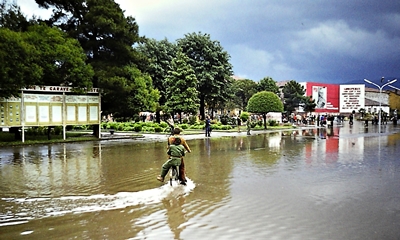
Flash flood in Shkodër, 1984

“After an unexceptional lunch, I roamed around the streets of Shkodër. I came across a small public garden, which was dominated by a chunky statue of Joseph Stalin. Even 30 years after his death, Albania continued to honour him. It was the only country in Europe still revering that illustrious Georgian. There was even a town, Qyteti Stalin (now known by its pre-Communist name as ‘Kuçovë’), named in his memory, but we did not visit it. I am pleased that I saw this statue, because although I did see many other statues on our trip, they were mostly depictions of Enver Hoxha.

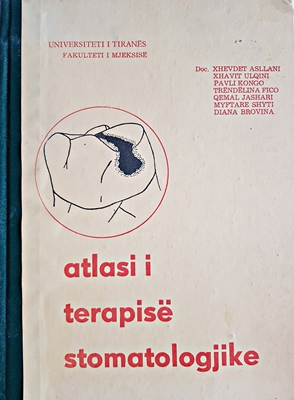
I discovered a bookshop near to Stalin’s monument, and being addicted to such establishments, I entered. I was surprised to find an Albanian textbook of dentistry prominently displayed there. Though crudely illustrated with line-drawings, I could make out that it was quite up-to-date. To the evident surprise of the shop’s staff, I purchased it and another dental book. I still treasure these two unusual souvenirs from Shkodër.”

ALBDENT 2

Backstreet in Gjirokastër

Later during our tour, we visited the historic city of Gjirokastër. Its hotel, like others in Albania, was equipped with a night club, where we, the foreign guests, were entertained by musical ensembles in splendid isolation: no Albanians apart from our guides and a waiter were permitted to enter the club. Incidentally, wherever our group ate in Albania, we were isolated by screens or curtains from other (i.e. Albanian) diners. I later learnt that this was because in 1984 there were great food shortages in the country. We were well-fed, but it was important that Albanians were not able to see that.

“That evening after dinner, a number of us sat with Aferdita and Eduart in the hotel’s night club. Each of the hotels in which we stayed had one of these. With the exception of our two guides and the musicians who performed in them, these clubs were out of bounds for Albanians. This evening we were entertained by a small band that played western pop music, mainly tunes originally performed by the Beatles. The noisy background of these clubs provided our two young guides with opportunities to ask us about life beyond their country’s tightly sealed borders. However, it was clear that Aferdita was trying to eavesdrop on Eduart and vice-versa. As the musicians strummed away in the semi-gloom of the club in Gjirokastër, Aferdita turned to me, rolled her lower lip away from her teeth, and asked my opinion of her gums. She wanted to know if they had been treated properly. I told her that I was unable to give her an opinion in such poor light.

The following morning, I spotted some tubes of Albanian toothpaste on display in a locked glass display case near the hotel’s main entrance. I tried to communicate to the receptionist (who did not understand English) that I wished to purchase a tube. I used to collect toothpastes from wherever I travelled and was curious to taste its contents. Whilst I was doing this, Aferdita appeared, and asked me what I wanted. I told her. She explained my desire to the receptionist, and moments later I had become the proud owner of a tube of Albanian dentifrice.”

ALBDENT 3

Many years later…

“In 2001, long after my trip to Albania, I began working in a dental practice in west London. Many of my patients were, and still are, refugees from the places in the world, which are stricken by military and political conflicts. Algerians, Iraqis, Afghans, Kurds, Palestinians, Eritreans, and many other others who have fled their far-off disturbed homes sit in my surgery and reveal the ravages that life has inflicted on their teeth. During the terrible conflicts in the former Yugoslavia, many of my patients hailed from Kosovo, and usually spoke poor English in addition to their native Albanian. Many were the smiles that I elicited from them when I quoted the old party slogans, undoubtedly poorly pronounced, and wished them ‘Mir u pafshim’ instead of ‘Goodbye’ at the end of their appointments.”


ALBANIA ON MY MIND” by Adam YAMEY may be purchased from Amazon, lulu.com, bookdepository.com, your bookshop. It is also available as a Kindle