Raw fish

raw


Japanese food was a relatively new addition to the Londoner’s diet in the early 1970s. It was then that I first tasted sashimi (i.e. raw fish).

Some friends including my future wife persuaded me, an impecunious PhD student, to join them at one of London’s few Japanese restaurants. This one was in St Christophers Passage that leads off Oxford Street. I ordered a serving of tuna sahimi. Four neatly cut cubes of tuna arrived in front of me. It was delicious. Fish had never tasted as good as this before. Cooking, however carefully done, removes something essential from the fresh taste of fish. The four exquisite cubes of fish soon disappeared. I did not order anymore because this tiny portion of sashimi  cost £7 Sterling, a huge amount in the early 1970s. The purchasing power of £7 in 1974 is roughly equivalent to the purchasing power of £66 today. Despite its enormous price, I became ‘hooked’ on sashimi

I must tell you that I left the Japanese restaurant with my hunger unassuaged. Without telling my friends, I sneaked off to a nearby … now, don’t frown disapprovingly … McDonalds outlet and filled up on junk food.

Fortunately, although not cheap, Japanese food, including sashimi, is relatively cheaper in London now than it was back in the 1970s,

A North London idyll

Highgate Wood in late February

Trees with bare branches will soon bear leaves.

The sun shines through the cool, clear morning air.

Shadows  of tree trunks fall across the gravelly path, along which a man walks his dog.

A mother wheels her baby in a pushchair. 

And a jogger lopes past me, panting wheezily. 

An occasional bus passes by a signboard on the barely used pavement. It invites customers to take refreshment in a sylvan café.

It is Monday morning, and most people are at work.

A suburban idyll.


Espresso in Ealing

Until a couple of years ago, I considered that the very best coffee served in London could only be found in a few coffee bars, all of which were Italian (e.g. Bar Italia, Lina Stores, and The Algerian Coffee House in Soho; the Portobello Garden Café in Portobello Road), Portuguese (e.g. Lisboa Café in Golborne Road and Madeira Star in Lambeth), or Spanish (e.g. Brindisa near Borough Market). I still consider all of these as good choices for excellent coffee, but need to add another to my list.

A Polish born receptionist working at the dental practice where I used to practise dentistry, suggested that a restaurant in Ealing called ‘Sowa’ (means ‘owl’ in Polish) served good Polish food. We visited this place, but were not impressed by the food. Much better Polish food can be obtained at Café Maja in POSK, the Polish Centre in King Street, Hammersmith.

The well-appointed restaurant at Sowa adjoins a café, which is part of the same establishment. Unlike the restaurant that fails to shine, the café is magnificent. The coffee served here in all forms (espresso, cappuccino, latte, etc.) is at least as good as that we have drunk in the best of the Italian, Portuguese, and Spanish coffee houses in London. Having visited Sowa too many times to remember, I can safely say that the high quality of its coffee never wavers. 

Sowa’s café also offers a mouth-watering range of highly tempting pastries and cakes. It seems in general that the Polish have a magical touch when it comes to making these delightful accompaniments to coffee.

So, if you are in Ealing, ignore every other café, and head for Sowa.

PS: Next door to Sowa, there is a lovely Polish delicatessen that offers a wide range of salamis, hams, and other cooked meats, as well as other Polish food items.

Sowa: 33 High St, London W5 5DB

NB: I have no interest financial or otherwise in Sowa. I am simply a content customer!


Seize the opportunity

North Germany


I have always enjoyed browsing the shelves and piles of books in second-hand bookshops. During my adolescence in the 1960s, I bought many old travel guidebooks, such as were published before WW2 by the likes of Baedeker, Michelin, Murrays, and so on. These items were not highly valued by collectors in the ’60s and were very reasonably priced. This was just as well because my spending power at that time was not great. My self-imposed rule was that I would not buy anything priced over £1 (Sterling). One of my prized purchases in that time was a pre-WW1 Baedeker’s guide to Egypt. I paid six shillings (30 pence) for this already rare edition in the second-hand department off Dillons university bookshop, which faces the Engineering Department of University College London. This shop is now a branch of the Waterstones chain of booksellers.

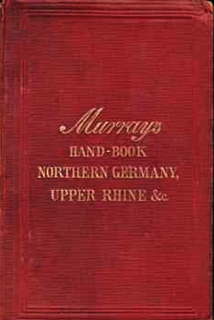
Most of the bookshops that I visited regularly were in or near Hampstead, which in the 1960s had at least eight second-hand booksellers. There was one shop that I visited occasionally on the corner of Fleet and Agincourt Roads, Once I entered it and found a copy of Murray’s Handbook to Northern Germany, which was published in the late 1880s. I was fascinated by this book which described Germany long before it was divided into East and West Germany, which is how it was in the 1960s. I looked inside its cover to discover its price. My heart sank. It was priced at one pound and ten shillings (£1.10). It was well over my price limit. I could not decide whether or not I should break my £1 rule … only this once. I did not. Reluctantly, I left the book behind in the shop. I had never seen a copy of this book before, and as I walked away I wondered whether I would ever see another.

In the 1980s, I was still collecting old books including travel guide books. By 1983, I had a car and drove to see friends all over the UK and elsewhere. Often, I visited friends in Cornwall. My route took me through many small towns, all of which I explored with a view to discovering second-hand bookshops. Honiton in Devon used to contain several well stocked booksellers. On one trip I entered one of them at the western end of the town and made an exciting discovery. Yes, you have probably guessed it already. In that shop, I found another copy of the guide to Northern Germany. Nervously, I looked for its price. By now, I had abandoned the idea of limiting my spend to £1, which in the 1980s would have been insufficient to buy any of the old guidebooks that attracted my interest. The volume I found was £7, which was good value in the 1980s. I snapped it up and paid for it with pleasure.

Nowadays, if I see a rare book that interests, I seize the opportunity to buy it, provided that it is not outrageously costly.

Liverpool

When I was doing experimental work in a physiology laboratory in London during the early 1970s, a new technician joined us. She was a lovely young girl from Liverpool. The job suited her perfectly and she was a great worker, full of cheer.

After two weeks, she announced that she was leaving us and returning to Liverpool. When asked why, she said: “I love working with you all, but nobody talks to each other on the bus. Back home in Liverpool everyone chats on the bus.”

Several decades later, I visited the lovely city of Liverpool. As soon as I was able, I took several rides on the city’s buses. On not one of these journeys did any of my fellow passengers chat to me nor to anyone else. I was so disappointed: I had been looking forward to speaking with the loquacious Liverpudlians, whom our technician had missed when she spent two weeks working with us in London.

An Albanian in Gujarat

An Albanian who attacked the Portuguese in India during the 16th century

yamey's avatarGUJARAT, DAMAN, and DIU

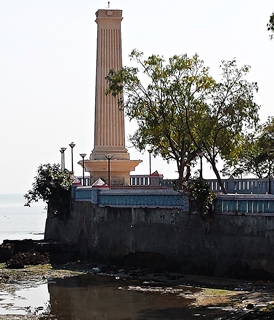
While visiting the former Portuguese colony of Diu, an enclave on the south coast of the Saurashtrian peninsula of Gujarat, I came across an open space that provides great views of the fortresses.

DIU MON

It contains a tall, bulky, four-sided column with longitudinal striations. Wire hoops serving as simple steps provide a means of reaching the column’s flat square summit. This is a monument built by the Portuguese to honour of the Gujarati General Khadjar Safar (known by the Portuguese as ‘Coge Cofar’).  The Gujaratis and the Portuguese were enemies and a siege occurred in 1546. This siege of Diu was won by the Portuguese, but Safar was remembered for his bravery. I have seen a picture of this column taken in the 1950s, when it bore a plaque in Portuguese that read in translation: “The tomb of Coge Cofar, instigator of the second siege of Diu. Commander-in-chief of the Turkish…

View original post 235 more words

Thoughts

Someone, maybe it was a great composer such as Beethoven, once said:

“Forget the past, don’t be satisfied with the present, and have hope for the future.”

I don’t agree with all of this, but then I am not Beethoven. The past teaches us valuable lessons. Enjoy every moment of the present. And, look forward to the future.

By the way, does anyone know for sure whether Beethoven or another composer came up with the words I quoted?

A precocious child

Sometimes it pays to keep your mouth shut at the dental surgery.

In the 1950s and early ’60s, our family dentist was a kindly German Jewish refugee called Dr Samuels. In those days, I learned later while I was studying dentistry, sugar used to be an ingredient of toothpaste made for use by children. I doubt that my mother provided us with children’s toothpaste, which she would have regarded as being gimmicky.

Dr Samuels had a very upmarket practice in London’s St John’s Wood. His waiting room floor was covered with thick pile oriental carpets and the reading matter was glossy journals such as Country Life.

The surgery, where Dr Samuels performed his dentistry, was old-fashioned. Instruments were kept on display in glass fronted metal cabinets. His x-ray machine looked antiquated even to my young, inexperienced eyes. So, did most of his other equipment, much of it made by the German Siemens company. One of my uncles, also a patient of Dr Samuels, once asked him if a museum might be interested in displaying this historic looking dental equipment. Samuels answer was that it was not quite old enough for a museum.

Dr Samuels drilled teeth with a cord driven dental handpiece. He told us that he had an air driven high speed dental drill, but he did not like it because it cut too fast in his opinion. So, having fillings in his surgery was quite a noisy and bumpy experience.

Dr Samuels was a gentle, kindly man, like a benevolent grandfather. He never frightened me.

At the end of an appointment, he used to reward me with a boiled sweet. I looked forward to receiving these. However, one day when I was about 8 or 9 years old and he offered me the sweet, I said to Dr Samuels: “No thank you. Sweets are filled with sugar and bad for my teeth.”

The price I paid for my precociousness was that he never again offered me a sweet at the end of my appointments with him. I should have kept my mouth shut and graciously accepted his kind but unhealthy gift.