Memories of childhood at a car show in Bangalore

MY MOTHER WAS the driver in our family. Having been injured in a bad accident during the 1930s, she was an overly cautious driver.

Fiat 1100

All of our family cars were Fiats. My mother believed that because there were many hills and mountains in Italy, where Fiats are made, these cars must be reliable and ‘strong’. We had a Fiat 600, then an 1100 (millecento), and then finally, a 1200.

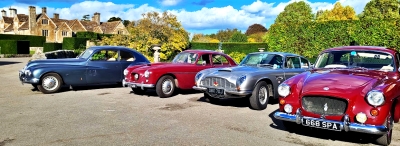
Seeing several Fiat 1100s at a vintage car show held at the Bangalore Club (in Bangalore/Bengaluru) jogged my memories of my mother, the 1960s and 1970s, and my childhood motoring experiences.

You can read more about my late mother and her unusual attitude to motoring here:
https://www.amazon.co.uk/REMEMBERING-HELEN-MY-MOTHER-ARTIST/dp/B0DKCZ7J7X/

A festival of art incarcerated in a penitentiary in Bangalore (Bengaluru)

MANY ART WORKS are ‘imprisoned’ in museums, galleries,  and private collections.  Today, 25 January 2026, we visited a collection of art ‘incarcerated’ in a prison.


The prison is, in fact, a former prison. It is what was once the grounds of Bangalore’s Central Jail.  After it became disused, it was converted into a public  park in 2008: Freedom Park. This contains many of the former prison’s buildings, which have been restored to create a fascinating museum within a leafy park.


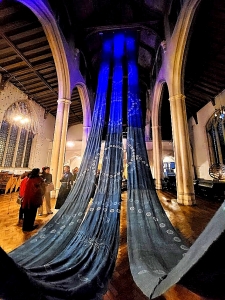
Freedom Park was the site of the 2026 BLR Hubba, which we visited today. The Hubba is a 10-day annual art festival held in Bangalore. Each year it is held at one of the city’s historic landmarks. This year at the former jail.

Encompassing many kinds of art including  for example,  sculpture, painting, music, theatre, and poetry, this festival is  well-attended and vibrant.


At Freedom Park, the Hubba’s artwork and events were scattered all over the site of the former jail including within the cell blocks and at the place where hangings were carried out.


On the Sunday that we visited the Hubba, there was a competent jazz band playing and a crowd of visitors. Everyone seemed to be enjoying the art and themselves.

 In comparison with the rather disappointing 2025/26 Kochi Muziris Biennale,  which we attended in early January, the Hubba was wonderful: a well curated, excitingly appealing festival of art. Although the Hubba contained far fewer things than the much larger biennale, it produced a far more impressive impact on us than what we saw in Kochi

A little England high up in the hills of southern India

WRITING IN 1931, the Spanish missionary Father Emilio noted:

“The Protestants in Munnar … appear arrogant and presumptuous and form a stark contrast to the humble pagans and submissive Catholics …”

The writer was referring to the British tea plantation owners and officials and their attitude to their Indian workers, both Hindus and those who had converted to Roman Catholicism.


31 years later, and after India had become independent,  another Spanish missionary, P Fermin, observed that Munnar (in Kerala) was conceived as:

“… as a meeting centre, with pretentions of an English town,  to break the routine of their [The British] plantation life on weekends. Munnar has its European club, …”


Now in 2026, the above-mentioned club, the High Range Club, still thrives, although now it is no longer exclusively for Europeans. We visited it several times in January 2026. Entering it is like stepping into the past.


The Club was established in 1909 on a large plot of land (6 acres) next to and high above a river. It was built as a residential  club, and has 17 rooms. Membership is restricted to corporate planters (senior officials of the tea plantations) of the Munnar area. As the club has many affiliations with other ‘elite’ clubs in India, many of the people who make use of its facilities are members of affiliated clubs.


Not only does the club’s architecture and interior design look like a leftover of bygone Britain,  but it preserves the old British club traditions and dress code rules. The Club has a wonderful old fashioned bar. Stepping into this is like going back to England of the 1930s or even earlier. Sadly, the High Range Club does not have a liquor licence.


On one of our visits to the Club, I looked at the board that listed the Club’s chairmen. From 1909 until 1973, all the chairmen had British surnames. It was only in 1974 that a chairman, Mr Murthy, had an Indian surname. And until 1966, none of the Honorary Secretaries had Indian surnames. Given this information,  I  wondered how many years elapsed before non-Europeans were admitted to the Club  after 1947 when India became independent.


Prior to the admission of Indians, the Club, like almost all of the British colonial clubs, were places where Europeans could isolate themselves from the Indian population. Today, these clubs provide a refuge for better-off Indians, who wish to socialise amongst themselves away from the ‘madding  crowds’.


The room used as the dining hall at the High Range intrigued me. At one end of it, there is a proper stage with curtains that could be used for performing plays and other entertainments. Seeing it reminded me of “A Passage to India” by EM Forster.  In it he described a British colonial club and how its members performed amateur theatricals. Here at the High Range is an example of exactly what Forster described.


Visiting the High Range is not only a pleasant way to pass a few leisurely hours, but it is also a chance to glimpse into the strange world that was once a feature of British India, albeit one that enforced a racial colour bar.

A teetotal private club by the seashore in Fort Kochi (Kerala)

DURING BRITISH RULE in India, the (white) colonisers formed clubs to which Indians, apart from those who worked in them as servants,  were excluded. Many of these colonial era clubs are still in business,  but now serve as refuges to which (mainly) upper middle class and upper class Indians can escape from the other Indians that surround them in daily life.


One of these clubs is the Cochin Club in Fort Kochi (Kerala). It stands on land close to the seafront. Prior to the establishment of the club in 1914, this land was formerly Schulers Shipbuilding Yard, and later Grieves Beach Yard. It was given to the founding secretary of the club,H Baechtold,  by Volkhart Brothers.


It was only in the 1960s and ‘70s that the club ceased to be exclusively for ‘white’ people. Many of the club’s buildings are fine examples of colonial architecture.  The bar is magnificent, as are the rooms adjacent to it (the lounge-cum-billiards room, the library, and another smaller bar).


Although the bar is a marvellous example of  colonial era design, there is now a problem. In the early years of the club, members and their guests used to enjoy alcoholic beverages at the bar, this is no longer the case. Exactly when alcohol ceased to be available I do not knoe.


For many years, the club has not had a liquor licence, and given the very high cost of such licences in the State of Kerala  there is little likelihood that an  alcohol licence will be purchased by the club. We were told that if a special occ  such as a wedding reception,  takes place within the lovely grounds of the club, whomever is organising it can purchase (at great cost) a temporary booze licence for the day.


Because of the absence of a liquor licence,  the club is often very empty – almost like the famed Marie Celeste. The club has five wonderful, spacious guest rooms, and the income from the guests hiring these is an important source of income for the establishment.  In addition, the club rents out space to other businesses. Currently (January 2026), one of these is a café,  and the other is  a boutique.


Outnumbering the usual number of members and room guests in the club are the white egrets that stride around the grounds in a most proprietorial manner.


Because we are members of a club affiliated to the Cochin Club, we can use their facilities and hire their bedrooms. The Cochin Club is today, as it was in the past, a peaceful place to escape from the hustle and bustle of Fort Kochi,  which seems to increase each time we visit the town.

From the Basque country to the tea plantations of Kerala (southern India)

DURING THE SECOND half of the nineteenth century, British tea planters cleared away great swathes of forest from the hills around Munnar in what is now Kerala. They used the cleared areas to grow tea bushes. To achieve this transformation and to maintain and harvest the tea gardens Indian workers, many of them Tamil, were brought into the area. Amongst them, there were some who had become Christians, most of them Catholics.


Outside Mount Carmel church in Munnar

Anticipating the Christian workers’ needs for practising their religion,  Spanish missionaries from the Archdiocese of Verapoly climbed up the treacherous paths to Munnar, risking attacks by tigers, wild elephants,  leeches, etc. They were of the Carmelite Order.


The first of these missionaries was Father Alfonso (1854-1916) who was born in the Spanish Basque country.  He arrived in Verapoly (in Kochi on the Malabar Coast) in 1883. When he first went up to Munnar in 1897,  there were no roads linking the place with the plains below it.


To cut a long story short, Father Alfonso managed to acquire a small plot of land in Munnar from the tea company that owned all of the land in the area. There, he built a church. It was a basic affair with a coconut leaf roof. Later, this was replaced by a more substantial edifice. Between  1934 and 1938, a new church replaced the second one, and that, with later modifications,  is what can be seen standing proudly above Munnar town’s bazaar area. Father Alfonso died of malaria while visiting Munnar, and his grave is in the existing Mount Carmel church  in Munnar.


Alfonso and his fellow missionaries did not come up to the hills merely to supply the Christian workers with their spiritual requirements.  While visiting their ‘flock’, which was scattered amongst difficult to reach settlements, they managed to convert many of the other labourers to become god-fearing Roman Catholics.


I have distilled this information from a fascinating book I bought in Munnar: “Mother Church of the High Ranges. Munnar Church. First Missionary Accounts”,  which contains extracts of letters written by the early Spanish missionaries to a Spanish Catholic journal.


What is notable amongst these accounts is the missionaries’ antagonism to the mainly British Protestants in the Munnar area. They also felt that the workers were being exploited, and that all of their readers should remember this while enjoying cups of tea.

Once a railway station in Kerala  but now a viewpoint for tourists

TOP STATION IS about 20 miles from Munnar (in Kerala) and 5500 feet above sea level.  Today, it is a popular tourist attraction, providing visitors with magnificent views of several ranges of hills. The place gets its name because it was the highest station on a railway that no longer exists.


View from Top Station

Between 1902 and 1908, a monorail system used for transporting locally harvested tea was built to connect Munnar with Top Station. In 1908, this was replaced by a narrow-gauge railway  the Kundala Valley Railway. Tea was transported to Top Station, where it was loaded onto a ropeway that carried it down 3 miles to a village, Kottagudi, in Tamil Nadu.  From there, it was transported to other parts of India. Sadly, the railway was washed away during a severe flood in 1924, and was never replaced.


Top Station was not only important as a railway Terminus, but also as a place on a road that was improved by the British  in 1942, when it was feared that Chennai, which had been bombed, might be invaded by the Japanese.


Following the bombing, which caused little damage, people fled from Chennai, the wealthy to hill station,  and the less well-known off to villages and towns far from the east coast. Meanwhile,  the British built what became known as the Escape Road, which ran across the high mountains between Kodaikanal and Munnar. This 50 mile road linked roads from Madras with roads from Munnar to Kochi (Cochin), from where troops could leave India if necessary.


The Escape Road, which reaches 8140 feet was the highest road in India South of the Himalayas.  The road remained in use until 1990. After this date, it fell into disused because neither Tamil Nadu nor Kerala were prepared to pay for its upkeep.


As a result of the closing of the former Escape Road,  travellers between Munnar and Kodaikanal have to travel on other roads. The present road route is 105 miles instead of  50 miles taken by the disused road.

  Top Station is well worth visiting. The views from over the precipice are amazing. To see them, one needs to elbow aside the numerous people posing for photographs or taking ‘selfies’. Unfortunately,  the viewpoint itself is covered with litter left by tourists.

Souvenir of a former kingdom in the south of India

HIGH IN THE WESTERN Ghats on the road, NH85, that connects Munnar in Kerala with Theni in Tamil Nadu, we passed the check post at the border of the two Indian states.

As we drove across the border into Tamil Nadu, I noticed a small greyish building on whose facade there is a crest (with a depiction of an elephant’s head) and the words: “Travancore Custom House. Bodi Meti”. Bodi Meti (now ‘Bodimettu’) is the name of the settlement at the border crossing.

Travancore was an independent kingdom between c1729 and 1949, when it merged with what was to become part of the current state of Kerala. Therefore, the custom house on the busy mountain road is a relic or souvenir of a kingdom that exists no more.

A simple cemetery near a tea factory in Munnar

AFTER HAVING EATEN lunch at Munnar’s High Range Club, which I will describe at a future date, we walked along the road that runs along a bank of the Muthirappuzhayar River. As we walked along the road from the club, away from Munnar town, we spotted some graves near to the Chokanad Estate tea factory.


One of the graves, an elaborate enclosure painted blue, is the final resting place of I Krishnan (1932-1980). He was “factory watcher”.


There were a few other substantial, simple funerary monuments, each of which had a small niche in which a diya (oil lamp) can be placed. The other graves in this rustic graveyard are simple mounds, mostly without informative markers. All of them had been sprinkled with a white powder.


None of the graves resemble any Muslim grave that I have seen. And none of them have the crosses one would expect if they were marking burial sites of Christians.


The two names we could read in the cemetery could well be those of Hindus: Krishnan and Shanmugathai. This and the absence of any Muslim or Christian symbols made me guess that this small rural graveyard is where Hindus have been buried.


Now, before some of you tell me that Hindus are cremated,  not buried, let me set you right on this. Many Hindus are cremated, but not all. There are some sects that favour burial. And if you need proof of this, visit the very large Hindu Cemetery which is close to Hosur Road in Bangalore.  The Hindu graves in that cemetery are far more elaborate and colourful than those we spotted surrounded by tea plantations in the hills of Kerala.


I would like to know more about the tiny graveyard by the river. However, it might be a long time before (if ever) I find out.  The place, which is about 400 yards from the nearest houses, is not even marked on maps.