
Van Gogh made sunflowers
So did German Anselm Kiefer
Amazing!

Van Gogh made sunflowers
So did German Anselm Kiefer
Amazing!
SINCE TIME IMMEMORIAL artists have been influenced and inspired by creators who preceded them. In the case of the German artist Anselm Kiefer (born 1945), he has been both influenced and inspired by Vincent Van Gogh (1853-1890), who was born almost a century before him. Both artists have broken boundaries, and explored new ways of expressing themselves in painting. At two Mayfair galleries, White Cube (Mason Yard; until 16 August 2025) and Thaddeus Ropac (in Dover Street), you can see some of Kiefer’s paintings that illustrate his response to Van Gogh, and in particular the Dutch artist’s depictions of sunflowers and wheat fields.

At the age of 18, Anselm Kiefer made a journey following in the footsteps of Van Gogh. The White Cube’s website revealed the route he took:
“… from the Netherlands to Belgium, Paris, and finally to Arles, where, in the final years of his life, Van Gogh created many of his most iconic works.”
It is those works painted in Arles that are reflected in Kiefer’s creations that are on display in both galleries as well as in a temporary exhibition in London’s Royal Academy in Piccadilly. Almost all of Kiefer’s images at White Cube and Thaddeus Ropac contain sunflowers and/or depictions of fields of agricultural crops. Unlike Van Gogh’s paintings, there are no human figures depicted in Kiefer’s artworks. In one of them, there is a flock of menacing looking black birds with wings outstretched. Kiefer’s crops made by sticking materials onto his canvases look much more sinister than the often-vivid depictions of agricultural landscapes created by Van Gogh. In their own ways, both Van Gogh and Kiefer portray the world as a disturbed place. In the case of the Dutch artist, this might have been due to his psychologically disturbed state of mind when he was in Arles. In Kiefer’s case, one must remember that he was born at the end of WW2 in a country devastated by conflict and the horrendous dictatorship that preceded it.
Although I am often less than convinced by pairing and comparing two artists in exhibitions such as that at the Royal Academy, but putting Vincent and Anselm side-by-side is both intriguing and appropriate. Having viewed the Kiefer works at the two Mayfair galleries, I now look forward to seeing how the Royal Academy’s curators have dealt with the relationship between the two artists.
YOU CAN SEE MURALS painted on walls throughout the Indian city of Bangalore (and in many other places in India). These paintings transform otherwise boring walls into something worth looking at.

Today, the 12th of November 2023 – Diwali, I visited Airlines Hotel in Bangalore. This place has an alfresco café and a large parking area. I saw some young people painting a mural. The design they were creating was a copy of a picture on the screen of a tablet or ipad. The building on which they were painting faces a long wall that marks the boundary of both the car park and the Airlines compound.
Since we last visited Airlines in February 2023, the boundary wall has been covered with a long painted mural. At first sight, this colourful painting brings to mind the work of the Dutch artist Vincent Van Gogh, who died long before it was made.
Though it resembles the style of the Dutch artist, on closer examination you can easily tell it is not by him. But its creator has certainly done a good job capturing the essence of Van Gogh’s style, and has livened up a hitherto unsightly, high breeze block wall. The other murals adorning the compound are visually engaging, but not as much as the Airlines “Van Gogh “
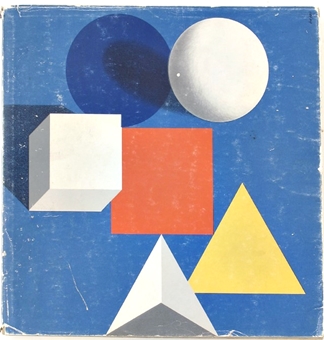
National museums in the UK do not charge entrance fees to view their permanent exhibits. However, they do charge, often quite high, fees to view special temporary exhibitions. This is nothing new. In 1968, I saw superb exhibition at the Royal Academy about the Bauhaus school, founded in pre-WW2 Germany. It was so excellent that I visited it on three separate occasions. Likewise, with a wonderful exhibition about Tutankhamen, also held at the Royal Academy.
Now, several decades later, the museums and galleries have caught on to the idea of ‘blockbuster’ exhibitions. These try to attract vast numbers of visitors, who would not nomally visit the institution where they are being held. They often succeed in drawing the crowds, but by slightly devious means. For example, recently the Royal Academy held an exhibition called: “RUBENS AND HIS LEGACY. Van Dyck to Cezanne”. I thought, as I am sure many other visitors believed, that this was primarily an exhibition of works by Rubens. Well, it was not. There were a few paintings by this great master diluted by a far larger number of works by other artists. It would have been more honest, but less ‘sexy’ and attractive to the public, to have called this exhibition something like “THE LEGACY OF RUBENS”.
My wife visited the current exhibition at the Tate Britain, a real crowd-puller called “VAN GOGH AND BRITAIN”. Who cannot resist seeing pictures by Van Gogh? Few, judging by the crowds of people jammed into the rooms where the exhibition is being held. And, how many paintings and other works by the man who cut off his own ear were on show. There were only a few. The rest of the show was of paintings by other artists, who were definitely not of interest to the bulk of the visitors, who had paid £18 a head to see a Van Gogh show. Clearly the name of the exhibition draws in the ‘punters’.
As with the Van Gogh exhibition, the recent Leonardo da Vinci exhibition at the National Gallery was also disappointing. A few works by the great Italian master were vastly outnumbered by works produced by inferior artists, in whom most visitors were uninterested. And, most of the ‘fillers’ in the exhibition had only tenuous connections with Leonardo.
Of course, not all blockbuster exhibitions fail to live up to their promise. Apparently, the Alexander McQueen exhibition at the Victoria and Albert Museum was a brilliant show that concentrated on the subject promised by the exhibition’s name. Another really good temporary exhibition, which attracted an entry fee, was one dedicated to Roy Lichtenstein at the Tate Modern.
Given the absence of entrance fees and the constant insufficiency of public funds, our national museums and galleries need to raise as much money as possible. The blockbuster exhibitions must be a good way of doing this. It would be better if their naming was a little more related to what the visitor is likely to see.
 yamey
yamey 