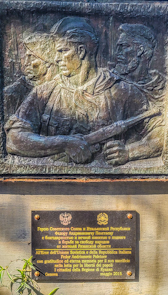
Szabadság tér – Liberty Square – is close to Budapest’s Parliament building. At one end of this piazza, there is a tall monument surmounted by the 5-pointed star of Communism. The monument also bears a hammer and sickle, as well as bas-reliefs depicting Red Army troops liberating Budapest from the Germans at the end of WW2.
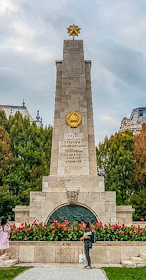
On both sides of the Soviet war memorial, which stands close to the US embassy, there are statues.
One statue depicts President Ronald Reagan, and the other President George W Bush. Both presidents were in power during the period when the Soviet Bloc and the Soviet Union were disintegrating.
Although the Russians were not loved by the Hungarians whom they ruled, it is good to see that the memorial to their soldiers, who sacrificed their lives to free Hungary from Nazi domination, has been maintainedand kept in good condition.