
AJIT KUMAR DAS was born in 1957, son of a laundry man (washer man). From an early age, he became fascinated with the wonderful colours of the textiles that his father washed. He became involved with traditional fabric printing and design. Today, Das is recognised as one of India’s foremost natural dye painters.
Das paints on cloth using natural dyes, rather than artificially created colours. He uses dyes derived ed from sources such as, for example, pomegranate rind, turmeric, fermented iron solution, indigo, and madder. He applies them using bamboo brushes and handmade quills. The colours are fixed using alum as mordant. With decades of experience and experimentation, he is able to use the natural dyes to produce interesting colourful effects.

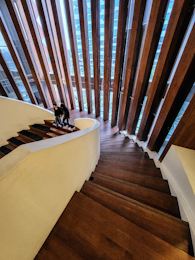
At his exhibition held in a magnificent gallery in the Kolkata Centre for Creativity, we were able to view more than 20 of his paintings. All of them feature closely observed natural objects, such as foliage, birds, and fish, all arranged in patterns on the textiles. Some of these compositions are naturalistic. In others, Das has arranged the details from nature to produce lovely patterns.
We were fortunate to have been at the inauguration of the exhibition, during which the soft-spoken Das discussed his works with a panel of invited guests. From what I could gather, the panellists were more interested in the current state of natural dye crafts than the artist’s works on display. I am pleased that we made the journey from central Kolkata to the outlying district of Anandapur to see the exhibition and to learn a little about the use of natural dyes in traditional methods of textile making.
 yamey
yamey 