
WHEN THE PORTUGUESE first landed in Madeira in the 15th century, the area that they settled – the southeast corner of the island – it was not well watered. Using slave labour, they constructed a series of irrigation channels to bring water from the mountains to the drier area, where they later planted valuable crops such as sugar cane. These channels that snake their way gradually downhill along the mountainsides are called ‘levadas’. The construction of these channels continued into the early 20th century, when they were built by Salazar’s political prisoners.
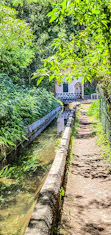
Today, the levadas continue to carry water and are well maintained. Paths run alongside each levada. Walking along them is a popular pursuit for tourist. Some of the paths are quite hazardous, and there are guided tours to shepherd groups of walkers safely along these waterside pathways.
We do not enjoy group tours. So, we had to find a levada that is not too hazardous and was easily accessible from Funchal. I homed in on the Levada dos Tornos, which passes under the hilltop village of Curral dos Romeiros – the terminal of bus number 29.
When we reached Curral, we asked the bus driver about the levada. He suggested where we proposed to walk was not good for us. We returned downhill in his bus, and he dropped us off at a staircase that led up toa section of the Levada dos Tornos, which he told us was not too narrow and led to a tea house.
We had a pleasant 3 mile walk along the levada, which wound its way gently downhill. All along the rout, lizards darted across the footpath as we approached them. Our way was lined with flowers and trees, many of them eucalyptus. Short stretches of the levada were shaded by bushes and trees. Other stretches provided views down wooded valleys. Sometimes, the port of Funchal could be seen far away and far below us. Most of the pathway was without hazards, but short lengths of it ran alongside sheer drops. Eventually, we reached the compound of the Jasmine Tea House, which caters for British tastes (cakes, scones, etc.) We did not have time to sample its wares because we did not want to miss the next bus (route 47) back to central Funchal.
Although we walked along a tame stretch of levada, we were able to gain an impression of Madeira’s remarkable network of irrigation channels.

 yamey
yamey 