
Getting a lift up at Leicester Square

ALDOUS HUXLEY published his novel “Point Counter Point” in 1928.
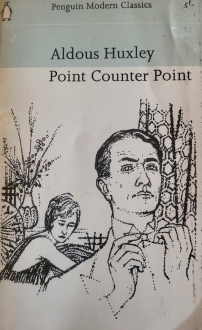
In the first chapter of the book, Walter takes an Underground train from Chalk Farm station to Leicester Square station. When he arrives there:

He stepped out on to the platform and made his way towards the lifts.”

When I read the word ‘lifts’ (elevators in US English), I was puzzled.

I have been using Leicester Square Station since the early 1960s, and never noticed lifts from the platform to street level. As long as I can remember, passengers use escalators, not lifts. Had Huxley got it wrong – unlikely – or were there once lifts at the station?

Out of curiosity, I consulted that font of all knowledge Wikipedia. From their article about the station (https://en.wikipedia.org/wiki/Leicester_Square_tube_station), I learned that it had lifts at the time when Huxley wrote his novel. In the 1930s when the usage of the station began to increase significantly, it was rebuilt to accommodate escalators, which replaced the lifts. As for the now unnecessary, Wikipedia revealed:

The redundant lifts were removed but the lift shaft remains in use as a ventilation shaft hidden behind a small door on the first landing of the Cranbourn Street entrance stairs. The redeveloped station opened in 1935.”

So, as the saying goes, ‘there you have it’. Until the 1930s, lifts operated at Leicester Square Station. I would have been unlikely to know that has I not started reading “Point Counter Point”.

Two in one at South Kensington

SOUTH KENSINGTON STATION has two street entrances connected by an arcade with a glazed roof. Its subsurface ticket office and foyer gives access to three of London’s Underground Lines: Circle, District, and Piccadilly. But this has not always been the case. People standing outside the southern entrance to the arcade will notice that to its right there is a building faced with the blood red glazed terracotta tiles typical of many London Underground stations. Above the façade are the words “South Kensington Station”, but there is no public entrance to this building.

The arcade used to be the entrance to the station at which passengers could embark and disembark from trains operating on the District and Circle lines, which were part of the Metropolitan Railway. This station was opened in 1868. In 1906, a station on the Great Northern, Piccadilly and Brompton Railway (now the Piccadilly line) was opened at South Kensington. Its platforms are far deeper beneath the surface than those of the District and Circle lines. Lifts inside the building with the red façade carried passengers to and from the Piccadilly line platforms. This building was then the entrance to the Piccadilly Line station, which was separate from that (with the arcade) which led to the shallower subsurface Circle and District platforms.

In the early years of the 1970s, the lifts to the Piccadilly Line were replaced by escalators. Access to these was made from the concourse that serves the District and Circle line platforms, and then the entrance via the building with the blood red façade was taken out of use. So, what had been two stations became one.

You can read much more about South Kensington in my book “Beyond Marylebone and Mayfair: Exploring West London” (see: https://www.amazon.co.uk/BEYOND-MARYLEBONE-MAYFAIR-EXPLORING-LONDON/dp/B0B7CR679W/)