
Getting a lift up at Leicester Square

ALDOUS HUXLEY published his novel “Point Counter Point” in 1928.
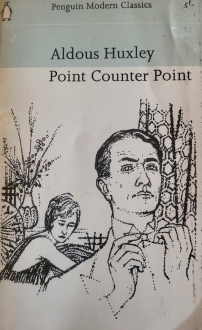
In the first chapter of the book, Walter takes an Underground train from Chalk Farm station to Leicester Square station. When he arrives there:

He stepped out on to the platform and made his way towards the lifts.”

When I read the word ‘lifts’ (elevators in US English), I was puzzled.

I have been using Leicester Square Station since the early 1960s, and never noticed lifts from the platform to street level. As long as I can remember, passengers use escalators, not lifts. Had Huxley got it wrong – unlikely – or were there once lifts at the station?

Out of curiosity, I consulted that font of all knowledge Wikipedia. From their article about the station (https://en.wikipedia.org/wiki/Leicester_Square_tube_station), I learned that it had lifts at the time when Huxley wrote his novel. In the 1930s when the usage of the station began to increase significantly, it was rebuilt to accommodate escalators, which replaced the lifts. As for the now unnecessary, Wikipedia revealed:

The redundant lifts were removed but the lift shaft remains in use as a ventilation shaft hidden behind a small door on the first landing of the Cranbourn Street entrance stairs. The redeveloped station opened in 1935.”

So, as the saying goes, ‘there you have it’. Until the 1930s, lifts operated at Leicester Square Station. I would have been unlikely to know that has I not started reading “Point Counter Point”.

A short but wonderful novel by Aldous Huxley

“… WHAT IS READING but a vice, like drink or venery or any other form of excessive self-indulgence? One reads to tickle and amuse one’s mind…”

These are the words of the verbose Mr Scogan in “Crome Yellow”, a novel by Aldous Huxley (1894-1963). With novels such as this one, reading is certain to become an incurable addiction, if not a vice. First published in 1921, only a few years after the end of WW1 this short novel is not only highly entertaining and extremely witty but almost completely un-put-downable.

Huxley was 27 years old when he published “Crome Yellow”. It begins when a young man, Denis, aspiring to be a poet arrives, at Crome, a stately home where various other guests have come to spend time during the summer. The book and the stately home contain a wealth of characters whose conversations and interactions with one another provide the reader with a wealth of entertaining situations. The author manages to convey the social atmosphere prevailing amongst the upper classes immediately after WW1, as well as presenting a range of philosophical ideas both about life and art. He managed to do this with a lightness of touch that makes even the most abstruse of ideas become easily digestible by the reader.

Every now and then, Mr Wimbush, the current head of the Crome household, reads extracts from the history of the house and its aristocratic inhabitants, which has taken him 30 years to complete. These are highly entertaining. Throughout the novel, Jenny, who is almost completely deaf, scribbles away in her notebook. What she had been entering into it is surprising, and only revealed near the end of the book.  Other characters include several young ladies, Mrs Wimbush who believes in mysticism and spiritualism, Mr Scogan who cannot stop talking and has an opinion about everything, Mr Bodiham the village priest, the artist Mr Gombauld, and the spiritualist Mr Barbecue-Smith. Throughout the story, a young lady, Anne, is the object of attention by both Denis and the French artist. Between these characters and others in the book, you can be sure that Denis’s stay at Crome was anything but dull.

I picked up my copy of “Crome Yellow” at a charity shop, and am extremely glad I did. I have not enjoyed a novel as much as this one for quite a few years. I hope to read more of Huxley’s novels in the future.