
HADRIANS WALL WAS commenced in 122 AD to fulfil the order of Emperor Hadrian, who wanted to separate Roman Britain from the so-called barbarians who lived in what is now Scotland and parts of Northumberland. The wall stretched 73 miles west from Bowness-on-Solway to Wallsend (next to Newcastle) on the River Tyne. Soon after it was built, it began to decline, and over the years, people used some of its stones to construct their own buildings.
Had it not been for the efforts of people like John Clayton (1792-1890), much of what we can see of Hadrian’s Wall today might have been lost forever. After having had a classical education, Clayton was a Town Clerk of Newcastle-on-Tyne and an antiquarian.
In 1796, John’s father, Nathaniel, bought the Chesters Eastate, through which part of Hadrian’s Wall runs. In its grounds, there stands a mansion, which was built in about 1771. After his father’s death in 1822, John inherited Chesters. John, who was keen on antiquities, excavated the Roman ruins on his land. These included what was left of a Roman fort known as ‘Cilurnum’. He also discovered the remains of a Roman Bridge that traversed to Tyne from the fort. After 1832, Clayton purchased other pieces of land on which there were remains of the Wall and its associated forts.
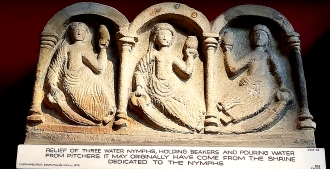
We visited Chesters, which is maintained by English Heritage. In addition to its well conserved remaims of the various parts of the Roman fort, there is a wonderful museum that contains many roman sculptures and inscribed stone discovered by Clayton. The museum, which is filled with many fine carvings, is delightfully old-fashioned. The museum was built after John Clayton’s death, but I am sure that he would have approved of the way his finds have been displayed.
 yamey
yamey 