
SOON AFTER READING “A Passage to India” by EM Forster (1879-1970), published in 1924, I read this author’s “The Hill of Devi”, first published in 1953. Forster made two visits to the Princely State of Dewas Senior, which ins in what is now Madhya Pradesh, not far from Indore and Ujjain. His first visit was in 1912, and the second in 1921. During the second visit, he spent several months as private secretary to the Maharajah of Dewas Senior.
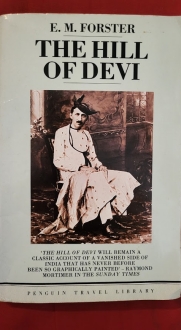
“The Hill of Devi” consists mostly of letters that Forster wrote from India to his mother and other people. In them, he described the typical often extraordinary events he experienced in Dewas Senior. He also describes the people whom he met and with whom he worked including the friendly but indecisive Maharajah. The letters, interspersed with commentary, provide a view of what life was like in a relatively unimportant kingdom within British India.
The letters were all written before Forster published his “A passage to India”. In his book “The Hill of Devi”, Forster noted that he had begun “A Passage…” before staying in India in 1921, and tried to finish it while staying in Dewas Senior, but was unable to do so. He completed it after his return to England. The letters published in his “The Hill of Devi” contain much material that he later incorporated into hs “A Passage …”.
I enjoyed reading the collection of letters. Because they were letters often written in haste and, originally not for a public audience, they have an immediacy even though they are not the finest works of the author. Nevertheless, they were most interesting because recently I have visited the region in which Dewas Senior is located, and stayed in places that must have formerly been similar to that about which Forster wrote.
 yamey
yamey 