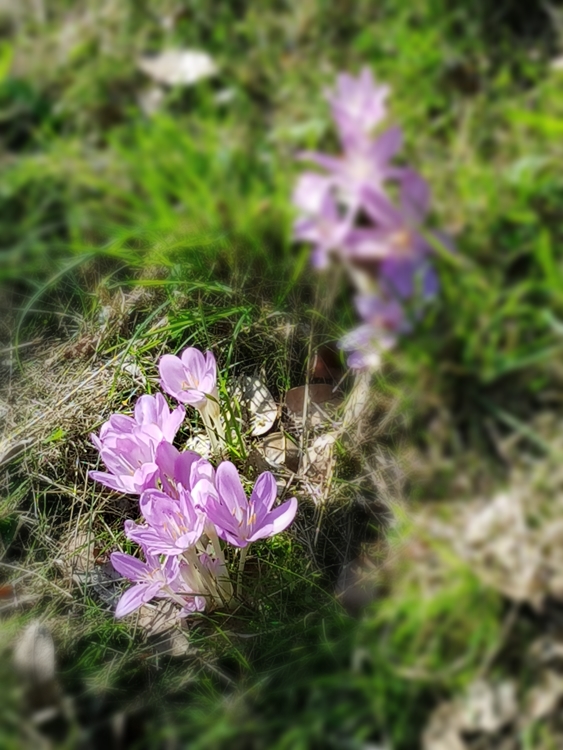
Read this before travelling under the English Channel!

This is an excerpt from a book I wrote some years ago about travels with my late PhD supervisor, Robert, and his late wife Margaret. Every summer, they used to travel with their caravan to Northern Greece – a nine day journey, camping along the way. Here is what happened on the first night across the English Channel.

HARK 78 Ptit S Bernard RDH AY MH

L to R: Robert, Margaret, and Adam  

After docking at Calais, we drove a short distance southwards towards the village of Coquelles. Having driven right through the village, we stopped in a lay-by situated in the midst of ploughed fields. There was neither a house nor a person in sight at this isolated spot.

At this point, I should explain that Robert and Margaret preferred to camp ‘wild’. That is to say, they preferred not to camp in officially organised camp-sites. This preference was not based on financial considerations, but on a desire to spend time far from the madding or maddening crowd. Robert once told me that his idea of hell would be to be trapped forever in a bus full of passengers chattering incessantly. I trust that St Peter has sent him to a better place!  Robert told me that if were to be born again, he would like to be reincarnated in the form of his pet horse named ‘Hobo’. This pampered creature spent all day in a huge field in the open-air, and lived an ideal life, neither having to make or listen to small-talk nor to attend committee meetings…

HARK 78 Ptit S Bern Camping


…Soon after we parked at our first camping site in the northwest corner of France, I felt the need to pass motion. There was not a toilet to be seen where we stopped and there was none in the caravan. The compartment in the caravan that had been designed to be used as a toilet was being used instead as a wardrobe and general storage cupboard. I wondered what arrangements had been made for evacuating one’s bowels. I asked Robert. Before he replied, he handed me a spade and a pickaxe. When I had these heavy implements in my hands, he pointed at the ploughed field across the road from where we had parked. He told me that I was to dig a hole in the ground, do my ‘business’, and then cover it up, taking care not to leave any signs that the earth had been disturbed. Robert was a keen environmentalist, but definitely not a ‘tree hugger’.

Armed with my workman’s tools, I entered the field and hid behind one of the few small windswept bushes near one of its boundaries. This was the first time that I had ever used, or even held, a pick-axe. So, I raised it high above my head, and brought it down sharply towards the ground in front of me. As soon as the cutting point of the tool hit the hard earth, it bounced of it. The ground was as unyielding as concrete. I tried again, but with the same unproductive result. By now, I could feel that things were becoming urgent and if I persisted in trying to dig a hole, I would soon find myself in an embarrassing hole. Making sure that I was not observed, I voided on to the surface of the earth, rather than beneath it, and then I returned to the caravan.

rob map

Late in 1994, nineteen years after I defecated onto that field near Cocquelles rather than beneath it, the field no longer existed. It had been excavated and destroyed to become a part of the French terminal of the recently constructed Channel Tunnel.


Beneath where I had once squatted, thousands of passengers now stream daily on their way to and from France.

I have been one of them.


aegean

FOLLOW ADAM YAMEY’s ECCENTRIC ADVENTURES WITH HIS PROF  HERE

Huberta the hippo


We visited South Africa in 2003. Wherever we parked, young men offered to ‘look after’ our hired car for a small fee. It was NOT a good idea to turn down their offers!

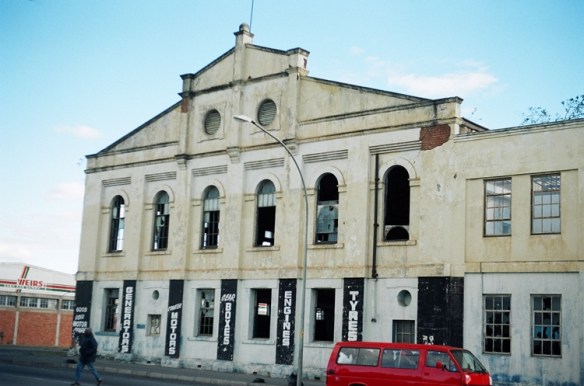
My great-grandfather, Franz Ginsberg, began industrial enterprises in King Williams Town in the late 19th century.
king 1

Once part of my great-grandfather’s factory in King Williams Town

We drove the short distance to the Amathole Museum (formerly called the ‘Kaffrarian’) in King Williams Town. Our car-minder was David, a friendly young man, who appeared to live in a derelict car parked near the museum…

We returned to the museum on the next day. We received a friendly greeting from David, our car minder from the day before.  He offered to wash our car whilst we were away. As it needed this, we agreed. We met the curator again. She had prepared a vast number of photocopies for me. I returned the photograph album, we chatted briefly, and bid farewell.

We had a quick look around the large museum. One exhibit in the Industry Section was a poster exhorting people not to buy imported matches but instead to buy locally made matches, that is matches made by Ginsberg & Co (my great-grandfather’s company). Near this is a picture of another large enterprise, King Tanning.
king 2

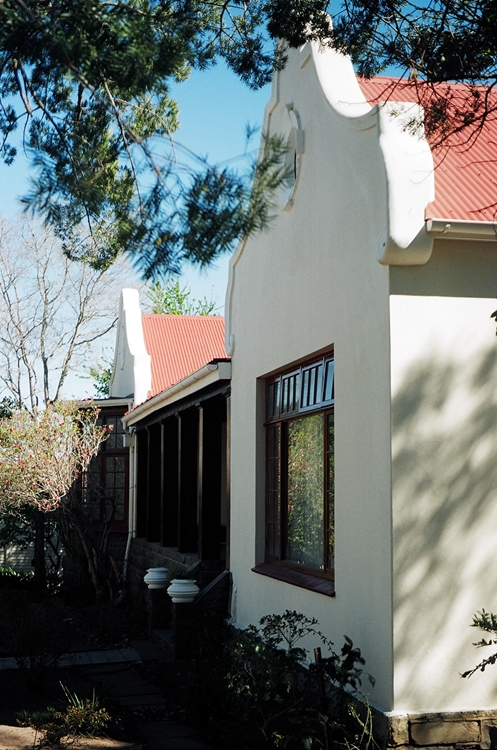
My great-grandfather’s home in King williams Town

The museum has an enormous collection of stuffed animals.  The curator said that this collection was better than the Kruger National Park, and that the animals were easier to see, as they don’t move around! The best known of these animals is Huberta, the Hippo. This creature, in the 1920s, wandered many 100’s of miles south from its tropical habitat in the north of the country and passed through King Williams Town. Near Port Elizabeth, an ignorant farmer ended her life by shooting. The body of Huberta was sent to London for taxidermy before returning to South Africa to its present home.

king 3

David, the car-minder, and his friends

After about an hour we left the museum. David and some of his friends had just started to clean our car. We watched them perform this procedure painfully slowly. Eventually, it was sort of done. To some extent it was a bit cleaner that before! We said good-bye and David asked to visit him again. He asked us to bring him a shirt and a pair of shoes on our next visit to King Williams Town.
