
It was long ago
Before water flowed in pipes
That pumps were useful

It was long ago
Before water flowed in pipes
That pumps were useful
OUTSIDE THE PARISH church of St Hugh in the Cornish village of Quethiock, there is a tall stone cross. Dating from the 10th or 11th century, this is one of the tallest such crosses in Cornwall. During the Reformation, many churchyard standing crosses were destroyed, and disposed of. Such was the case for the cross in Quethiock. However, in 1881, it was resurrected after Quethiock’s Reverend William Willimot’s workmen discovered it while repairing the south wall of the graveyard.

Cornish crosses, such as the one in Quethiock, served a variety of purposes including: places for preaching; way markers for religious processions; and places for public proclamations and expressions of penance.
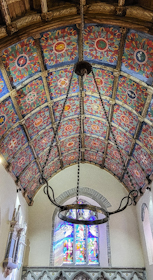
QUETHIOCK IS A tiny village in Cornwall. It has a church, St Hugh, that contains many interesting features.
One small thing that fascinated me was a small brass plate attached to a wooden table. It commemorates Dr Erich Schneider of Aussig (Usti na Labem) in Bohemia, who was born in 1889, and perished in the Auschwitz concentration camp in 1944. His wife, Marketa, was interned in the Terezin concentration camp, but survived. She moved to England after WW2. The Schneiders had a son, Johann, who was born in 1921. He was educated in England. At school or college, he became friendly with Reverend Lintell’s children, and spent holidays with them in Quethiock. Later, Johann became an economist at the Treasury, and between 1987 and 2005, he was an assistant pastor at St Anne’s Lutheran Church in London.
It was a great surprise finding this memorial to a victim of the Holocaust in sucharemotepart of Cornwall.
FALMOUTH IS A small port on the south coast Cornwall, It was founded near their ‘palace’, Arwenack, by the Killigrew family in 1613.

In 1385, the Killigrew family acquired a property, a manor house called Arwenack, now in Falmouth. Although fragments of the 14th century house remain, the shape of Arwenack that can be seen today was established in the mid-16th century by John Killigrew. After that, the family continued to modify this grand residence. During the Civil War (1642-1651), Arwenack was badly damaged. Nothing much was done to the building until the 18th century when extra wings were constructed. Thereafter, the building fell into decline until 1978 when a firm from Redruth repaired and modernised it before converting it into several dwellings, which are still in use today. Arwenack faces a 44-foot-high granite obelisk/pyramid that was erected in 1738 by Martin Lister Killigrew to celebrate his illustrious family.
Now, Arwenack faces a large car park, and behind that a complex of modern buildings that contains shope, restaurants, and the National Maritime Museum (Cornwall)
ZENNOR IS VERY close to Lands End. Its granite church is part Norman and part 13 to 15th century, and dedicated to a Cornish saint, Senara. Legend has it that the church was established by her when she arrived from Ireland in the 12th century. What makes the church special is a carving on the end of an old timber pew, which is about 400 years old. The carving depicts a mermaid holding a comb in one hand and a round mirror in the other one. One version of this mermaid’s story goes as follows:

“Many years ago a richly dressed and beautiful lady occasionally attended the church at Zennor. Nobody knew who she was or where she came from, but her unusual beauty and lovely voice made her the subject of much discussion. With such beauty, the lady had no shortage of want-to-be suitors in the village. One of these local men was Mathew Trewella, a handsome young fellow with the best singing voice in the village. He took it upon himself to discover who this beautiful stranger was. After a service one Sunday, the lady had smiled at Matthew Trewella so he had decided to follow her as she made her way off and towards the cliffs. Years passed and Matthew Trewella’s unexplained disappearance faded into the past. Then one Sunday morning a ship cast anchor off Pendower Cove near Zennor. The vessel’s captain was sitting on deck when he heard a beautiful voice hailing him from the sea. Looking over the side of the ship he saw a beautiful mermaid, with her long, blonde hair flowing all around her. She asked him if he would be so kind as to raise his anchor as it was resting upon the doorway of her house. She explained was anxious to get back to her husband, Mathew, and her children. For it turns out that the beautiful stranger from the church was in fact one of the daughters of Llyr, king of the ocean, a mermaid by the name of Morveren. Warey of stories of Mermaids the captain weighed anchor and headed for deeper water fearing the mermaid would bring the ship bad luck. He did, however, return later to tell the townsfolk of the fate of Matthew.” (www.cornwalls.co.uk/myths-legends/mermaids.htm)
The carving commemorates the mermaid and Matthew, her admirer.
DESPITE BEING OVERRUN with tourists, the small fishing port of St Ives is one of my favourite places in Cornwall. Since the early 19th century, this picturesque place has attracted artists. With the decline of the pilchard industry in the 1880s, many of the buildings associated with this became vacant, and some of them were occupied by artists who converted them into studios. With the advent of the railway (in 1877), a means for easily transporting large canvases to London became available. It was not long before St Ives became an artists’ ‘colony’. In 1889, the St Ives Arts Club was founded as a place where artists could meet and socialise. It still exists. Its ground floor is used for temporary exhibitions. The upper floor is for members only, but I was lucky enough to have visited it with my friend, the late Michael Jacobs, who was writing his book, “Good and Simple Life: Artist Colonies in Europe and America”.
In 1927, the St Ives Society of Artists was formed. Its aim was (and still is) to raise the artistic standards of the artists’ colony and to exhibit works that they considered to be of significant quality. It was housed in various buildings in the town before 1945, when it moved into its present accommodation, the deconsecrated gothic church of St Nicholas. Exhibitions are held both in the church itself and in the crypt below it. The works of St Ives artists, who were considered avant-garde, such as Barbara Hepworth, Peter Lanyon, and Patrick Heron, were displayed alongside those of the town’s less adventurous artists, but were given less favourable positions in the exhibitions than the conventional creations. In 1946, several of the modernist artists held an exhibition in the crypt. They became members of a newly created Crypt Group. There were a couple more exhibitions by members of the Crypt Group in 1947 and the following year. Following a disagreement at an extraordinary general meeting of the Society in 1948, many of the members resigned including those who were included in the Crypt Group – some of Britain’s leading modern artists of the time.

In 1949, some of the modernist artists in St Ives, including Barbara Hepworth, Ben Nicholson, Peter Lanyon, Bernard Leach, Sven Berlin and Wilhelmina Barns-Graham, founded a new organisation – The Penwith Society. Later members included the sculptor Henry Moore, Terry Frost, and Patrick Heron. Because of its association with Britain’s pioneers of modern art, the Penwith is a tangible, important landmark in 20th century British art history. In 1961, the Penwith occupied a disused pilchard packing factory, and over the years it has expanded into neighbouring buildings. As its website (https://penwithgallery.com/about-us/) explained:
“Today the Penwith offers a year-round programme of exhibitions by Society Members and Associates, as well as those by other artists from Cornwall and further afield. The Penwith continues to be at the forefront of presenting contemporary work of quality.”
Every time we visit St Ives, we visit the Penwith. Of all the numerous (commercial) galleries in St Ives, the Penwith consistently contains artworks of the highest quality and greatest visual interest. The exhibition areas are spacious and well-lit. One area in the gallery is called the ‘Hepworth Room’, which is used for exhibitions, but also contains a fine sculpture by Barbara Hepworth. A small courtyard, used to exhibit sculptures, contains a plaque, which reads:
“This foundation stone was laid by our friend and benefactor Dame Barbara Hepworth 10 January 1973”
It must refer to one of the many extensions made to the place since it was adopted by the Penwith in 1961.
I always enjoy visiting the Penwith. My advice to a visitor, who is short of time, is to forget the Tate St Ives, and instead make a beeline for the Penwith. Having said that, the Barbara Hepworth Sculpture Garden should also not be missed.
METHODISM BECAME SUCCESSFUL in the county of Cornwall. Although I do not pretend to understand this branch of Christianity in any detail, I was curious to know why it had such a great appeal for the Cornish people. Apart from the great number of Methodist chapels one passes when travelling through Cornwall, there were several places associated with Methodism that sparked my interest. I will write about these after discussing why the branch of Christianity, founded by John Wesley (1703-1791), his brother Charles Wesley (1707-1788), and George Whitefield (1714-1770), was so widely accepted by the Cornish.

Most Methodists believe that Jesus Christ died for all of humanity, and that salvation can be achieved by everyone. This is in contrast to the Calvinist belief that God has pre-ordained the salvation of only a select group of people. Whitefield held the Calvinist position, but the Wesley brothers believed that all could be saved. Part of the appeal of Wesleyan Methodism in Cornwall was that it did not select those who could be saved from those who could not – everybody was eligible for salvation.
John Wesley first visited, and preached in, Cornwall in 1743, and then made a further 32 visits before his death in 1791 (www.cornwalls.co.uk/history/people/john_wesley.htm). During this period, Anglicanism was in decline in the county. There were several reasons for this (https://bernarddeacon.com/cornish-methodism-or-methodism-in-cornwall/the-causes-of-methodist-growth/). One of them was the rise of industrial (mainly mining) activity and its effect on the social fabric of Cornwall. Another was the fading appeal of the Anglican Church in the county. An interesting website (www.cornwallheritage.com/ertach-kernow-blogs/ertach-kernow-cornish-methodism-rise-decline/) noted that:
“The 18th century Anglican Church had greater concern for ensuring the support of wealthy and influential families rather than the poor agricultural labourers and miners that made up the vast majority of the Cornish population.”
Furthermore:
“The running of parishes were often ‘subcontracted out’ to curates and churchwardens with the clergy occupied in the major parishes and centres of religious influence. Some parishes were very large with the people spread thinly, only limited numbers living in the historic churchtowns surrounding the medieval churches. During the 18th century growth in mining, settlements gradually grew up around the sites of major mining activities leading to new villages and small, towns.”
These new settlements were often distant from the established Anglican churches, and travelling about the county was far from easy back in the 18th century. The rise in industrial activity along with the corruption of the Anglican church in Cornwall, and the economic uncertainties caused by the fluctuations in the world’s prices for what was being mined by impoverished Cornish workers with large families, left a spiritual void that preachers like John Wesley helped to fill.
But what did John Wesley and Methodism have to offer the Cornish, and to gain them as followers? To start with, Methodism as practised by Wesley did not exclude anyone from gaining salvation. A reasonable sounding explanation for the appeal of Methodism to the Cornish miners and their families was provided by the historian David Luker:
“According to Luker, for the poor Methodism did not principally legitimate ‘respectable’ or middle class values; it legitimated the morality and structures of ‘traditional’ Cornish society. It upheld and validated the cottage as a socio-economic unit in the face of the changes being wreaked by an external modernity. This role is perhaps underlined by the fact that the majority of those who joined early Methodist societies in Cornwall were women. Overall, Methodism appealed to a conservatism of the commons, seemingly justifying a way of life increasingly under pressure from economic change, just as the rituals of the Anglican church appealed to the conservatism of the propertied classes. This is why Methodism grew earliest and fastest in those districts where mining was present, in large parishes, in areas of dispersed settlement out of the reach of a socially enfeebled gentry, and in ‘unimproved’ agricultural districts.” (https://bernarddeacon.com/cornish-methodism-or-methodism-in-cornwall/the-causes-of-methodist-growth/).
Cornwall was one of the counties of England that gave Methodism its greatest acceptance.
John Wesley discovered that the Cornish enjoyed hearing him (and other preachers) in the open-air. I am not sure the reason for this. During a visit to the small Cornish town of Indian Queens, we came across a ‘preaching pit’ (see https://adam-yamey-writes.com/2024/07/03/indian-queens-in-the-heart-of-cornwall/). Because mining activity undermined the land above it, occasionally the surface would collapse causing depressions, rather like quarries, in the landscape. At Indian Queens, one such hollow was remodelled to make it into an outdoor amphitheatre with tiered rows upon which people could stand or sit whilst they listened to a preacher speaking from a stone pulpit. While we were visiting this ‘pit’, a local historian told us about other surviving pits in Cornwall, at: St Newlyn East, Whitemoor, Tregonnig Hill, and Gwennap.
The pit at Gwennap (near Redruth) is one of the most interesting places we have visited in Cornwall. It is an inverted cone with circular tiers of seating cut into its side. Grass grows on the seating and the surface surrounding the pit. Almost perfectly geometrical, it rivals some of the stone stepwells I have seen in India. The present pit was constructed in early 1807, and is still used to hold Methodist services occasionally. What exists today is a remodelling of an earlier depression in the ground which John Wesley described (in September 1766) as being:
“… a round, green hollow, gently shelving down, about fifty feet deep; but I suppose it is two hundred one way, and near three hundred the other.”
He added that he considered it to be the finest natural amphitheatre in England. People gathered within it and around its edges, and because of its shape and acoustics, Wesley’s voice could be heard by the multitudes (often thousands of people) who had come to hear him. John Wesley made 18 visits to Gwennap Pit between 1762 and 1789. He used to stand just below the outer rim of the pit, and could be heard clearly by those within the pit and those around it, even some distance away. In his diary, he noted that on the 27th of August 1780:
“It was supposed twenty thousand people were assembled at the amphitheatre at Gwennap. And yet all, I was informed, could hear me distinctly, in the fair, calm evening”
Although the size of the congregations might not have been estimated accurately, there is no doubt that they were large and because of the acoustics of the pit, they were able to hear Wesley even if they were quite a distance from him.
THE TOWN OF Redruth in Cornwall was once the centre of a flourishing mining industry. Now, although it contains a few attractive buildings that remind the visitor of its heyday, it has a slightly forlorn feeling. Amongst the many places in Cornwall that attract the visitors, Redruth is not highly rated. However, it has an attraction that is well worth visiting. Located at the western edge of the old town, it is called ‘Kresen Kernow’.
Kresen Kernow is the Cornish for ‘Cornwall Centre’. Recently opened (in 2019), it houses the historical archives of Cornwall, a library, and a café. What makes it so very special is its architecture and the ‘recycling’ of a former industrial building. This used to be the on the site of the Devenish Brewery, which had been the Cornish Brewery Company Ltd until 1934. In 1991, the brewery was sold to new operators and renamed the ‘Redruth Brewery’. This closed in 2004, and the edifice fell into decay, and was damaged by fire both in 2011 and 2013.
During the early 2000s, Cornwall Council began to consider having a new archive centre and local studies library. After much deliberation, the former Redruth Brewery was chosen as the site for a new home for Cornwall’s archives. In 2015, the derelict brewhouse was purchased by the council, and after the site was cleared and decontaminated, construction commenced. The building was chosen because despite the damage it had suffered, its shell was recognised as being of great beauty. Making use of much of what was left of the original brewhouse, the architects of the Purcell Practice designed a new building. Pictures of the project before and after it was completed can be seen on their website (www.purcelluk.com/projects/kresen-kernow/).

Completed in 2019, the result is a beautiful blend of modern design and the remains of the original structure. With clean lines and plenty of natural illumination, the building consists of a harmonious combination of interconnecting spaces. On the ground floor, there is a spacious reception area in which there are exhibition display cases and an area for temporary exhibitions. There is also a café. Apart from public spaces, there are several for use of the staff of the archives. The first floor has a library and rooms where people can carry out research on archival material.
Behind the refurbished building, there is a courtyard in which there are sculptures of ‘ordinary’ people. They resemble a group of people who have suddenly frozen during conversations. They were created in 2015 by two artists from Glasgow: Craig Little and Blake Whitehead.
I hope that the presence of Kresen Kernow and the gradual recognition of the beautiful 19th century and earlier buildings in the town will help elevate Redruth to the ranks of places worth visiting in Cornwall.
EVERY TIME WE visit the town of St Ives in Cornwall, we come across something we have not seen before. On our most recent visit at the end of June 2024, we came across three sculptures by Barbara Hepworth (1903-1975), which were new to us. I will describe two of them in this essay, and leave the third for another time.
Hepworth migrated from Hampstead (in north London) with her second husband, the artist Ben Nicholson (1894-1982), and children, to St Ives in Cornwall at the outbreak of WW2. She lived there until the end of her life. From 1949 onwards, she lived and worked in Trewyn Studios, close to the busy heart of St Ives. This building is now a Barbara Hepworth Museum and Sculpture Garden maintained by the Tate Gallery. Visitors can see Hepworth’s studio and her garden next to it. The garden was laid out to designs created by Hepworth and her friend, the composer Priaulx Rainier (1903-1986). The garden contains works by the sculptor, which are arranged exactly as their creator had planned. We pay a visit to this lovely place every time we visit St Ives.

On our latest visit, we took a wrong turning, and headed down a narrow, sloping street. To our great delight we found a large outdoor sculpture by Barabara Hepworth, standing outside the front of the town’s Guildhall. Entitled “Dual Form”, this large abstract artwork made of cast bronze was created in 1965. It is part of an edition of 7 castings. The artist presented it to the town in 1968. It has blueish hues.
The other sculpture that we had not seen before is in a side chapel of St Ives’s gothic parish church of St Ia. Unlike “Dual Form”, it is figurative rather than abstract, and it is carved in shiny white stone. It depicts the Madonna and Child. Hepworth created this work following the death of her elder son, Paul Skeaping, who was an RAF air pilot. He was killed in an accident in Thailand in February 1953. The sculpture was unveiled in the church, where she found peace during her grieving, in 1954.
The two sculptures described above give a good idea of the breadth of Hepworth’s artistic talent. More evidence of her amazing creativity can be discovered in her former home, now a museum. In another piece, I will describe another sculpture and something I had not realised about Hepworth’s connection with St Ives.
WHENEVER WE VISIT the picturesque port of St Ives in Cornwall, we come across things we had not noticed on previous visits. On our latest visit, made in early July 2024, we discovered a monument that we had not noticed before and entered a chapel, which we had seen often, but never entered.
The monument is a bas-relief plaque mounted on one of the walls of the Roman Catholic Sacred Heart and St Ia Church. It is dedicated to the memory of John Payne, the portreeve (harbour master) of St Ives. He was executed in 1549 because he was a Roman Catholic. His demise occurred during the 1549 Prayerbook Rebellion. In case you had never heard of this – and it was news to me – the Prayerbook Rebellion (aka the ‘Western Rising’) happened because of something that happened during the reign of King Edward VI. Edward’s uncle, Edward Seymour, encouraged iconoclasm and the use of English (instead of Latin) during church services. This was unpopular in large parts of England, and when in 1549 the “Book of Common Prayer” was introduced, revolt against it broke out in Devon and Cornwall.

John Payne was hung in the marketplace of St Ives. His death was ordered by Sir Anthony Kingston, the Provost Marshal (c1508-1556). Payne was not the only Cornishman who was executed for his Catholic beliefs. The monument in St Ives is not only dedicated to him but also to:
“… all the men of St Ives who died to defend the Catholic faith in the Western Rising – 1549”
I am not sure when the memorial plaque was placed on the church, but it does bear the dates “1549” and “1949”.
Further into the town than the monument just described, one reaches the Smeaton Pier, where fishing boats unload the seafood, which they have caught. Wedged between a public toilet (for ‘gents’) and the small St Ives Harbour Master’s Office, there is a tiny chapel dedicated to St Leonard. This small building built with stones is entered via a few granite steps. Consisting of a small room (about 10 feet long and 6 feet wide. No one knows when it was constructed, but records indicate that it underwent some repairs in1577. The chapel was probably used by seamen setting out for sea and also provided shelter in bad weather. In 1971, the chapel was renovated and opened as a museum and a memorial to the fishermen of St Ives.
On the outside of the chapel, there is a plaque commemorating the record breaking 600-mile passage made by the St Ives lugger Lloyd from Scarborough to St Ives in 1902. The journey took 50 hours. Within the chapel, there are glass cabinets containing historical maritime items as well as old photographs and some models of sailing ships.
Although small, both the chapel and the memorial add to the fascination of the wonderful town of St Ives. In a future essay, I will tell you about some more of the things we ‘discovered’ during our latest visit to the place.
 yamey
yamey 