British and Chinese

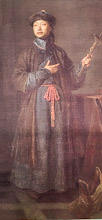
I BET YOU DID NOT KNOW that Michael Alphonsus Shen Fuzong (c1658-1691) was the first documented person from China to visit England. I did not know that he met King James II in 1687. Furthermore, did you know that the Chinese sculptor Tan-Che-Qua (c1728-1796) from Canton, who visited London between 1769 and 1772, not only exhibited at London’s Royal Academy but also met King George III before returning to his native land. Maybe, I might have stumbled across these two notable men from China by accident had I not visited the British Library today (the 20th of March 2023), but this is highly unlikely. Until the 23rd of April 2023, there is a fascinating, well-displayed exhibition called “Chinese and British” at London’s British Library.
Beginning with the earliest Chinese visitors to Britain, this splendid exhibition charts the growth and considerable achievements of Chinese people who chose to live in Britain. John Hochee (1789-1869) was one of the first people from China to have settled permanently in England. He arrived from Canton in 1819, worked as a property manager with John Fuller Elphinstone (1778-1854; son of William Elphinstone a Director of the EIC: see https://www.rh7.org/factshts/hochee.pdf), whom he probably met whilst working for the East India Company in China. Hochee married an English lady, Charlotte Mole, and James (1832-1897), one of their seven children, became a surgeon. John was naturalized in Brighton in November 1854.

Since Hochee (Ho Chee) settled in Britain, many more people from China have followed in his footsteps. The exhibition at the British Library illustrates this well. Early settlers included many who had worked on ships and had landed in Liverpool or London. Chinese communities became established in the 1880s, notably in London’s East End. The Chinese in Britain established businesses to serve their community and their British neighbours. Chinese restaurants and laundries figured largely amongst the early enterprises. With the advent of laundrettes in the 1950s and 1960s, the Chinese laundry business faded away, but still today the Chinese are very important in Britain’s catering industry. It was after WW2 that restaurants and take-aways really took off in Britain. These outlets supplied both British and Chinese food. Many of their workers and owners were from Canton and Hong Kong.

During WW1, nearly 100,000 Chinese men provided support for The British Army in Europe – digging trenches, burying the dead, and other tasks. Some of these men had signed 3-year contracts, which obliged them to return to China after the war, which most of them did. The exhibition devotes some space to the activities of these men.

Apart from what I have already described, the exhibition has displays illustrating the many other achievements of the Chinese British. One exhibit that particularly amused me was a selection of books in English by Chinese British authors. They were displayed on a ‘lazy Susan’, a revolving serving platform often found in the centre of round tables in Chinese restaurants.

All in all, I am very pleased that a post on Instagram alerted me to this interesting exhibition, and I encourage everyone to visit it.

Looking for something?

Archive


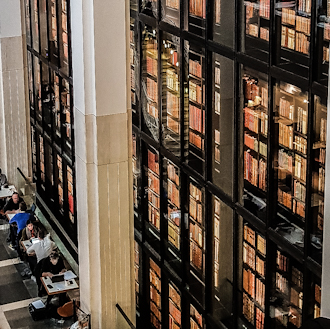
I write a great deal in my spare time. Apart from blogs like this one, I write books about subjects that require a considerable amount of research. I have a British Library (‘BL’) reader’s card, which gives me access to an unbelievable collection of material. However, even though I live not far from the BL, it is quite time-consuming getting to and from the material inside the library. Apart from security checks at the BL, one must leave many items, which are forbidden in the reading rooms (e.g. food, drink, all kinds of writing implements apart from pencils), in a locker in te basement. Once in the reading rooms, the BL becomes a joy to work in.


Over the years, I have been using another kind of library. It is on-line, and is reached by typing https://archive.org/ . Using its superb search engine, you can explore its collection in many ways, such as by author, by title, by keywords, etc. What comes up, if you are lucky, is a set of scanned volumes of relevant books or pamphlets. By clicking on an item, you are given the option of downloading it (.pdf, Kindle, and other formats), reading the scanned book using a very practical online reader, or reading a typed transcript of the entire text online. If the item is one you need, it is a lot easier reading it via this website than having to ‘schlep’ to the BL. This is especially the case if you do not live in London.


If you have not come across this website and you are looking for texts published long ago and not so distantly, head for archive.org, and give it a try!


My picture is part of a screen-shot of a page of results from archive.org


A myth


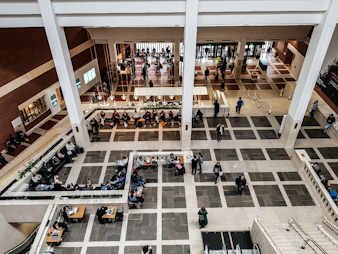
Recently, I renewed my Reader’s Card at the British Library, currently housed in superb premises on Euston Road, next door to the Victorian Gothic St Pancras railway station. This building was opened by Queen Elizabeth II in about 1998. Prior to this, the library’s Reading Room was a huge circular structure in the heart of the British Museum.

When our daughter was at primary school, she was taught about the Ancient Egyptians  including a female Pharaoh called Hatshepsut. One Saturday, I took our daughter to the British Museum in the hope of finding an image of the pharaoh in the Egyptian Galleries. After a desultory search, we gave up and walked acoss the the lovely covered Great Court, created relatively recently. The central circular structure within it contains the unused but well-preserved round Reading Room, which was designed by Sidney Smirke and opened in 1857, the year of the First Indian War of Independence. 

We entered the old Reading Room and I asked the attendant sitting there:

“Where exactly did Karl Marx used to sit when he used the library?”

“It’s a myth, sir,” replied the attendant, “He did not have a particular place because it has always been the library’s policy that places can not be reserved from day to day.”

I was a bit disappointed with his reply, but had to accept it.

When we got home, my wife asked our child how we had got on. She replied:

“You know Mummy. Daddy asked about his friend at the big old library?”

My wife asked which friend. Our daughter replied:

“I don’t know, but the man said he was a myth really.”


Picture shows foyer of current British Library in Euston Road